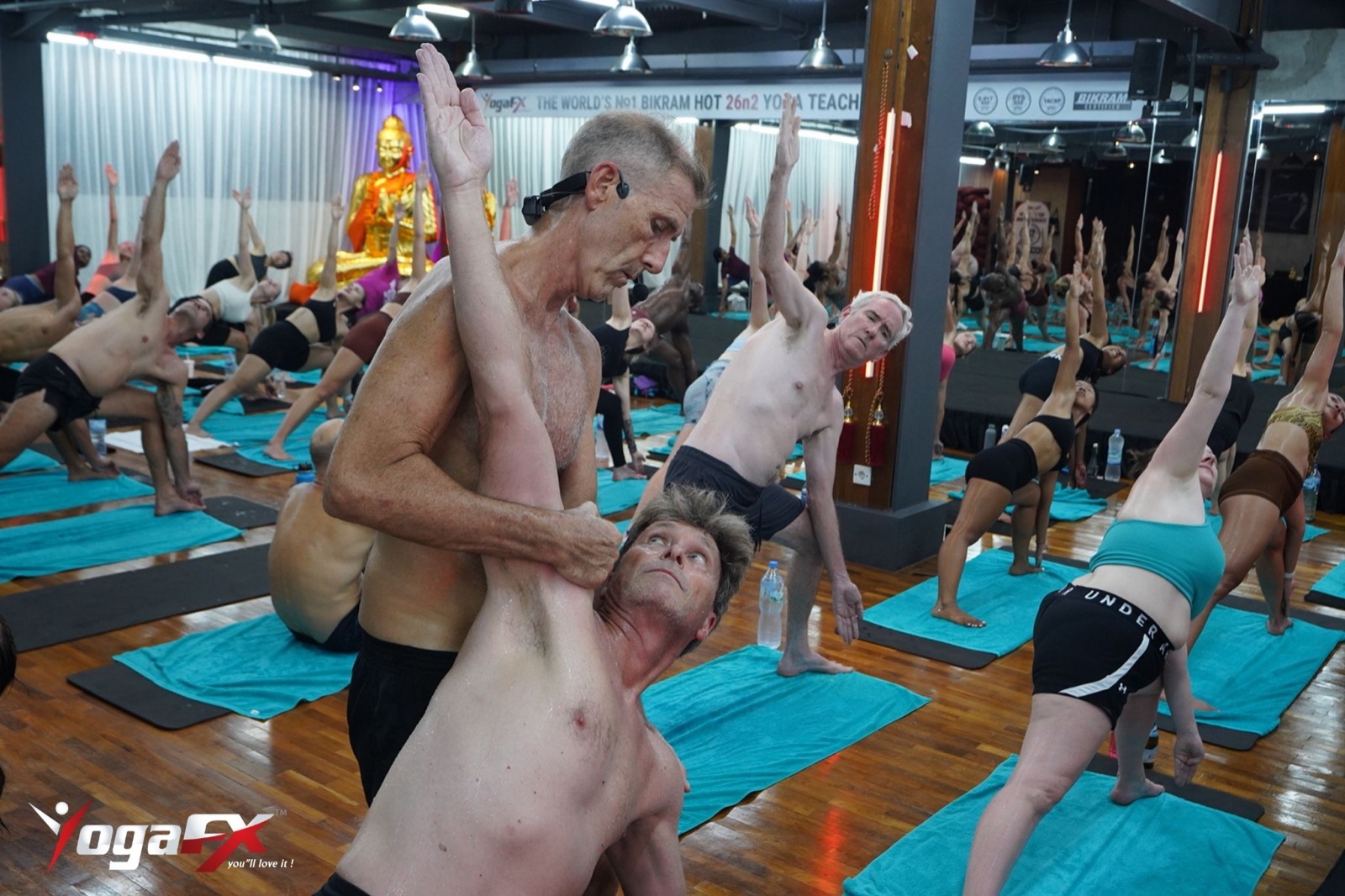
Yes. Men can do hot yoga, and the question is worth answering plainly because so many men ask it quietly before they ask it out loud. There is no rule, no policy and no physical barrier keeping men out of a heated studio. What keeps most men out is the suspicion that the room was designed for somebody else. In the case of the 26 and 2 sequence, that suspicion is simply wrong, and the reason is in the design of the method rather than in anything a studio says on its website.
Table of Contents
This guide covers what the sequence was actually built to do, what the research reports for male practitioners, and the honest version of who should speak to a doctor before booking a class. It does not cover what to pack or how to survive your first 90 minutes. Those deserve their own answers.
The Short Answer, and Where the Question Comes From
Men can go to hot yoga, join any class on the timetable, and practise the identical sequence everyone else practises. Nothing about the method is gendered. The question keeps getting asked because of what men see rather than what they are told: marketing images weighted toward women, class names that sound like something they would have to translate, and a persistent background idea that flexibility is a prerequisite rather than a result.
Look at where men take the question and the pattern is consistent. Forum threads titled some version of "why do so few men practise yoga" run for years. Men post asking whether they will be the only one in the room, whether to keep a shirt on, and whether being unable to touch their toes disqualifies them. Almost nobody asks whether they are physically capable. They are asking whether they will be out of place, which is a social question wearing the clothes of a physical one.
The useful reply is not encouragement. It is structure. A class built on a fixed script and a fixed order of postures removes most of the situations where a newcomer can be visibly wrong, and that is worth understanding before you decide whether to book.
Why the 26 and 2 Sequence Was Built for Any Body
The Original Hot 26&2 Yoga sequence is 26 postures and 2 breathing exercises in a fixed order, held in a room at roughly 40 degrees Celsius and 40 percent humidity for 90 minutes. It was assembled as a therapeutic series, which means the order is not decorative. Each posture prepares the one after it, the standing series works the body before the floor series asks anything of the spine, and every posture is performed twice so the second set has the benefit of the first.
Three design decisions matter for anyone who assumes they are not built for yoga.
- No arm balances and no inversions. There is no crow, no handstand, no headstand. Nothing in the sequence requires you to hold your bodyweight on your hands, which removes the single most common reason a heavier or less mobile beginner fails out of a general yoga class.
- Everything happens on two feet or on the mat. The standing series is balance and strength. The floor series is spine and hips. You are never asked to transition through a shape you have not already been walked into verbally.
- Depth is optional, position is not. The instruction tells you where to put things, not how far to go. A man with locked hamstrings performs the same Separate Leg Stretching as the person beside him. The shape is shallower. The posture is the same posture.
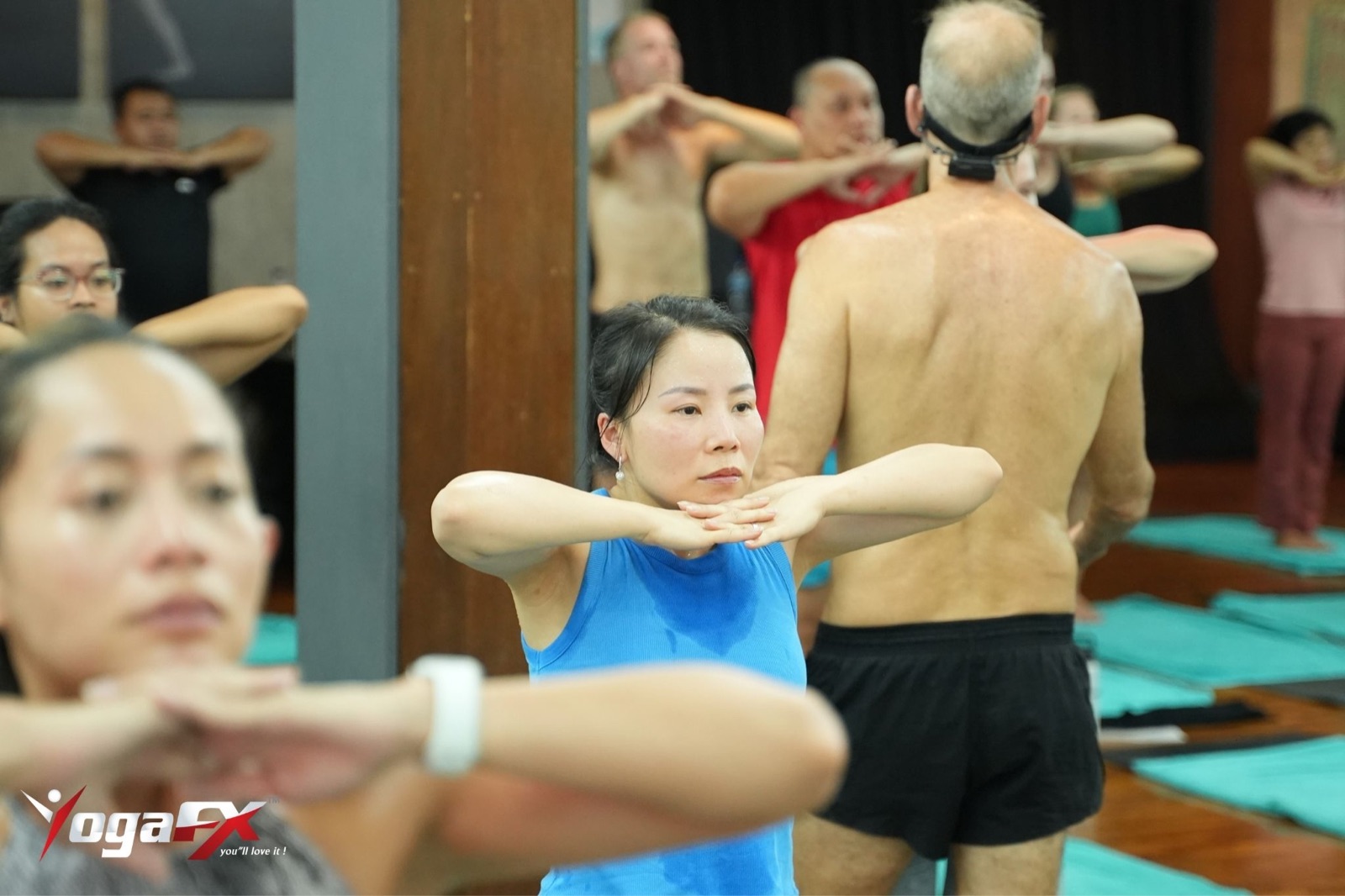
The heat does the rest. Warm tissue moves further than cold tissue, which is exactly why the room exists and why a stiff beginner often finds a heated class more forgiving than an unheated one. A systematic review by Willmott and colleagues published in 2025, covering 43 studies and 942 participants, reported consistent improvements in flexibility, balance and general well-being across Bikram-style practice. None of those studies recruited people who were already flexible. If you want the posture-by-posture detail, we set it out in the 26 and 2 yoga sequence, and the wider explanation of the method sits in what is 26 and 2 yoga.
What the Research Reports for Male Practitioners
Men who assume hot yoga is a stretching class tend to be surprised by the measured numbers. Research led by Porcari at the University of Wisconsin in 2014 recorded men burning an average of 460 calories across a 90-minute heated class, against 333 for women, with heart rates averaging around 80 percent of maximum. That is not a recovery session. That is a sustained aerobic effort with the thermal load of a hot room on top of it.
Strength moves too. In a controlled trial published by Tracy and Hart in 2013, participants following a Bikram-style programme recorded roughly a 20 percent increase in posterior chain strength along with gains in flexibility and body composition. For men who lift, that number usually lands differently than a general claim about wellness does. The postures are held isometrically, often at the edge of what the legs can support, and the body adapts the way it adapts to any repeated load.
| Common assumption | What the measured research reports |
|---|---|
| It is mostly stretching | Around 80 percent of maximum heart rate across a 90-minute class |
| It will not build anything | Roughly 20 percent posterior chain strength increase in a controlled trial |
| You need flexibility first | Flexibility is a reported outcome, not an entry requirement |
| It is the same as a gym stretch session | Measured calorie burn of about 460 for men per class |
Is Hot Yoga Bad for Men? The Honest Answer
Hot yoga is not bad for men as a category. It carries the same considerations it carries for anyone, and those considerations are about heat and cardiovascular load rather than about sex. The risk that matters for a first-timer is not the postures. It is pushing hard in a hot room before the body has adapted to it. Once that adaptation happens, the upside is well documented, and this look at what men gain from regular heated practice sets out the measured results.
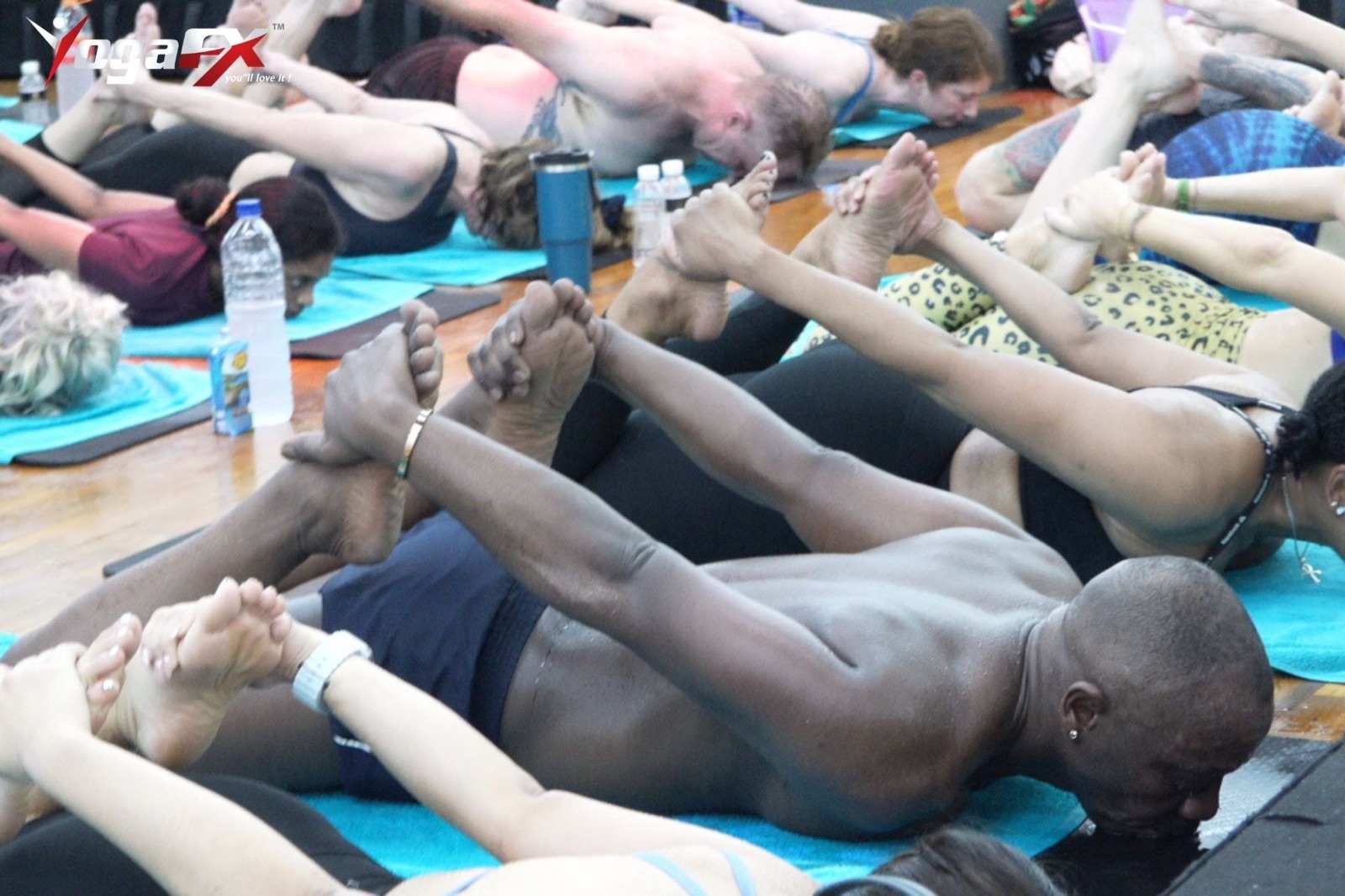
Speak to a healthcare professional before your first heated class if any of the following apply to you.
- A diagnosed heart condition, or blood pressure that is not under control. Heat raises heart rate independently of effort, so the usual way of gauging exertion does not transfer.
- Medication that affects sweating, hydration or blood pressure. Some common prescriptions blunt the body's cooling response without any obvious warning sign.
- A history of heat intolerance or fainting. Previous episodes are the best available predictor.
- A recent injury or surgery, particularly knee, shoulder or lower back. Heat masks sensation, which is useful for mobility and unhelpful for pain signals.
- Questions about heat exposure and fertility. This one comes up often enough among men to deserve a full answer of its own rather than a paragraph here. Raise it with a doctor who knows your history.
None of that is a reason for a healthy man to avoid the room. It is a reason to arrive hydrated, take the first class at a conservative effort, and sit down when you need to rather than when you are forced to. Sitting out a posture is a normal part of the class, not a failure of it. This article is general information and not medical advice, so treat your own doctor's answer as the one that counts.
The Four Worries Men Actually Voice
These come up in forum threads, in studio reception conversations and in emails before a teacher training intake. They are worth answering directly rather than reassuring around.
"I cannot touch my toes."
Neither can a good share of the room on any given morning. Tight hamstrings are the most common starting condition among men who lift, run or sit at a desk, and the sequence was built on the assumption that bodies arrive tight. Flexibility is what the practice produces. Our honest assessment of the difficulty is in is 26 and 2 yoga hard.
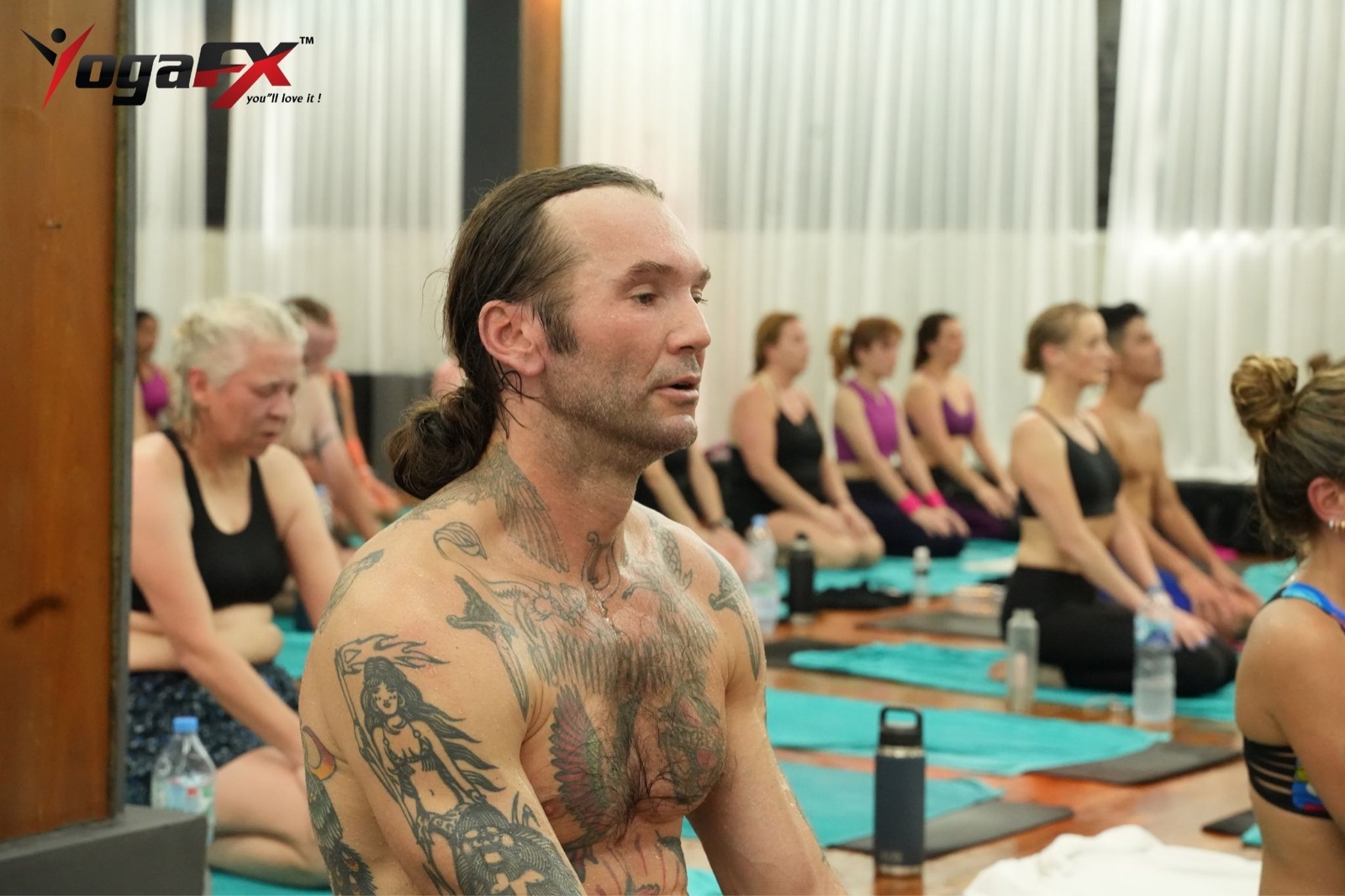
"I will be the only man in there."
Unlikely in a 26 and 2 studio, where the heat and the fixed structure draw a higher share of men than flowing classes do. And in a class where everyone holds the same posture for the same count, there is no choreography to fall behind in. Nobody is watching you, because watching you would mean missing their own posture.
"Shirt or no shirt?"
Either is normal. Most men end up practising without one simply because a soaked shirt gets heavy and cold, and a fitted top is the usual compromise for anyone who would rather keep covered. Wear whatever means you are not thinking about it by posture six.
"I will not last the 90 minutes."
Possibly not at full effort, and that is expected. Heat adaptation takes a handful of classes, not one. The instruction is the same whether you are moving through every posture or sitting on your mat breathing, and sitting down is a legitimate way to spend part of your first class.
One of the men who went through the training in Bali put the answer to this question in his own words at the end of the course.
What Changes Between Class One and Class Ten
The arc is predictable enough that teachers can forecast it. The first two or three classes are heat management and very little else, and most men report that the room, not the postures, is the obstacle. Somewhere around class four or five the body stops treating 40 degrees as an emergency, and attention moves from survival to instruction. By class eight to ten the sequence has become familiar enough that you stop anticipating what comes next, which is the point at which range of motion usually starts shifting.
Knowing that arc in advance changes how the first week feels. Men who expect to be competent immediately tend to quit in week one. Men who expect three uncomfortable classes followed by a noticeable shift tend to stay.
Where to Start, and Who Is Teaching You
Mr. Ian Terry, who leads the YogaFX programme in Bali, is an E-RYT 500 instructor with more than 12,000 teaching hours and over 1,500 graduates from 80 countries, and he trained directly under Bikram Choudhury across five training events between 2012 and 2019. His standard answer to a man asking whether he belongs in the room is that the sequence does not know who is performing it, and the dialogue does not change for anybody. You can read his background on the our teacher page.
If you are in Bali, the simplest test is to take a class and decide for yourself, and the Seminyak and Canggu studios run on natural tropical heat rather than electric heaters. The beginner guide for Bali classes covers what a first visit looks like. For men who find the practice sticks and want to take it further, the YogaFX hybrid programme runs online pre-course study followed by a six-day intensive capped at 19 students, leading to dual certification as a Yoga Alliance RYT 200 and a certified Hot 26&2 teacher. Dates and detail are on the teacher training page, and a WhatsApp message to Mr. Ian Terry on +62 811 3888 330 is the fastest way to ask a direct question.
FAQ
Can men go to hot yoga classes?
Yes. Every class on a 26 and 2 timetable is open to men, and the sequence, the dialogue and the heat are identical for everyone in the room. No studio requires prior experience or flexibility. You book the class, bring a mat towel and water, and work at whatever depth your body currently allows.
Is hot yoga bad for men?
Not as a category. The considerations are about heat and cardiovascular load rather than sex, and they apply equally to everyone. Men with a heart condition, uncontrolled blood pressure, heat intolerance or a recent injury should speak to a healthcare professional first. For a healthy man, the main risk is pushing too hard before adapting.
Do you have to be flexible to start hot yoga?
No. Flexibility is an outcome of the practice rather than a requirement for entry. Research on Bikram-style programmes reports flexibility gains in participants who were not flexible at the start. The sequence contains no arm balances or inversions, so a stiff beginner can perform every posture at a shallower depth.
Who should not do hot yoga?
Anyone with a diagnosed heart condition, uncontrolled blood pressure, a history of heat intolerance or fainting, a recent injury or surgery, or medication affecting hydration and sweating should get medical clearance first. Pregnancy and several chronic conditions also warrant a doctor's input. This is general guidance, not medical advice.
Why do so few men practise yoga?
Mostly perception rather than interest. Men report assuming that flexibility is a prerequisite, that they will be conspicuous, and that the practice will not be physically demanding enough to be worth the time. Each assumption tends to collapse within the first handful of heated classes, which is why retention among men who start is high.