Is 26 and 2 yoga teacher training worth it? For most people who finish, yes, when the goal is depth in one method: 26 postures, 2 breathing exercises and a fixed dialogue, taught with personal feedback. It pays back in skill and confidence first, and in teaching income only if you act on it afterwards.
Table of Contents
Is 26 and 2 yoga teacher training worth it for you in particular? This guide looks at whether 26 and 2 yoga teacher training is worth it from the side of method depth. It asks what you actually master, how that shows up in a classroom, and how to check the answer against your own reason for training.
Is 26 and 2 yoga teacher training worth it? The short verdict
So, is 26 and 2 yoga teacher training worth it for you? Worth is personal, so the honest verdict has conditions. Training in one method is worth it if you want to teach the same class well, many times, rather than sample ten styles lightly. It is a poorer fit if you want a broad survey of yoga or a quick income without effort.
Here is how the verdict usually breaks down for the people who ask us.
- Worth it: you want to teach a defined, repeatable class and be confident delivering it to a full room.
- Worth it: you already practise and want to understand why each cue is worded the way it is.
- Probably not: you want a general introduction to every yoga tradition in one course.
- Probably not: you expect the certificate alone to bring in students without any outreach.
The word worth also changes with your stage. A student teacher who has practised for years may value the structure most. Someone newer to yoga may value the confidence of a clear script. Both are legitimate reasons, and both are covered in the checks near the end.
Mr. Ian Terry, E-RYT 500, leads the training at YogaFX. The method stays fixed, so your delivery is what grows from one day to the next. That idea sits behind everything below.
Is 26 and 2 yoga teacher training worth it because of method depth?
In short, is 26 and 2 yoga teacher training worth it when you master one sequence? Often yes.
The 26 and 2 method is a fixed sequence of 26 postures and 2 breathing exercises, led through a scripted dialogue. Every posture has its own wording, its own order of cues and its own common mistakes. Mastery means you can deliver all of it, calmly, in the same sequence, to people who are hot, tired and watching you.
That sounds narrow. In practice it is the opposite of shallow, because a fixed sequence lets you put your attention on the students rather than on what to say next. As a result, the work moves from remembering to noticing.
The three layers you learn
- The postures. Alignment, entry, exit and the usual errors in each of the 26.
- The breathing. Two pranayama exercises, taught as part of the class rather than as an extra. Our guide to pranayama in the 26 and 2 class shows how the cues work.
- The dialogue. The spoken script that carries the class. Learning it is closer to learning lines for a play than to memorising a list.
Because the structure is easy to misjudge from the outside, it helps to read about the method behind the 26 postures and dialogue before you decide. If the method is new to you, take a class first.
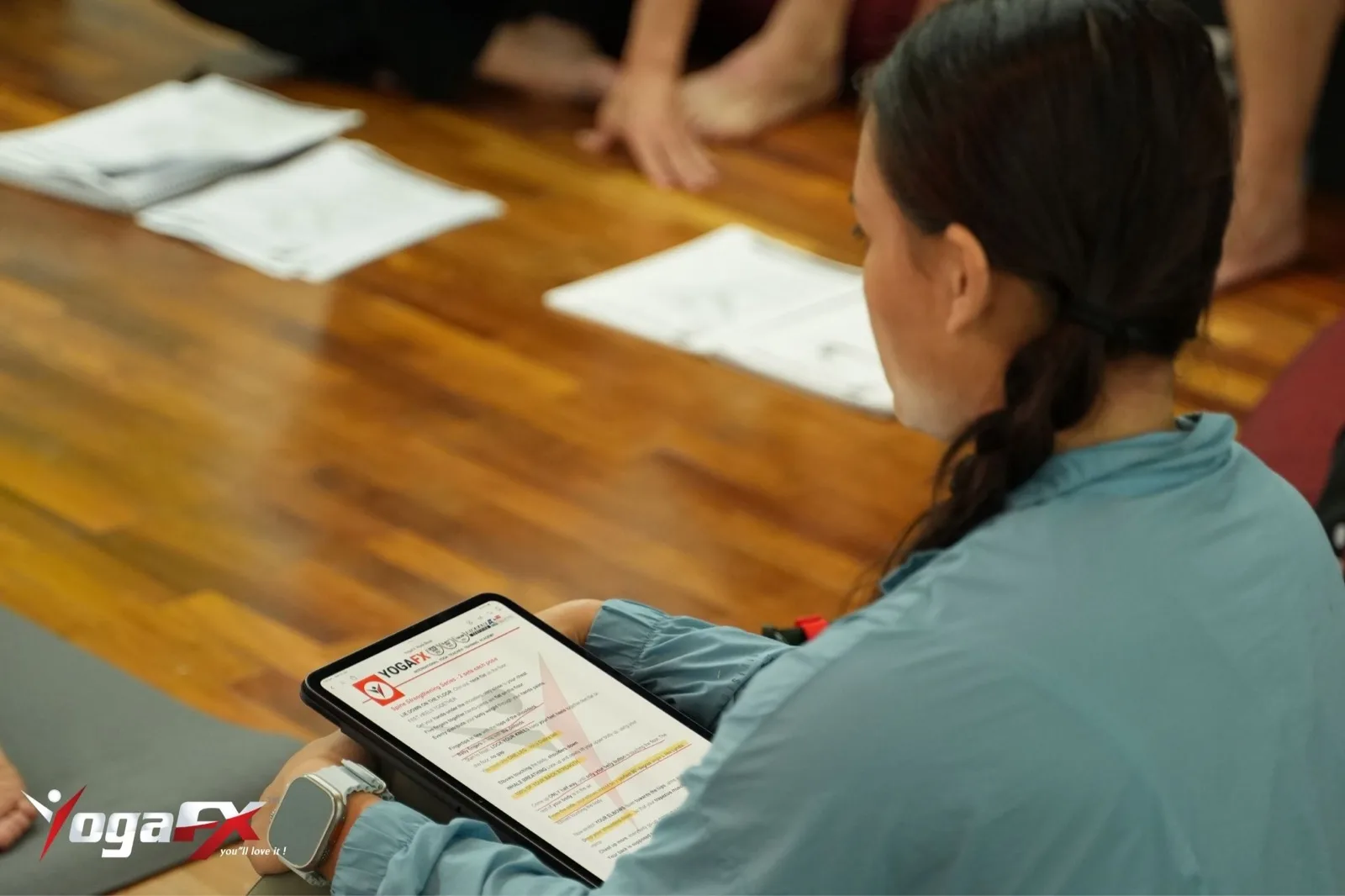
Depth versus breadth: what each approach gives a trainee
The table below compares two ways of structuring a 200-hour style course. It is a general comparison of approaches, not a review of any particular school.
| What you look at | One method in depth (26 and 2) | Broad survey of styles | What it means for you |
|---|---|---|---|
| Postures taught | 26, each studied closely | Many styles, fewer details per posture | Depth lets you spot and correct errors quickly |
| Breathing | 2 exercises, practised every class | Varies by style covered | Repetition builds a steady, teachable rhythm |
| Teaching script | One fixed dialogue, rehearsed | Often you write your own | You can lead a full class without notes |
| Feedback | Individual feedback on delivery | Depends on group size and format | You hear what to fix while you can still fix it |
| Best suited to | Teaching one class well | Exploring what you like | Choose by what you want to do next |
Neither approach is wrong, and is 26 and 2 yoga teacher training worth it for every learner? No. A broad course and a deep one answer different questions, so judge worth against your own question. For example, a trainee who wants to run one weekly class gains more from repetition, while a trainee who wants to explore styles gains more from variety.
Is 26 and 2 yoga teacher training worth it? The method in numbers
What research says when you ask if 26 and 2 yoga teacher training is worth it
Teacher training teaches you to deliver the class, so it helps to know what the class has been studied for. The honest answer is that the evidence is about practising, not about training, and it is still developing.
A randomised trial led by Maren Nyer at Massachusetts General Hospital, reported by Harvard Gazette, compared an eight-week heated yoga programme with a waitlist. In the yoga group, 59.3 percent had a symptom drop of 50 percent or more, against 6.3 percent of the waitlist group.
A 2025 systematic review by Willmott and colleagues, covering 43 studies and 942 participants, also looked at Bikram-style practice. We cite it by name only and do not quote its numbers here.
These findings do not prove that training makes you a better teacher. They do suggest the class you will teach is worth teaching. Anyone with a medical condition should speak to a healthcare professional before starting hot yoga, and research suggests benefits, it does not promise them.
Is 26 and 2 yoga teacher training worth it? Two student reviews
We would rather let students answer whether 26 and 2 yoga teacher training is worth it. These come from our own review videos, quoted word for word.
Carla, YouTube review, 2019: "It's not just about the yoga teacher training, it is more than that."
A trainee in our YouTube review, 2026: "the best training I've ever had in my life." The trainee describes it as a passion project and says they intend to teach the practice as well as they can.
Two quotes do not make a statistic, and we do not claim they do. They show the kind of reaction depth can produce when the teaching is personal. Because every trainee arrives with a different reason, we suggest you watch the full videos and listen for the reason that sounds like yours.
Is 26 and 2 yoga teacher training worth it financially?
Whether 26 and 2 yoga teacher training is worth it depends on cost, so here it is plainly. The current Early Bird price for the YogaFX Bikram Hot 26&2 Yoga Teacher Training MasterClass is US$1,799. Our guide to what yoga teacher training costs for the 26 and 2 method breaks down the rest, and a payment plan can spread the fee if that matters to you.
Money is only one cost. Time and effort count too. A six-day intensive is short, but the preparation before it and the practice after it are what decide the return. Think of the tuition as the smallest part of the commitment.
| Cost or benefit | What you put in | What you get back | Depends on |
|---|---|---|---|
| Tuition | Early Bird US$1,799 | Dual certification and the full method | Whether you use the credential |
| Time | Online pre-course plus six days | A compact, focused intensive | Study before you arrive |
| Practice after | Regular teaching, even unpaid | Fluency that lasts | Starting within weeks |
| Network | Keeping in touch with fellow trainees | Peers who know the method | Reaching out after the course |
Is 26 and 2 yoga teacher training worth it for everyone? No, and these cases show why.
When it is probably not worth it
- You only want a personal wellness boost. A steady studio practice gives you most of that for less.
- You want income without building a class base. The certificate opens doors, it does not walk you through them.
- You choose purely on price and skip the questions about feedback, hours and registration.
That last point matters. Ask any school how much individual feedback you get on delivery. If the answer is vague, the sticker price is not the whole story.
How the six days work if 26 and 2 yoga teacher training is worth it to you
YogaFX runs the training as a six-day hybrid: an online pre-course, then an intensive in Seminyak, Bali. The next intake checks in on Sunday 24 January 2027 and checks out on Friday 29 January 2027. Our page on hybrid yoga teacher training covers what is learned online and what is saved for the room.
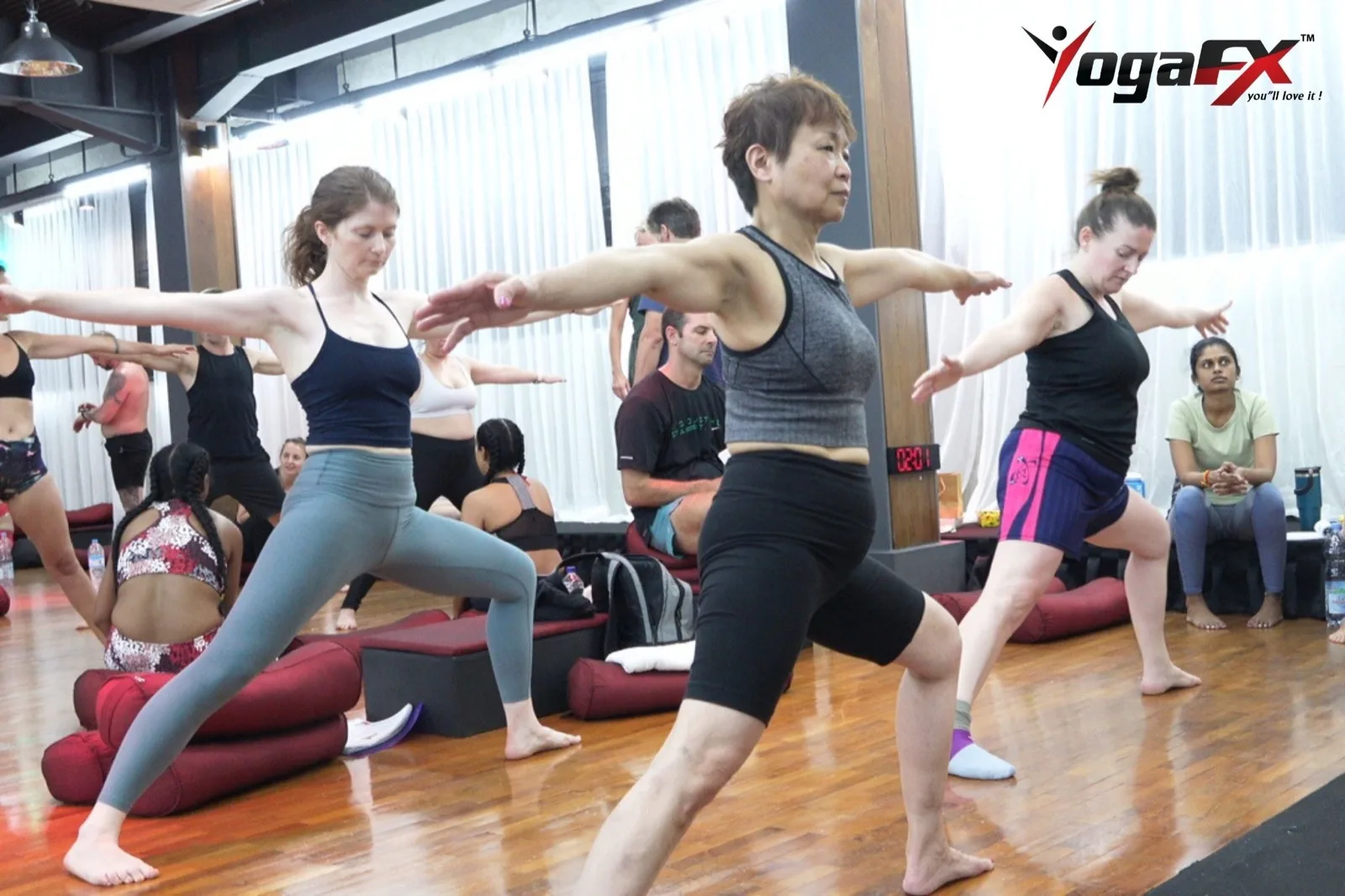
Mr. Ian Terry, E-RYT 500, leads the training. He trained for five years, from 2014 to 2019, with the founder of the Bikram Hot 26&2 method and has logged more than 12,000 teaching hours since. He and the team give individual feedback on how you deliver the dialogue.
Graduates leave with two credentials: Yoga Alliance RYT 200 and the Bikram Hot 26&2 200-Hour International Yoga Certification.
Seen against all of this, is 26 and 2 yoga teacher training worth it for a serious beginner teacher? The reviews are encouraging, though two quotes prove little on their own.
If you want to see what other graduates reported, read what 26 and 2 graduates say about learning the dialogue.
Why a fixed script helps new teachers
New teachers usually fear two things: forgetting what to say and not knowing what to fix. A fixed script removes the first fear almost completely. Once the dialogue is in your memory, you can watch the room instead of searching for words.
That freedom is where teaching skill grows. You notice a student locking a knee, a jaw clenching, or breath that has stopped. Then you adjust your cue, because you are not busy composing it.
Repetition is the teacher
In a six-day intensive, every trainee delivers parts of the dialogue many times. Each delivery gets feedback while it is fresh. By the end, the wording, the pacing and the pauses feel like yours rather than like a script you borrowed.
- Pacing. You learn how long to leave a posture before the next cue.
- Voice. You practise projecting calmly to the back of a warm room.
- Presence. You learn to stand still on the podium and let the class settle.
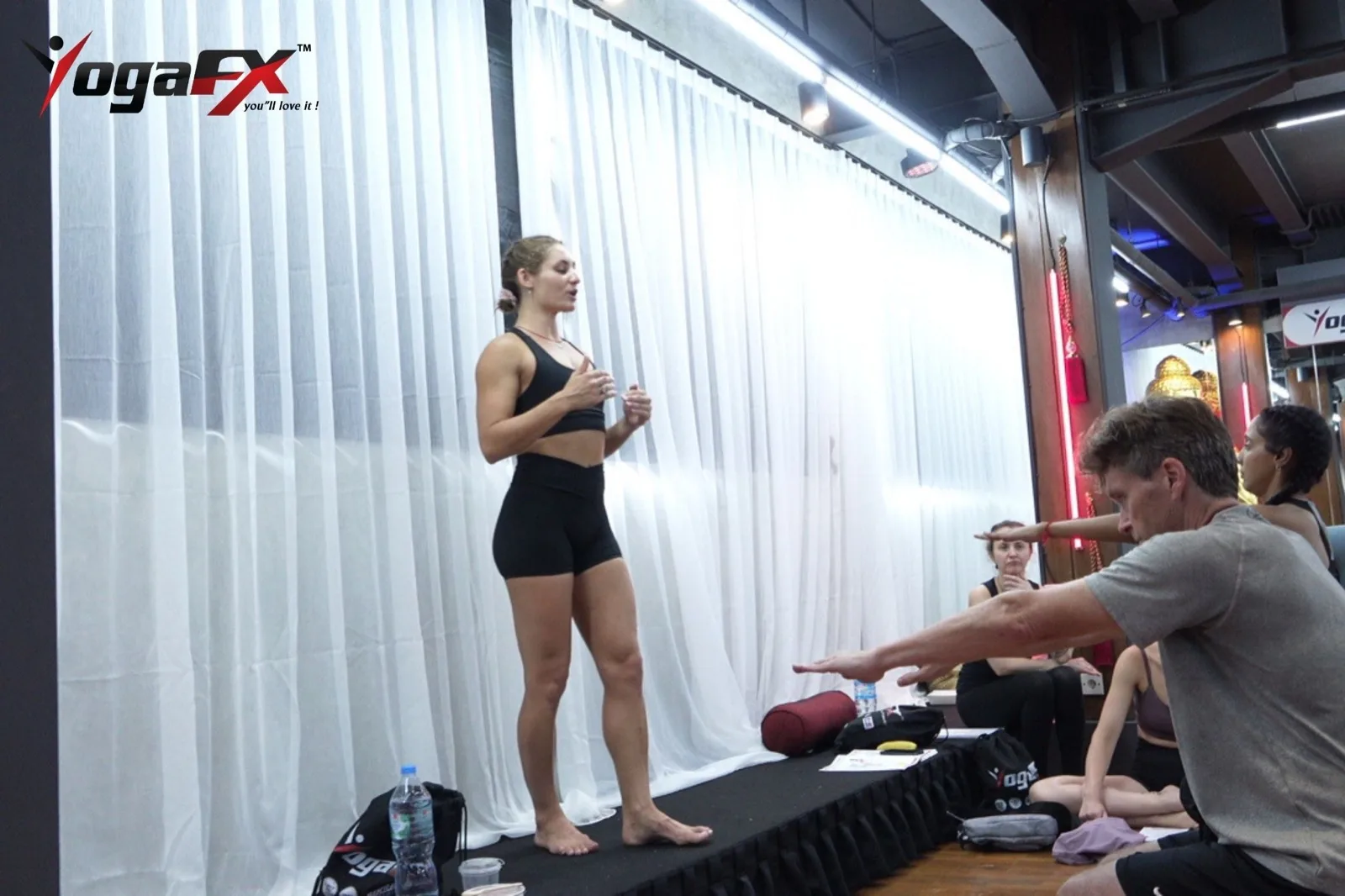
What happens after you graduate
Is 26 and 2 yoga teacher training worth it after graduation? That depends on what you do next. A certificate is the start of the work.
The graduates who say the training was worth it months later tend to be the ones who began teaching quickly. They message a few local studios, offer to cover a single class, and teach friends in the first month.
This matters because delivery fades without use. The dialogue you rehearsed for six days stays sharp only if you keep saying it aloud. A short, regular teaching habit protects the investment you made.
No programme can promise you a job, and any school that does should be treated with caution. What a good programme can offer is a recognised credential, a method you can deliver with confidence, and people to ask when a class does not go to plan.
A realistic first-year picture
- Months 1 to 3: cover classes, teach friends, and keep practising the dialogue weekly.
- Months 4 to 9: build a regular slot at a studio or in your own community.
- Months 10 to 12: review what you enjoy and decide whether to deepen the training further.
Again, whether 26 and 2 yoga teacher training is worth it depends on you. This is an illustration of a sensible approach, not a forecast of what will happen to you. Results depend on where you live, how much you teach and how steadily you keep going.
Five honest checks before you decide
Use these checks to decide whether 26 and 2 yoga teacher training is worth it for you, rather than taking our word for it.
- Name your goal. Write one sentence: teach weekly, deepen my practice, or change career.
- Ask about feedback. How many people watch your delivery, and how often do you get corrections?
- Check the credential. Confirm what you receive and who registers it.
- Plan the first month. Decide which studios or friends you will teach first, before you enrol.
- Try the room. Take a class so you know whether the method suits you.
Our guide to choosing a yoga teacher training goes deeper on these checks. For a wider look at whether any teacher training pays off, see what graduates actually get from yoga teacher training.
If your answers point to one method taught in depth, then 26 and 2 yoga teacher training is very likely worth it for you. If they point to variety, a broader course will serve you better, and that is a perfectly good result.
FAQ
Is 26 and 2 yoga teacher training worth it for beginners?
It can be, if you already practise the class regularly and want to teach it. The fixed sequence helps beginners to teaching because the script stays the same. If you have never taken a class, try one first so you know the method suits you.
What do you learn in 26 and 2 yoga teacher training?
You learn the 26 postures, the 2 breathing exercises and the spoken dialogue that carries the class. Training covers alignment, common errors, delivery and individual feedback. The aim is to teach one defined class with confidence, rather than to survey many different styles of yoga.
Can you teach yoga with a 200-hour certification?
Yes. A 200-hour certification, such as Yoga Alliance RYT 200, is the usual entry qualification for teaching group classes. It does not guarantee work, so building teaching hours early, even covering a single class, matters as much as the certificate itself.
How long is the training in Bali?
The programme is a six-day hybrid. You complete an online pre-course first, then join the intensive in Seminyak, Bali. The next intake checks in on Sunday 24 January 2027 and checks out on Friday 29 January 2027, so you can plan your time away from work.
Is this teacher training independent?
Yes. This is independent training and not an official Bikram Choudhury teacher training. Mr. Ian Terry, E-RYT 500, trained for five years, from 2014 to 2019, with the founder of the method, and the programme is built on that direct instruction, so you know exactly whose teaching you are getting.
Still have questions? Message Mr. Ian and the YogaFX team on WhatsApp and we will answer them personally.