Hot yoga inflammation research is early. One small trial found higher heat shock protein levels after four weeks of hot yoga. One large sauna study linked frequent sessions with lower C-reactive protein. No study has tested a full 26 and 2 class against inflammation, so treat every benefit claim as a lead, not a promise.
Table of Contents
This article is education, not medical advice. Please talk to a healthcare professional before you start heat-based exercise, especially if you are pregnant or have a heart, blood pressure, kidney or inflammatory condition. At YogaFX, Mr. Ian Terry (E-RYT 500, 12,000+ teaching hours) asks every teacher to describe a study exactly, give its size and never promise an outcome. We follow that rule below.
Hot Yoga Inflammation: The Short Answer
Possibly, but nobody has shown hot yoga inflammation benefits for a real 26 and 2 class. Some ideas about heat and inflammation come from lab mechanisms, some from sauna studies and one from a small hot yoga trial. Because each source answers a slightly different question, here is the whole picture in three lines:
- What the mechanism suggests: heat may raise heat shock proteins, which help cells repair and may dampen inflammatory signals.
- What early studies found: a small hot yoga trial raised one heat shock protein marker, and a sauna study linked frequent sessions with lower CRP.
- What nobody knows yet: whether a 26 and 2 class lowers inflammation in healthy people, and whether that would matter for health.
If you came here hoping for a reason to practise more, you can relax. The hot yoga inflammation research gives you something interesting to read, not a reason to push harder. For the wider picture of the method, see our guide to the benefits of 26 and 2 yoga and their honest limits.
What Inflammation and CRP Mean for Hot Yoga
Inflammation is the body's response to injury, infection or other stress. Doctors often check it with a blood test for C-reactive protein, or CRP. A CRP test measures the level of CRP in a sample of your blood, according to the US National Library of Medicine. The liver makes CRP in response to inflammation. MedlinePlus explains the test in plain language.
The same page makes two points that matter here.
First, the results tell you how much inflammation you have, but not what is causing it or where it is. Second, increases can also be linked to insomnia, depression, hormone therapy for menopause and obesity. So a single number is a clue, never a verdict on hot yoga inflammation or anything else.
- CRP is a marker. A lower number on a blood test is not the same as feeling better.
- CRP moves for many reasons. Sleep, mood, weight and illness can all change it.
- Only a doctor can interpret it. That is why we avoid any promise about your own results.
Heat Shock Proteins: The Mechanism, Honestly Labelled
The YogaFX research guide that Mr. Ian Terry uses with teachers describes a proposed pathway. Thermal stress prompts cells to make heat shock proteins, mainly HSP70 and HSP90. These act as molecular chaperones: they help other proteins keep their shape, help repair damaged cell parts and, in the guide's wording, may suppress pro-inflammatory pathways.
That is a mechanism, not a hot yoga inflammation result in people who practise. The guide also lists a lower CRP among its evidence-supported findings. We could not confirm that for hot yoga from the sources we opened, so we label the strength of each idea below.
How strong is each idea?
Evidence ladder: heat, heat shock proteins and inflammation
The hot yoga trial is Bourbeau and colleagues, 2021. It compared hot and normal-temperature yoga in 22 healthy adults over four weeks, using a modified Bikram protocol at 41°C. It reported higher HSP70 in the hot group only. Notably, the measures were HSP70, fitness, a brain-related protein, a stress hormone and perceived stress. CRP was not among them. Our post on whether 26 and 2 classes trigger heat shock proteins walks through the design and its limits.

Heat Exposure and CRP: What the Sauna Letter Found
The closest human data on heat and CRP comes from sauna bathing, not yoga. A short letter in the European Journal of Epidemiology (2018) looked at sauna bathing and systemic inflammation. It covered 2,084 men aged 42 to 60 who had no acute or chronic inflammation. After adjusting for age, body mass index, smoking, physical activity and other factors, the authors reported a significant inverse association between sauna frequency and CRP.
| Sauna frequency | Men in group | Mean CRP (as reported) |
|---|---|---|
| Once a week | 533 (25.6%) | 2.41 |
| 2 to 3 times a week | 1,368 (65.6%) | 2.00 |
| 4 to 7 times a week | 183 (8.8%) | 1.65 |
Read that table with care. It is not about hot yoga inflammation directly. It describes an association in men, not a trial where people were assigned to a sauna, so it cannot show that heat lowered CRP. The authors themselves wrote that further studies are warranted. A sauna also differs from a 90-minute class in which you balance, stretch and breathe.
For how a heated class compares with sitting in heat, see hot yoga vs sauna and our overview of heat therapy benefits.
Where the 26 and 2 Posture Series Fits
A 26 and 2 class runs 90 minutes at about 40°C and 40% humidity, with heat from Bali's tropical climate at the YogaFX Seminyak studio. The sequence never changes: two breathing exercises, 26 postures, a scripted dialogue, no demonstration and no music. That fixed structure is handy for researchers in theory, because every class is the same.
In practice, no one has yet measured hot yoga inflammation markers across it.
| Part of the class | What students do | What research can say about inflammation |
|---|---|---|
| Breathing exercises | Standing deep breathing at the start, blowing in firm later | Nothing specific. We found no inflammation study on these two exercises in a 26 and 2 class. |
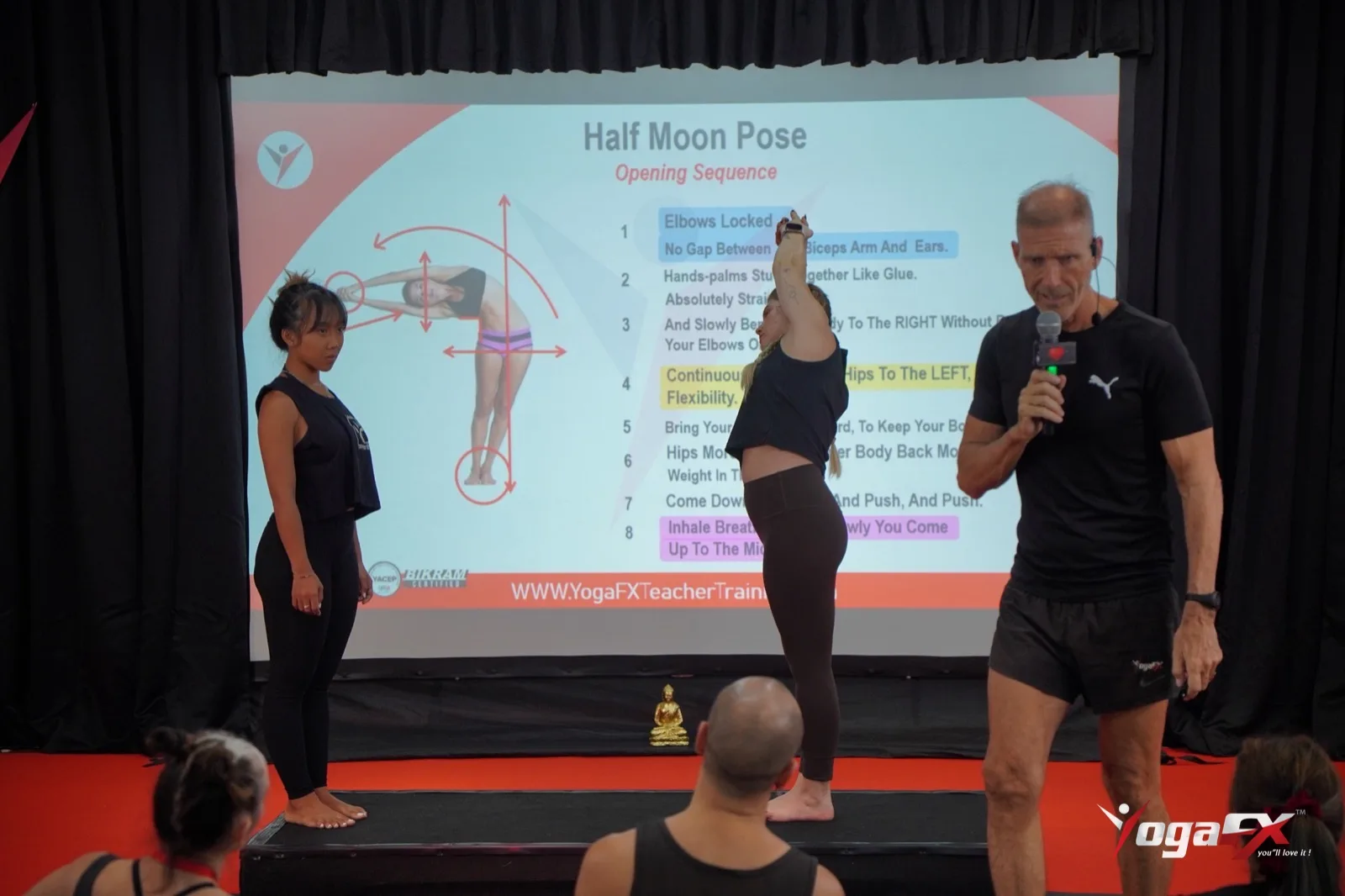
| Standing series | Eleven balancing and stretching postures, such as Half Moon, Eagle and Triangle | Effort and heat arrive together here. Studies cannot separate the two. |
| Floor series | Cobra, Locust, Bow, Camel and other floor postures | No posture-by-posture inflammation data exists. |
| Savasana and rests | Lying still between sets and at the end | Recovery matters for how you feel, but we have no inflammation data on it. |
Because the series is fixed, you can use it to learn how your own body responds over weeks. Notice sleep, soreness and energy rather than chasing a hot yoga inflammation number. Our beginner guide shows what to expect in a first class.
Hot Yoga Inflammation Evidence: What Is Still Missing
Honest limits matter as much as findings, and they matter most for hot yoga inflammation. Each point comes from the design of the studies above, not from our opinion.
- No 26 and 2 trial. The hot yoga study used a modified protocol, not a full studio class.
- No inflammation outcome in that trial. It reported a heat shock protein marker, not CRP or any disease.
- Small and short. Twenty-two people for four weeks cannot speak to years of practice.
- Sauna is not yoga. The CRP data come from men who sat in saunas, and they show association only.
- Mixed reviews. A systematic review and meta-analysis titled Effectiveness of Yoga in Modulating Markers of Immunity and Inflammation exists, but we could not open its full text for this article, so we quote no numbers from it.
Broader sources are more cautious and more general. Johns Hopkins Medicine describes regular yoga as helping to reduce stress and inflammation, but that statement covers yoga in general, not heated 26 and 2 classes. So we keep the claim at that level and no higher.
We also avoid any link between heat and disease. In particular, we do not say the class treats arthritis, autoimmune conditions or any other illness. If you live with one, your doctor decides whether heat is suitable for you.
Safe Practice, Not Inflammation Chasing
Heat is a real stress on the body, so a hot yoga inflammation headline is a poor reason to push harder. Consequently, our advice is simple and deliberately dull:
- Leave the heat early if you feel dizzy, faint, sick or confused. Sit down, cool off and drink water.
- Skip the extras. Do not add sauna sessions to chase a blood marker.
- Ask your doctor first if you take regular medicines or have a heart, blood pressure, kidney or inflammatory condition.
- Do not stop treatment. Yoga never replaces advice or medicine from your doctor.
Sweat is your cooling system, not a sign that the class is doing extra work. If you have seen claims that sweat cleanses the body, read our honest answer on whether hot yoga sweats out toxins.
What YogaFX Students Say
Studies give you numbers on hot yoga inflammation. Students give you the lived side. Neither reviewer below mentions a lab marker, and that is the point: what they remember is the teaching, the group and how the experience felt.
Cheleigh, YouTube review, 2026: “it's been very good and thank you everyone for the positivity the encouragement” and “it's been very interesting and eyeopening experience.” Watch Cheleigh's review on YouTube.
Dior, YouTube review, 2024: “this has been wonderful” and “I am very grateful for this experience and for meeting every single individual here.” Watch Dior's review on YouTube.
Try a 26 and 2 Class at YogaFX Seminyak
Reading about hot yoga inflammation only goes so far. One class tells you more than a paper can, and you do not need to commit to anything first. YogaFX teaches the original 90-minute Hot 26&2 class at its Seminyak studio, Jl. Pangkungsari Gg Jepun No.888, Kuta Utara, Seminyak, Badung, Bali 80361. The Free 1-Day Guest Pass makes your first class free.
If the class draws you in and you start to think about teaching it, Mr. Ian Terry also runs the 6-day hybrid MasterClass, with online pre-course work plus an intensive in Bali. You can read what it covers in our post on original hot yoga teacher training.
FAQ
Does hot yoga reduce inflammation?
Maybe, but it is not proven. One small trial found higher heat shock protein levels after four weeks of hot yoga, and a large sauna study linked frequent use with lower CRP. Neither tested a full 26 and 2 class against inflammation, so we make no promise.
Can hot yoga cause inflammation?
Hard effort and heat are stresses, and soreness after a tough class is common. We found no study showing that a 26 and 2 class raises inflammation markers in healthy people. If you feel unwell, swollen or in pain, rest, drink water and ask your doctor.
Is hot yoga good for arthritis?
We found no research on 26 and 2 classes and arthritis in the sources we checked, so we cannot say it helps. Heat and movement affect people with joint conditions differently. Please ask your doctor or specialist before trying heated classes, and never stop prescribed treatment.
What does a CRP test tell you?
A CRP test measures C-reactive protein in your blood, which your liver makes in response to inflammation. According to MedlinePlus, it shows how much inflammation you have, but not what causes it or where it is. Only your doctor can interpret a result.
Should I practise 26 and 2 to lower my CRP?
No. Practise for the class itself, the focus, the breathing and the postures. The research is early, no target dose exists, and many things change CRP, including sleep, weight and illness. If you have a health condition, talk to your doctor before starting heated classes.
Still have questions? Message Mr. Ian Terry and the YogaFX team on WhatsApp and we will answer them personally.