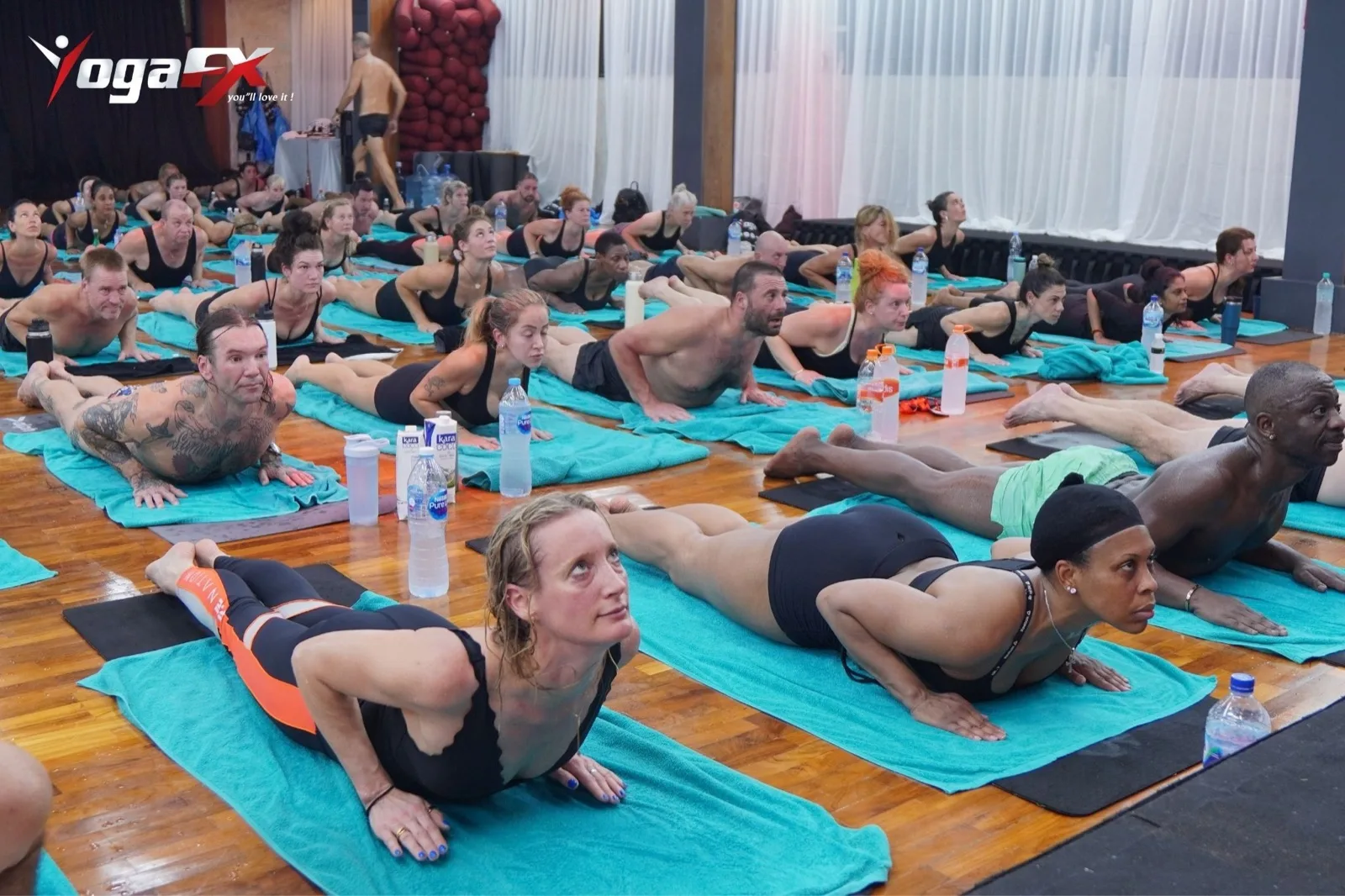
Does hot yoga sweat out toxins? No, not in any meaningful way. Sweat is mostly water and salt, and its main job is cooling your body as it evaporates. Your kidneys and gut do the real clearing of waste, every day. This guide explains what sweat does, what it does not do, and what a hot class offers in its place.
Table of Contents
What Sweat Is Actually For
When your core temperature rises, sweat glands release fluid onto your skin. As that fluid evaporates, it pulls heat away from your body. That is the whole mechanism. Sweat works like a cooling system, not a drainage pipe.
You sweat the same way on a hot walk, a long run, or a sunny afternoon with no exercise at all. A heated studio just makes the process start sooner and run harder. The room changes the amount of sweat, not the purpose of it.
The fluid itself is mostly water, with sodium and chloride (salt) and small amounts of other substances. That is why a salty crust sometimes dries on your skin after a long class. Losing water and salt is real, and it deserves attention. Losing toxins is a different story.

Does Hot Yoga Sweat Out Toxins? Where Waste Really Goes
Kidneys, gut and skin
If sweat is not the main exit door, what is? The answer starts with your kidneys. The National Institute of Diabetes and Digestive and Kidney Diseases explains that in a single day, your kidneys filter about 150 quarts of blood, and only 1 to 2 quarts become urine. That is an enormous amount of work, done around the clock.
Your gut also carries waste out of the body, and the kidneys and gut together form the main routes of excretion. Your skin plays a smaller part. None of this depends on how hot your room is, or whether you practise at all.
What the research says
A 2019 review by Lindsay Baker, published in the journal Temperature, looked at sweat in depth. Its conclusion on this point is direct. The role of sweating to eliminate waste products and toxicants seems to be minor, compared with the other avenues of excretion through the kidneys and gastrointestinal tract.
| Route | What it does | What the cited source says |
|---|---|---|
| Kidneys | Filter blood and make urine | About 150 quarts of blood filtered per day, with 1 to 2 quarts becoming urine (NIDDK) |
| Gut | Carries solid waste out of the body | Named with the kidneys as a main route of excretion (Baker, 2019) |
| Skin sweat | Cools the body as it evaporates | Role in eliminating waste and toxicants seems minor (Baker, 2019) |
You may have read that sweat contains traces of metals or other substances. That part can be true in small amounts. The real question is whether sweat is a meaningful way to remove them, and the review above says it is minor. Finding a substance in sweat is not the same as proving that sweating clears it from your body.
Four Sweat Myths, Checked One by One
Most people who wonder if hot yoga sweats out toxins are repeating one of four ideas. Each one sounds reasonable until you test it against the sources.
Myths one and two: heat and trace metals
Myth one is the easiest to test. A hotter room makes you sweat more, so you lose more fluid. It does not make the fluid a cleanse. As a result, the thermometer doesn't change the clearing. Your kidneys and liver keep working at their own steady pace.
Myth two rests on trace amounts. Small quantities of a substance in sweat are not the same as a route that removes it. Baker's review judges the role of sweat in waste removal to be minor, so the size of that role is what matters here.
Myths three and four: feelings and bad days
Myth three is the one most students feel. You walk out lighter, calmer and a little wrung out. Those feelings come from the movement, the breathing and the stillness at the end of class. They are real, and they do not need a toxin to explain them.
Myth four is the one that can hurt. A headache, nausea or dizziness after a hot class is a warning, not a healing crisis. Those signs match heat stress and fluid loss, so the correct response is to stop, cool down, sip water and rest. Because calling it a detox can keep someone pushing through a problem, the label really matters. For example, a student who thinks nausea is a cleanse may stay in the room when they should leave it.
Why Hot Yoga Feels Like a Detox
The hot yoga detox idea sticks because the experience is so strong. Heavy sweat makes it look as if something is leaving your body. Soaked towels, a drenched mat and a shirt you can wring out all seem like proof.
Then there is the language. Studios, brands and social media repeat the word detox so often that it sounds like fact. When a class leaves you tired, the tiredness gets labelled as a cleanse. Nothing in the physiology requires that label.
A good hot class is demanding. Ninety minutes in a warm room, with the same postures repeated, will leave most people wiped out. That is effort, not elimination. So knowing the difference helps you judge your practice honestly.
Four things usually create the feeling that a class has cleansed you:
- Heavy sweat. Soaked skin looks like something is leaving, even when it is only cooling you.
- Lightness afterwards. A drop in body water shows on the scale, and it returns when you drink.
- Calm mood. Breathing, movement and stillness lift the mind, and those effects are real.
- Heavy language. Studios and social media repeat the word detox until it sounds like a fact.
What a 26 and 2 Class Actually Asks of You
A 26 and 2 class follows one fixed sequence of 26 postures and 2 breathing exercises, and it runs for 90 minutes. At YogaFX, the room is about 40°C with around 40% humidity, and the heat comes from the tropical climate rather than electric heaters. The teacher follows a scripted dialogue, with no demonstration and no music.
That setup explains the sweat. Standing postures such as standing bow load the big muscles of the legs and back, so your body makes heat from the inside while the room adds heat from the outside. Sweat is simply the response. It is the body keeping you at a safe temperature while you work.
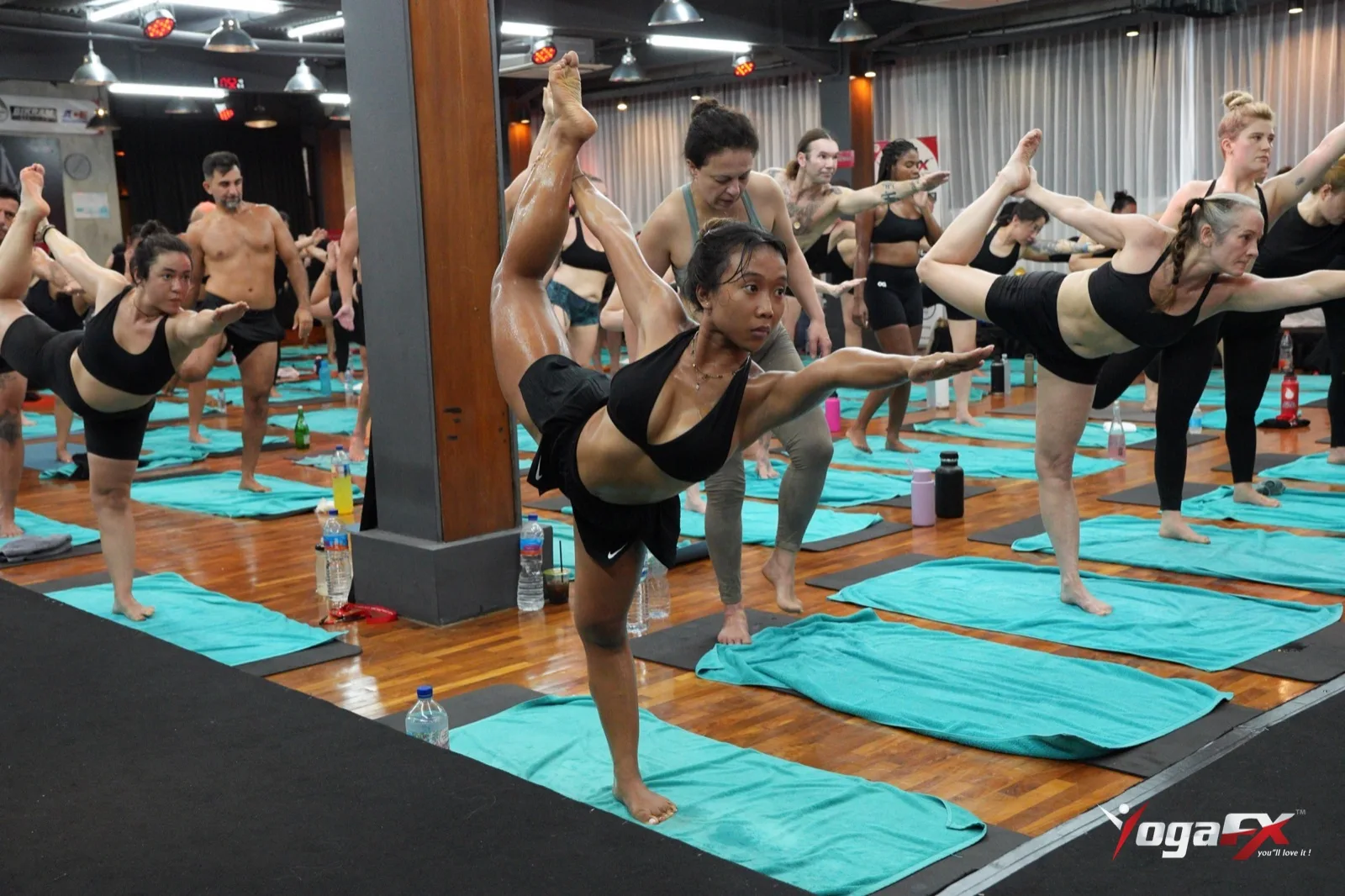
Because the sequence never changes, you can learn a lot about your own body from class to class. Perhaps you sweat sooner on a humid day, or after a poor night of sleep. Those patterns tell you about heat, hydration and effort. They tell you nothing about toxins.
The scale tells a similar story. A lower number after class is mostly fluid, and it comes back when you drink. So it is neither fat loss nor a cleanse. For a closer look at the energy side, our guide to how many calories a 26 and 2 class burns separates real effort from sweat.
What Does Sweating in Hot Yoga Do?
Sweat is still useful, so it deserves a fair hearing. For how the postures load your muscles, our guide on whether hot yoga is a good workout goes posture by posture. Sweat keeps your core temperature in a safe range while you work in the heat. The more fluid that evaporates, the more heat you shed. In a heated room, your sweat glands carry most of that load.
Sweat also costs you water and salt. Because of that, the useful question is not how many toxins left your body. It is how you replace what did leave. These habits help most people:
- Drink early. Start hydrating hours before class, not only when you walk in.
- Replace salt. After a very sweaty session, water alone may not be enough.
- Take the rest. Sitting out a posture is a skill, and it keeps you safe.
- Know the warning signs. Dizziness, nausea, confusion or a racing heart mean stop, cool down and tell your teacher.
How to Practise Hot Yoga Safely
Good habits matter more than any cleanse. Most of the advice below applies whether you are a first-timer or a teacher in training, and it keeps the focus on the practice itself.
Arrive rested and hydrated. Eat a light meal a few hours before class, not a heavy one. Bring a towel and a bottle of water, and place your mat away from the heater or the door where the air moves most.
Listen to your body more than to the room. Some days a posture will feel easy, and other days the same posture will demand a rest. Both are normal. A teacher who knows the method will expect you to pause, and will not measure your worth by how long you hold a pose.
What you do after class matters as well. For example, sip water slowly rather than gulping it, and eat something with a little salt if you sweated heavily. Give yourself a few quiet minutes to cool down before you drive or head back to work. Because your body has just done hard work in the heat, rest is part of the practice, not a reward for it.
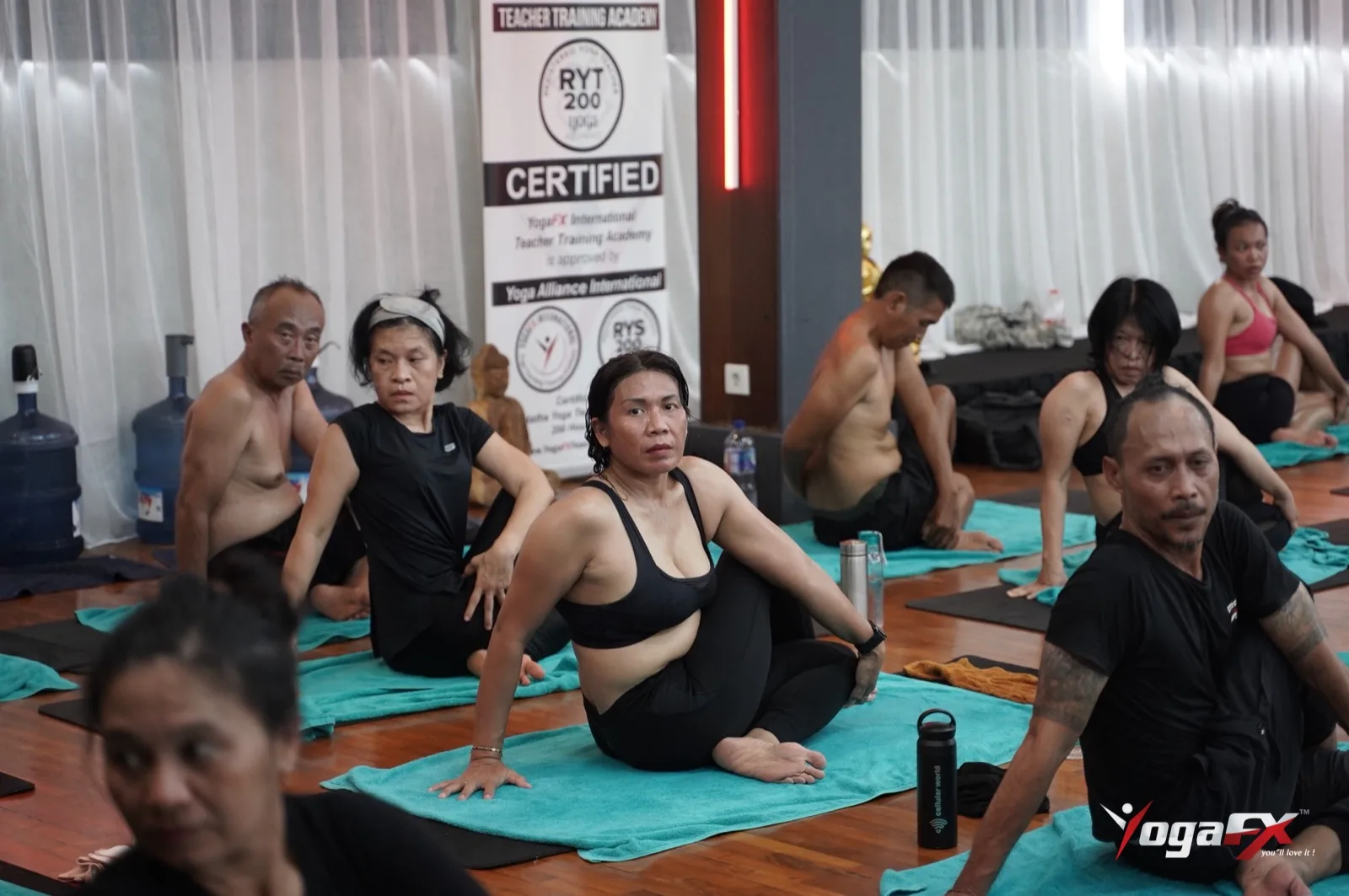
Ask your doctor before you start if you are pregnant, take medication that affects heart rate or fluid balance, or have a heart or kidney condition. This article is general education, not medical advice. Please consult a healthcare professional about your own health before you start or change a hot yoga routine.
What Students Say About the Work
Students in our trainings sweat a lot, and they tend to talk about the work rather than a cleanse. One trainee, Stacey, shared her thoughts after her January 2024 graduation ceremony in a YouTube review. Her words were about connection and growth: "I think you all inspire me to do more and better."
A student in a 2018 YouTube review of a Moscow class put the day this way: "It was by far the best class I've had in many years!" That is the kind of response a good class should earn, and it comes from the teaching and the effort, not from any claim about toxins.
What Ian Terry Teaches About Sweat
Mr. Ian Terry, E-RYT 500, has taught more than 12,000 hours of hot yoga. He trained from 2014 to 2019 with the founder of the Original Hot 26&2 method, and more than 1,500 graduates from over 80 countries have trained with YogaFX. The question does hot yoga sweat out toxins comes up often in training, and the answer our teachers give stays the same.
The answer is short, and students remember it. Teachers tend to say three things:
- Sweat cools you. So drink water and take your time.
- Your organs clean. Your kidneys and liver do the cleaning every day, class or no class.
- The good feeling is earned. You may feel great after class, and that comes from the work you just did.
Teachers in training learn to give that answer with evidence. If you want to teach the 26 and 2 method yourself, the next YogaFX intake runs from Sunday 24 January to Friday 29 January 2027, with the intensive held at Soham Wellness Center in Seminyak. The course includes Yoga Alliance RYT 200 certification.
For a longer look at the sweat research, our sister teacher-training site has a full article on the science of sweat.
FAQ
Does hot yoga sweat out toxins?
Not in the way marketing suggests. Your kidneys and liver already clear waste around the clock, and the sources we checked describe sweat as a minor route for that job. What hot yoga can offer is exercise, relaxation and a steady practice. Those benefits are real without any cleanse, and they do not depend on how much you sweat.
Why do I sweat so much in hot yoga?
You sweat because the room is warm and the class is hard work. Your sweat glands release fluid so evaporation can cool your skin. The hotter and more humid the room, the sooner and more heavily you sweat. Heavy sweat is a cooling response. It does not show that toxins are leaving your body.
Can hot yoga cause dehydration?
It can, because sweat carries water and salt out of your body. Drink water before, during and after class, and replace salt if you sweat heavily. Stop and rest if you feel dizzy, sick or faint. People with heart, kidney or blood pressure conditions should check with a doctor before they start.
Is hot yoga still worth doing if it does not detox?
Yes, for most people. The value of hot yoga comes from the practice, the teaching and the consistency of showing up. Sweat is simply how your body copes with the heat during that work. Judge your practice by how you move, breathe and feel over weeks, not by how much you drip on the mat.
What should I do if I feel unwell after a hot class?
Sit down in a cool place, sip water and, if needed, a drink with a little salt. Headache, nausea, dizziness or a racing heart are signs to stop, not signs of a detox. If symptoms continue or are severe, seek medical care. Please consult a healthcare professional about any symptoms you are worried about.
Still have questions? Message Mr. Ian and the YogaFX team on WhatsApp or through our contact page, and we'll answer them personally. If you would like to try a class first, ask about the free 1-Day Guest Pass at our Seminyak studio.