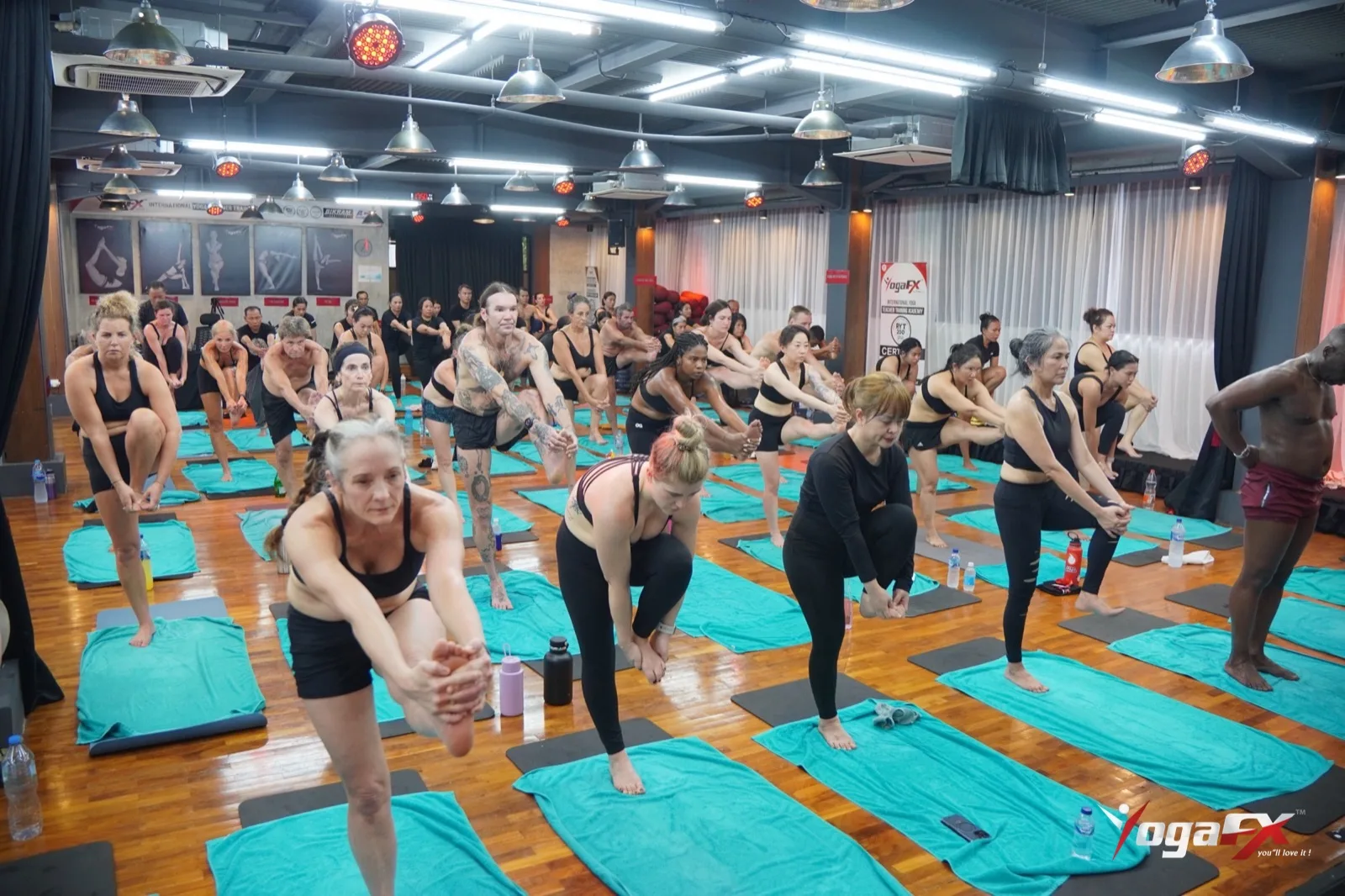
Proprioception exercises train the sense that tells you where your body is without looking. A 26 and 2 class is full of that work: 26 postures and 2 breathing exercises, in the same order, for 90 minutes at about 40°C. Here is where proprioception exercises show up in each part of the sequence, what the research says, and how to practise without overdoing it.
Table of Contents
What Proprioception Is and Why Heat Helps You Notice It
Proprioception is your body's ability to sense its own position and movements. The Cleveland Clinic describes it as an automatic process, one you rarely notice until a foot rolls on an uneven step or a hand misses a rail in the dark. Most of the time the signals run in the background, and that's exactly why they need training.
Proprioception exercises are different from stretching. A stretch asks how far a muscle can lengthen. A proprioception exercise asks whether you can tell where a joint is and correct it when it drifts. You can be very flexible and still wobble on one foot, which is why balance and range need separate attention in a good class.
Heat changes how easy those signals are to feel. Many students say their muscles loosen sooner in the room, so small corrections become easier to find. That doesn't make the heat a shortcut. It means the feedback from your feet, ankles and hips is clearer, so you can notice it and repeat it on the next posture.
Why repetition matters
Repetition turns proprioception exercises from a hunt into a habit. The 26 and 2 method is built on that repetition. The same postures return in the same order every class, so your body learns where it tends to drift. A pose that wobbled in week one often feels steadier by week six. The room hasn't got easier. You simply know what to look for, and proprioception exercises work best when you know what you're listening for.
Posture by Posture: Where the 26 and 2 Trains Proprioception
Proprioception isn't one posture. It runs through the whole sequence, but a few postures ask for it more directly than the rest. The table below names five of them, what each one asks of your sense of position, and where a student is most likely to feel the work.
| Posture | What it asks of your sense of position | Where to notice it |
|---|---|---|
| Tree (Vrksasana) | Hold one leg steady while the hips stack over the standing foot | The moment the standing foot starts to grip, shift or sway |
| Balancing Stick (Tuladandasana) | Keep the body level on one leg while the arms reach forward | Small sways at the hips and at the ankle of the standing leg |
| Eagle (Garudasana) | Wrap the limbs and keep the weight moving between the hips and the foot | Whether your weight sits on the outside or the inside of the standing foot |
| Standing Bow Pulling (Dandayamana-Dhanurasana) | Balance on one leg while the back leg lifts and the hip stays square | How far the lifted thigh pulls the hip off line |
| Standing Head to Knee (Dandayamana-Janushirasana) | Keep the standing knee soft while the torso folds forward | The position of the knee under load and the grip of the toes |
The table is a map, not a checklist. You won't feel all five skills at once. Some weeks the Tree teaches you about the ankle, and the next week the Balancing Stick shows you that your hips have been carrying the work all along. To practise that posture step by step, see how to hold Balancing Stick pose.
The Standing Series: Balance as a Repeatable Skill
The standing series is where most students first meet proprioception head on. When you lift one foot in Tree, the standing leg makes dozens of tiny adjustments in a few seconds. The work sits mostly in the ankle, the knee and the small muscles around the hip, and it happens whether you're paying attention or not.
Why standing balance is harder than it looks
Standing balance looks still from the outside. Inside the body it is anything but. Your ankle corrects, your hip adjusts and your eyes search for a point to hold, all within a second or two. Most of that happens below conscious thought, which is why a pose can feel steady one day and shaky the next.
Teachers often describe balance as a conversation between the foot and the floor. In a 26 and 2 class there's no music and no demonstration to lean on. The dialogue gives you the cues. Your body answers them. That's why a student who listens closely usually finds their balance sooner than one who only watches the person in front.
Three cues help most students in the standing series:
- Find one fixed point. Pick a spot on the wall or the room at eye level and keep your gaze there. Your eyes give the inner ear a stable reference, which makes the ankle's job easier.
- Grip with the standing foot, not the toes. Spread the weight across the ball and heel of the foot. Gripping only with the toes tends to pull the whole leg into a wobble.
- Breathe into the stillness. A slow exhale lowers the effort in the standing leg. Hold for the rhythm of the breath, then release.
These cues don't change the posture. They change where your attention goes, and proprioception responds to attention. Use them as a bridge into proprioception exercises at home too: the same three cues work with a chair for support or against a wall while you brush your teeth.
If you want more on how balance builds across the year, our guide on what 26 held postures do for balance and control goes deeper into the standing series.
Floor and Seated Postures: Awareness Without Standing
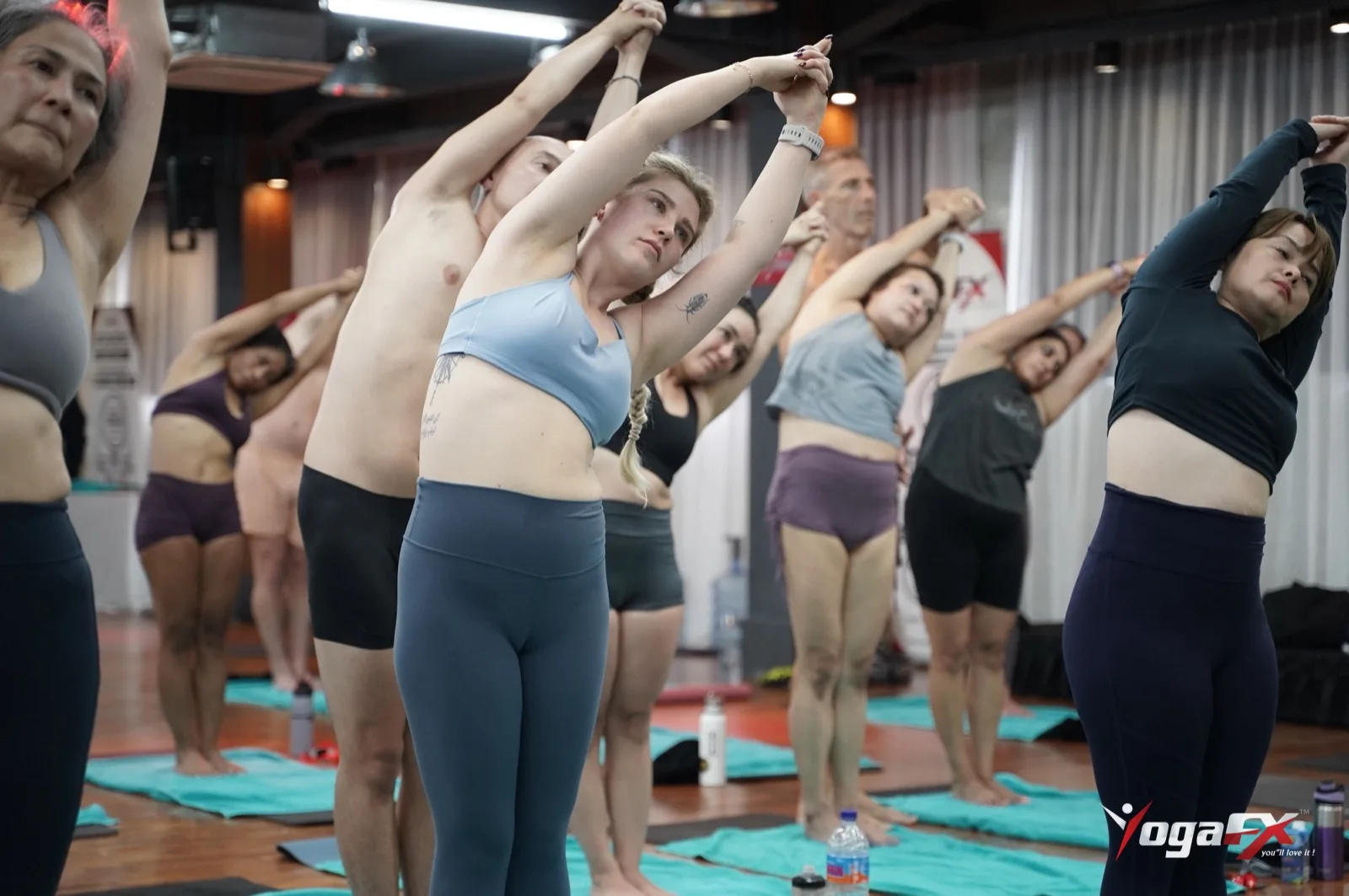
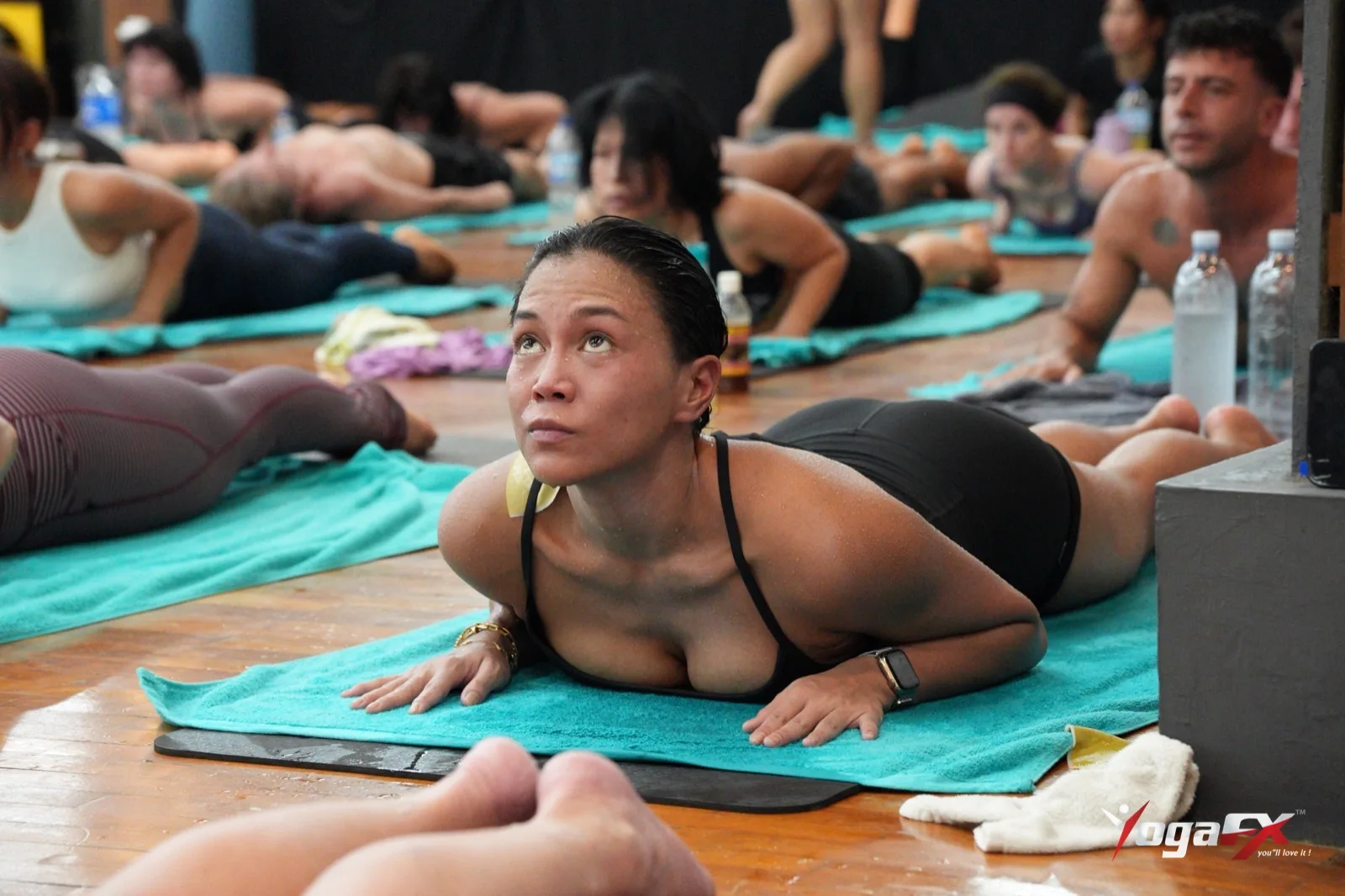
Not all proprioception happens on your feet. The floor series asks your hips, spine and knees to know where they are while gravity holds you down. That's a different kind of work, and many students find it harder than standing balance because there's nothing to push against.
In a seated forward fold, for example, the hamstrings, hips and lower back share the stretch. The useful question isn't how far you go. It's whether you can tell which part of the back is taking the load and let the rest soften. Students who learn to feel that difference tend to carry it back into the standing series.
Floor work also trains the way you move between positions. Getting up from the floor, or lowering into a posture slowly, relies on the same signals as standing balance. Our article on what the 26 postures ask of every muscle group maps these demands across the whole class.
You can tell you're making progress in the floor series when these signs show up:
- You notice the load before you move. You pause and feel where the weight lands, rather than dropping into the posture.
- Your breath stays even on the way down. The exhale carries you into the fold instead of forcing it.
- You can rise without grabbing the floor. Your hands guide, but your core and legs do the lifting.
What the Research Says About Proprioceptive Training
Most of the strongest evidence for proprioception exercises comes from sports medicine, not from yoga studios. A 2017 evidence-based review in the Journal of Athletic Training looked at proprioceptive training for ankle sprains. Its conclusion was that proprioceptive training programs were effective in reducing the incidence rates of ankle sprains in the athletic population, for athletes both with and without a history of sprains.
What the sprain evidence does and doesn't show
That's useful, but it isn't a promise about hot yoga. The programmes in that review were dedicated balance and proprioception training, not a 90-minute heated class.
So treat the finding as evidence for the principle. Repeated, attentive work on balance can change how the joints are protected. The 26 and 2 class applies that principle through its postures. It hasn't been tested as a sprain-prevention programme, and we don't claim it has.
The Cleveland Clinic makes a similar, more general point. It notes that physical therapists may be able to give you specific exercises to improve this sense, and that such exercises can also strengthen your sense of balance, including one-legged balance. That's the same skill the Tree and Balancing Stick ask for, practised in a different room.
This is general information, not medical advice. If you have an ankle, knee or back injury, speak to a healthcare professional or physiotherapist before you start balance work, and tell your teacher about it before class.
Proprioception in the 26 and 2 at a glance
How Mr. Ian Terry Teaches the Balance Work
Mr. Ian Terry, E-RYT 500 with more than 12,000 teaching hours, leads the teacher training at YogaFX in Bali. He trained for five years, from 2014 to 2019, with the founder of the Bikram Hot 26&2 method. He teaches the balance work as a series of small corrections rather than one correct shape, and that's the approach the training carries forward.
In the training, balance postures are taught as a skill to be heard as well as seen. Trainees learn to name where the weight sits in the foot, because a teacher who can describe that clearly can help a student find the same feeling. That's the part of the work a video can't show, and it's why proprioception exercises get more precise with a good teacher in the room.
What Trainees Say About Training in Bali
Students tend to describe the balance work less than the feeling of the group around them. Two reviews from YogaFX trainees show that, with first names only.
I join YogaFX Yoga Teacher Training in January, so excellent! I meet many friends and very much enjoy the training.
Prana, Google review, 2019
In his video review, Slamet describes a hard daily schedule and the support of the team, and says that the group could "do it together until finish" (transcript, lightly edited). Watch the full review below.
A Three-Week Practice Plan for Proprioception Exercises
You don't need a new routine to start. Add a few minutes of balance work to two or three regular classes a week, and build in three steps. Each step should feel challenging but never painful. If a joint hurts, stop and skip that step.
- Week one: eyes open. Stand near a wall and lift one foot for about 30 seconds on each side. Notice which part of the standing foot does the most work.
- Week two: eyes closed, briefly. Repeat the same hold with your eyes closed for about 10 seconds, still near the wall. Expect more sway, and let it teach you.
- Week three: bring it into class. In your next Tree, take one slow breath before you lift the foot and place your gaze on a fixed point.
Expect the first two weeks to feel clumsy. That's normal. Your nervous system is learning a new map of the feet and ankles, and clumsy practice is how the map gets drawn. Most students notice the first real change in steadiness after three to four weeks of regular, gentle work, though everyone's timing is different.
Keep the practice modest. Two or three short sessions a week are enough for most students, and rest days matter as much as the work. Proprioception exercises build slowly, so a steady routine beats a long session you can't repeat. If you notice pain, dizziness or swelling after balance work, stop and speak to a healthcare professional.
Where to Go Next
If you want to see how balance fits the rest of the method, start with our guide to hot yoga for athletes and the 26 and 2 postures that fill training gaps, which shows where proprioception exercises fit beside strength and cardio. Footballers meet the same single-leg demands in a different setting, which our piece on balancing stick and standing bow for footballers explains.
If the sense of position you're building starts to feel like something you'd like to teach, our guide on how to choose a yoga teacher training sets out the questions to ask any school before you commit. The next step after that is learning the dialogue, which is where proprioception meets teaching.
FAQ
Can proprioception exercises improve balance?
Research on proprioceptive and balance training suggests that repeated, attentive practice can improve balance and the sense of joint position, most clearly in people training for sport. Results depend on the person and the programme. Yoga isn't the same as a dedicated training programme, but the 26 and 2 standing series asks for the same skills, which is why many students notice steadier balance over time.
Which 26 and 2 postures train proprioception the most?
The standing series does most of the work. Tree, Balancing Stick, Eagle, Standing Bow Pulling and Standing Head to Knee each ask your ankle, knee and hip to keep track of position on one leg or under load. The floor series adds awareness of the hips and spine without standing, so both parts of the class contribute to proprioception exercises in their own way.
Is hot yoga safe if I have an ankle injury?
It depends on the injury, the stage of recovery and your own doctor's advice. Heat and balance work both carry risk for an unstable ankle, so speak to a healthcare professional or physiotherapist first. Tell your teacher about the injury before class, choose postures you can hold without pain, and never push through sharp or swelling pain.
How often should I practise proprioception exercises?
Two or three short sessions a week are enough for most people. Keep each session to about ten minutes of balance holds, and build gradually. Rest days help the nervous system adapt, so the gains come from regular, modest practice rather than long, exhausting sessions that leave you too tired to notice what your feet are doing.
Do I need good balance before I start the 26 and 2?
No. Balance is built in the room, one class at a time, and beginners are welcome. The standing postures are taught with cues that help you find your footing, and the same postures return every class so you can see your own progress. Arrive hydrated, eat lightly beforehand, and let your teacher know about any health condition so the class can be adjusted for you.
Still have questions? Message Mr. Ian and the YogaFX team on WhatsApp and we will answer them personally.