Hot yoga for athletes works best as a planned training day, not a stretch break. A 26 and 2 class runs 90 minutes at 40°C, so it asks for balance, hip and hamstring range, and steady breathing that most sports leave untrained. Book it on an easy day, start with one class, and drink early.
Table of Contents
Hot Yoga for Athletes: The Short Answer
Most athletes ask the same thing before a first heated class: will this help my sport, or will it cost me a session? The honest answer depends on where you put it. Hot yoga for athletes is not a quick stretch. It is 90 minutes of standing, balancing and bending in a warm room, so your body works the whole time.
Because of that, treat it as a third kind of day. It is not a hard session, and it is not a full rest day. It sits in the middle, and it pays off when you plan around it. That holds whether you play five-a-side on Tuesdays, run a half marathon in spring, or lift four days a week.
Here is the rule of thumb we suggest for hot yoga for athletes who are new to the 26 and 2:
- One class a week first. Give your body three or four weeks before you add a second one. That's the safest start.
- Easy days only. Never place a heated class the day before a match, a race or a heavy lifting day.
- Drink early. Start hydrating the day before, and keep water beside your mat.
- Leave when the room stops helping. Dizziness, a pounding headache or chills mean you step out and cool down.
That plan fits in four lines, and the rest of this guide explains why each line matters.
This guide to hot yoga for athletes maps the 26 postures to the gaps athletes leave open, shows where a class fits in a real training week, and says plainly what the research can and cannot tell you. As the hub of our athlete series, it also points to separate guides for runners, footballers, lifters and recovery days.
What a 26 and 2 Class Asks of an Athlete
The 26 and 2 method is a fixed sequence of 26 postures and 2 breathing exercises. Every class lasts 90 minutes, and the room sits at 40°C with 40% humidity. The warmth and humidity are part of the design of the room. For an athlete, the fixed order is useful. You know what is coming, so you can measure how each posture feels from one week to the next. That makes hot yoga for athletes easier to track than most cross-training.
Mr. Ian Terry, E-RYT 500 with more than 12,000 teaching hours, teaches this class from a spoken script. There's no music and no demonstration. Instead, the teacher's voice tells you what to do, and you set your own effort. That suits athletes who like clear cues and who'd rather beat last week's version of themselves than the person on the next mat.
Notice what is missing from those numbers. There are no weights, no reps and no timed intervals. The challenge is staying calm, balanced and precise while the room is hot. Hot yoga for athletes is therefore as much a skills class as a fitness class. Searches for Bikram yoga for athletes lead to the same practice, now taught as Original Hot 26&2 Yoga.
The Training Gaps the 26 Postures Reach
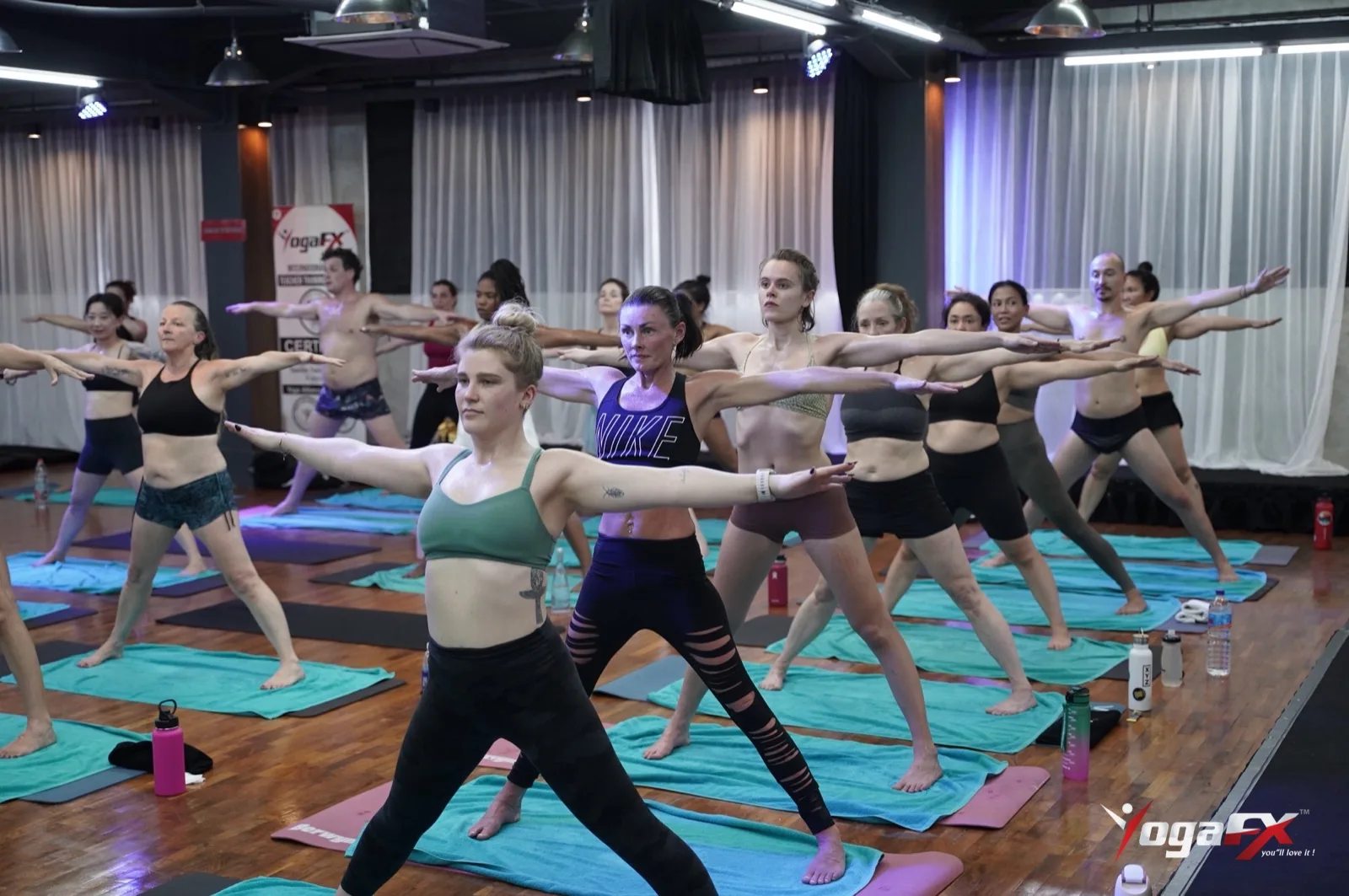
Most sports train a narrow set of movements very hard. Runners repeat one stride. Lifters repeat a few patterns under load. Team players sprint, cut and kick. Over time, the parts of the body that sport rarely asks for can fall behind, and a class with 26 different postures visits many of them in one sitting. That is why hot yoga for athletes starts from gaps, not from fitness.
The table below groups the postures by what they ask of the body. It describes the work in each posture. It does not promise a result, and a later section explains why.
| Posture group | 26 and 2 postures | What the posture asks of the body | Who tends to feel it first |
|---|---|---|---|
| Hips and hamstrings | Triangle, Standing Separate Leg Stretching, Standing Head to Knee, Head to Knee with Stretching | Long holds with straight legs and open hips | Runners, cyclists, footballers |
| Single-leg balance | Tree, Toe Stand, Standing Head to Knee, Eagle | Staying steady on one leg while the room is warm and the heart rate is up | Court and field players, climbers |
| Spine and back of the body | Cobra, Locust, Full Locust, Bow | Lifting the chest and legs against gravity through the back | Lifters, rowers, swimmers |
| Quads and hip flexors | Standing Bow Pulling, Fixed Firm, Camel | Opening the front of the thigh and the hips | Runners, cyclists, sprinters |
| Shoulders and upper back | Eagle, Camel, Half Moon | Reaching, wrapping and lifting the arms overhead | Swimmers, throwers, CrossFit athletes |
| Breath and calm | Standing Deep Breathing, Blowing in Firm, Dead Body | Slow breathing, then forceful exhaling, then stillness | Every athlete |
Hot Yoga for Athletes: Hips and Hamstrings
Tight hips and hamstrings are the most common complaint we hear from athletes. In Standing Head to Knee (Dandayamana-Janushirasana), you balance on one leg, hold the other foot, straighten that leg and fold forward. The pose asks for hamstring length and for steadiness at the same time.
Balancing Stick (Tuladandasana) works from the other direction. You hinge forward on one leg while the other leg and your arms reach out in a straight line. Many cyclists and runners find it humbling, because the standing leg has to stay strong while the back of the leg lengthens.
Single-Leg Balance for Athletes
Sport is mostly single-leg work. You push off one foot, land on the other and change direction. Yet few training plans practise standing still on one leg for long. Tree and Toe Stand ask for exactly that, and the heat makes the task more honest. Your heart rate is up, your hands are slippery and the pose still has to be calm.
Toe Stand (Padangustasana) in particular asks you to lower slowly onto the heel of a balancing foot. It is slow and plain, and sprinters often find it harder than a hard interval.
The Back of the Body
Lifters, rowers and swimmers use the back all week, but usually in a bent or braced position. In the floor series, Cobra, Locust and Bow ask you to lift the chest or the legs while lying face down. The work is short and repeated, with rest between sets. If you lift heavy, expect the effort to land in the lower back and glutes, and keep the set short.
Hot Yoga for Athletes: Quads and Hip Flexors
Anyone who runs, cycles or sits at a desk all day carries tight hip flexors. Standing Bow Pulling (Dandayamana-Dhanurasana) opens the front of the thigh and the hip of the lifted leg while the standing leg balances. Fixed Firm and Camel then work the same area from the floor and from your knees.
Runners can go deeper on this in our guide to hot yoga for runners, which follows the stride through each posture.
Breath and Calm
The class opens with Standing Deep Breathing and ends with a second exercise, Blowing in Firm. Athletes who only breathe hard during effort sometimes find slow breathing the hardest part of the 90 minutes. Learning to settle your breath while the room is hot is a skill, and it carries into racing, match play and the minutes before a heavy lift.
Where Hot Yoga for Athletes Fits in a Training Week
The CDC says adults need at least 150 minutes of moderate-intensity physical activity a week, plus at least 2 days of muscle-strengthening activity (CDC, Adult Activity: An Overview). Serious athletes train well beyond that baseline. So the question is not whether you move enough. It is whether a heated class helps or hurts the sessions that matter most to you.
Hot Yoga Across the Season
Start with the shape of your week. Most sessions are easy, one or two are hard, and one is long or competitive. Slot a class into the easy part, and the hard parts stay hard. Here is how the same class can change across a season:
- Off-season. The best time to try a second weekly class, because there is no match or race to protect.
- Pre-season, while load builds. One class on the easiest day of the week, in place of a recovery walk, not in place of a session.
- In-season, with a match or race every week. One class early in the week, and never within two days of competition.
- Taper or race week. Skip it, and come back the week after.
How Often to Go
In every phase, heat appears once a week at most. For many athletes, one class of hot yoga for athletes is enough to learn whether it helps.
If your legs feel looser the next morning and your next session feels normal, add a second class on another easy day. If you feel flat instead, don't add more heat. Hot yoga for athletes should leave you ready for the next session, not drained before it.
More Guides by Sport
For a different view of the same question, laid out around the training calendar, see this companion guide to fitting heated classes around hard sessions from our online teacher training site.
Your sport changes the details. Lifters and WOD athletes can read yoga for CrossFitters, team players will find a posture plan in yoga for footballers, and the day after a hard session is covered in yoga for athletes' recovery.
Heat Safety for Hot Yoga for Athletes in a 40°C Room
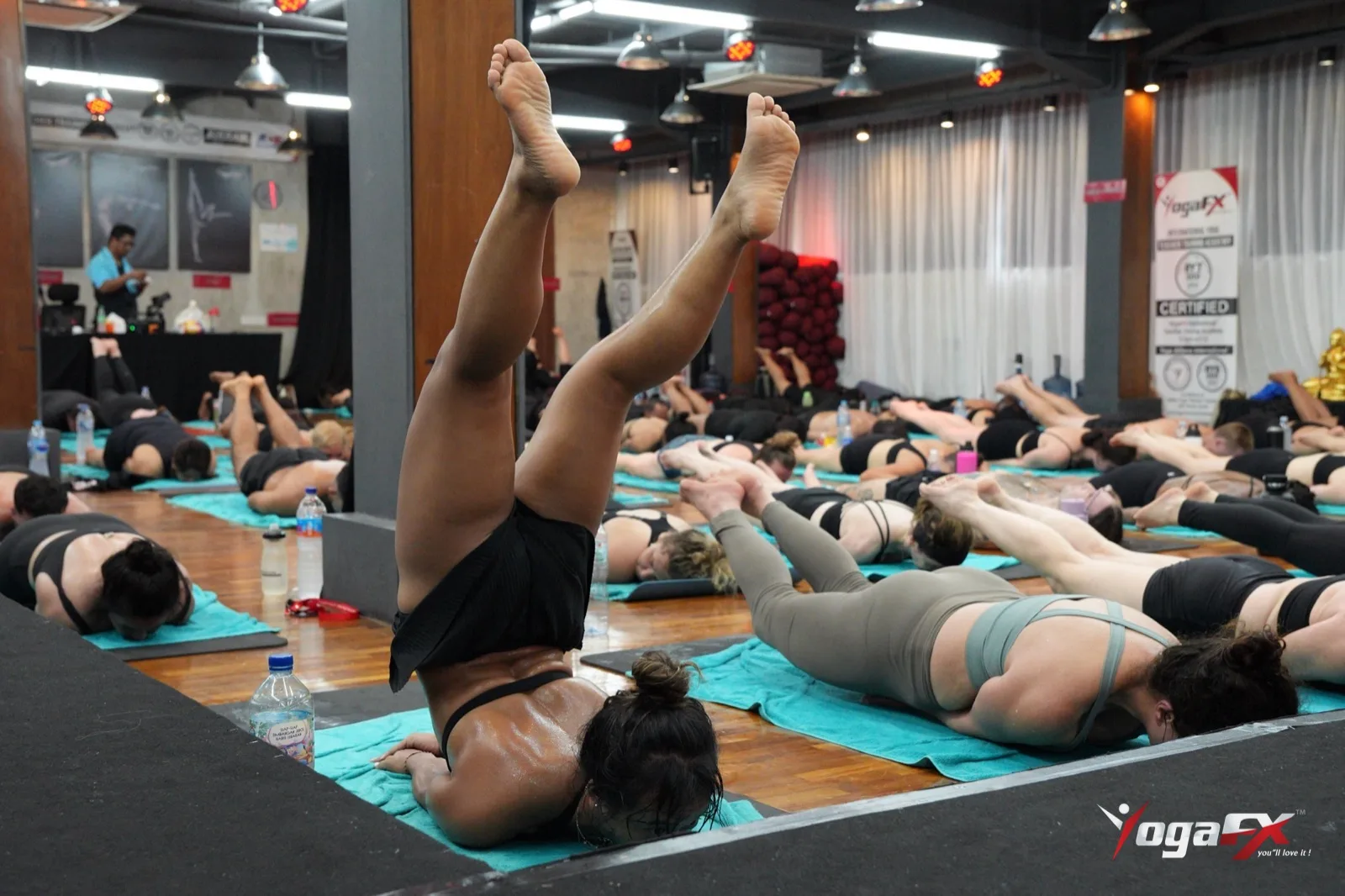
Athletes are used to pushing through discomfort, and that habit is the main risk in a hot room. Hot yoga for athletes needs a different instinct: back off early.
Mayo Clinic notes that heat exhaustion can follow exposure to high temperatures, particularly with high humidity and strenuous physical activity, and that dehydration lessens the body's ability to sweat (Mayo Clinic, Heat exhaustion). A 90-minute class at 40°C and 40% humidity is exactly that mix.
The same page says it can take several weeks for your body to adjust to hot weather. That fits our advice to start with one class a week. Treat your first few classes as the adjustment period, keep the effort modest and rest in the breaks between postures.
The NHS draws a clear line between two conditions. Heat exhaustion does not usually need emergency medical help if you can cool down within 30 minutes, while heatstroke is a medical emergency that needs immediate help (NHS, Heat exhaustion and heatstroke). So the practical habits are simple:
- Drink before, during and after class. Mayo Clinic says staying hydrated helps your body sweat and keep its temperature from rising too high.
- Step out early. If you feel unwell, leave the postures, sit near the door and cool down. Nobody in the room will mind.
- Tell the teacher you are new. The class is the same for everyone, but the teacher can tell you where to rest.
- Speak to a healthcare professional first if you have a heart condition, are pregnant or take regular medication.
This article is general information, not medical advice. Consult a healthcare professional before you start hot yoga, especially if you have a medical condition.
What the Evidence Does and Does Not Say
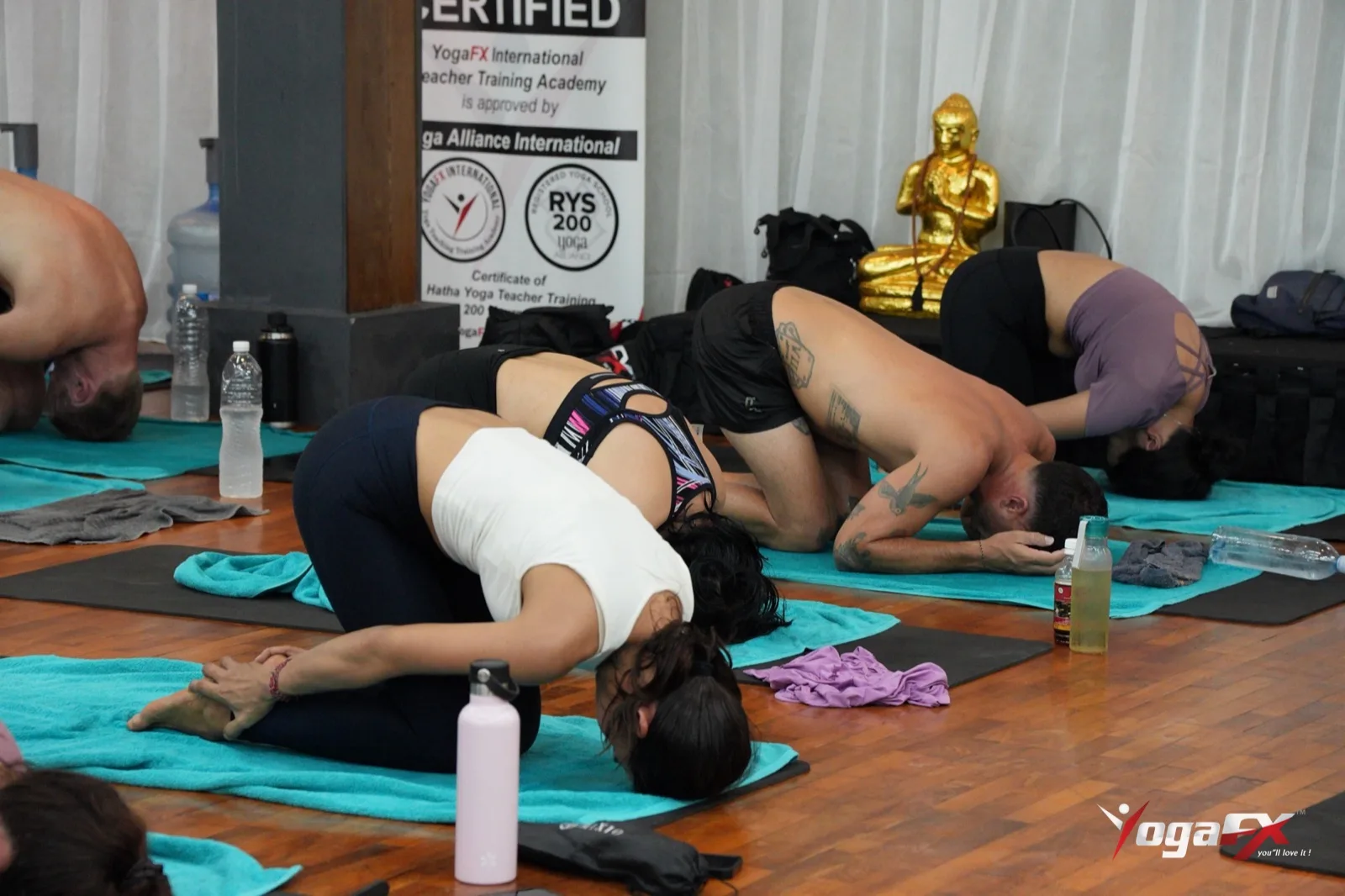
Search results for hot yoga for athletes are full of confident promises about performance and recovery. We have not found a trial we could read in full that tests heated 26 and 2 classes against sport performance in trained athletes.
So we don't promise faster times or bigger lifts, and you should be wary of anyone who does. Any claim about hot yoga for athletes that skips this limit deserves a second look.
What we can say is practical and limited. The postures ask for specific ranges and skills, and the table above shows which ones. The heat guidance from Mayo Clinic and the NHS applies to any hot room. The CDC's weekly targets are a floor for adults, not a ceiling for athletes. Beyond that, you are the experiment.
A fixed sequence makes the experiment fair, because the class does not change from week to week. Keep a simple log for four weeks and you will have your own data, which beats any headline:
- The next morning: how your hips, hamstrings and lower back feel.
- Your next hard session: whether it felt normal, better or flat.
- Your sleep and appetite: a poor night after a class is a sign to cut the effort.
- Your hydration: weigh yourself before and after one class, or simply note how thirsty you were.
What Students Say About the Intensity
Athletes like hard things, so the best test is what trainees say about a tough week. These reviews come from YogaFX students, shown with first names only. They are not athlete reviews, but they show how hard the 26 and 2 feels, which is the point of hot yoga for athletes.
The training was tough but so rewarding and we got to meet and become friends with some incredible people from all parts of the world.
Samantha, Google review, 2025
Cherry, a trainee in a 2019 video review, says she never knew she could teach until the training showed her she could, and she calls the training amazing (paraphrased from her video, which is embedded below).
Anne, in a 2025 video review, calls the experience quite life-changing for me, and says she loves her life now.
From Athlete to 26 and 2 Teacher
Athletes who enjoy hot yoga for athletes as training often ask about teaching it. YogaFX runs the Bikram Hot 26&2 Yoga Teacher Training MasterClass, a six-day hybrid course with an online pre-course and an intensive in Bali. Graduates earn a Yoga Alliance RYT 200-Hour certificate and the Bikram Hot 26&2 200-Hour International Yoga Certification.
Mr. Ian Terry (E-RYT 500) trained for five years, from 2014 to 2019, with the founder of the method. Since YogaFX began in 2017, more than 1,500 graduates from over 80 countries have trained with the academy. The next intensive runs with check-in on Sunday 24 January 2027 and check-out on Friday 29 January 2027.
You can also try the class first. Our studios in Seminyak and Canggu are open from 06:00 to 22:00 every day. For the full picture of the course, read what the original hot yoga teacher training covers.
FAQ
Is hot yoga good for athletes?
It can be, when you treat it as a planned easy-day session. A 26 and 2 class works balance, hip range and breathing for 90 minutes in a 40°C room. We cannot promise faster times, so start with one class a week and judge the effect on your own training.
Is hot yoga good for runners?
Many runners enjoy it because the postures reach the hips, hamstrings and the front of the thigh. Take it on an easy day, never before a race or long run, and drink early. Our dedicated guide to hot yoga for runners shows which postures to watch.
What are the benefits of hot yoga for athletes?
The postures ask for single-leg balance, long holds through the hips and spine, and slow breathing, which many training plans skip. We don't promise performance gains. Test the benefits of hot yoga for athletes yourself, using a simple four-week log of how you feel and train.
How often should an athlete do hot yoga?
Start with one class a week on an easy day and give your body three or four weeks to adjust. Mayo Clinic notes the body can take several weeks to adjust to heat. Add a second class only if your next hard session still feels normal.
Is hot yoga safe for athletes?
It suits many healthy adults when approached sensibly, but heat adds real risk. Drink before, during and after class, step out if you feel unwell, and speak to a healthcare professional first if you have a medical condition. The NHS treats heatstroke as a medical emergency.
Still have questions? Message Mr. Ian and the YogaFX team on WhatsApp and we will answer them personally.