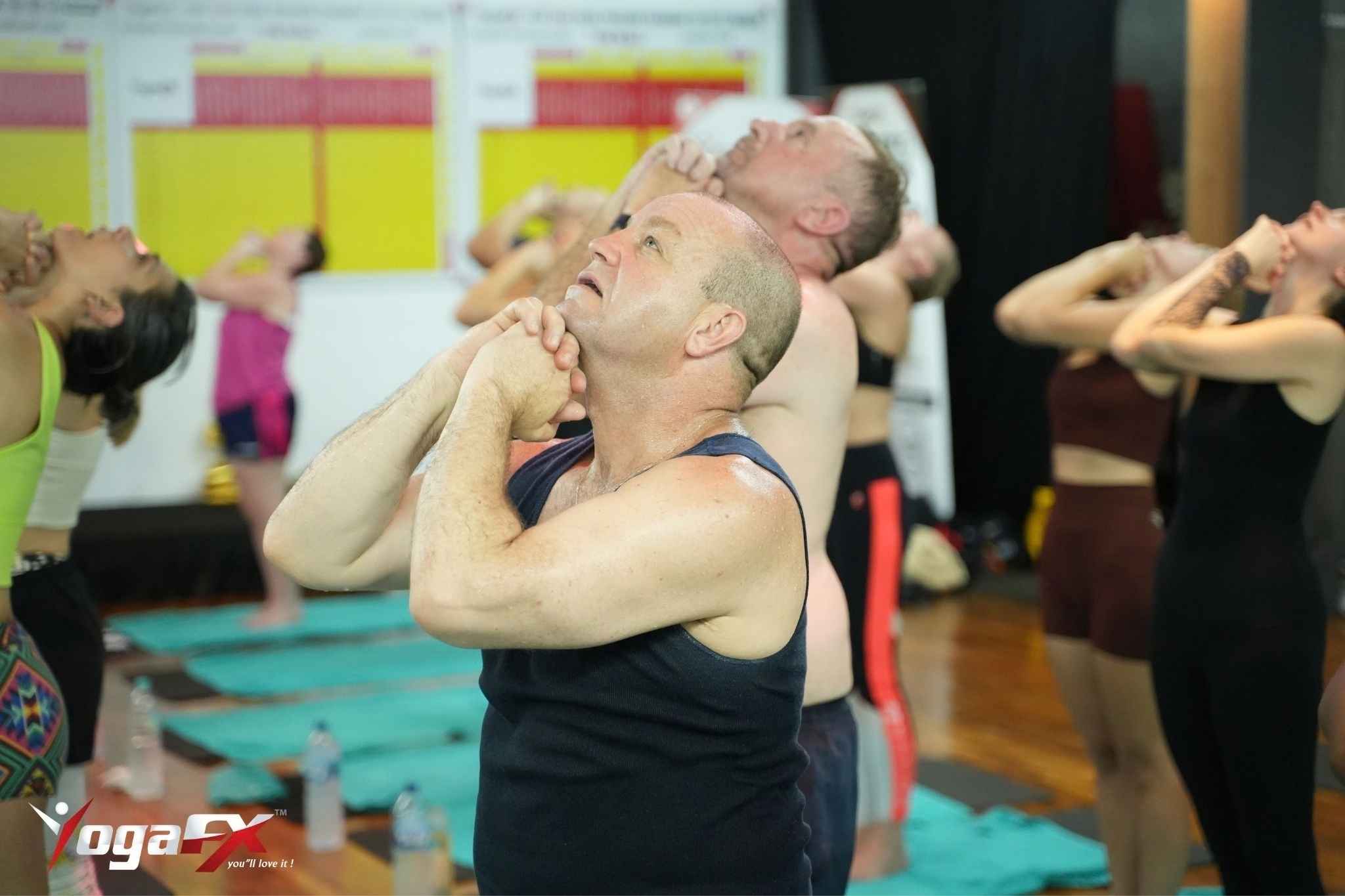
Yoga for CrossFitters works best as a partner to the WOD, not a rival. CrossFit trains short, explosive power. Bikram 26&2 yoga trains 90 minutes of heat tolerance, balance, mobility and calm breathing under stress. So the honest answer to "Bikram yoga vs CrossFit" is that they are hard in different ways, and most athletes gain the most by doing both.
Table of Contents
This guide is for the athlete who lifts, rows and burpees four days a week. Maybe you keep hearing that hot yoga would fix your squat. So we compare the two side by side, show what the 26 postures ask of a strong body, and give you a weekly plan for yoga for CrossFitters.
The coaching perspective comes from Mr. Ian Terry, E-RYT 500, founder of YogaFX. He has taught more than 12,000 hours of the method and trained over 1,500 teachers from more than 80 countries.
Yoga for CrossFitters: Bikram Yoga vs CrossFit at a Glance
Before deciding anything, it helps to see the two formats next to each other. The table below compares a traditional 26 and 2 class with a typical CrossFit session. CrossFit boxes vary a lot, so treat that column as a common pattern rather than a fixed rule.
| Factor | Bikram 26&2 yoga | CrossFit |
|---|---|---|
| Session length | 90 minutes, every class | Usually about an hour, with a short, intense workout inside it |
| Room | Around 40°C (105°F) and 40% humidity | Normal gym temperature |
| Structure | The same 26 postures and 2 breathing exercises in the same order | A different Workout of the Day (WOD) most days |
| Equipment | A mat and a towel | Barbells, kettlebells, rowers, rigs and boxes |
| Main stimulus | Isometric holds, balance, flexibility, heat and breath control | Power, strength and high-intensity conditioning |
| Pace | Steady, with short rests between sets | Fast, often against the clock |
| Main injury risks | Overstretching and heat stress | Load, fatigue and technique breakdown at speed |
The key line is structure. CrossFit is built on constant variety. The 26 and 2 sequence is built on never changing. That contrast is exactly why yoga for CrossFitters works so well: one practice keeps surprising the body, and the other gives it a fixed benchmark you can measure against every week.
Which Is Harder? Two Different Kinds of Hard
People ask this on forums all the time: is a 90-minute Bikram class harder than an hour of CrossFit? It depends on what "hard" means to you.
A CrossFit workout is hard the way a sprint is hard. Your heart rate spikes, your muscles burn, and you are often flat on the floor at the end of a ten-minute piece. But then it is over, and you recover while you put the plates away.
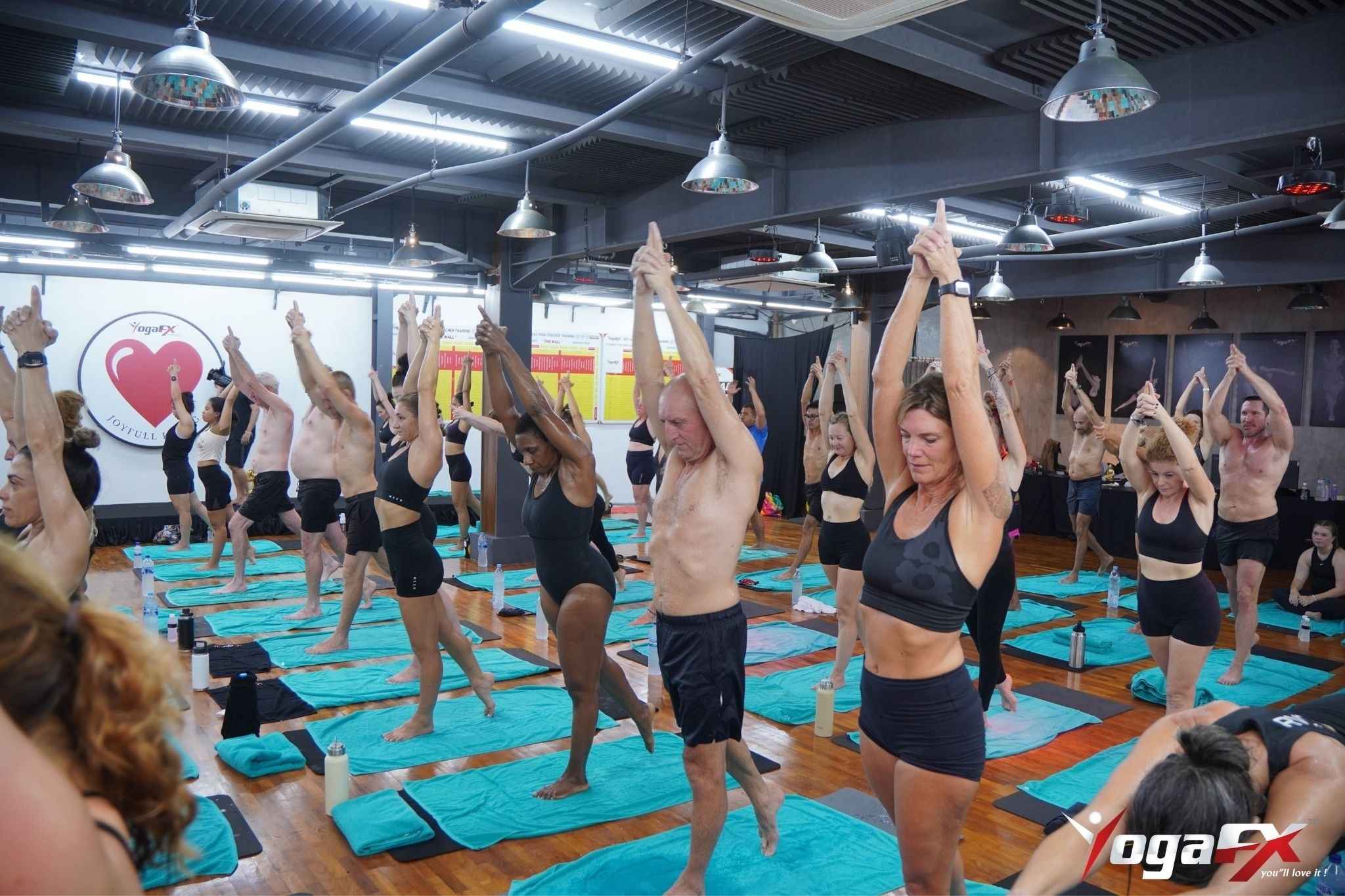
A 26 and 2 class is hard the way a long climb is hard. Nothing is explosive. Instead, you hold each posture in serious heat, twice, for 90 minutes, and there is no music or chatter to distract you. Many strong athletes are surprised by how humbling their first class feels. In fact, the hardest part is often staying in the room, not the postures themselves.
Here is how the difficulty usually lands for a CrossFit athlete in their first month:
- Heat, not muscle, is the limiter. Your legs can handle Awkward Pose. Your cooling system takes a few weeks to adapt.
- Balance exposes small weaknesses. Standing on one leg for a full set shows ankle and hip control that a barbell often hides.
- Stillness is a new skill. Lying still in Savasana between floor postures is harder for type-A athletes than any burpee.
- Ego has to step aside. A flexible beginner may go deeper than you on day one, and that is normal.
If you want a fuller picture of what the first ten classes feel like, our guide on whether 26 and 2 yoga is hard walks through it posture by posture.
"It's Just Stretching": What 26&2 Actually Asks of a Strong Body
The most common doubt about yoga for CrossFitters is that it is only stretching. That belief usually lasts until Awkward Pose. The 26 and 2 sequence loads the body in ways a box workout rarely does, because the effort comes from long isometric holds rather than reps.
Isometric strength in the legs and back
Awkward Pose is essentially a long, slow chair squat on your toes. The spine strengthening series (Cobra, Locust, Full Locust and Bow) works the whole posterior chain with no weight at all. That is why an eight-week study by Tracy and Hart (2013) measured better deadlift strength in people who practised the sequence, alongside gains in lower back, hamstring and shoulder flexibility.
Single-leg balance and stability
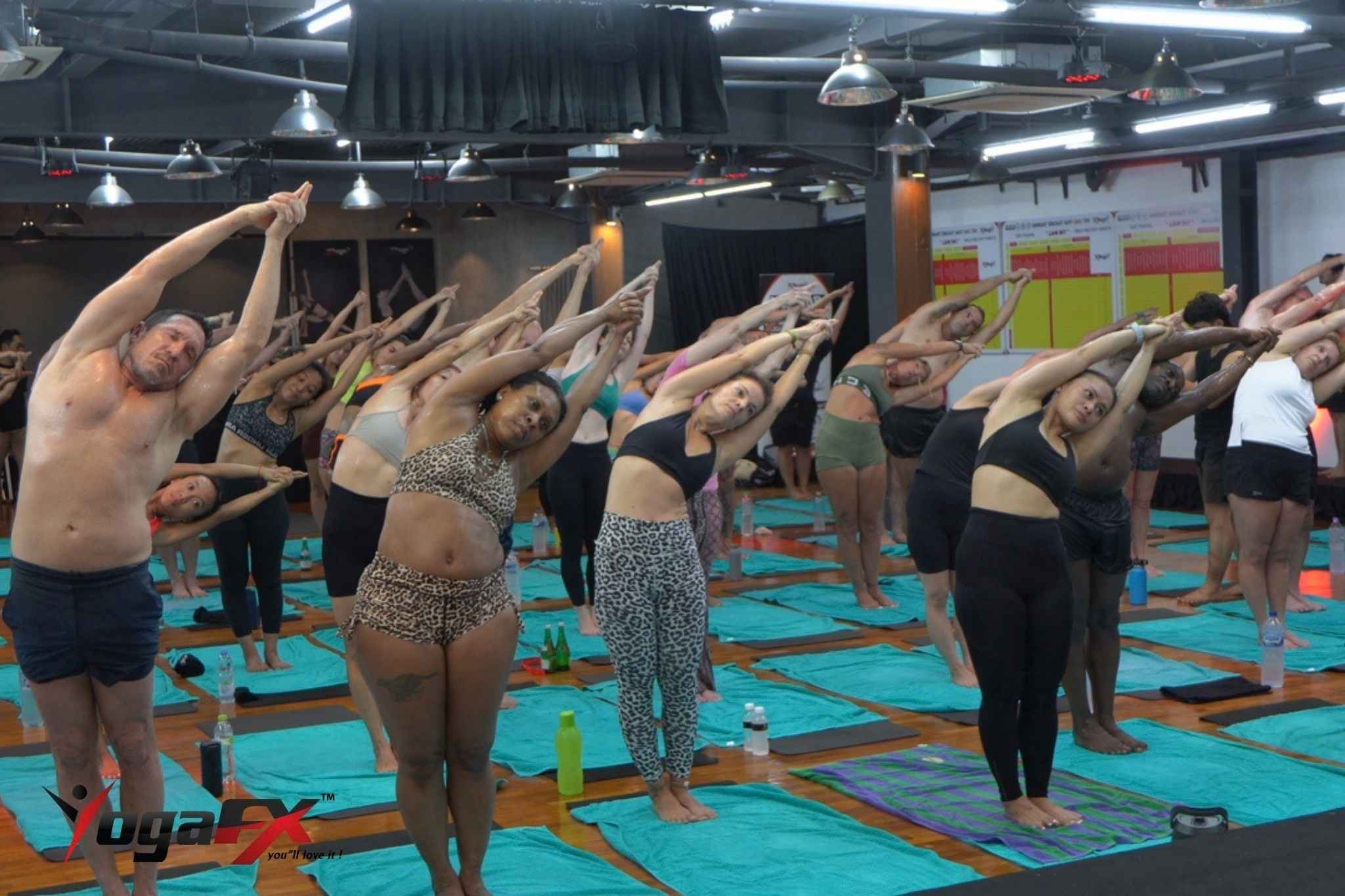
Three postures in the middle of the standing series are single-leg balances: Standing Head to Knee, Standing Bow Pulling and Balancing Stick. Each one demands a locked standing knee, a stable hip and quiet ankles. For an athlete who lands box jumps and pistol squats, that control transfers directly.
What it will not build
Honesty matters here. The 26 and 2 sequence will not replace barbell training. There is very little upper-body pushing or pulling, no maximal loading, and no explosive hip extension. So treat yoga for CrossFitters as a complement to your strength work, never a substitute for it.
Is Bikram Yoga Cardio? Heart Rate, Heat and Calories
Yes, partly. In a lab study of real 90-minute classes, Porcari and colleagues (2014) recorded heart rates in the moderate-to-vigorous range and average energy use of about 333 calories for women and 460 for men. That is roughly a brisk walk of the same length.
However, part of that raised heart rate is the heat, not the work. Your heart pumps harder to move blood to the skin for cooling. So a hot yoga class is real aerobic exercise, but it is not the same stimulus as intervals on a rower.
For a CrossFit athlete, that is good news. You already get plenty of high-intensity conditioning. What you usually lack is long, easy time where your breathing stays controlled. That gap is exactly what yoga for CrossFitters should fill.
Weight is the other common question. Much of the scale drop after class is sweat, which returns as soon as you rehydrate. Our deep dive on how many calories 26 and 2 yoga burns explains what the research measured and what it did not.
Why the Fixed Sequence Makes Yoga for CrossFitters Work
Most yoga for CrossFitters advice online is a random list of hip openers. The 26 and 2 method offers something different: the same 26 postures every single class. For an athlete, that turns yoga into a test you can retest.
For example, think about how you track a back squat. You load the same lift, week after week, and watch the number move. The fixed sequence does the same thing for mobility. If your forehead gets closer to your knee in Standing Head to Knee, you know it changed. Nothing else in the class moved, so the progress is real.
Mr. Ian often tells athletes the same thing in his own words. The sequence is your mirror. It shows you exactly where you are tight today, without a coach having to guess. That is the real value of yoga for CrossFitters: honest feedback, every class.
Matching postures to CrossFit movements
Here is where the sequence lines up with the lifts and skills most CrossFit athletes care about:
| CrossFit need | 26&2 postures that train it | Why it helps |
|---|---|---|
| Deep squat and wall balls | Awkward Pose, Fixed Firm, Toe Stand | Ankle, knee and hip range under load |
| Deadlifts and cleans | Hands to Feet, Standing Separate Leg Stretching, Locust | Hamstring length and posterior chain strength |
| Overhead squat and snatch | Half Moon, Standing Bow Pulling, Camel | Shoulder and thoracic opening with a strong trunk |
| Box jumps and pistols | Standing Head to Knee, Balancing Stick, Tree | Single-leg stability and ankle control |
| Breathing under fatigue | Standing Deep Breathing (Pranayama), Blowing in Firm (Kapalbhati) | Controlled breathing at a high heart rate |
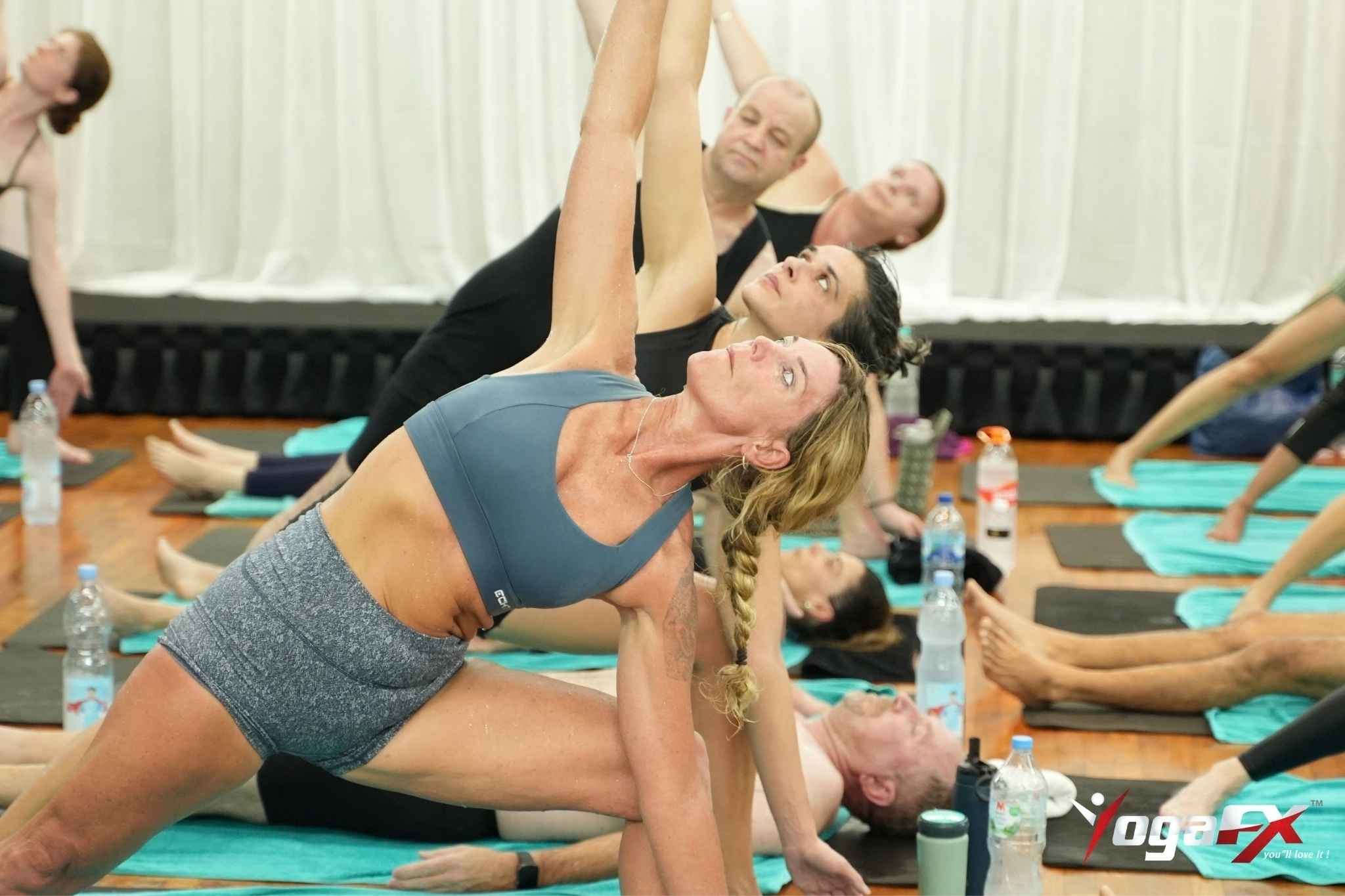
Research also backs the broad pattern. A 2025 systematic review by Willmott et al., covering 43 studies and 942 participants, reported gains in flexibility and balance from Bikram-style hot yoga. Those are the two qualities most box athletes say they neglect.
Using Hot Yoga for CrossFit Recovery
Yoga for CrossFit recovery is one of the most searched angles, and it needs a careful answer. A 26 and 2 class is not passive recovery. It is a 90-minute session in serious heat. So it fits best as active recovery on a lighter day, not as a cool-down after a brutal WOD.
That said, many athletes find the slow pace helps their body and mind reset. That is because breath control is a big part of it. Hui et al. (2022) reported lower state anxiety after hot yoga, which matches what students describe after class: a calmer head and better sleep.
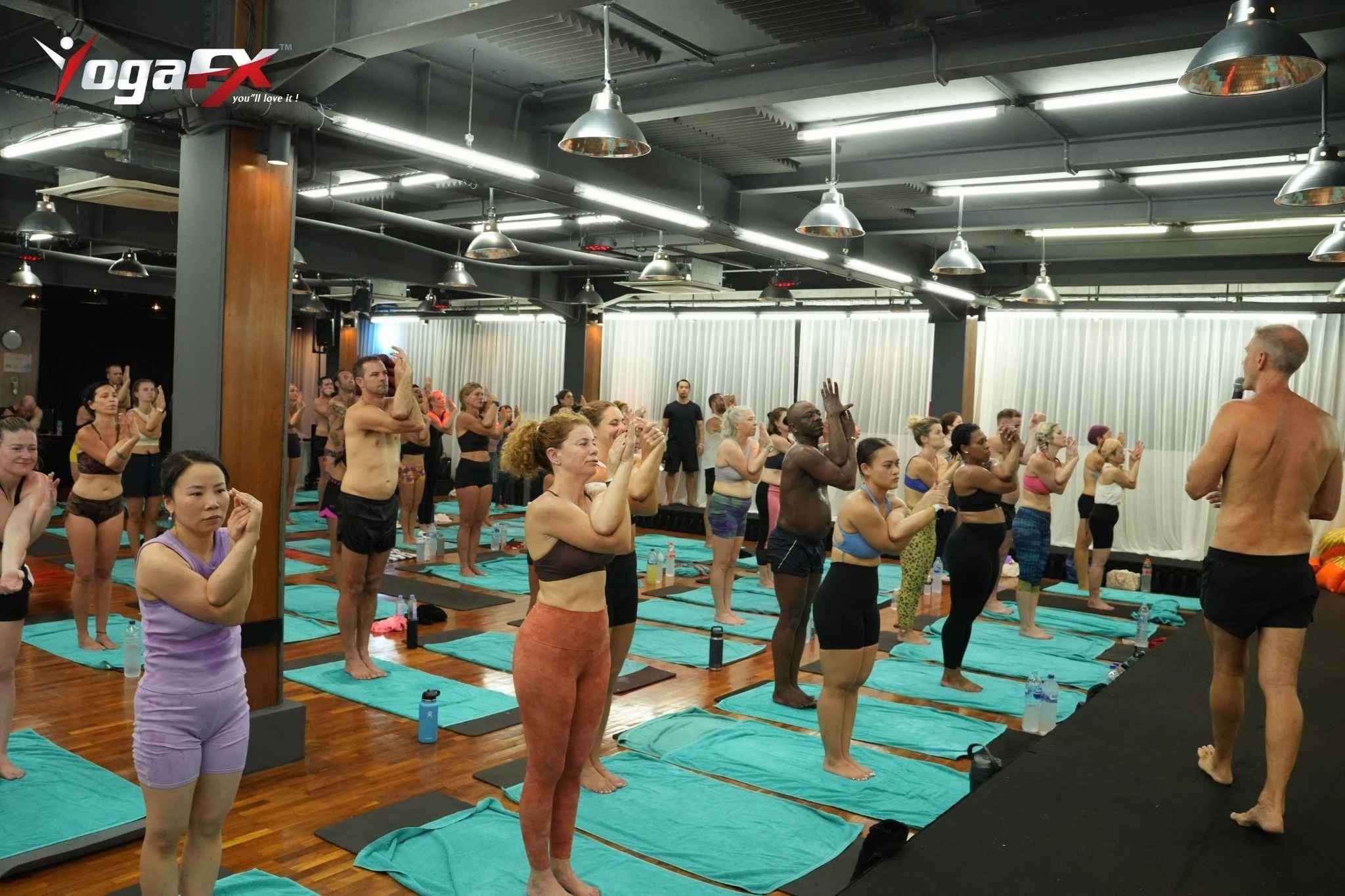
Use these rules so yoga for CrossFitters helps your recovery instead of stealing from it:
- Hydrate the day before. Drinking a litre right before class is too late. Add electrolytes after heavy sweat sessions.
- Skip the heat after a max-effort day. If you hit a heavy lift or a long chipper, take a true rest day instead.
- Work at 70% depth. Warm muscles can move further than joints like. Stay short of your end range for the first month.
- Rest whenever you need to. Sitting down for a set is allowed. Leaving the room in a panic is what you want to avoid.
How to Combine Them: A Sample Weekly Schedule
The best yoga for CrossFitters plan is the one you can repeat for eight weeks. Most research on the method used regular practice over about two months, and most students notice change with two classes a week. Here are two templates that fit around a normal box schedule.
| Day | Plan A: 4 WODs + 2 yoga | Plan B: 3 WODs + 3 yoga |
|---|---|---|
| Monday | CrossFit (heavy strength) | CrossFit |
| Tuesday | CrossFit (conditioning) | 26 and 2 class |
| Wednesday | 26 and 2 class | CrossFit |
| Thursday | CrossFit | 26 and 2 class |
| Friday | CrossFit (lighter) | CrossFit |
| Saturday | 26 and 2 class | 26 and 2 class |
| Sunday | Full rest | Full rest |
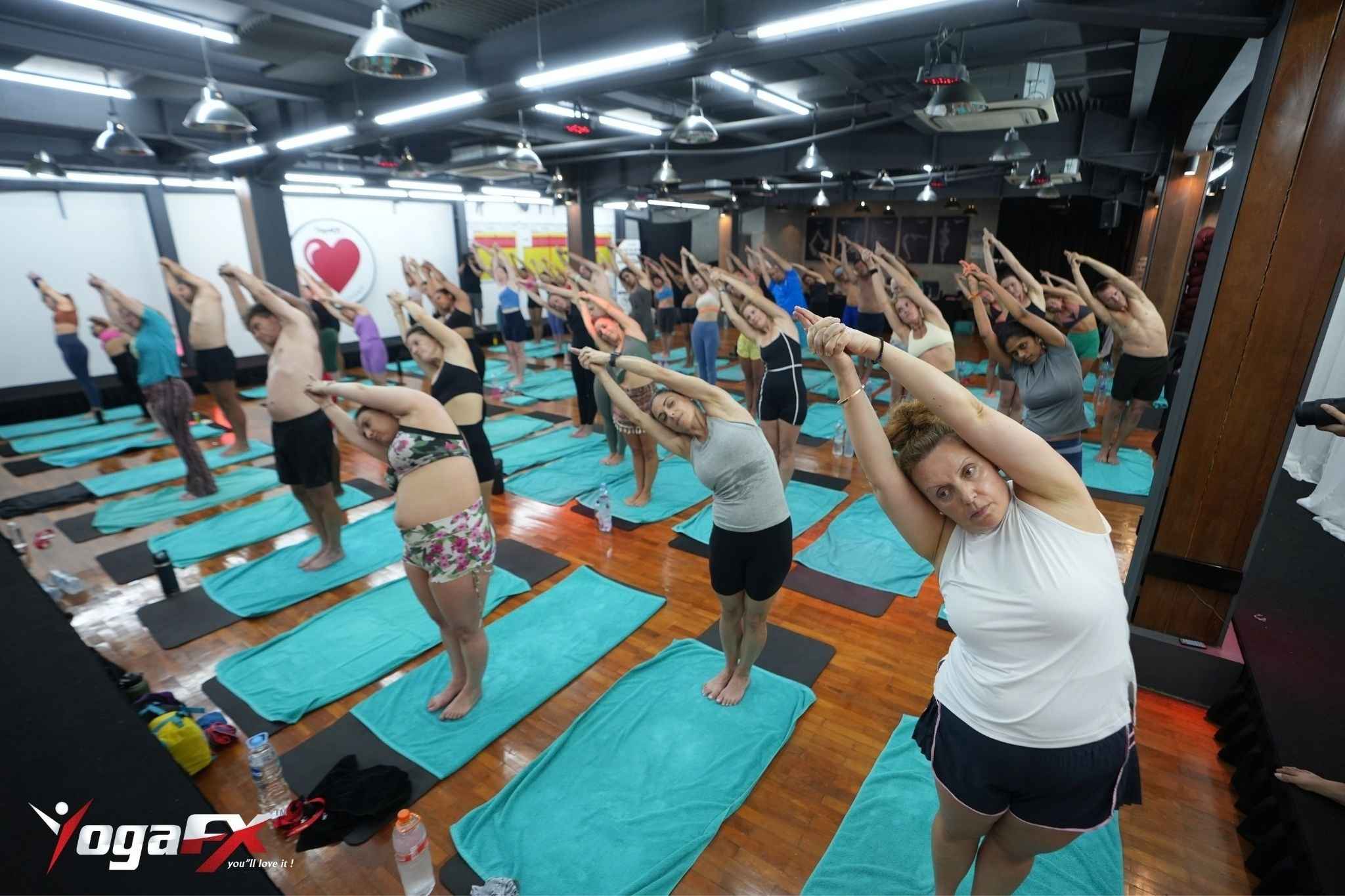
A few practical notes make either plan work:
- Same day is possible. If you must double up, do CrossFit in the morning and yoga in the evening, with food and fluids in between.
- Never yoga before heavy lifting. Deep stretching in the heat right before a max attempt can leave joints less stable.
- Start with one class a week. Give your body two or three weeks to adapt to the heat before adding a second.
- Track one posture. Pick Standing Head to Knee or Fixed Firm and note your depth each week, just like a lift.
For frequency by goal, including daily practice, our guide on how often you should do hot yoga goes into more detail.
Who Should Choose Which, and Who Should Avoid the Heat
Not every athlete needs both, because yoga for CrossFitters is not one-size-fits-all. Your goal decides the mix.
- Choose more CrossFit if your main goals are maximal strength, power and fast conditioning.
- Choose more 26 and 2 if you keep stalling on mobility, balance or recovery, or if training has started to feel stressful.
- Choose both if you want to stay in the sport for years with fewer niggles and better positions.
Some people should not start hot yoga without advice. Please consult a healthcare professional first if you are pregnant, have a heart condition, have very high or low blood pressure, have a history of heat illness, or take medication that affects heart rate or fluid balance. Tell the teacher about any injury before class so they can suggest modifications.
If you are still deciding between yoga styles, our comparison of 26 and 2 vs vinyasa vs power yoga explains why a fixed sequence suits athletes who like structure.
Learning 26&2 From the Source: Bali and Mr. Ian Terry
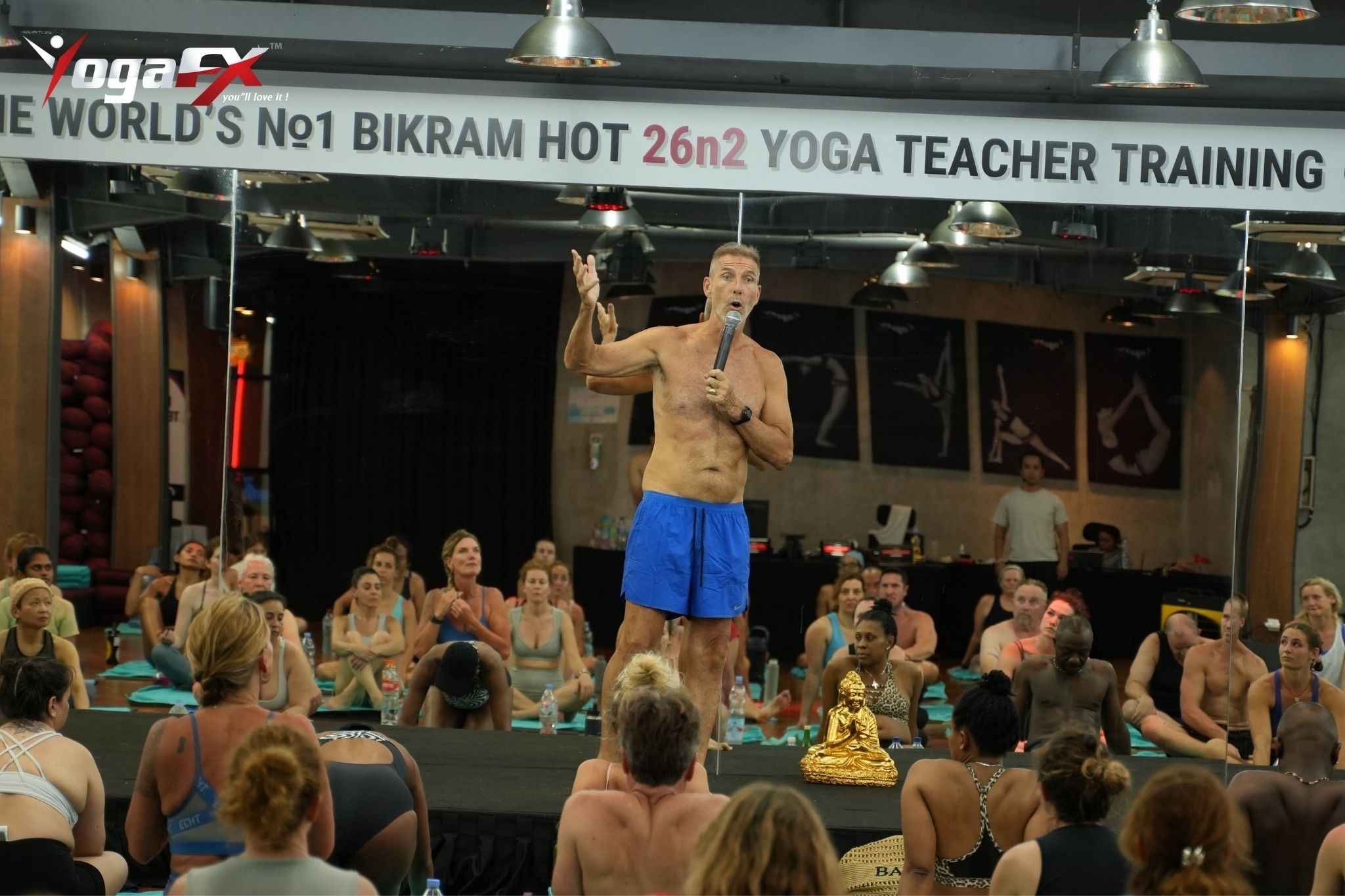
At YogaFX, classes run in natural tropical Bali heat of around 40°C and 40% humidity at our studios in Seminyak and Canggu. There are no electric heaters, no music and no demonstrations, just the spoken dialogue for the full 90 minutes. That means the heat comes from the Bali climate itself, so the room feels like a hot tropical day rather than a heated box.
Mr. Ian Terry trained for five years, from 2014 to 2019, with Bikram Choudhury, the founder of the method. In 2026 he was appointed Master Trainer of the Republic of Indonesia Yogasana Sports Federation. His graduates compete in yogasana sport too, with 12 medals in total, including at the 2026 World Yogasana Sports Federation Championships in Ahmedabad.
So he understands how athletes think: in sets, numbers and progress. That is why his approach to yoga for CrossFitters is simple. Pick one posture, test it every class, and let the number move.
Some CrossFit coaches take the next step and learn to teach the sequence to their own members. For example, a box can add one structured yoga for CrossFitters class to its timetable and keep members training for longer.
Our 26 and 2 yoga teacher training is a six-day hybrid intensive in Bali. It leads to Yoga Alliance RYT 200 plus a Bikram Hot 26&2 certificate. The next intake runs from 24 to 29 January 2027, with Early Bird pricing at US$1,899 (normally US$1,999).
FAQ
Is Bikram yoga considered cardio?
Partly. A lab study of 90-minute classes recorded heart rates in the moderate-to-vigorous range and about 333 calories for women and 460 for men, similar to a brisk walk. Some of the raised heart rate comes from the heat itself, so it complements interval training rather than replacing it.
Does Bikram yoga build strength?
Yes, mainly in the legs, glutes and back. Long isometric holds such as Awkward Pose and the Locust series load the posterior chain, and an eight-week study found better deadlift strength without weights. It builds little upper-body or maximal strength, so lifters should keep their barbell work.
Is yoga good for CrossFit?
Yes. Yoga for CrossFitters adds the mobility, balance and breath control that high-intensity training often neglects. A fixed sequence like 26 and 2 is especially useful because the postures never change, so you can measure progress in your squat, hinge and overhead positions week after week.
Can you do hot yoga and CrossFit on the same day?
You can, with care. Train CrossFit first, ideally in the morning, then take hot yoga in the evening after eating and rehydrating. Avoid deep stretching in the heat right before heavy lifting, and skip the heat entirely after a max-effort day. Two separate days are better for most athletes.
Is yoga or CrossFit better for weight loss?
Neither wins on its own. Both burn real energy, but diet and consistency matter far more than the class you choose. Much of the weight lost in a hot yoga class is sweat that returns once you rehydrate. Combining both, plus sensible eating, gives the most sustainable result.
Who should not do hot yoga?
People who are pregnant, have a heart condition, very high or low blood pressure, a history of heat illness, or medication affecting heart rate or fluids should consult a healthcare professional first. YogaFX is independent training, not official Bikram Choudhury Teacher Training, and teachers adapt postures for injuries.
Still have questions? Message Mr. Ian and the YogaFX team on WhatsApp and we will answer them personally. Whether you want to try your first class in Bali or bring the 26 and 2 method to your box, we are happy to help you plan the next step.