Hot vinyasa vs bikram comes down to one question: do you want a sequence that never changes, or a flow that changes every class? Hot vinyasa links poses with the breath, and the teacher picks the order. Bikram yoga, now taught as Original Hot 26&2, runs the same 26 postures and 2 breathing exercises every class.
Table of Contents
That single difference drives almost everything else. It changes how hard the class feels, how fast you can measure progress, and what a teacher has to learn. This guide to hot vinyasa vs bikram compares the two styles, then adds hot power yoga and hot yoga sculpt so you can place every hot class you meet.
Hot Vinyasa vs Bikram: The Quick Comparison
Here is the short version before we go deeper. The table uses the 26 and 2 sequence as the fixed side, because that is what we teach at YogaFX in Bali, and describes vinyasa in general terms because no two vinyasa teachers build the same class.
| Feature | Hot vinyasa | Original Hot 26&2 (Bikram lineage) |
|---|---|---|
| Sequence | Changes with each teacher and class | Fixed: 26 postures and 2 breathing exercises |
| Pace | Continuous movement, breath-linked | Each posture is held, then repeated once |
| Class length | 60 to 75 minutes is common | 90 minutes |
| Temperature | Set by the studio, often 32 to 38 degrees | About 40 degrees, humidity around 40% |
| Music and demonstration | Usually music and demonstration | Scripted dialogue, no music, no demonstration |
| Progress tracking | Hard: the class is never the same twice | Easy: the same class is a yardstick |
| Teacher skill | Creativity and sequencing | Delivery of an exact script |
Temperature ranges for vinyasa are typical studio settings, not a standard. The 26 and 2 class conditions are the YogaFX studio settings.
If you only read one row of this hot vinyasa vs bikram table, read the sequence row. Everything below is a consequence of it. For a comparison that focuses on class names, see our guide to hot 26 vs hot hatha vs bikram.
What Hot Vinyasa Actually Is
Vinyasa means "to place in a special way." In practice the teacher strings poses together so that each movement rides on one inhale or exhale. A hot vinyasa class adds heat, usually from heaters or infrared panels, and lets the sequence wander. One day is hip openers, the next is arm balances.
Structure of a hot vinyasa class
Expect a warm-up, a build of sun salutations, a peak pose, then a cool-down. The peak changes by class. Because the order is flexible, a good teacher can read the room and adapt on the spot. That's the style's real strength.
Who hot vinyasa suits
Hot vinyasa suits students who get bored by repetition and enjoy music, creative sequencing and a faster pace. It also suits people who want a dance-like flow. If you love variety, it's the hot class that rewards you for it.
What the Fixed 26 and 2 Sequence Is
The 26 and 2 sequence is two breathing exercises and 26 postures, practised in a set order. Every posture is done twice, with a short rest between sets. The first half is standing work. The second half moves to the floor. If you want the full list in order, our 26 and 2 yoga sequence page walks through it posture by posture.
Three things stay constant in every class:
- The order of the 26 postures and 2 breathing exercises.
- The scripted dialogue the teacher speaks.
- The 90-minute length and the heat.
Nothing is improvised. The teacher speaks a scripted dialogue, so the cues you hear in Bali are the cues you would hear in any properly taught class. That's why people who travel love it: the class is a known quantity in any city.
Why the order matters
The sequence moves through the body in a deliberate way: spine, hips, shoulders, then back to the spine, with the floor series coming after the legs are warm. Students learn what comes next, so attention shifts from "what is this pose" to "how am I doing it today." That is the heart of hot vinyasa vs bikram for most students. For the background, read what 26 and 2 yoga is.
Hot Vinyasa vs Bikram: Which Is Harder?
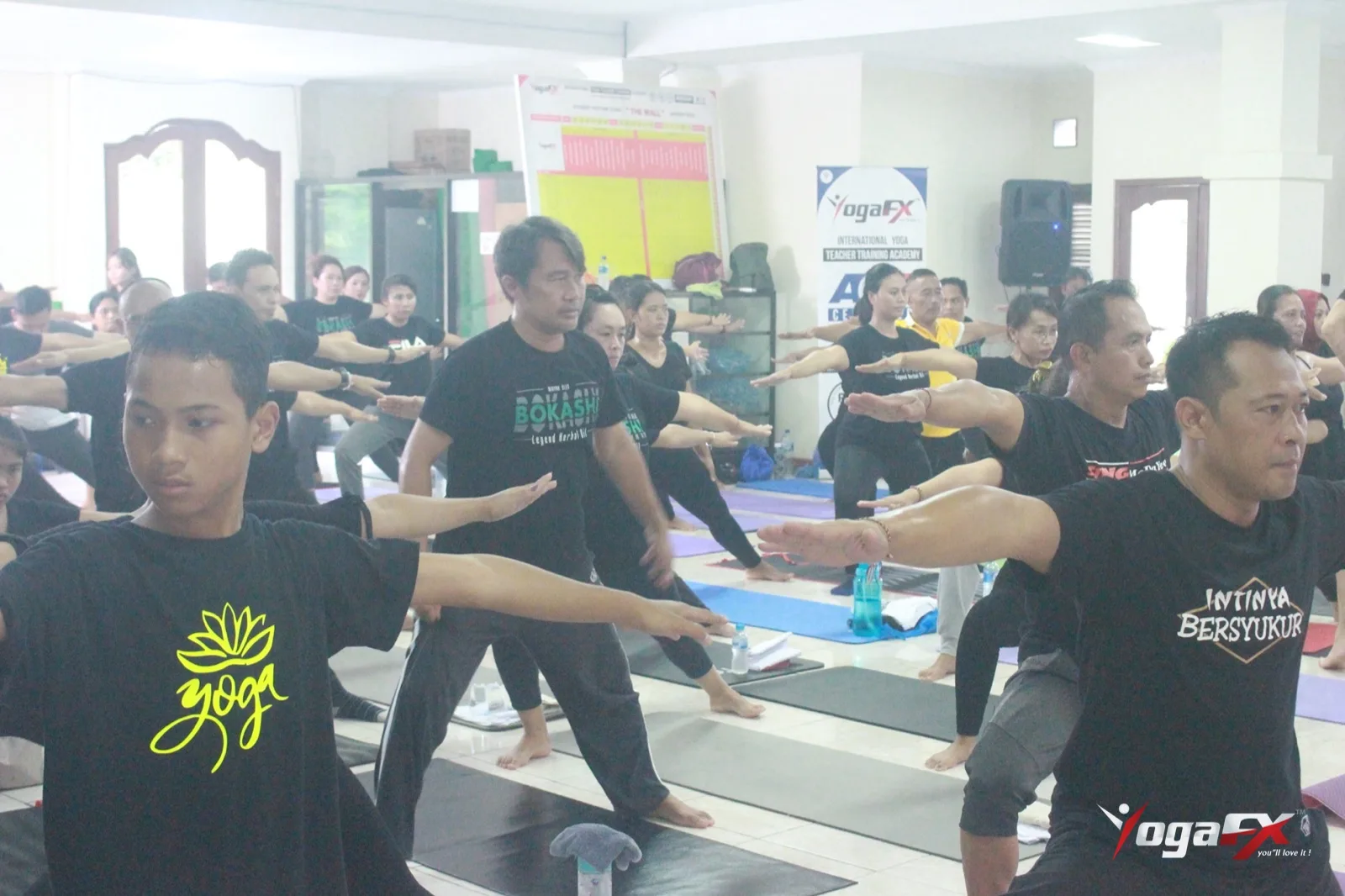
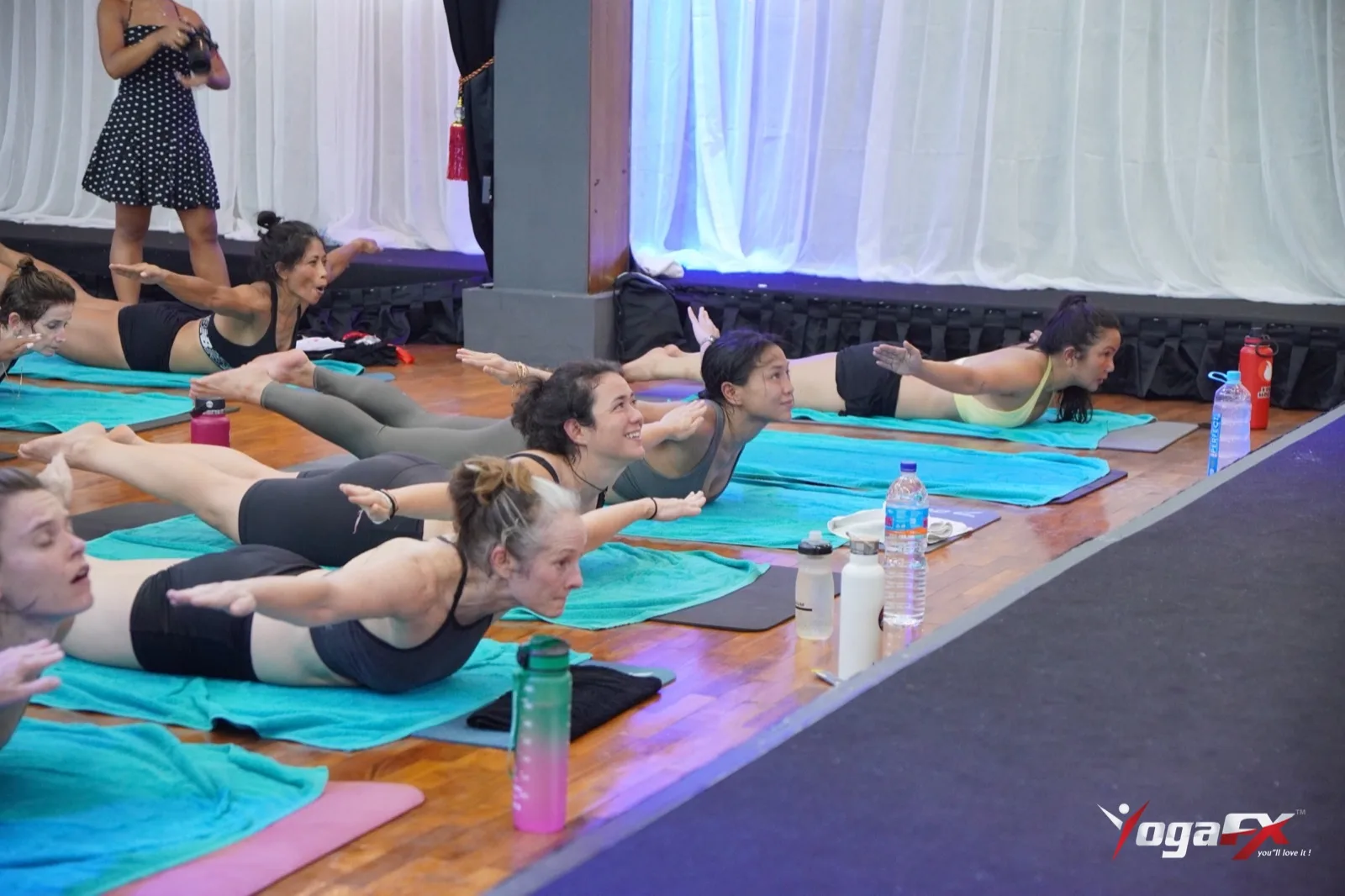
Harder depends on what "hard" means. A fast vinyasa class can leave you winded because you never stop moving. The 26 and 2 class can wring you out because the heat stays high and the holds are long. Different challenges, similar tiredness. In the hot vinyasa vs bikram debate, neither side wins on difficulty alone.
What the research says about effort
A 2014 University of Wisconsin study (Porcari et al.) measured calorie burn in Bikram classes: about 333 kcal for women and 460 kcal for men over 90 minutes. Separate work at Colorado State University, summarised in a university press write-up, found heart rate averaged near 160 beats per minute in 19 practitioners. The lead researcher cautioned that heart-rate-based calorie estimates run high.
Not every study agrees. A 2020 trial in the International Journal of Exercise Science (Lambert et al.) compared a heated Bikram-style hour with the same hour at room temperature in 16 practitioners. Mean heart rate was 113 vs 109 beats per minute, so the heat added little to the oxygen cost.
So the summary is this. The 26 and 2 class is demanding, mostly because of heat and long holds, but it isn't a sprint. No single calorie figure describes hot vinyasa, because vinyasa classes differ so much by teacher. For the numbers on the fixed class, see our 26 and 2 yoga calories burned breakdown.
How the effort feels
In hot vinyasa the peak effort comes in bursts: a fast chaturanga flow, a long arm balance. In the 26 and 2 class effort is steady, then spikes in the standing series, where the thighs and balance work are most demanding. For a student-level view, our guide asks directly whether 26 and 2 yoga is hard.
| Demand | Hot vinyasa | Original Hot 26&2 |
|---|---|---|
| Cardio rhythm | Bursts and recoveries | Steady with peaks in the standing series |
| Balance | Depends on the class | Several single-leg postures, every class |
| Flexibility | Varies with the peak pose | Spine, hips and shoulders trained every class |
| Mental load | Following changing cues | Staying present through repetition |
| Heat tolerance | Moderate | High: about 40 degrees for 90 minutes |
Hot Yoga vs Hot Power Yoga
Students weighing hot vinyasa vs bikram also meet hot power yoga on the timetable, so it helps to separate the names. Hot yoga is a broad label for any yoga practised in a heated room. Hot power yoga is a more athletic, vinyasa-based class in that room, with strength work such as planks, lunges and push-ups.
The difference between hot yoga vs hot power yoga is therefore about the type of work. Hot yoga describes the room. Hot power describes the workout inside it. If you are weighing a heated class against a mat class, see hot yoga versus a Pilates mat class.
Is hot power yoga a good workout?
For most people, yes. Hot power yoga builds muscular endurance in the arms, shoulders and core through repeated holds and flow transitions, and the pace keeps your heart rate up. It is a fair choice if you want something that feels like gym conditioning with a breath practice on top.
The caution is the same one that applies to every heated class. Fast movement plus heat plus dehydration is a poor mix, so build up gradually, and drink water before and after class. People with heart conditions, low blood pressure or pregnancy should speak with a doctor first.
Where hot power sits next to the fixed sequence
If vinyasa sits in the middle, hot power is the strongest end of it and the fixed 26 and 2 is the most structured end. Students who want sweat quickly choose power. Students who want a class they can measure from month to month choose the fixed sequence. That's the practical side of hot vinyasa vs bikram.
Hot Yoga Sculpt in One Minute
Hot yoga sculpt is a newer format that adds light weights, bands or bodyweight toning to a heated vinyasa class. Think of it as hot vinyasa plus resistance work. The goal is toning and strength rather than the mind-body calm that the fixed series is known for.
Sculpt classes are the least traditional of the group. The sequence is built around strength sets, so there's no standard version, and a studio can design it however it likes. If you enjoy a gym-style session in a warm room, you'll probably like it.
"Truly life changing experience, blessed to have had this opportunity."
Villin, Google review, 2022
Hot 26 vs Hot Flow: Which Should You Choose?
Choosing between hot 26 vs hot flow is easier if you start from your goal. Settle that first, and the hot vinyasa vs bikram question mostly answers itself. The list below matches each goal with the style that tends to fit.
- You want measurable progress. Choose the fixed sequence. The same class each time makes change obvious: deeper backbends, steadier balance, a calmer breath.
- You get bored easily. Choose hot flow. New sequences and music keep it fresh.
- You want strength and conditioning. Choose hot power or sculpt. The workload is closer to a gym session.
- You want to teach. Choose the fixed sequence if you like precision and scripts, vinyasa if you like creative sequencing.
- You are brand new to yoga. Either works, but a studio that explains the postures clearly matters more than the style name.
If the decision still feels open, a trial class in each style tells you more than any article can, and our guide to hot yoga compared with regular yoga helps if the heat is your main question. And you don't have to choose forever. Many students begin with the fixed series and later add flow, or the other way around.
Which Is Better for Weight Loss, Strength and Flexibility?
No hot class is a magic weight-loss tool, and sweat itself isn't fat loss. What counts is how often you show up and what you eat. Hot classes can help by making practice something you want to repeat. On goals, hot vinyasa vs bikram looks like this:
| Goal | Best fit | Why |
|---|---|---|
| Flexibility | Original Hot 26&2 | Spine, hip and shoulder work in a fixed order, every class |
| Strength | Hot power or sculpt | Planks, lunges and weights add load |
| Cardio feel | Hot vinyasa | Continuous movement keeps your heart rate rising and falling |
| Consistency | Original Hot 26&2 | Same class, same cues, easy to repeat |
| Stress and mood | Either | Research on heated yoga is promising, not a replacement for care |
On mood, a 2023 Massachusetts General Hospital trial (Nyer et al.) found that 59% of participants in an eight-week heated yoga programme had a drop of 50% or more in depression symptoms, against 6.3% on a wait list. That is a study of heated hatha yoga, not a head-to-head of styles, so it says heat plus regular practice may help, not that one class beats another. Our 26 and 2 yoga benefits article covers the broader evidence.
What Practitioners Say
Words from students tell you something that numbers cannot. Adam, who trained with us, shares his experience on camera in a video review from 2024. Jason did the same in 2023. Both videos are public on the YogaFX YouTube channel.
Jason's YouTube review, 2023 is worth a look if you want a second trainee voice.
Can You Do Both Styles?
Yes, and many students do. The two styles use the body differently, so each one fills a gap in the other. Vinyasa adds dynamic strength and a faster rhythm. The fixed sequence adds structure, balance and a yardstick. Choosing hot vinyasa vs bikram doesn't have to be permanent.
A practical plan looks like this:
- Practise the fixed series three or four times a week.
- Add one flow class a week for variety.
- Rest when you need to, and skip a heated class on a day you feel unwell.
- Drink water before and after every class.
How often is right depends on you, so our guide on how often to practise helps you pick a rhythm.
Learn From the Teacher Who Studied the Method
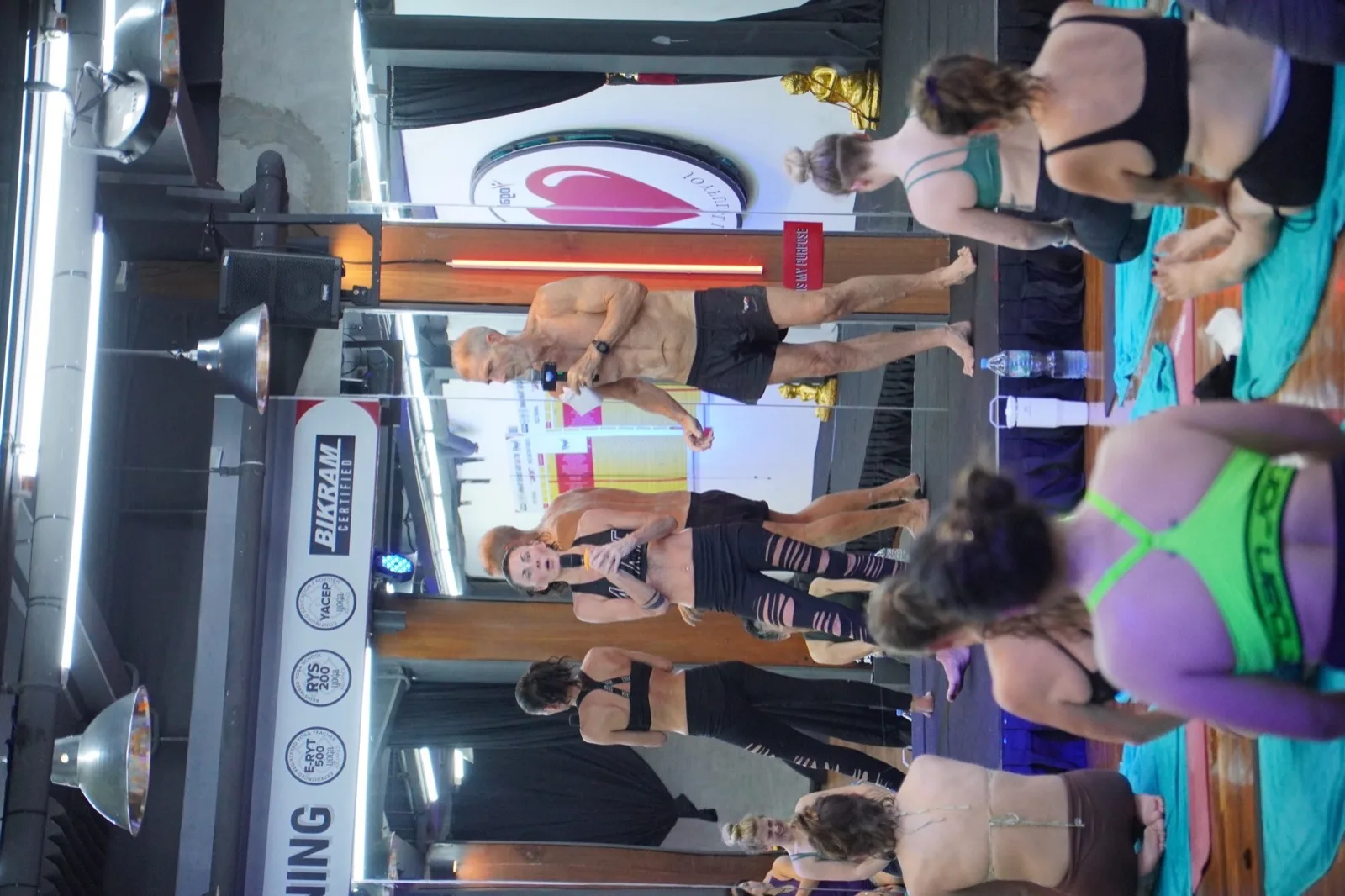
Mr. Ian Terry holds E-RYT 500 status, has taught for 12,000+ hours and spent five years (2014-2019) training alongside the founder of the method. Since 2017 he has trained 1,500+ teachers from 80+ countries. If you're comparing styles because you want to teach, see the teacher training page.
For a longer, side-by-side look at the same two styles from our teacher training site, read this Bikram vs vinyasa comparison.
FAQ: Hot Vinyasa vs Bikram Questions Answered
Is hot vinyasa harder than Bikram yoga?
Neither is harder in every way. Hot vinyasa is harder if you struggle with fast, continuous movement. Original Hot 26&2 is harder if you struggle with long holds and sustained heat of about 40 degrees. Try one class of each and note which one leaves you more tired.
What is the main difference between hot vinyasa and Bikram yoga?
The sequence. Bikram yoga, now taught as Original Hot 26&2, uses the same 26 postures and 2 breathing exercises in the same order every class. Hot vinyasa changes with each teacher, linking poses by breath, so no two classes are the same.
Is hot power yoga a good workout?
Yes, for most healthy adults. Hot power yoga builds muscular endurance and keeps your heart rate up through flowing strength work. Start gradually, hydrate well, and check with a doctor first if you have heart, blood pressure or pregnancy concerns.
What is hot yoga sculpt?
Hot yoga sculpt is a heated vinyasa class that adds light weights, bands or bodyweight toning. It focuses on strength and muscle tone rather than a fixed sequence, so the format varies by studio. It suits people who like gym-style sessions in a warm room.
Can I switch between hot 26 and hot flow classes?
Yes. Many students practise the fixed sequence several times a week and add one flow class for variety. Each style trains the body differently, so they complement each other. Rest when needed and skip heated classes on days you feel unwell.