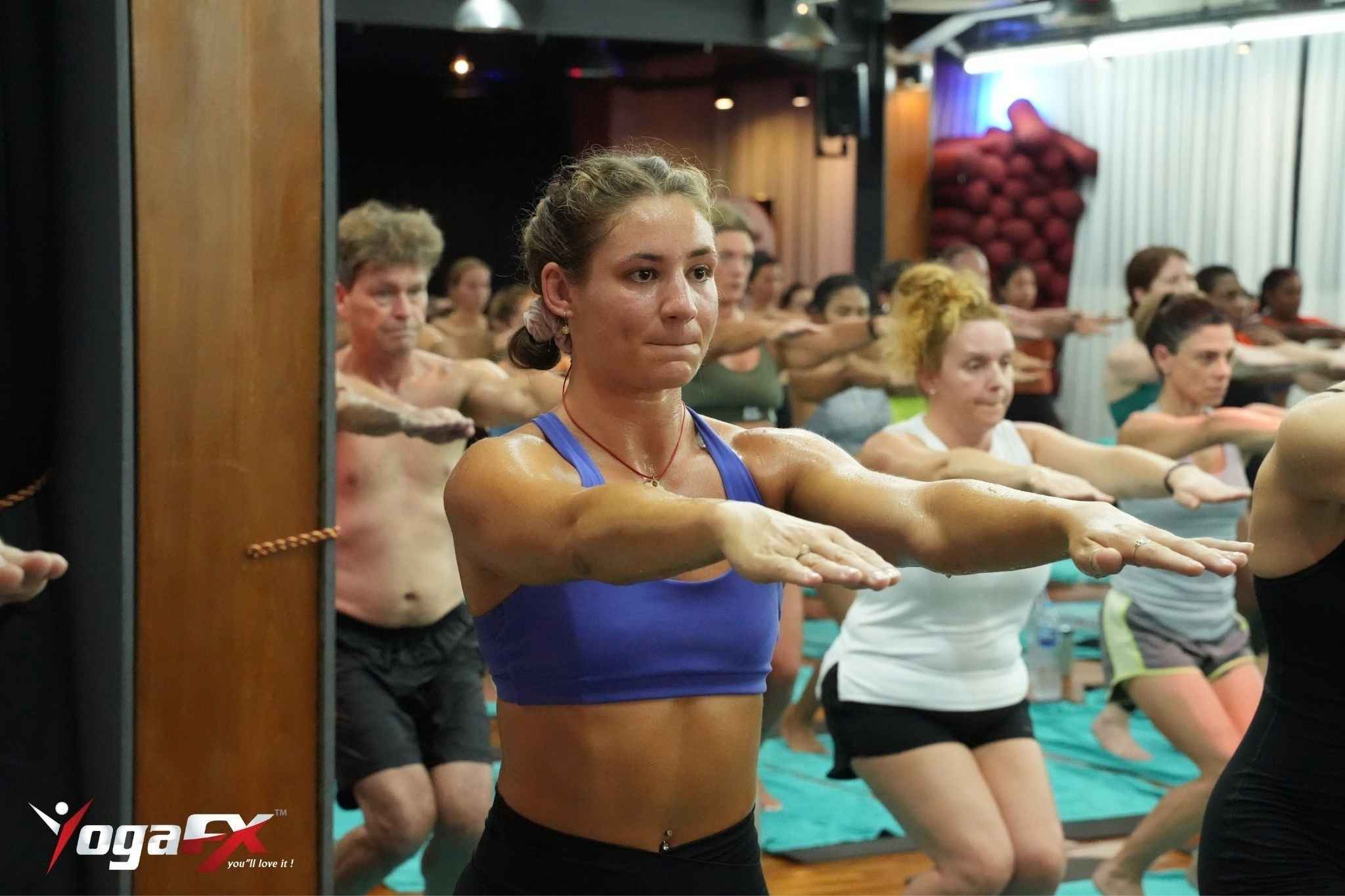
For most healthy adults, yes, 26 and 2 yoga is good for you. Research into 26 and 2 yoga benefits shows measurable gains in flexibility, lower-body and back strength, balance and mood. There is also some early evidence for heart and blood vessel health. It is not a miracle practice, though. It does not detox your body. It is also not proven to beat other forms of exercise. And the heat brings real risks if you ignore your limits.
Table of Contents
This guide weighs both sides. It sorts the claimed 26 and 2 yoga benefits by how strong the evidence actually is. It also covers the downsides the marketing tends to skip, and explains who is most likely to benefit. The practical perspective comes from Mr. Ian Terry, E-RYT 500 and founder of YogaFX, who has taught more than 12,000 hours of the method and trained over 1,500 teachers from more than 80 countries.
26 and 2 Yoga Benefits at a Glance: What the Evidence Supports
Not every claimed benefit rests on the same quality of research. The table below grades the main 26 and 2 yoga benefits honestly, using only published studies on hot or heated yoga. Most of the research covers the 26 and 2 sequence, or close variations of it. Study sizes are still small, though, compared with research on running or strength training.
| Benefit | What the research shows | Strength of evidence |
|---|---|---|
| Flexibility | Gains in lower back, hamstring and shoulder flexibility after eight weeks of regular practice | Good |
| Lower-body and back strength | Improved deadlift strength after eight weeks, with no weights involved | Moderate |
| Balance | Improvements reported across several studies in a 2025 systematic review | Moderate |
| Mood and depression | A randomised trial found large symptom reductions after eight weeks of heated yoga | Promising, from a small trial |
| Anxiety and stress | Reductions in state anxiety after hot yoga practice | Early but consistent |
| Heart and blood vessel health | Improvements in vascular function and lipid profiles in some studies | Early |
| Bone density | Gains in bone mineral density reported in the review | Early |
| Weight loss | A 90-minute class burns roughly as much energy as a brisk walk of the same length | Limited; depends on diet and frequency |
| Detoxing through sweat | No evidence; sweat is mostly water and salt, and the liver and kidneys handle detoxification | Not supported |
| Better than other exercise | Not shown; researchers say superiority claims are not yet substantiated | Not supported |
If you want a longer tour of individual effects, our sister site covers 15 research-backed benefits of Bikram yoga in more detail. The rest of this guide answers the real question: are the 26 and 2 yoga benefits worth it for me?
The 26 and 2 Yoga Benefits With the Strongest Evidence
Flexibility
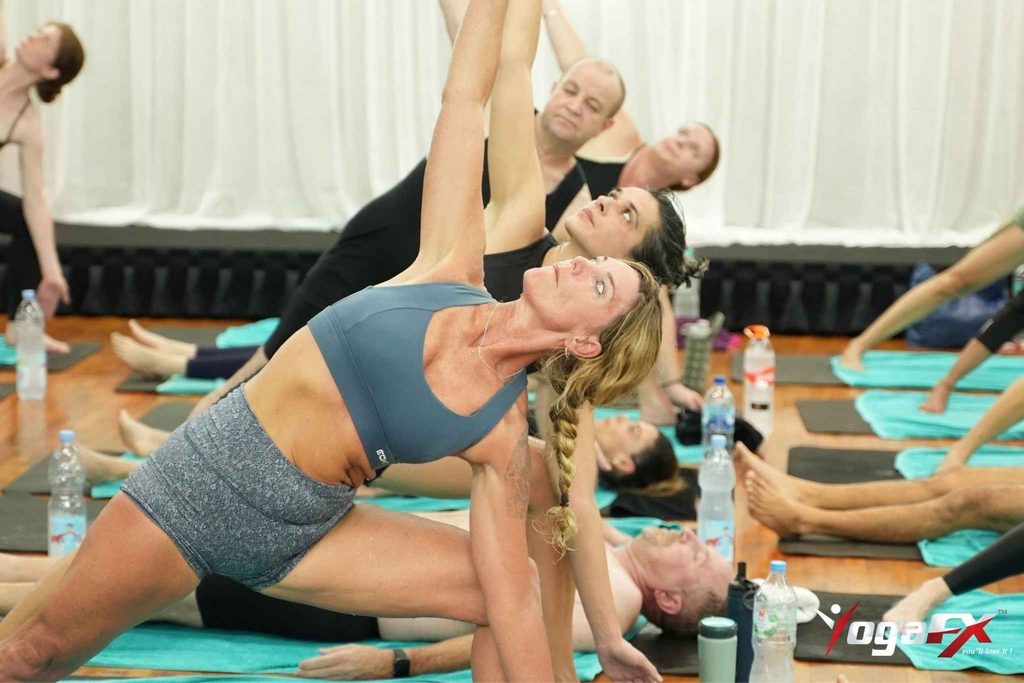
Of all the 26 and 2 yoga benefits, this is the one students notice first and the one the research supports most clearly. In an eight-week study, Tracy and Hart (2013) measured improvements in lower back, hamstring and shoulder flexibility in people practising the sequence regularly. The heat helps you move further into each posture. And because the sequence is fixed, you stretch the same areas every class. So progress builds on itself.
Strength, especially in the legs and back
Strength is one of the less obvious 26 and 2 yoga benefits. The same study found better deadlift strength after eight weeks, even though no weights were used. That makes sense once you look at the sequence. For example, Awkward, the balancing series and the spine strengthening series all load the legs, glutes and back muscles. Upper-body pushing strength is not a major focus, which is worth knowing if that matters to you.
Balance
Three single-leg balances sit at the heart of the standing series, plus Tree and Toe Stand at the end. Willmott et al. (2025), a systematic review of 43 studies and 942 participants, reported improvements in balance alongside flexibility. Balance is one of those abilities that quietly declines with age, which makes balance one of the more valuable long-term 26 and 2 yoga benefits.
The Promising 26 and 2 Yoga Benefits: Mood, Anxiety and Heart Health
Mood and depression
The most striking recent study came from Massachusetts General Hospital. In a 2023 randomised trial led by Nyer, adults with moderate-to-severe depression were assigned to eight weeks of heated yoga classes or a waitlist. Around 59% of the yoga group saw their symptoms fall by at least half. In the waitlist group, the figure was roughly 6%. But it was a small trial. The classes were heated hatha yoga rather than strictly the 26 and 2 sequence. So this is one of the 26 and 2 yoga benefits that still needs confirming in larger studies.
Yoga is not a replacement for treatment. If you are living with depression, talk to a healthcare professional about how exercise fits into your care.
Anxiety and stress
Hui et al. (2022) reported reductions in state anxiety after hot yoga. Many students also describe the same thing in plainer words. Ninety minutes of full attention on breath and posture leaves no room for the usual mental noise. For many students, that calm is one of the 26 and 2 yoga benefits they value most. More broadly, Johns Hopkins Medicine notes that regular yoga practice can help reduce stress and inflammation.
Heart and blood vessels
The Willmott review also found improvements in vascular function and lipid profiles in some studies. The effort level supports this: a 2014 study led by Porcari measured heart rates in the moderate-to-vigorous range across a 90-minute class, with average energy use of about 333 calories for women and 460 for men. These results are encouraging. They come from a limited number of studies, though. So treat these heart-related 26 and 2 yoga benefits as a likely bonus rather than a guaranteed outcome.
Where the 26 and 2 Yoga Benefits Come From in the Class
It helps to connect each benefit to the part of the class that produces it. The sequence is designed so that different groups of postures do different jobs. As a result, knowing which does what makes it easier to target the 26 and 2 yoga benefits you want.
| Part of the class | Postures | What it mainly works on |
|---|---|---|
| Opening breathing | Standing Deep Breathing | Breath control and focus, which carry through the rest of the class |
| Warm-up and legs | Half Moon, Hands to Feet, Awkward, Eagle | Spine mobility in four directions, leg strength and joint range |
| Balancing series | Standing Head to Knee, Standing Bow Pulling, Balancing Stick | Balance, concentration and the peak of cardiovascular effort |
| Stretching and hips | Standing Separate Leg Stretching, Triangle, Standing Separate Leg Head to Knee, Tree, Toe Stand | Hamstring and hip flexibility, plus single-leg stability |
| Spine strengthening | Cobra, Locust, Full Locust, Bow | Back strength and posture |
| Deep floor work | Fixed Firm, Half Tortoise, Camel, Rabbit, Head to Knee with Stretching, Spine Twisting | Spinal flexibility in every direction, and the deepest stretches of the class |
| Closing breathing | Blowing in Firm | A strong finish for the breath before final relaxation |
The balancing series and the spine strengthening series are where most of the effort sits. So they drive much of the 26 and 2 yoga benefits for strength and heart rate. The long floor series, done when the body is warmest, is where most of the flexibility gains happen. That is also why shortened classes, which often cut floor time, may deliver less of the flexibility benefit than a full 90 minutes.
What 26 and 2 Yoga Will Not Do
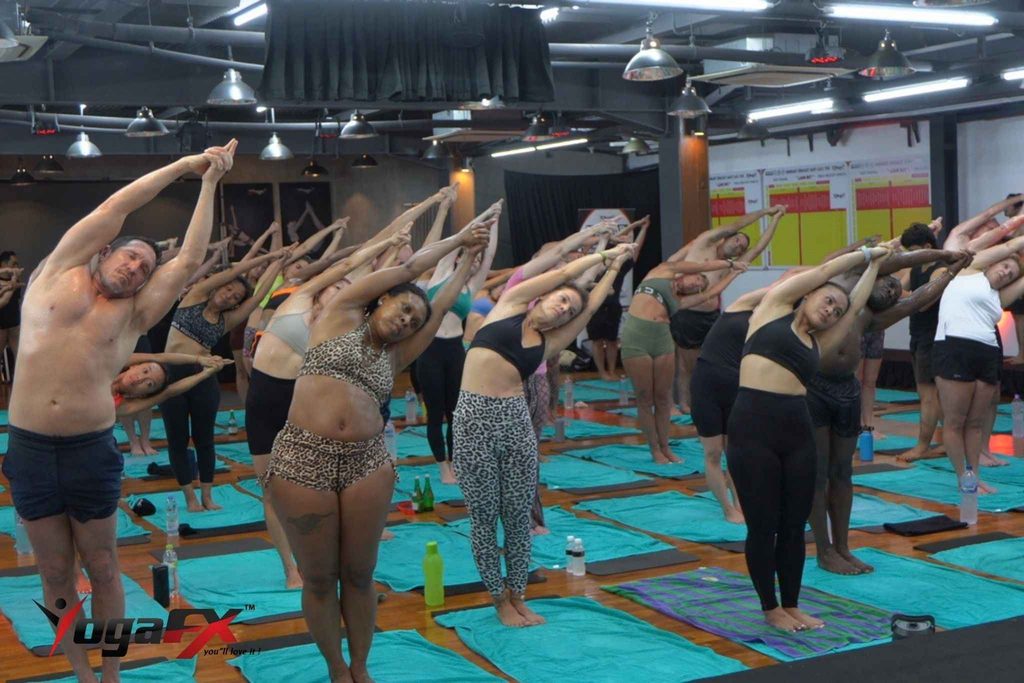
Honest guidance matters here. Some of the most repeated claims about 26 and 2 yoga benefits are not true.
- It will not detox your body. Sweat is mostly water and salts. Your liver and kidneys are responsible for clearing waste, and sweating heavily does not speed that up.
- It is not proven to beat other exercise. The 2025 systematic review was explicit that claims of hot yoga being superior to other forms of yoga or exercise are not yet substantiated. It is a very good option, not the only good option.
- It is not a fast weight-loss tool. Weight loss is not one of the headline 26 and 2 yoga benefits. The energy used in a class is real but moderate. Much of the scale drop after class is water, which comes straight back when you rehydrate.
- It will not replace everything else. If your goals include upper-body pushing strength, heavy lifting or running performance, you will still need training for those.
The Real Downsides and Risks
A fair answer to "is it good for you" has to include the costs. None of these cancel out the 26 and 2 yoga benefits, but you should go in with your eyes open.
| Downside | Why it happens | How to manage it |
|---|---|---|
| Heat stress and dehydration | 40°C and 40% humidity for 90 minutes puts real load on the body | Hydrate the day before, rest whenever you need to, and leave the posture if you feel dizzy |
| Overstretching | Warm muscles can move past the point where joints are well supported | Stay well short of your maximum range, especially in the first months |
| Repetition | The same 26 positions every class can feel monotonous for some people | Treat it as a way to measure progress; small changes become visible because the sequence never changes |
| Time | A traditional class takes 90 minutes plus travel and a shower | Two or three classes a week is enough for most benefits in the research, and you can practise at home when travel is the obstacle |
| Not suitable for everyone | Some medical conditions do not mix well with heat | Get medical advice first if any of the conditions below apply to you |
Please consult a healthcare professional before starting. That applies if you are pregnant, have a heart condition, or have very low or high blood pressure. It also applies if you have a history of heat illness, or take medication that affects heart rate or fluid balance. If you have a specific injury, tell the teacher before class so they can suggest how to modify the affected postures.
Who 26 and 2 Yoga Is Best For
Weighing the evidence against the downsides, these groups tend to get the most from the 26 and 2 yoga benefits:
- People with tight hamstrings, hips or backs, including desk workers and runners, because flexibility is where the evidence is strongest.
- People who like structure and want to measure progress, because the sequence never changes.
- People looking for a mental reset, given the early evidence on mood, stress and anxiety.
- People who want a joint-friendly way to build leg and back strength without weights.
- Beginners who are nervous about complicated yoga, because there are no arm balances or inversions. The heat is the main challenge, as we explain in our guide to whether 26 and 2 yoga is hard.
Why do the postures run in a fixed order, and which group drives which of the 26 and 2 yoga benefits? Our guide to the 26 and 2 yoga sequence explains. If the heat is what worries you, our guide to whether 26 and 2 yoga is hard walks through what the first ten classes usually feel like.
How Often You Need to Practise to See 26 and 2 Yoga Benefits
The studies that found clear 26 and 2 yoga benefits generally involved regular practice over eight weeks. In practical terms, most students notice the difference with two to three classes a week. Once a week still helps, but progress is slower and the heat adaptation tends to reset between classes. Daily practice is possible for experienced students. It is not necessary for the 26 and 2 yoga benefits described in the research. For frequency by goal, daily practice and double classes, see how often you should do hot yoga.
| Frequency | What to expect |
|---|---|
| Once a week | Gradual flexibility gains; each class may still feel like a fresh challenge in the heat |
| Two to three times a week | The pattern used in most studies; noticeable change in flexibility, strength and mood within about two months |
| Four or more times a week | Faster progress for experienced students; recovery, sleep and hydration become more important |
How YogaFX Teaches the Method in Bali
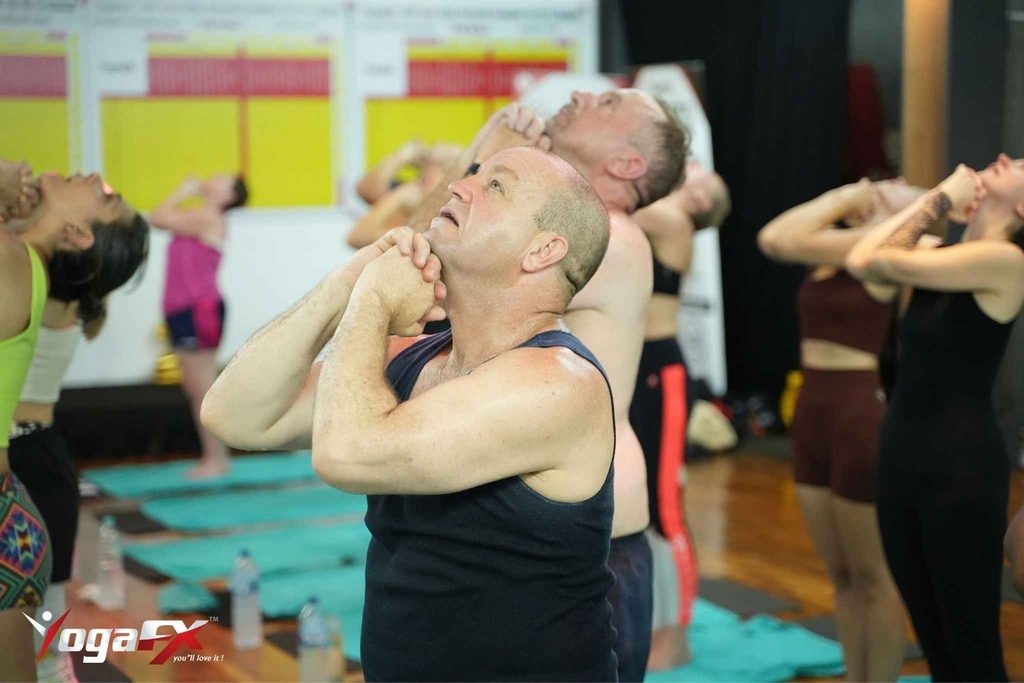
At YogaFX, classes run in natural tropical Bali heat of around 40°C and 40% humidity at our studios in Seminyak and Canggu, for the full 90 minutes, taught through the spoken dialogue with no music. That consistency matters, because the 26 and 2 yoga benefits in the research come from regular practice of a stable method, not from occasional classes that change every time. Our introduction to what 26 and 2 yoga is explains the method in more detail.
Mr. Ian Terry trained for five years, from 2014 to 2019, with the founder of the Bikram Hot 26&2 method, and was appointed Master Trainer of the Republic of Indonesia Yogasana Sports Federation in 2026. He is careful about how 26 and 2 yoga benefits are described, for the same reason this guide is. Students stay with a practice longer when what they were told matches what they feel.
Have the 26 and 2 yoga benefits made you want to teach? Our 26 and 2 yoga teacher training leads to Yoga Alliance RYT 200 plus a Bikram Hot 26&2 certificate. The next intake runs from 24 to 29 January 2027, with 2027 pricing at USD 1,999 twin share or USD 2,199 single room, accommodation included. Not sure you are ready? Take the two-minute readiness quiz, or message Mr. Ian on WhatsApp with any questions.
FAQ
Is 26 and 2 yoga good for you?
For most healthy adults, yes. Studies show gains in flexibility, leg and back strength, balance and mood, with early evidence for heart health. It does not detox the body and is not proven superior to other exercise. People who are pregnant or have heart conditions should consult a healthcare professional first.
What are the main benefits of 26 and 2 yoga?
The best-supported 26 and 2 yoga benefits are improved flexibility, especially in the lower back and hamstrings, better leg and back strength, and improved balance. Research also suggests benefits for mood, anxiety and stress, and possibly for blood vessel function and bone density, although those findings come from smaller or fewer studies.
Does 26 and 2 yoga help you lose weight?
It can support weight loss, but it is not a fast fix. A 90-minute class burns roughly 333 calories for women and 460 for men, similar to a brisk walk of the same length. Much of the weight lost during class is water that returns once you rehydrate. So diet and regular practice matter more.
How many times a week should you do 26 and 2 yoga?
Two to three classes a week is enough for most people to see the 26 and 2 yoga benefits, and it matches the frequency used in most studies. Once a week still helps but progress is slower. Experienced students often practise four or more times a week, which makes hydration, sleep and recovery more important.
Is hot yoga bad for you?
Hot yoga is safe for most healthy adults who hydrate, rest when needed and avoid pushing past their range. The main risks are heat stress, dehydration and overstretching. It is not suitable for everyone, so anyone who is pregnant, has a heart condition or has had heat illness should consult a healthcare professional first.
Is YogaFX affiliated with Bikram Choudhury?
No. YogaFX, a major Hot 26&2 (Bikram) yoga teacher training academy, is based in Bali, and is not affiliated with Bikram Choudhury or Bikram's Yoga College of India. Mr. Ian Terry trained for five years, from 2014 to 2019, with the founder of the method and teaches the original 26 and 2 sequence and dialogue, with graduates earning Yoga Alliance RYT 200 plus a Bikram Hot 26&2 certificate.