The standard hot yoga temperature in a 26 and 2 class is 40°C (104°F) with about 40% humidity, held for all 90 minutes. Other studios run anywhere from 32°C to 40.5°C. The heat isn't there to punish you. It warms your muscles, lifts your heart rate and slows you down enough to hold each posture well.
Table of Contents
This guide explains the hot yoga temperature numbers, the reason behind them and what they do to your body. It also covers how to stay safe in the room. If you are new to the method, start with our overview, what 26 and 2 yoga is, and come back here for the heat.
Hot Yoga Temperature in a 26 and 2 Class: The Short Answer
A full 26 and 2 class at YogaFX runs for 90 minutes in a room set to 40°C, which is 104°F. Humidity sits near 40%. You practise 26 postures and 2 breathing exercises, with no music and no demonstration. The teacher guides you with a scripted dialogue instead.
So how hot is hot yoga? In this class, 40°C. The hot yoga temperature and the humidity work as a pair. Heat alone would just make you tired. Heat with moderate humidity warms the body while still letting sweat evaporate, so the room stays workable for most healthy adults.
Celsius, Fahrenheit and where each number shows up
Searches for hot yoga temperature split between Celsius and Fahrenheit, so here is a quick converter for the numbers you will meet.
| Celsius | Fahrenheit | Where you will meet it |
|---|---|---|
| 35°C | 95°F | Low end of the range most heated studios use |
| 38°C | 100°F | Common setting for heated flow classes |
| 40°C | 104°F | The YogaFX standard for a 26 and 2 class |
| 40.5°C | 105°F | Top of the usual range, often quoted as "105 degrees" |
People also search for the Bikram yoga temperature. In the original Bikram class it is 40.5°C, or 105°F. Studios set their own conditions, and the room also shifts a little with the number of students on the mat. So treat any single figure as a target, not a guarantee. Ask a studio for its numbers before you book.
Why the 26 and 2 Room Is Heated
The hot yoga temperature has three jobs. It makes the body easier to stretch, it raises the work your heart does, and it gives your mind one more thing to stay calm about. Each job matters for a different kind of student.
Job one: warmer muscles stretch more safely
In an unheated class at 20°C to 22°C, your muscles have to warm themselves from the inside. That takes time, so rushing it is how people pull a hamstring. A warm room does part of that work for you. Your blood vessels widen, more blood reaches the muscles and the connective tissue becomes easier to lengthen.
That's why the first standing postures in the sequence are chosen the way they are. They build heat and circulation before the deep backbends and the floor series arrive. For example, that order means you don't have to force a stretch to get depth.
Job two: a steady, measurable load on the heart
Heat adds a second demand on top of the postures. As a result, your body has to cool itself while you hold Awkward pose or Standing Bow, so your heart rate climbs even though the movement is slow. We look at the research on that in a moment.
Job three: a room that trains your attention
A warm, damp room is hard to ignore, because the hot yoga room temperature touches every breath. Many students tell us the heat is what teaches them to breathe through the nose and stay still when they want to fidget. That's a skill, and it carries over to life outside the studio.
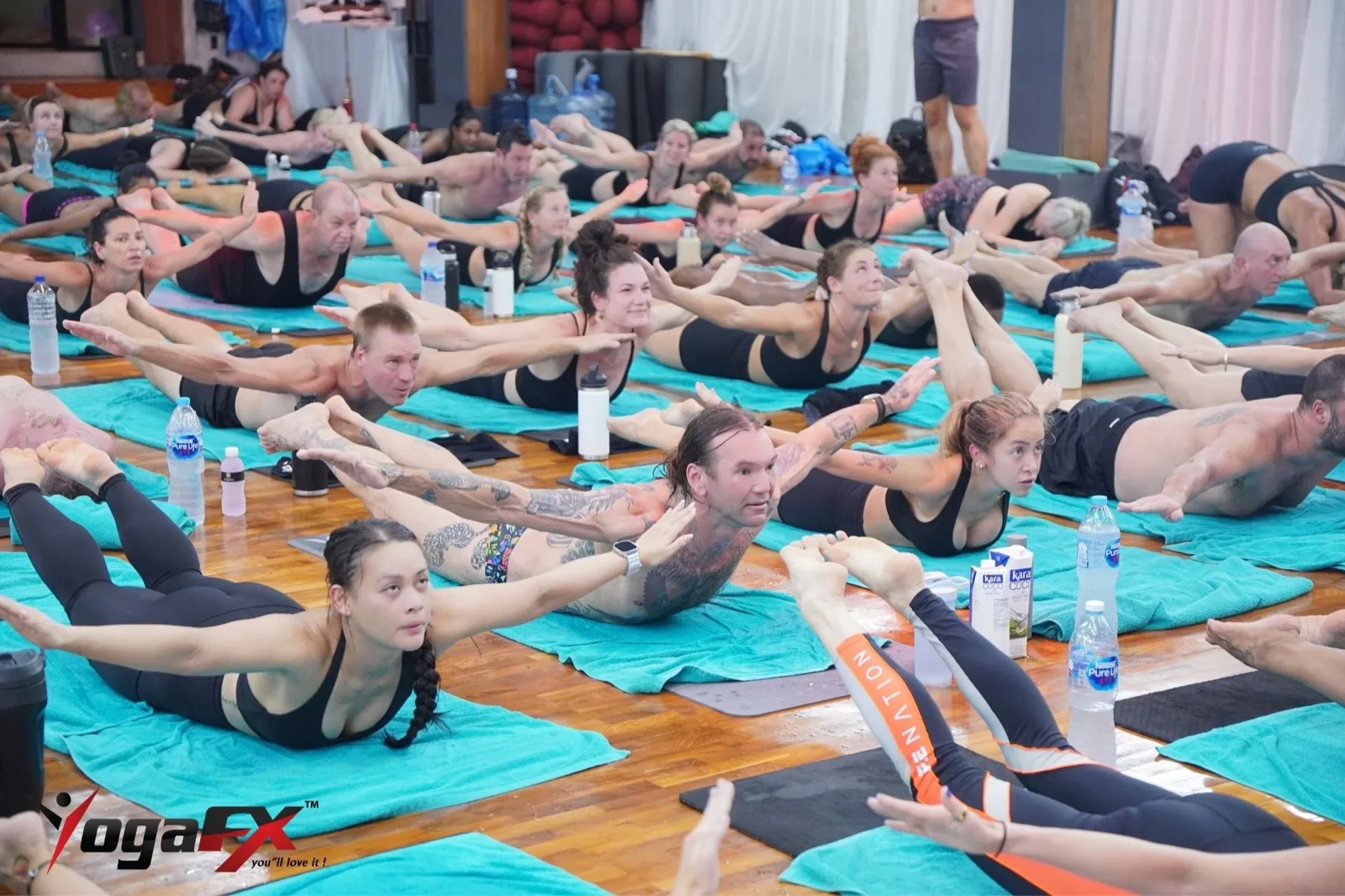
01
40°C / 104°F
The YogaFX standard room temperature for a full 26 and 2 class.
02
About 40% humidity
Damp enough to feel tropical, dry enough that sweat can still evaporate.
03
90 minutes
26 postures and 2 breathing exercises, in the same order every class.
04
103.2°F
Average peak core temperature of men in a 20-person hot yoga study (Quandt et al., 2015).
Hot Yoga Temperature and Humidity Side by Side
Not every heated class uses the same hot yoga temperature. The table below compares the three setups students ask about most. It uses the ranges from the YogaFX guide to Hot 26&2 Yoga, so you can see where a 26 and 2 room sits.
| Class type | Typical room temperature | Humidity | What it means for you |
|---|---|---|---|
| Non-heated yoga | 20°C to 22°C (68°F to 72°F) | Ambient | Muscles warm up slowly from the inside, so go gently into deep stretches |
| Hot vinyasa or power flow | 32°C to 38°C (90°F to 100°F) | Varies by studio | Moving flow, with the heat changing from room to room |
| 26 and 2 class | 40°C (104°F), the YogaFX standard | About 40% | Fixed room and fixed sequence, so you can compare one class with the next |
The fixed room is the point. When the hot yoga temperature and the sequence never change, you can tell whether your own body changed. That is one reason serious students and teachers prefer it. If you want the full comparison of heated against unheated practice, read hot yoga vs regular yoga.
Four numbers to ask any studio about
- Room temperature. Ask for the target in Celsius or Fahrenheit.
- Humidity. A number near 40% keeps sweat evaporating.
- Changes during class. Ask whether the room is adjusted when it fills up.
- Water and rest rules. A good studio lets you sit out at any moment.
What the Heat Does to Your Body
Research on hot yoga temperature is small but useful. Two studies are worth knowing, because they show both the upside and the limits.
Heart rate and energy use
A 2020 randomised crossover study by Lambert and colleagues, Acute Physiologic Effects of Performing Yoga in the Heat, compared a one-hour Bikram sequence in a 105°F (40°C) room with the same sequence at 74°F. It had 16 experienced practitioners and kept humidity at 40%. The paper found no significant difference in heart rate, and the heat did not significantly raise aerobic energy cost.
Average heart rate was 113 beats per minute in the heat and 109 in the cooler room. Calorie use was 156 against 151. In plain words, the hot room didn't turn the class into a much harder workout. It changed how the work felt, and how your body handled the heat.
Core temperature
An ACE-sponsored study of 20 regular Bikram practitioners by Quandt, Porcari and colleagues tracked core temperature with a swallowed sensor. The highest average was 103.2°F for men and 102.0°F for women. Seven of the 20 people passed 103°F, and one man reached 104.1°F by the end of the 90-minute class.
Heart rate averaged about 80% of predicted maximum for men and 72% for women. Core temperature rose steadily through the class. That's why pacing and water matter so much, and why you should never treat the last 30 minutes as a test of toughness.
This is general information, not medical advice. The studies were small, and they say nothing about your own heart, blood pressure or medication. Please consult a healthcare professional before you start a hot yoga practice, especially if you have a heart condition, low blood pressure, diabetes or are pregnant.
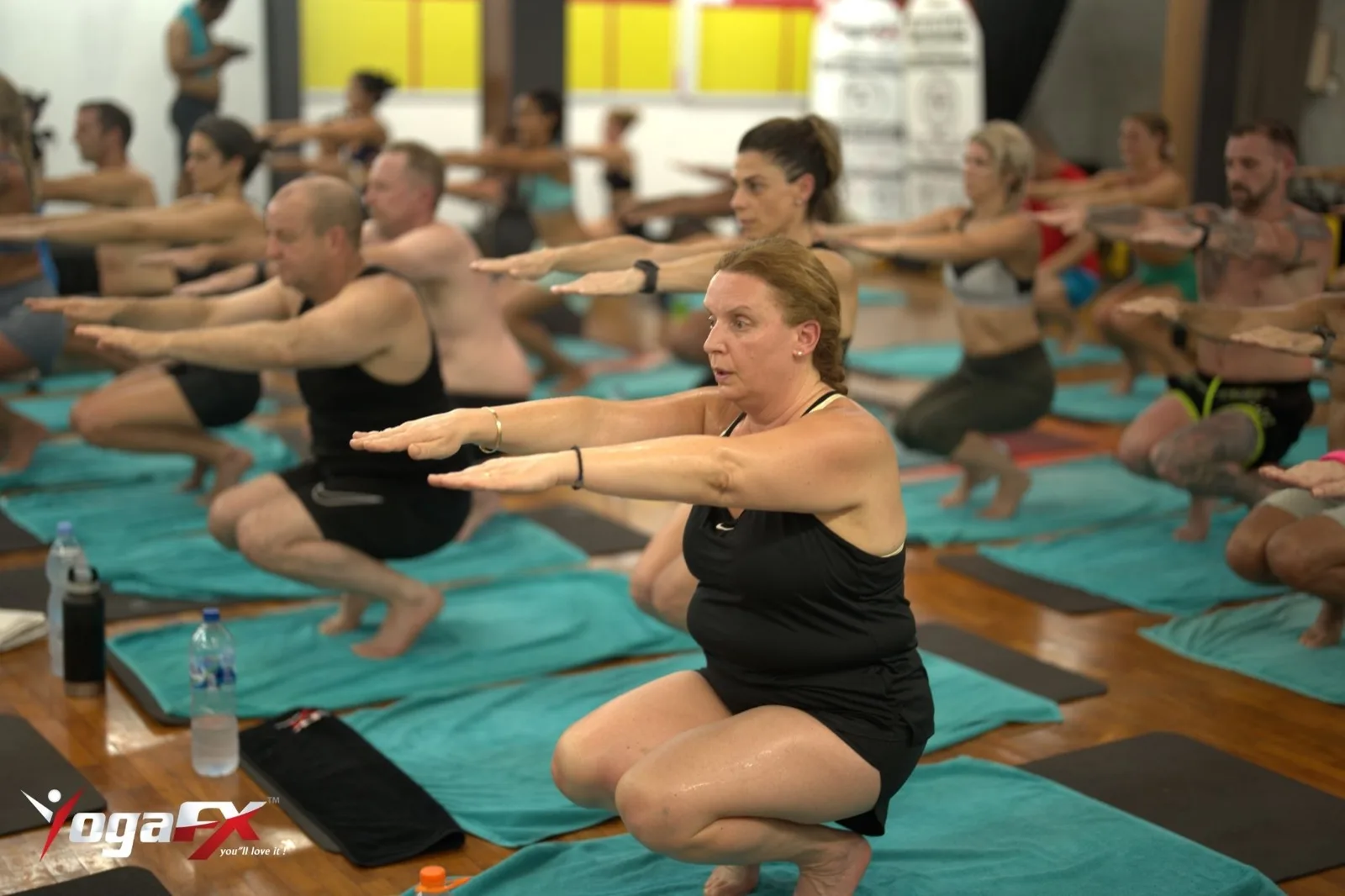
How Humidity Changes the Way You Cool
The hot yoga temperature gets the headlines, but humidity decides how the heat feels. The Mayo Clinic explains that in hot weather your body cools itself mainly by sweating, and that when humidity is high, sweat cannot evaporate as easily, so the body has more trouble cooling down.
That's the reason a 26 and 2 room sits near 40% rather than much higher. At that level, sweat can still leave your skin and carry heat with it. Push the air toward saturation and sweat just drips. Instead, you get hotter without getting any cooler, and the class stops being a good teacher.
Why the hot yoga temperature moves a little
A room full of students adds body heat and moisture. So a teacher watches the room, not only the thermostat. If the air feels heavy, the class slows down, the doors or fans come into play and students are reminded to rest. The guide we teach from gives a range of about 38% to 50% humidity, depending on how many people are on the mat.
If you want to see how this differs from a steam room, our comparison hot yoga vs steam room walks through what 40% humidity does in a class.
How Mr. Ian Terry Teaches the Room
Mr. Ian Terry, E-RYT 500, founded YogaFX in 2017 and has taught more than 12,000 hours. He spent five years, from 2014 to 2019, training with the founder of the Bikram Hot 26&2 method. His view is simple: the room is part of the teaching, so every teacher must know how to read the hot yoga temperature and the faces in front of them.
That is why our dialogue is scripted. A teacher who speaks the same words in the same order has a free mind to watch faces, skin colour and breathing. Heat becomes something you manage together, not something that happens to the class.
What a teacher looks for in the first ten minutes
- Breathing. Students who gulp air through the mouth are working too hard for the room.
- Colour. A very flushed or very pale face means that student needs a rest.
- Posture. If form falls apart early, the pace needs to drop.
- Water. Bottles should be within reach, and sips should start before thirst.
Our Seminyak studio is open from 06:00 to 22:00 every day. Tropical air does a lot of the work there, and the class still follows the same 40°C standard. If you would like to feel it for yourself, message us and we will help you plan a first class.
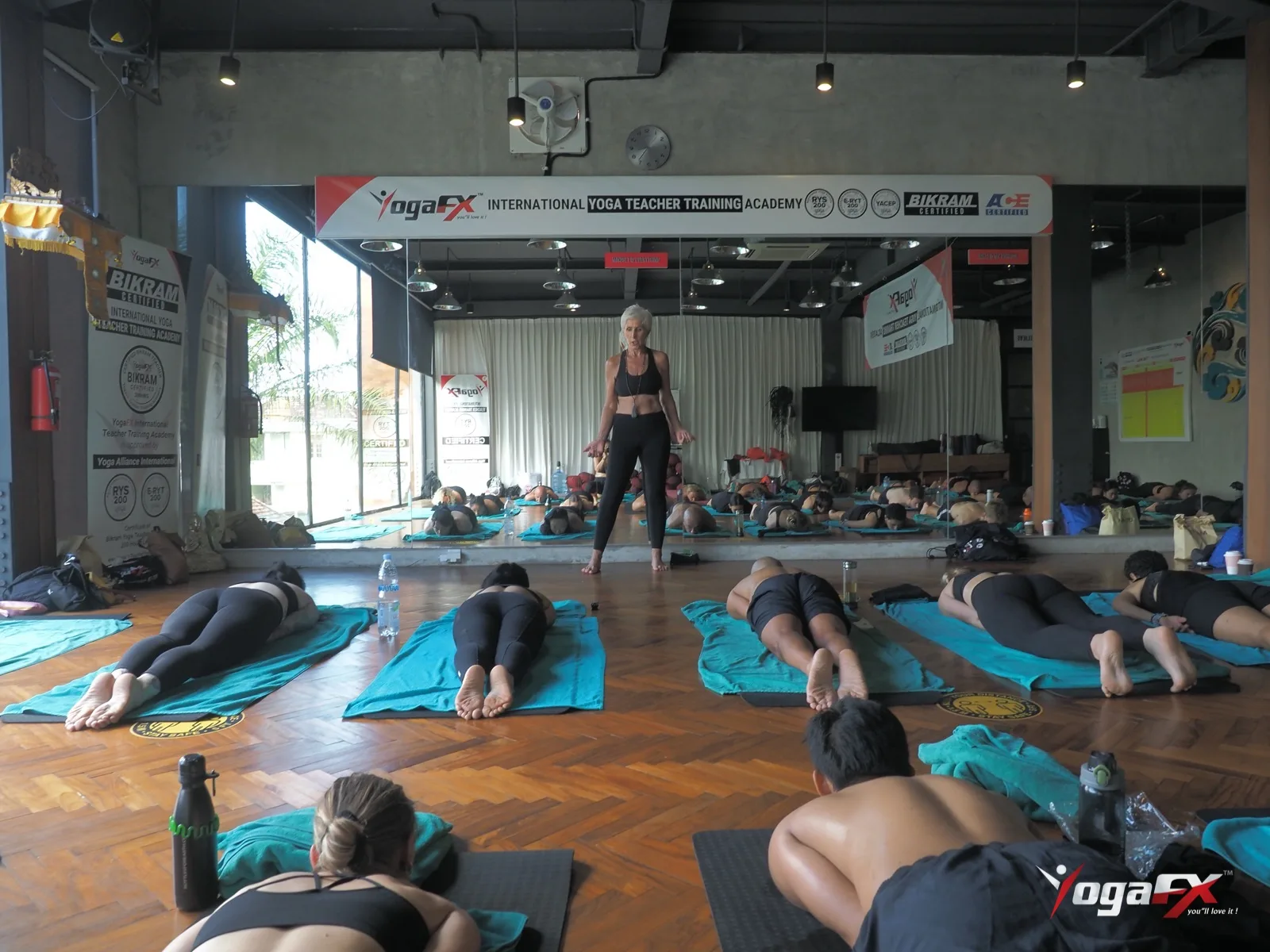
What Students Say About the Heat
Many students arrive nervous about the heat. These reviews come from YouTube videos recorded at the end of a training in Bali. We have kept their names to first names, and the first quote is word for word.
Katia, YouTube review, 2025: "I've learned a lot. The whole process has been amazing. Thank you for your patience, thank you for believing in us."
David, YouTube review, 2026, told the room he was very grateful for his team and for a great week, and spoke about wanting to build a positive community through the practice.
Katy, YouTube review, 2019, said she did not feel alone in the hard moments because the people around her were so supportive. It is a good reminder that the heat is easier when the room holds you up.
How to Stay Safe at This Hot Yoga Temperature
A room at this hot yoga temperature is safe for most healthy adults when you respect it. The Cleveland Clinic notes that heat exhaustion happens when you lose too much water or salt, typically when you exert yourself in the heat. Its listed symptoms include dizziness, nausea, vomiting and headache. You can read the details on its page about heat-related illness.
Before class
- Drink early. Start hydrating hours before class, not just minutes before.
- Eat light. Leave two to three hours after a heavy meal.
- Check your health. Ask a doctor first if you have a heart, blood pressure or kidney condition.
- Tell the teacher. Say it if you are new, pregnant or on medication.
During class
Breathe through your nose and stay on the mat when you need to. If you feel dizzy or faint, lie down on your back and rest. Don't push through it. Resting in the room is a normal part of practice, and every teacher expects it.
The Mayo Clinic advice for heat exhaustion is clear: stop all activity and rest, move to a cooler place, and drink cool water or sports drinks. It also says to get help right away if core body temperature reaches 104°F (40°C) or higher, which is why a hot room is never a place to test your limits.
After class
Let your body cool for ten to fifteen minutes before a cold shower, and replace water and salt. Then eat a balanced meal. You don't need an extra sauna or a long ice bath to finish the job.
Practising at home brings its own risks, because you control the heat and nobody watches you. Read how to do 26 and 2 hot yoga at home before you try to copy the room.
Learn to Hold the Room in Teacher Training
Anyone can set a hot yoga temperature on a thermostat. Reading a room full of people in the heat is a teaching skill, and it takes practice. That is what our trainees learn alongside the dialogue and the sequence.
The Bikram Hot 26&2 Yoga Teacher Training MasterClass runs six days in a hybrid format. You study online first, then join the intensive in Bali. It leads to a Yoga Alliance RYT 200-Hour certification and a Bikram Hot 26&2 200-Hour International Yoga Certification. See the full details on our 26 and 2 yoga teacher training page.
The next batch checks in on Sunday 24 January 2027 and checks out on Friday 29 January 2027, at the Soham Wellness Center in Seminyak. The Early Bird price is US$1,899, against a standard price of US$1,999.
FAQ: Hot Yoga Temperature
What temperature is hot yoga done at?
It depends on the style. Heated flow classes often sit between 32°C and 38°C. A full 26 and 2 class is held at 40°C (104°F) with about 40% humidity for 90 minutes. Studios set their own numbers, so ask for the exact temperature before your first class.
What is the 26 and 2 yoga temperature in Fahrenheit?
A standard 26 and 2 class runs at 40°C, which is 104°F. Many people quote 105°F, which is 40.5°C, the top of the usual range. Humidity sits near 40%, and it can shift a little with the number of students in the room.
Is a hot yoga room the same as a sauna?
No. A sauna is passive heat while you sit still. A 26 and 2 room is a warm, damp space where you move through 26 postures for 90 minutes with a teacher guiding you. The class adds muscle work and breathing practice that sitting in heat does not give you.
What humidity should a hot yoga room have?
A standard 26 and 2 class holds about 40% humidity, and the guide we teach from gives a range of roughly 38% to 50% depending on how many students are present. Moderate humidity lets sweat keep evaporating, which helps the body cool while it works.
Is hot yoga temperature dangerous?
It can be if you ignore the warning signs. Dizziness, nausea, headache and faintness mean you should rest, cool down and drink water. Check with a doctor first if you have a heart, blood pressure or kidney condition, or if you are pregnant. Tell your teacher before class.
Still have questions? Message Mr. Ian and the YogaFX team on WhatsApp and we will answer them personally.