Hot yoga vs steam room is really a choice between a room you move in and a room you rest in. A 26 and 2 class runs at about 40 degrees Celsius with humidity near 40%, and you work through 26 postures for 90 minutes. A steam room holds close to saturated air while you sit still. Both make you sweat, but they load the body in very different ways.
Table of Contents
Hot Yoga vs Steam Room: The Short Answer
For most people, the hot yoga vs steam room decision is simpler than it looks. Choose the hot room when you want to build leg strength, balance and flexibility with a teacher guiding every posture. Choose the steam room when you want a short, passive soak after a long day.
The difference comes down to work. In a 26 and 2 class, your legs, core and heart do the job for the whole session. In a steam room, the heat is the only thing your body has to handle. That is the core of any steam room vs hot yoga comparison.
Neither room is better in general. Each one answers a different question, and humidity is the setting that separates them most clearly. The rest of this guide explains what that means for your sweat, your heart and your mood. If you are wondering whether the sweat itself clears anything out, read whether sweat removes toxins.
Why a 26 and 2 Room Holds Humidity at 40%
Humidity is the largest practical difference in any hot yoga vs steam room comparison. It is also the setting teachers watch most closely. Mr. Ian Terry, E-RYT 500, has more than 12,000 hours of teaching behind him, and he treats humidity as a teaching tool rather than a feature to maximise.
A room that feels like a sauna can look impressive on paper. But it changes how every student moves, breathes and recovers. So why not push the humidity higher? Because intensity is not the goal. A first-time student and a trained athlete should both stay on the mat for 90 minutes with good form.
Near 40%, the air is damp enough to feel tropical, yet still easy to breathe through every posture. That balance is deliberate. It is the reason the standard stays the same from one class to the next, and it is the first thing to understand in any hot yoga vs steam room choice.
What 40% humidity feels like once you stand up
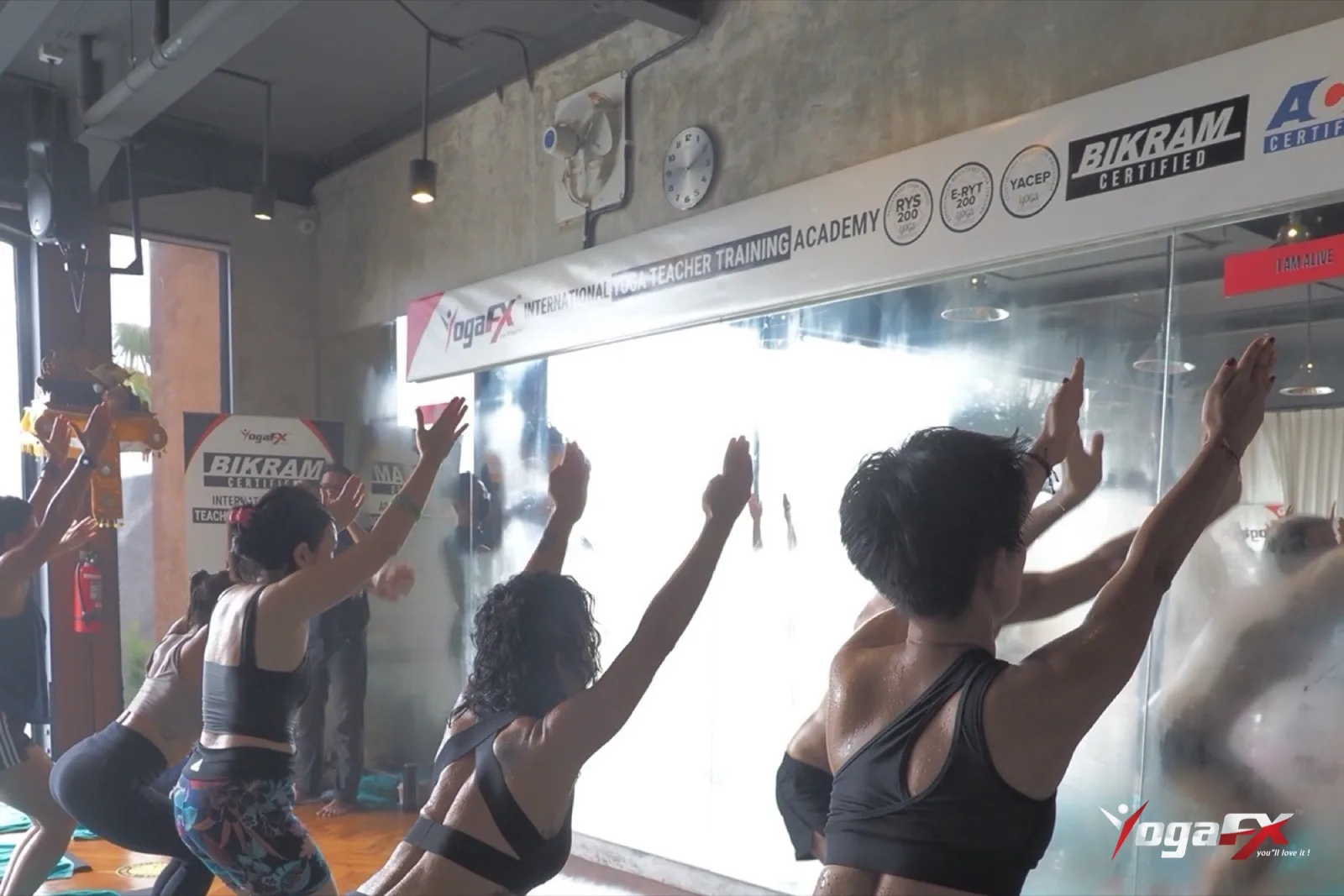
Most first-timers expect the room to feel wet. In practice, 40% humidity feels closer to a warm afternoon in Bali than to a steam room. Your skin gets damp within a few minutes. Sweat starts to run as you move into the standing postures.
The air does not cling to your face the way steam does. That means you can keep your breathing steady for longer, which is exactly what the class is designed to train.
How Sweat Cooling Works in Hot Yoga and Steam Rooms
Sweat only cools you when it evaporates. The CDC's NIOSH bulletin, Keeping Workers Hydrated and Cool Despite the Heat, explains that sweat evaporating off the skin allows for heat loss and cooling. The same page lists high air temperatures and humidity among the factors that raise the risk of heat illness.
In a steam room, the air already carries a lot of water, so sweat has little room to evaporate. It tends to drip off the skin, and the body gets less help with cooling. At about 40% humidity, sweat still evaporates. That gives your body one more way to shed heat while you move.
That is also why hydration matters more in a hot room, not less. Drink water before class, rest on your mat when you need to, and step out if you feel dizzy or unwell. Sweating a lot isn't a sign of a better session. It is a sign that your body is working to stay cool.
Four things humidity changes in a hot room
01
Sweat is your cooling system
Evaporation carries heat away from the skin, so it does most of the cooling work.
02
Saturated air slows it
Near-saturated steam leaves sweat little room to evaporate, so it mostly drips.
03
About 40% still lets it work
Sweat keeps evaporating while you move, giving the body one more way to shed heat.
04
Pace and water matter most
Drink early, rest on the mat when needed, and step out at the first sign of dizziness.
What a 26 and 2 Class Looks Like in Numbers
These are the settings a standard class uses, so you can hold them against any steam room you have tried. Put them side by side and the hot yoga vs steam room difference becomes concrete.
| Setting | 26 and 2 class standard | What it means for you |
|---|---|---|
| Room temperature | About 40 degrees Celsius | Warm enough to loosen the muscles, still easy to breathe through |
| Humidity | Near 40% | Damp like a tropical afternoon, so sweat can keep evaporating |
| Class length | 90 minutes | Long enough to build endurance, with a teacher guiding each step |
| Sequence | 26 postures and 2 breathing exercises | The same order every class, so progress is easy to see |
| Music and demonstration | None | Your attention stays on your breath and the teacher's words |
What the Research Says About Heat and Mood
The closest science to a 26 and 2 class, and to any hot yoga vs steam room comparison, is a trial of heated yoga. Researchers at Massachusetts General Hospital tested heated yoga in a 105°F (about 41°C) room with adults who had depression. After eight weeks, 59% of the yoga group had a drop of 50% or more in their depression symptoms. Among people on the waitlist, 6% did.
The findings were reported by the Harvard Gazette. Read it alongside the trial itself before you draw conclusions about your own practice.
What a trial can and cannot tell you
- It shows a pattern in one study group over a set number of weeks.
- It tested heated yoga, not a steam room, so it says little about steam on its own.
- It does not promise the same result for every student, or tell us that humidity is the active ingredient.
If you want the full breakdown of the study and what it means for practice, read our guide to the Harvard hot yoga depression trial. It walks through the numbers in more detail and explains what to ask before you start.
This is general information, not medical advice. Please consult a healthcare professional before starting any heat practice, especially if you have a heart condition, low blood pressure or diabetes, or if you are pregnant. If you take medication, ask your doctor how heat may affect it.
Where a Steam Room Fits
A steam room is a rest tool. You sit, you breathe and you leave. It can feel calming after a hard training day, and it asks nothing of your muscles.
The trade-off is that it gives you heat without movement. The leg strength, balance and spinal mobility from a 26 and 2 class simply don't happen while you sit in a steam room. That gap is the real answer to the hot yoga vs steam room question.
If you are also comparing heat rooms with saunas, our guide to hot yoga vs infrared sauna explains why the 26 and 2 room uses humid heat rather than a dry box. If you plan to add a sauna to your week, read sauna after hot yoga first, because timing and cooling change the answer.
Who Should Choose Which Room
When you weigh hot yoga vs steam room, match the room to the goal you have right now, not the one that sounds most extreme. Most students find their answer quickly once they name what they want from the next month.
- Choose the hot room if you want to build leg strength, balance and flexibility through one repeated sequence.
- Choose the steam room if you want a quiet, passive soak and you can keep the visit short.
- Use both only with a plan, cooling down and drinking water in between, and only after checking with your doctor.
If you already practise yoga and want to know what the heat adds to the same postures, read hot yoga vs regular yoga. It compares the two side by side, so you can see which changes come from the room and which come from the sequence.
Common Myths About Hot Yoga and Steam Rooms
Hot yoga vs steam room comparisons attract a lot of loose claims. These are the three we hear most often at the studio, and what we tell students instead.
More sweat means a better session
Sweat is a cooling system, not a score. Body size, fitness, hydration and the weather all change how much you sweat. A student who sweats less isn't working less. Judge a class by your form, your breathing and how you feel afterwards.
A steam room can replace a class
Warmth and quiet are real benefits, but they are not the same as practice. A steam room doesn't ask your legs to hold you up, your spine to lengthen or your mind to follow a sequence for 90 minutes. Heat without movement gives you heat. Heat with movement gives you practice as well.
Hot rooms clear waste out of the body
We don't make that claim. Your liver and kidneys handle waste, and sweat is not how they do it. What heat does well is warm the muscles, raise the heart rate during movement and make you slow down enough to notice your body. Those are useful effects, and they need no exaggeration.
First-Timer Tips for Any Heat Room
Whichever side of the hot yoga vs steam room question you land on, a few habits keep you safe and comfortable. They apply to a first 26 and 2 class and to a first steam room visit alike.
- Hydrate early. Start drinking water well before you go in, not only when you feel thirsty.
- Eat light. A heavy meal right before heat makes most people feel unwell.
- Go at your pace. Rest on the mat or step out if you feel dizzy, and tell the teacher.
- Cool down slowly. Sit somewhere cooler for a few minutes and drink water before you head back out.
- Respect your health. If you have a medical condition, ask your doctor before you start.
Most students feel more at ease by their third class. The heat stops being the main event, and the postures take over. That shift is the real goal of the room.
What Students Say About the Heat
Our students come from many countries, and many arrive nervous about the heat. These two quotes come from YouTube reviews recorded at the end of their training in Bali. Both are shared word for word.
Febri, in a 2024 YouTube review, described the first day in the room: "I feel my body broken but today easy for me." Many students say the second and third classes feel very different from the first, and this review describes that same shift.
Anika, in a 2025 YouTube review, put the arc of the training in one line: "start at rock bottom and then from there it could only just kind of go up." Anika's full video review is embedded below.
Teaching Heat Well: Mr. Ian Terry's Approach
Mr. Ian Terry, E-RYT 500, has taught more than 12,000 hours of hot classes. Since 2017 he has trained more than 1,500 graduates from over 80 countries. His classes use scripted dialogue, no music and no demonstration.
That structure lets students pace their effort, because they hear the next step before they have to guess it. It also gives teachers a clear model to copy when they lead their own rooms.
Ian trained for five years, from 2014 to 2019, alongside the founder of the Bikram Hot 26&2 method. That lineage shapes how the room is held. For teachers, humidity becomes part of the job. You read the room, watch faces and decide when a student needs a rest.

Learn the Room in Teacher Training
The Bikram Hot 26&2 Yoga Teacher Training MasterClass runs six days in a hybrid format. You study online before you arrive, then complete an intensive in Bali. The programme leads to a Yoga Alliance RYT 200-Hour certification and a Bikram Hot 26&2 200-Hour International Yoga Certification.
The next batch checks in on Sunday 24 January 2027 and checks out on Friday 29 January 2027, at the Soham Wellness Center in Seminyak. The Early Bird price is US$1,899, against a standard price of US$1,999.
Monthly plans start at US$250 with no interest. Our studios in Seminyak and Canggu use the same class standard, so the room you learn in is the room you will later teach in. Many trainees realise during the intensive that the hot yoga vs steam room question is really a question about teaching.
For the broader view of humidity and steam from a training angle, our Bikram teacher training guide to humidity and steam covers the same settings in more depth.
FAQ: Hot Yoga vs Steam Room
Is hot yoga better than a steam room?
They do different jobs. Hot yoga is a 90-minute class where you move through 26 postures, so it builds strength, balance and flexibility. A steam room is passive and suits rest. Choose the hot room for practice and the steam room for a quiet soak, and talk to your doctor first if you have a heart or blood pressure condition.
What is the humidity in a 26 and 2 class?
A standard 26 and 2 class is held at about 40 degrees Celsius with humidity near 40%. That is damp and warm, like a tropical afternoon, and far from the near-saturated air of a steam room. Studios set their own conditions, so ask any studio for its numbers before you book.
Does sweating in hot yoga flush out waste?
No. Sweat is your body's cooling system, not a measure of toxins or effort. Your liver and kidneys handle waste. Heat warms the muscles and raises your heart rate during movement, and that is useful on its own. Judge a class by your breathing, your form and how you feel afterwards.
Can I use a steam room after hot yoga?
Some people do, but give your body time to cool first and drink water before you go in. Keep the visit short and leave at the first sign of dizziness or nausea. If you have heart, blood pressure or pregnancy concerns, speak with a healthcare professional before combining heat sessions.
Still have questions? Message Mr. Ian and the YogaFX team on WhatsApp and we will answer them personally.