Hot yoga for depression is a question many people ask when other options have not helped, and the honest answer is promising but early. A 2023 Harvard-linked trial found that about 60% of people in a heated yoga group had symptoms ease by half or more. Here is what that shows, what it does not, and where a 26 and 2 class fits.
Table of Contents
What the Harvard Trial Found About Hot Yoga and Depression
The study was a randomized trial published in the Journal of Clinical Psychiatry in October 2023. It enrolled 65 adults aged 18 to 60 and compared a group doing heated yoga with a waitlist group that started later.
According to the Harvard Health summary of the trial, symptoms eased by 50% or more for about 60% of the yoga participants, compared with about 6% of the people on the waitlist.
So does hot yoga help with depression? The trial suggests it may help some people, but the answer has limits. The heated group did better than a waitlist, which shows a difference from doing nothing. It does not show that hot yoga for depression beats other forms of exercise or other yoga styles.
Why the study design matters
Those are large differences, but the design has limits. The comparison was against a waitlist, not against another form of exercise or another style of yoga. Harvard Health says plainly that the study did not investigate whether hot yoga was better than other types of yoga for treating depression. That sentence matters for anyone choosing between classes.
The trial also tested hot yoga in general, not the 26 and 2 sequence specifically. Our class follows a fixed set of 26 postures and 2 breathing exercises, so the study cannot tell us how much of any effect comes from the heat, the posture order, the breathing, or simply showing up each week.
Treat the result as encouragement to try a regular practice, not as a promise that a class will lift your mood.
How the 26 and 2 Class Is Built
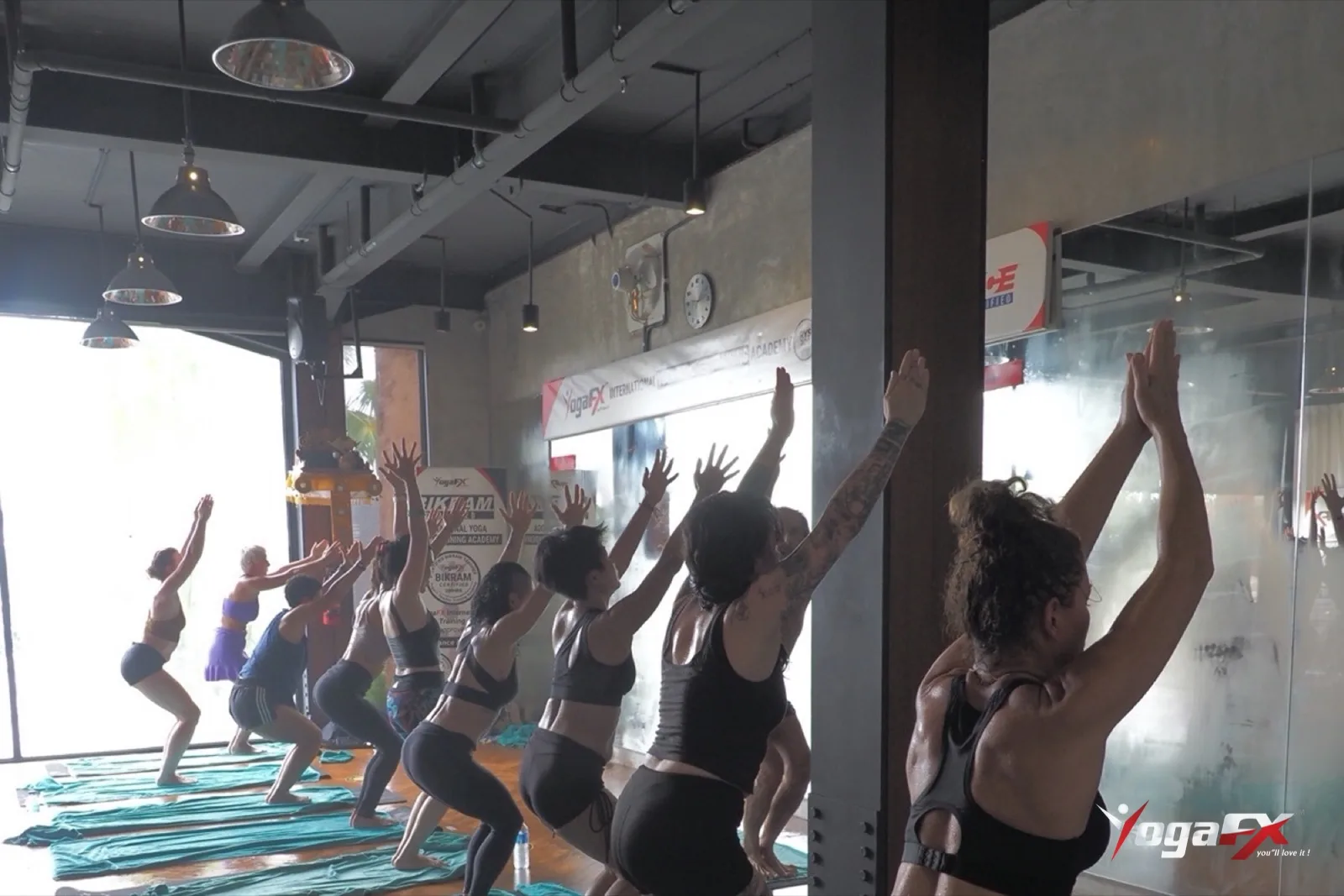
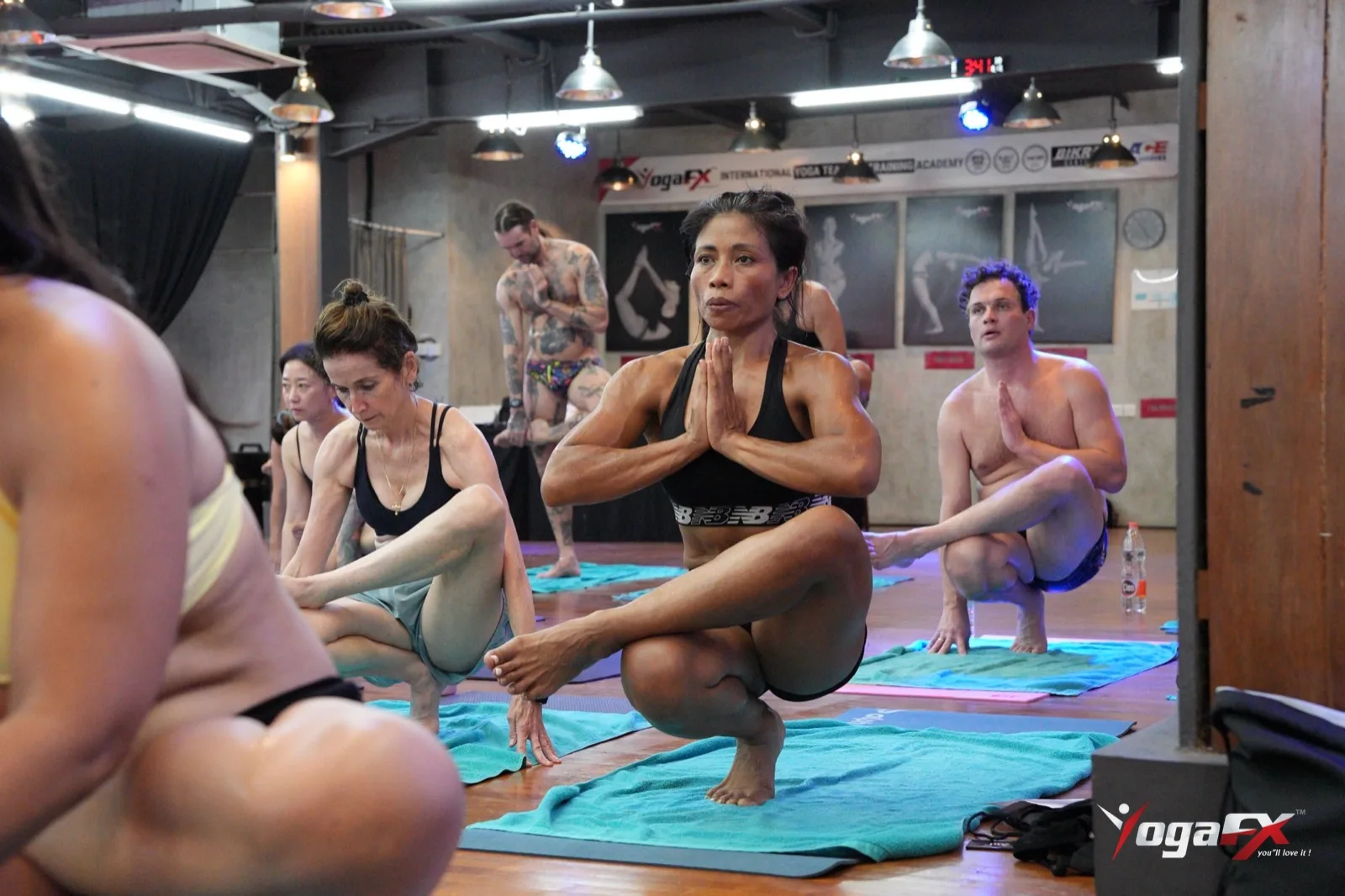
A 26 and 2 class runs for 90 minutes in a room of about 40 degrees Celsius, with humidity around 40%. The heat is the natural tropical heat of our Bali studios, not an electric heater. Every class follows the same order, so students who come back week after week stop wondering what comes next and can start noticing how their body and mind respond.
- The heat. About 40 degrees Celsius and 40% humidity, the natural heat of the Bali climate, not electric heating.
- The sequence. 26 postures and 2 breathing exercises, in the same order every class.
- The dialogue. The teacher follows a scripted dialogue, with no music and no demonstration, so students listen and move at their own pace.
- The length. Each class lasts 90 minutes, which is long enough for the breathing to settle but short enough to fit into a working week.
The no-music rule is the part new students notice first. Without a playlist, the room is quiet except for the teacher's voice and the breath. Some people find that calming. Others find it hard in the first week, and that is normal. A class built on the same dialogue every time gives the mind something steady to follow, and that steadiness is part of why many students return.
Mr. Ian Terry, E-RYT 500, has taught more than 12,000 hours. The class does not try to fix anyone. It asks you to do the postures in the same order, breathe through them, and report honestly to yourself how you feel afterwards.
What Students Say About Feeling Better
Students often describe changes that go beyond the body. One trainee in our YouTube reviews put it this way: "it's not just physical pain. I think it's emotional, as well, and psychological." The video is short, and it is worth watching for the full context.
Marta, who left a Google review in 2025, focused on the whole experience rather than the postures alone: "It's a life changing experience and I'd recommend to anyone, regardless if the end goal is teaching or not." Her words describe a training week, but the same reflection applies to students who come to the 26 and 2 class for their own health.
These are personal experiences. They are not measurements, and they do not replace the Harvard data or a clinical assessment. We include them because readers ask what a class feels like, and the people who have taken it are the best place to start.
Where the 26 and 2 Method Fits Alongside Care
Hot yoga as part of a plan
Hot yoga can be a useful part of a plan for depression. It should not replace one. The MedlinePlus depression information from the US National Library of Medicine states that "Depression often needs long-term treatment but getting help at the earliest sign of a problem can help manage your symptoms." It also advises seeing a provider or a mental health professional if you or someone you love is depressed.
If you are asking whether hot yoga for depression suits you, start with your own clinician. If you are already seeing a doctor, therapist or psychiatrist, tell them that you practise hot yoga.
They can help you judge whether the class supports your treatment and how it might change your sleep, energy or appetite. If you are not in treatment, speak to a provider first, especially when symptoms are severe or getting worse.
- Talk to your doctor first. Harvard Health advises talking to your doctor before trying hot yoga if you have certain conditions, such as heart problems.
- Keep your treatment going. A class is not a substitute for prescribed care, medication decisions or counselling.
- Tell your teacher. Share any health conditions, injuries or medications before class, so the teacher can advise you on what to skip.
- Rest when you need to. Leave the room or sit out a posture if you feel dizzy, unwell or unable to breathe comfortably.
Consult a healthcare professional before you change your treatment or add hot yoga for depression to your plan. This article is general information, not medical advice, and it cannot assess your own health.
None of this makes the class a risk for most healthy adults. It means the class works best as one part of a plan. A student in treatment can attend, tell their provider how it goes, and adjust together over the coming months.
Key Facts About the Study and the Class
The table below puts the trial figures next to the facts about our class, so you can judge hot yoga for depression on evidence rather than hype. Each line has its source. Where a figure comes from the trial, the source is Harvard Health. Where it describes our studio, the source is the YogaFX class format.
| Item | Figure | Source |
|---|---|---|
| Trial participants | 65 adults aged 18 to 60 | Harvard Health, 2024 |
| Symptoms eased by 50% or more, heated yoga group | About 60% | Harvard Health, 2024 |
| Symptoms eased by 50% or more, waitlist group | About 6% | Harvard Health, 2024 |
| Length of a 26 and 2 class | 90 minutes | YogaFX class format |
| Room heat and humidity in class | About 40 degrees Celsius, about 40% humidity | YogaFX class format |
Hot yoga for depression at a glance
Source: Harvard Health (2024), summary of a 2023 randomized trial in the Journal of Clinical Psychiatry. Class format: YogaFX 26 and 2 class description. The cards show trial results, not a promise for any individual.
Hot 26 and 2 Yoga Next to Other Options
Many people wonder whether a heated class is better than a standard yoga class or a gentle practice at home. The Harvard trial did not answer that question, so there is no evidence here that heat beats other styles.
What the studio adds is a fixed sequence in a set room, with a teacher leading the same dialogue each time. Our article on hot yoga versus regular yoga looks at what the heat changes in the same postures.
Readers often compare hot yoga for depression with a walk, a gym session or a standard class. For someone who feels low or heavy, the choice is less about the style and more about what they can keep doing.
A class that you can attend regularly, with a teacher who knows your history, is worth more than a perfect class you attend once. If a heated room feels too much, a gentler class or a short home practice may suit you better, and your provider can help you decide.
Preparing for a First Class
A first class can feel intense, especially in the heat. Preparation matters more than flexibility. Eat a light meal a few hours before class, drink water through the day, and arrive a few minutes early to settle in.
Students who rush in at the last minute often spend the first postures catching their breath. If you are coming to hot yoga for depression, agree on a plan with your provider before the first class, so you know what to watch for.
- Before class. Hydrate during the day, eat light, and tell the front desk about any injury or condition.
- During class. Follow the teacher's voice, rest when needed, and breathe through the postures rather than forcing them.
- After class. Rehydrate, eat a proper meal, and notice how you feel over the next day rather than judging the class in the room.
Many students keep a short note after each class. A line about sleep, mood, energy and appetite is enough. Over several weeks the note becomes useful for your next conversation with a provider, because it shows patterns that are hard to remember from one day to the next.
What the Research Still Needs to Answer
The Harvard-linked trial is encouraging, but it leaves important questions open. Researchers still need to know how long any benefit lasts, how many classes are needed, and whether heated yoga performs better than other forms of exercise or other yoga styles. They also need larger trials with more diverse participants, because 65 adults is a small group for a result this important.
Until those answers arrive, the honest position on hot yoga for depression is this. Hot yoga may help some people feel better, the evidence so far comes from one small trial, and the practice works best alongside professional care. Anyone who reads a bold promise about hot yoga for depression should be cautious, because the trial itself does not support one.
Wider Context: Mood, Anxiety and the Heat
Depression and anxiety often appear together, and many students who come to hot yoga for depression mention both. Our article on whether hot yoga is good for anxiety covers the breathing and stillness side of the practice. For the research itself, our guide to the Harvard depression study goes through the trial design in more detail.
For a research-led companion guide to hot yoga for depression, read the article on our online hot yoga teacher training site, which looks at the evidence from a teacher training angle. Readers who want the men's perspective can also read our piece on hot yoga mental health for men.
How YogaFX Teaches the 26 and 2 Method
YogaFX was founded in 2017 and has trained more than 1,500 teachers from over 80 countries. Mr. Ian Terry is the founder and lead teacher, an E-RYT 500 with more than 12,000 teaching hours. He also holds the title of Master Trainer with the Republic of Indonesia Yogasana Sports Federation, confirmed in June 2026.
Students practise at our Seminyak and Canggu studios in Bali, open from 06:00 to 22:00 every day. The studio classes follow the 26 and 2 sequence described above. Some students come to train as teachers, and others come for their own health. The studio team is happy to talk through either choice with you.
Adam, who left a YouTube review in 2024, describes what Mr. Ian's encouragement meant to him during the course: "Mr Ian's changed my life coming to this course his encouragement to do it." His review sits in the video below.
If you want to talk through whether a class suits your situation, message the team on WhatsApp. Mention that you are reading about hot yoga for depression, and a real person will reply with honest advice, including advice to speak to your doctor first when that is right for you.
Questions to Ask Before You Book a Class
A good class for hot yoga for depression should answer your questions clearly, not push you to book. Before you pay for a class or a course, ask the studio the questions below. Honest answers tell you more than any promise on a website.
- What happens in the first class? Ask how the class is structured, whether you can rest, and what the teacher expects from a beginner.
- Who teaches? Ask about the lead teacher's training and teaching hours, and whether the teacher can talk about health conditions with you.
- What if I feel unwell? Ask what the studio does if a student feels dizzy, and whether you can leave the room without any fuss.
- Does the studio work with my doctor? A good studio will welcome a note from your provider and will not discourage you from keeping treatment going.
If the answers feel rushed or vague, take that as information. A studio that is confident in its class will explain it plainly, and you can book a single class to see how it feels before committing to anything longer.
FAQ: Hot Yoga for Depression Questions and Answers
Can hot yoga help with depression?
A 2023 Harvard-linked trial found that about 60% of people in a heated yoga group had symptoms ease by half or more, compared with about 6% on a waitlist. The study was small and compared yoga only with a waitlist. Hot yoga may be a helpful addition for some people, but it is not a replacement for treatment.
Should I do hot yoga instead of seeing a doctor?
No. MedlinePlus notes that depression often needs long-term treatment. A class can be part of a plan, but it should sit alongside care from a doctor, therapist or psychiatrist. Keep your appointments and tell your provider about your practice, so they can support you as a whole.
Is hot yoga safe if I have heart problems?
Check with your doctor before you start. Harvard Health advises talking to your doctor before trying hot yoga if you have certain conditions, such as heart problems. Tell your teacher about any conditions, injuries or medications before class, and rest whenever you feel unwell.
What should a beginner expect in a 26 and 2 class?
Expect a 90 minute class in a room of about 40 degrees Celsius with about 40% humidity. The sequence is the same every class, with 26 postures and 2 breathing exercises. Expect to sweat, rest when you need to, and drink water before and after. Start with one class rather than committing to a long course.
Do you teach hot yoga in Bali?
Yes. YogaFX runs 26 and 2 classes at studios in Seminyak and Canggu, Bali, open from 06:00 to 22:00 every day. Mr. Ian Terry, E-RYT 500, leads the teaching. Message the team on WhatsApp to ask whether a class suits your situation.
Still have questions? Message Mr. Ian and the YogaFX team on WhatsApp and we will answer them personally.