The hot yoga mental health link for men is easiest to understand through one tool: the dialogue. In a 26 and 2 class, a fixed script, a mirror and two breathing exercises give your mind one job for 90 minutes. You listen, you watch yourself, you breathe. For many men, that structure works as a mental reset.
Table of Contents
That reset isn't magic, and it isn't therapy. It's a training effect. Because the words, the order and the room never change, your attention has fewer places to wander. So the class becomes a weekly hot yoga mental health drill in focus, much like a set of squats is a drill for the legs.
This guide explains how each tool works, what the research on heated yoga and mood has measured so far, and how a man can use the method sensibly. It's written from the teaching room of Mr. Ian Terry, E-RYT 500, who has taught the 26 and 2 for more than 12,000 hours.
Hot Yoga Mental Health for Men: Why the Dialogue Matters
Most hot yoga mental health articles talk about heat, sweat and endorphins. Those play a part. But in the 26 and 2, the biggest mental tool is something you hear, not something you feel. It's the dialogue, the scripted set of instructions the teacher speaks from the first breath to the final posture.
The dialogue tells you where to put your feet, when to breathe and how long to hold. It doesn't ask you to choose a pose, invent a flow or keep up with music. There is no music at all, and the teacher doesn't demonstrate. As a result, your only task is to listen and follow.
For a man who spends the whole day deciding, planning and fixing, that's a rare break. You hand the decisions over for 90 minutes. Then the mind, which usually races ahead to the next problem, has to stay with the next instruction instead.
- One voice to follow: the teacher's words replace your own running commentary.
- One place to look: your own eyes in the mirror, not your phone or your neighbour.
- One rhythm to keep: slow nasal breathing, even when the heart rate climbs.
If you want the full background on the script itself, our guide to what the 26 and 2 dialogue is and why it matters covers its history and which studios still teach it word for word.
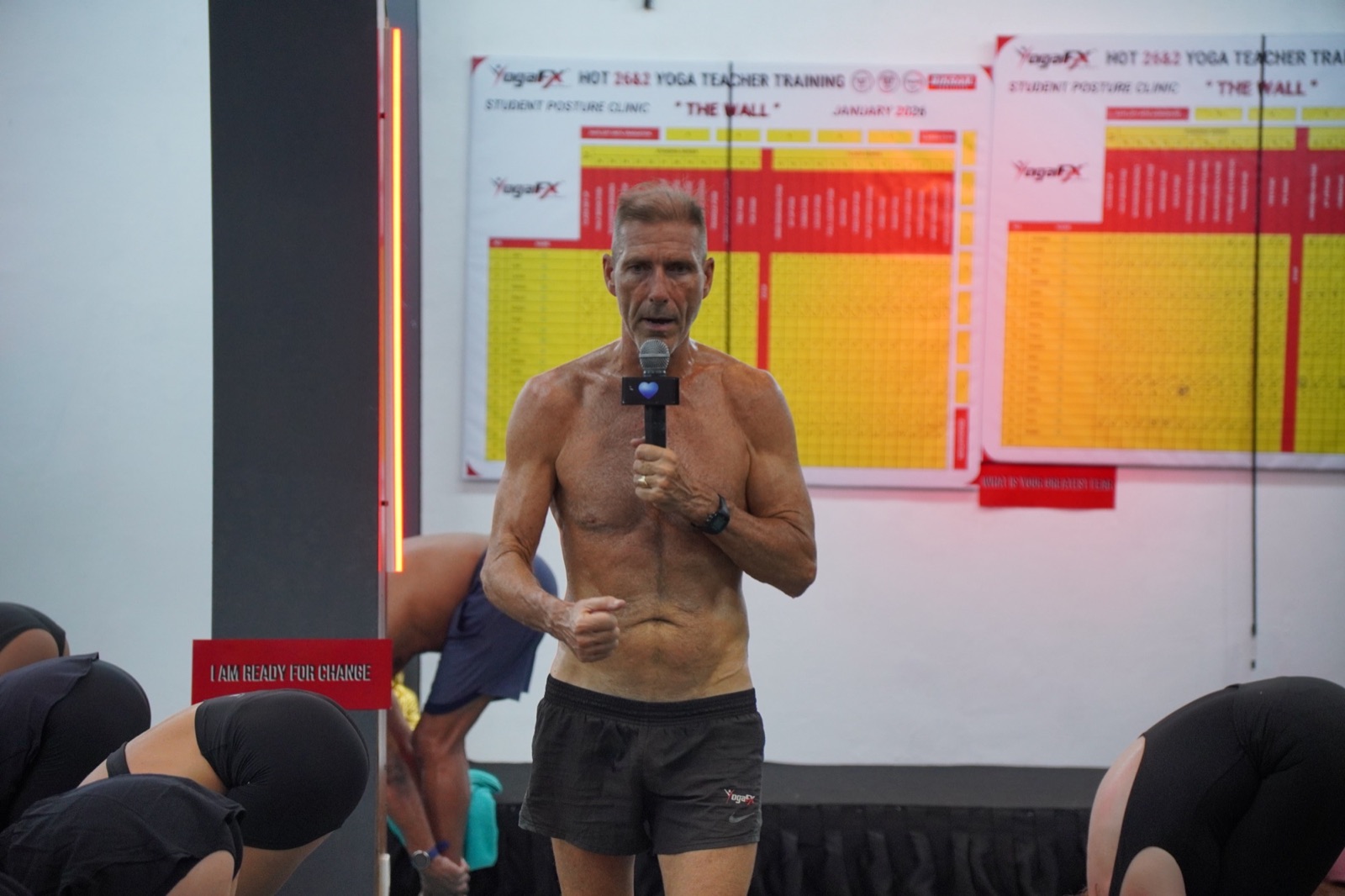
The Three Focus Tools, Side by Side
The dialogue never works alone. It pairs with the mirror and with the breath, and together they form a simple system. Each tool asks for a different kind of attention, and each one shows up at a fixed point in the class.
| Focus tool | What it asks of you | Where it shows up in class | What it trains in your head |
|---|---|---|---|
| The dialogue | Listen and follow the exact words, in order | From the first breath to the last posture, 90 minutes | Sustained attention, letting go of control |
| The mirror | Look into your own eyes and check your alignment | Every standing posture, most of all the balancing series | Honest self-observation without judgment |
| The breath | Keep slow nasal breathing while the effort rises | Pranayama at the start, Kapalbhati at the end, and every hold in between | Staying calm while the body is under stress |
The next three sections take each tool in turn. Read them as a practical hot yoga mental health manual: what to do with your attention, posture by posture, so the class works on your head as well as your hamstrings.
Tool One: Listening to the Dialogue
Why fixed words calm a busy mind
A busy mind loves open questions. What's next? Am I doing this right? How long is left? In most fitness classes, those questions never stop. In the 26 and 2, the dialogue answers them before you ask, so the mind has less to chew on.
Because the script is the same in every class, you learn it without trying. After a few weeks, you know that "lock the knee" comes before the kick in Standing Head to Knee. That predictability is the point. Instead of planning, you simply arrive at each cue as it comes.
How to listen, not just hear
Hearing is passive. Listening is a skill, and you can train it on purpose. Try these three habits in your next class:
- Act on the cue, not before it. Wait for the word "change" to switch sides, even if you know it's coming.
- Catch one new detail per class. Pick a posture and notice an instruction you've never followed fully, such as "toes pointing forward" in Triangle.
- Return when you drift. When your mind wanders to work, let the next spoken word bring it back. That return is the rep.
That last habit is the heart of hot yoga mental health training. Every time you notice a drifting thought and come back to the teacher's voice, you've done one repetition of attention training. A 90-minute class gives you dozens of those reps.
One of our trainees, Sandra, described how learning the script changed her practice during teacher training:
"Knowing the details of it, the dialogue and everything, has just been so empowering."
Sandra, YouTube review, 2025
Tool Two: The Mirror as an Honest Coach
Many men dislike the mirror at first. It feels vain, or it shows a body that's stiffer than they'd like. Yet in the 26 and 2, the mirror has a practical job. It lets you check your alignment, and it gives your eyes a fixed point so your balance and your attention stay steady.
The dialogue often tells you to look at yourself, eye to eye. In the balancing postures, such as Dandayamana Janushirasana (Standing Head to Knee) and Tuladandasana (Balancing Stick), a wandering gaze usually means a fall. So the mirror trains a kind of focus you can actually see: when your eyes stay still, you stay up.
Watching without judging
The mirror also teaches something harder. You see yourself shake, sweat and fall out of a posture, then step back in. Over time, most students stop reacting to that picture with frustration. Instead, they treat it as information: hips uneven, shoulders up, try again.
That shift is a quiet hot yoga mental health gain for men who are hard on themselves. In fact, it's a small, repeatable lesson in self-observation without self-attack. You look, you adjust, you carry on. Nobody is grading you, and the next set is a fresh start.
- Find your own eyes first, before you look at your feet or your neighbour.
- Name one fix per posture, such as "hips square", then let the rest go.
- Keep the face soft. A clenched jaw in the mirror is often the first sign you're forcing it.
Tool Three: Breathing Under Load
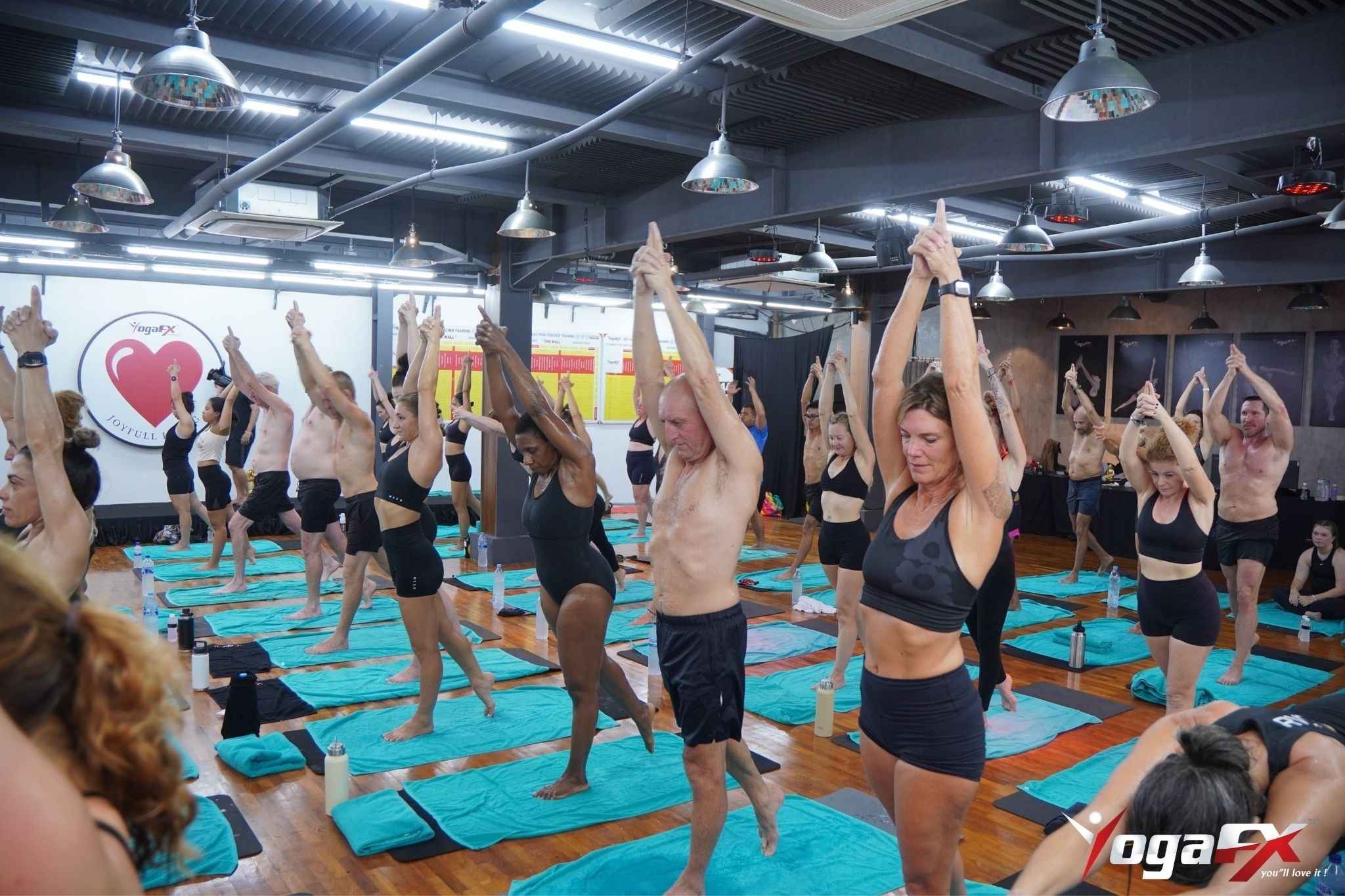
The 26 and 2 opens with Pranayama, or Standing Deep Breathing, and closes with Kapalbhati, or Blowing in Firm. Between those two, the dialogue keeps reminding you to breathe normally through the nose. That sounds simple until you're holding Awkward Pose in a room near 40°C with about 40% humidity.
Many men breathe high in the chest and hold the breath when they brace. It's a habit from lifting, sport and stress. In the heat, that habit backfires quickly, because a held breath makes the effort feel even harder. So the class keeps asking for one skill: keep the breath slow while the body works hard.
From the mat to the meeting room
That skill is where hot yoga mental health work leaves the studio. A man who can keep a calm nasal breath in Balancing Stick has practised the same response he needs in traffic, in a tense meeting or in an argument at home. The heat is the stressor. The breath is how you answer it.
Then there's the stillness. After the standing series, the class pauses in Savasana, lying flat and still for two minutes. Short Savasanas follow between the floor postures. For many men, these are the hardest moments of the class, because doing nothing feels wrong. Yet learning to lie still with a racing heart is exactly the reset the session is built around.
A 90-Minute Mental Reset, Stage by Stage
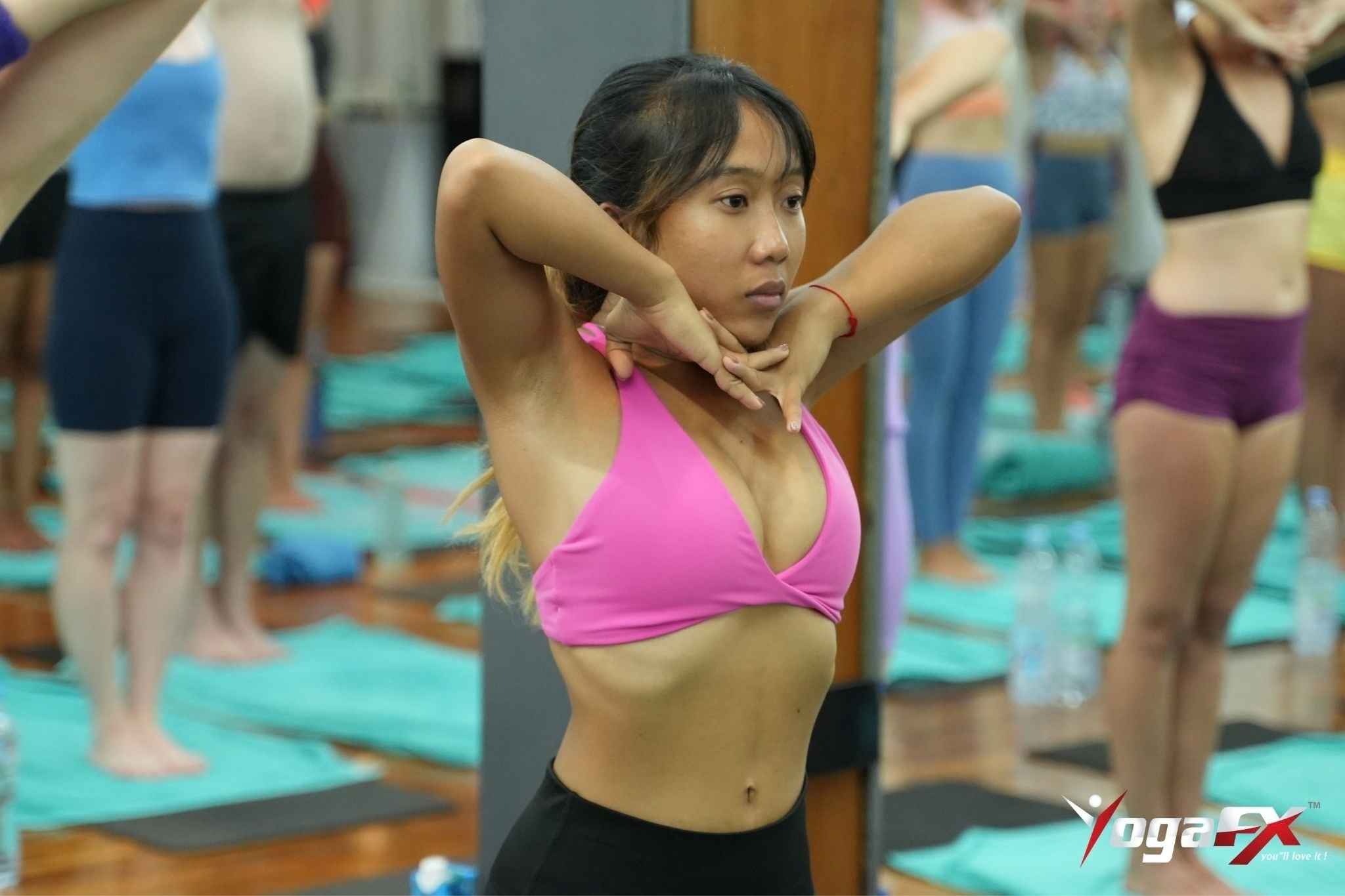
Here's how the three hot yoga mental health tools stack up across one class. The format is fixed, so these stages arrive in the same order every time you practise.
2 breaths
Open and close with breathing
Pranayama sets a slow rhythm. Kapalbhati ends the class with a clear head.
26 postures
One fixed order
Nothing to plan and nothing to choose, so attention stays on the next cue.
40°C
About 40% humidity
The heat makes a drifting mind costly, so focus becomes a practical need.
0 music
No demonstration either
Only the teacher's words and your own eyes in the mirror.
59%
Halved depression symptoms
After 8 weeks of heated yoga, against 6.3% on the waitlist (Nyer et al., 2023).
- Arrive and breathe. Pranayama gives the mind its first simple job: count the breath and follow the words.
- Warm up and lock in. Half Moon, Awkward and Eagle bring the heart rate up while the dialogue keeps you on task.
- Balance and focus. The balancing series demands the steadiest gaze in the mirror, which is why most men feel their mind settle here.
- Lie still. The two-minute Savasana asks you to stop, even though the body wants to fidget.
- Work the floor and finish. The spine and kneeling series alternate effort and rest, then Kapalbhati closes the session.
The reasoning behind this order is covered in our guide to why every posture in the 26 and 2 sequence comes in this exact order.
What the Research Says About Hot Yoga Mental Health
The hot yoga mental health research is young, but it's moving. It also says nothing yet about the dialogue on its own. The studies tested whole heated classes, so they can't tell us which part of the class did the work. Here's what has been measured.
Depression: the Massachusetts General Hospital trial
The strongest result comes from Boston. As the Harvard Gazette reported on the 2023 trial led by Maren Nyer, 80 adults with moderate to severe depression were randomised. The yoga group did 90-minute Bikram yoga sessions in a room heated to 105°F, for eight weeks.
The headline number is clear. 59% of the yoga group cut their symptoms by half or more, compared with 6.3% of the waitlist group. Participants averaged about 10 classes, not the 16 prescribed. Even so, symptoms dropped in people who managed only half the planned dose, which suggests one class a week may still help.
Anxiety and stress
A 2022 study from the University of Cambridge by Hui and colleagues found that hot yoga reduced state anxiety, the short-term, in-the-moment kind. Johns Hopkins Medicine also notes that regular yoga practice helps reduce stress. Neither finding is specific to men, and neither isolates the dialogue. Still, both fit what students describe after class: a quieter head and a lower baseline of tension.
The gap for men
Here's the honest catch. A 2025 systematic review by Willmott and colleagues, presented to The Physiological Society, pooled 43 hot yoga studies. About 76% of participants were women. The authors called the psychological findings "promising, albeit inconclusive" and flagged a lack of high-quality designs.
So the hot yoga mental health results probably apply to men, but nobody has tested that directly. For a closer look at who took part in the key trials, see this breakdown of what researchers measured in men on our online training site.
Please note: yoga is not a replacement for care. If low mood, anxiety or stress affects your daily life, consult a healthcare professional. If you're in crisis, contact your local emergency number or a crisis line today.
Why the Structure Suits Many Men
There's a practical reason the 26 and 2 approach to hot yoga mental health appeals to men who would never book a meditation retreat. The class doesn't ask you to talk, share or sit cross-legged and empty your mind. It gives you a clear task, a clear finish line and a clear way to measure progress.
- A defined job. Follow the words. That's easier for many men than "clear your mind".
- Visible progress. The same 26 postures return every class, so a deeper Camel or a steadier Standing Bow is easy to notice.
- A fixed time box. Ninety minutes, then it's over. No open-ended commitment.
- No talking required. You can be in a room full of people and still keep your thoughts to yourself.
That structure is also why the physical side and the mental side grow together. For a posture-by-posture view of the body gains, read our guide to the hot yoga benefits for men across each posture group.
How to Use the Class as a Mental Reset
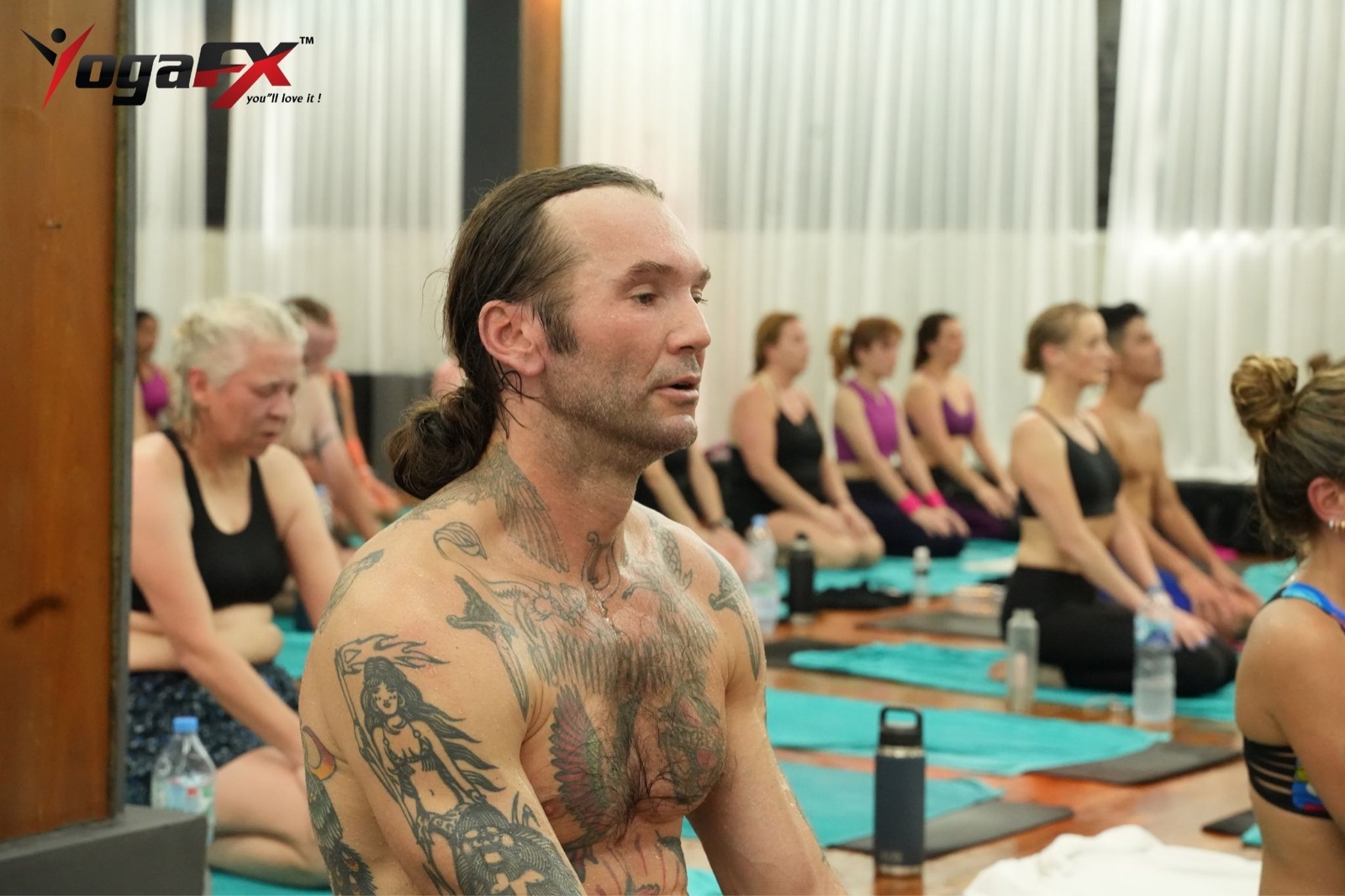
If you want hot yoga mental health benefits, treat the class like training, with a plan and a simple log. The Massachusetts General Hospital trial asked for two classes a week for eight weeks, so that's a sensible starting dose.
- Check with your doctor first, especially if you have heart problems, high blood pressure or take medication that affects heat tolerance.
- Book two classes a week. If life gets busy, keep one. The research suggests a lower dose can still help.
- Pick one focus tool per class. One week, listen for new cues. The next, hold your own gaze. Then the breath.
- Rate your head, not just your body. After class, score your mood and your mental noise from 1 to 10.
- Keep any existing care. Add the class to your support, never swap it for treatment.
Expect the first two or three classes to feel rough, and don't judge your hot yoga mental health progress by them. The heat is the main challenge at first, and focus usually comes once the body adapts. Sit down when you need to, drink water before class, and stop if you feel dizzy.
For help building a weekly routine around work and training, see our 26 and 2 frequency guide by goal.
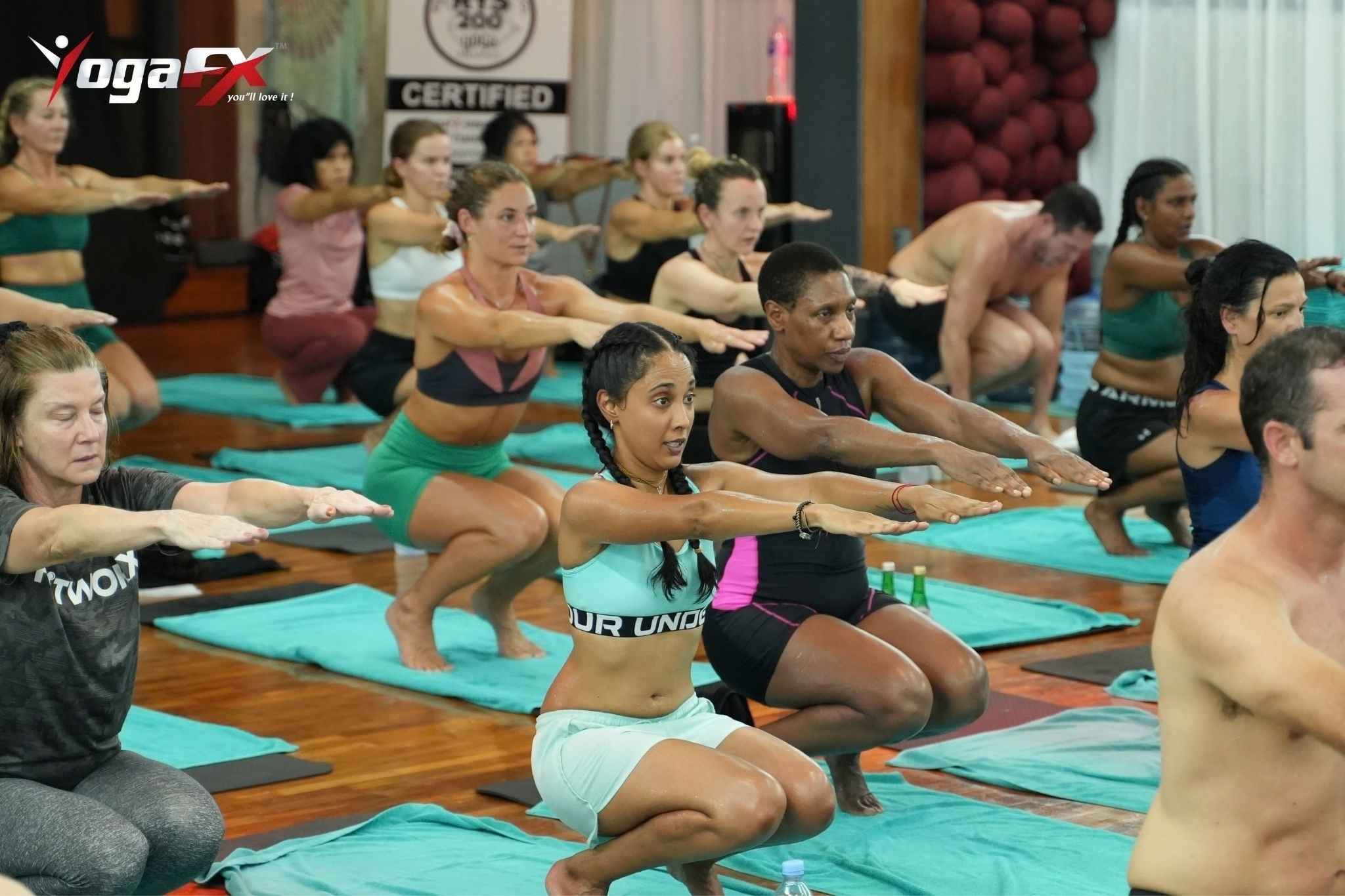
What Trainees Say About the Mental Side
The research describes averages. Trainees describe the experience. These comments come from video reviews recorded at the end of YogaFX teacher trainings, where the dialogue is learned word for word.
Michelle arrived feeling she had to hold everything together. By the end of the week, she said the training had changed that:
"This experience has taught us that it's okay to not be okay, it's okay to break, it's okay to cry."
Michelle, YouTube review, 2025
Nadya, a teacher in Jakarta, described the burnout many working men will recognise:
"I just keep pushing myself just to work and teach, work and teach, work and teach. And these things, like this whole week, is just so amazing for me."
Nadya, YouTube review, 2026
You can watch Michelle's full review below.
Learn the Dialogue With Mr. Ian Terry
Some men come to the 26 and 2 for hot yoga mental health benefits and stay for the method. If you want to understand the dialogue from the inside, or teach it, that's what the YogaFX training is built for. Every cue in this guide is taught word for word, with the reasoning behind it.
- Your teacher: Mr. Ian Terry, E-RYT 500, with 12,000+ teaching hours and 1,500+ graduates from 80+ countries since 2017.
- Lineage: five years, from 2014 to 2019, training with the founder of the method.
- Title: Master Trainer, Republic of Indonesia Yogasana Sports Federation.
- Format: a 6-day hybrid, with online pre-course study, then an intensive in Seminyak, Bali.
The Bikram Hot 26&2 Yoga Teacher Training MasterClass next checks in on Sunday 24 January 2027 and checks out on Friday 29 January 2027, at Soham Wellness Center. Graduates earn a Yoga Alliance RYT 200-Hour and a Bikram Hot 26&2 200-Hour International Yoga Certification.
The Early Bird price is US$1,899, against a normal US$1,999, and interest-free plans start from US$250 a month. See the 26 and 2 yoga teacher training page for dates and inclusions.
FAQ
Why is Bikram yoga so addictive?
Many students say the class leaves them with a quieter head, and the fixed sequence makes progress easy to see. Because the same 26 postures and 2 breathing exercises return every time, each small gain shows up. That mix of a clear task, visible progress and a calm finish keeps people coming back.
What type of yoga is best for mental health?
There is no single best style. Heated yoga has some of the strongest recent evidence, with a 2023 Massachusetts General Hospital trial showing 59% of participants halving depression symptoms. Men who like structure often prefer the 26 and 2, because the dialogue gives the mind one clear job. Always consult a healthcare professional about treatment.
Is hot yoga high intensity?
It's demanding, but not in the same way as interval training. A 26 and 2 class runs for 90 minutes in about 40°C with 40% humidity, so the heart rate stays high even during holds. Beginners should rest whenever they need to, drink water before class, and stop if they feel dizzy or unwell.
Does Bikram yoga include meditation?
Not as a separate seated practice. Instead, the class works like a moving meditation. You follow the dialogue, hold your own gaze in the mirror and keep a slow nasal breath. The Savasana rests between postures add short periods of stillness, so attention training runs through the whole 90 minutes.
Is Bikram yoga spiritual?
The 26 and 2 is taught as a physical and mental practice, not a religious one. There are no chants, no music and no belief system to adopt. Some students find it deeply personal, while others treat it like training. Both approaches work, because the dialogue and sequence stay the same for everyone.
Still have questions? Message Mr. Ian and the YogaFX team on WhatsApp and we'll answer them personally. This article is general information, not medical advice.