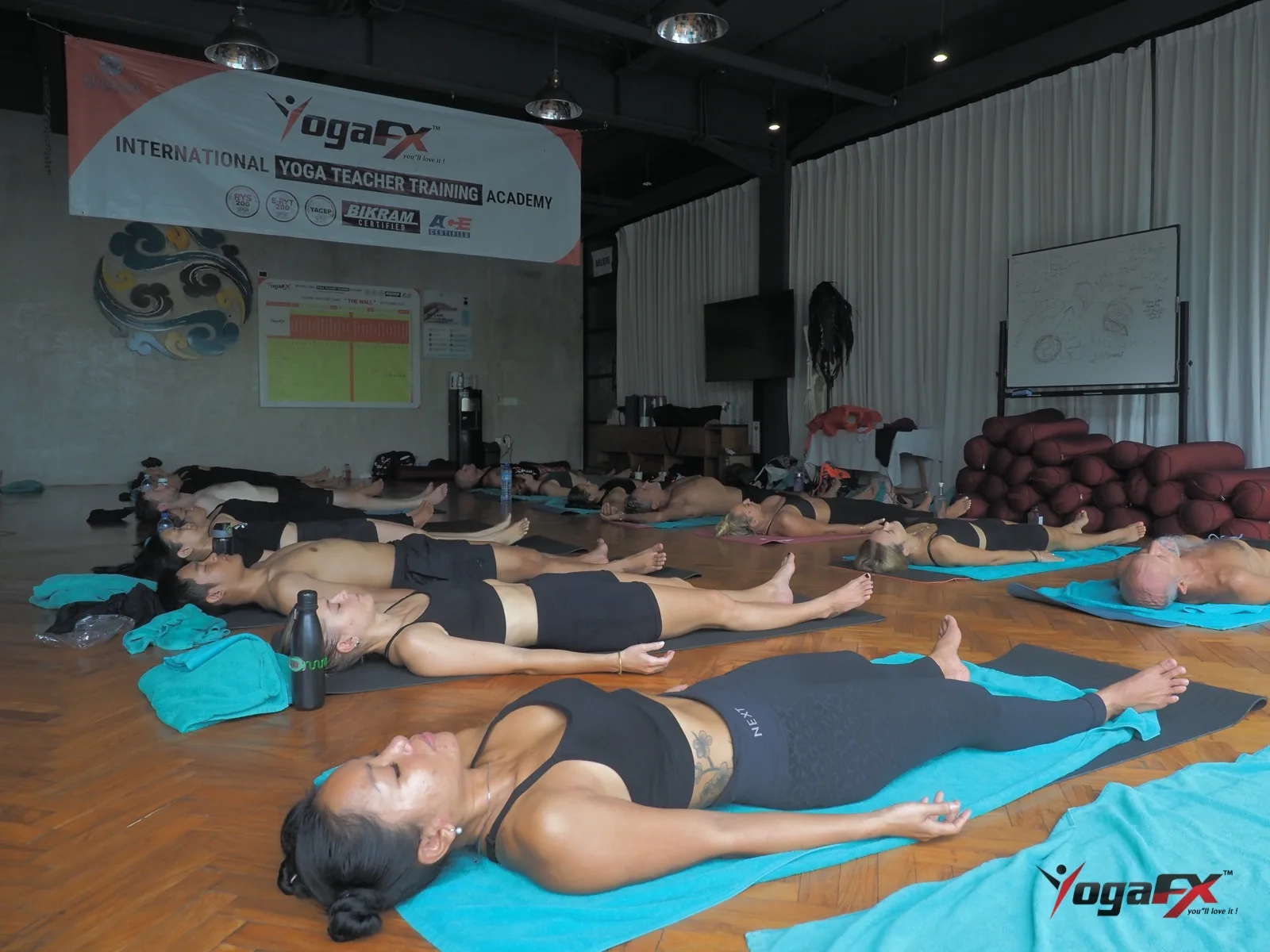
Does hot yoga increase cortisol? Briefly, one hard class can raise cortisol for a short time, as most exercise does. Over several weeks the picture changes. The main randomised trial of heated hatha yoga found that stressed women who reacted strongly showed a smaller cortisol response. Here is what it did, and did not, show.
Table of Contents
Does hot yoga increase cortisol during one class?
Cortisol is the hormone your body releases when it meets a demand, whether that demand is a sprint, a deadline or a hot room. A single session is a demand. Your heart rate climbs, you sweat, and the stress axis responds. That response is normal, and it is not the same thing as living with chronically high cortisol.
The question most students really ask is different: does the stress response get better or worse after weeks of practice? A single class cannot answer that.
You need a trial that measures the same person before and after a course of classes, under a stressor that is repeatable. Only a small number of studies have done this for heated yoga, and one of them is the study this article keeps returning to.
What the 2016 heated yoga trial actually found
This is the study most articles on hot yoga cortisol levels cite. The study is Hopkins et al. (2016), published in the Journal of Consulting and Clinical Psychology. The first author is L. B. Hopkins of Southern Methodist University, so the name has nothing to do with Johns Hopkins. It is often shortened to "the Hopkins study" in online articles, which is where some of the confusion starts.
Who took part and what changed
Fifty-two women took part. All reported high everyday stress and a tendency to eat when upset. The researchers randomly assigned 27 of them to heated hatha yoga, taught as Bikram-style classes at 104°F (40°C), for eight weeks.
The other 25 joined a waitlist. Before and after the eight weeks, each woman sat through a short laboratory stressor, and saliva samples tracked how much her cortisol rose under pressure. Scientists call that rise cortisol reactivity.
The stress test result
The result was specific, and it's worth reading slowly. Women who started with high reactivity, meaning their cortisol jumped the most under stress, showed a larger drop in that jump after the yoga course than the waitlist group did (p = .042, d = .85).
Women who started with low reactivity showed no significant difference between the groups. So the trial does not say heated yoga lowers cortisol for everyone. It says the people whose stress response ran hottest to begin with seemed to benefit most.
The dose matters
Pay attention to the dose as well. The women were asked to attend regularly, and attendance fell short of the plan for many of them, so the trial tests a fairly light dose of heated yoga rather than a full training programme. Treat the result as a promising signal, not a final answer.
| Study | Heat and format | What was measured | Result |
|---|---|---|---|
| Hopkins et al., 2016 (52 women, 8 weeks) | Heated hatha yoga at 104°F (40°C) vs waitlist | Cortisol reactivity to a laboratory stressor | Larger reduction in high reactors (p = .042); no significant change in low reactors |
| Lambert et al., 2020 (16 experienced practitioners) | One class at 105°F (41°C) vs room temperature at 74°F (23°C), crossover design | Inflammatory markers IL-6, IL-10 and TNF-alpha. Cortisol was not measured | Serum IL-6 rose after heated yoga only |
The heated yoga numbers at a glance
Source: Hopkins et al., 2016, J Consult Clin Psychol, PMID 26963599.
Where breath and rest fit in the 26 and 2 method
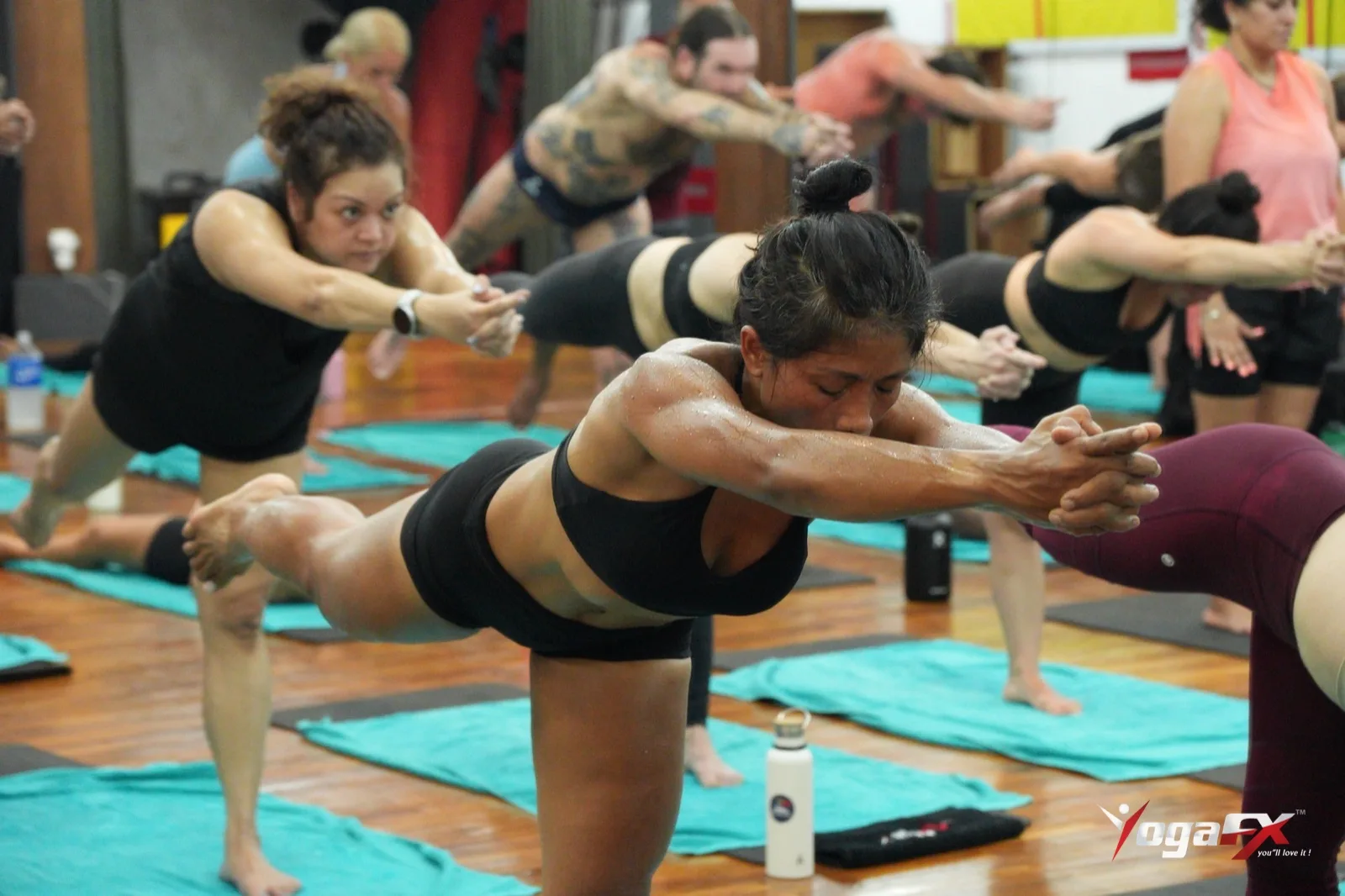
The 26 and 2 sequence is built around twenty-six postures and two breathing exercises, ending in rest. Most of the attention in articles about heat goes to the postures and the temperature. The breath and the rest deserve a closer look, because those are the parts of the class where a student practises calming the stress response on purpose.
Here's the honest limit. No published trial has separated the effect of the heat, the postures, the breathing and the rest. The 2016 study delivered the whole class, so nobody can say which part produced the smaller cortisol response. Anyone who tells you that breath alone lowers cortisol is going further than the research does, and you shouldn't take that claim at face value.
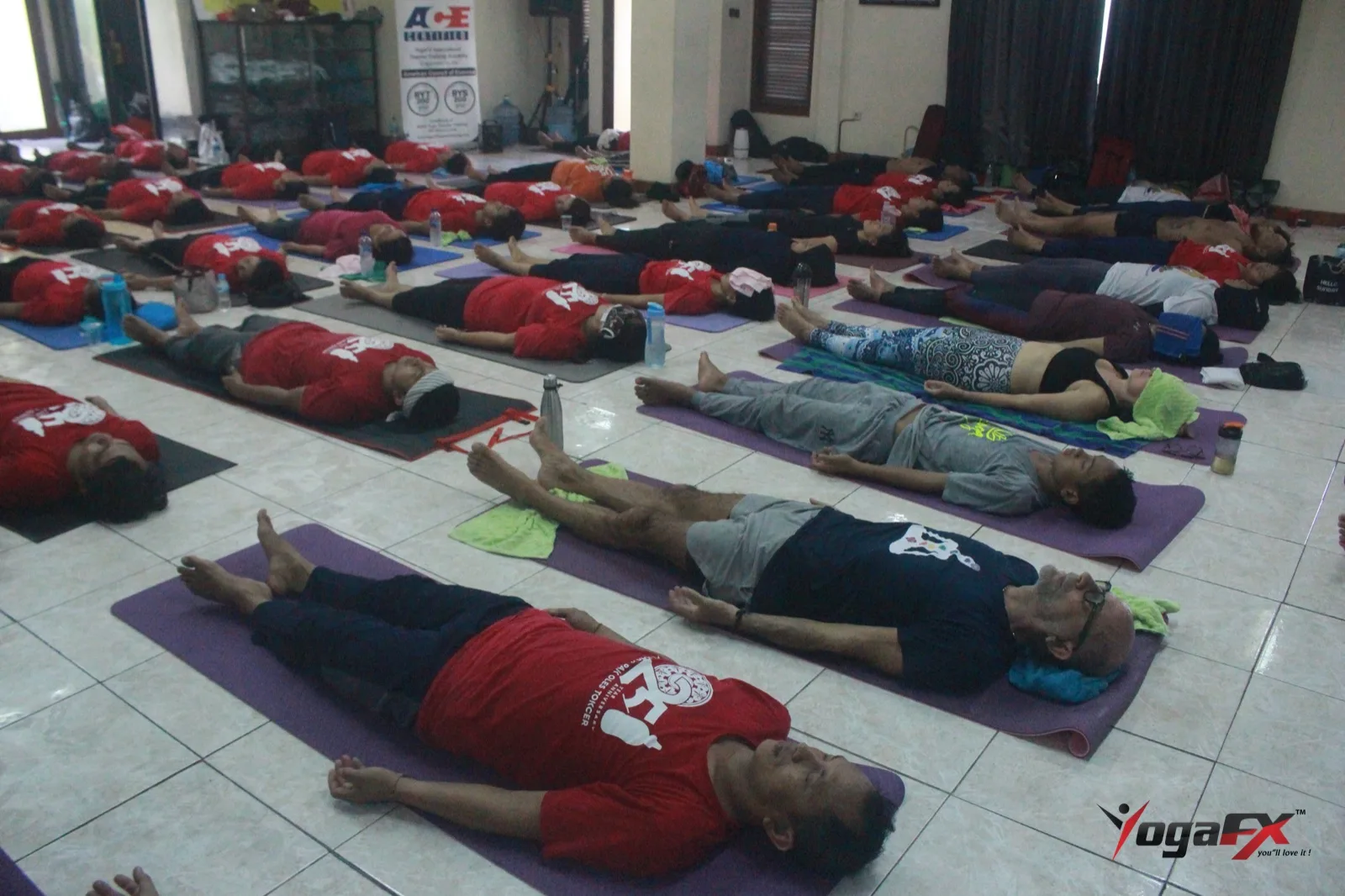
What the method does give you is a repeatable structure. You meet the heat, you breathe through a set pattern, and then you lie down for savasana. Savasana is the moment the body is asked to stop bracing, and it may matter for how you feel afterwards, even though it has not been measured on its own.
Treat the breath and the rest as a practice you can keep, not as a hormone treatment. For readers asking about hot yoga and high cortisol, that distinction is the most useful thing to take away.
What heat does to the body, beyond cortisol
Cortisol is only one signal, and hot yoga stress hormones are not the whole story. The second study in our table, Lambert et al. (2020), took sixteen experienced practitioners through a single class in two conditions: heated at 105°F (41°C) and at room temperature (74°F, 23°C).
The crossover design meant each person did both. Cortisol was not measured. Instead the team tracked inflammatory markers, and serum IL-6 rose after the heated class only.
That finding does not mean heat is harmful. It means the body responds to a hot class with measurable changes beyond the stress hormone, and a single session is a different experience from a full course. The sixteen participants were experienced, so the result may not describe a beginner in her first week. Read it as one more piece of the picture, not a verdict.
How to practise if stress is your reason for coming
If you already know your stress runs high, the research points to a few sensible habits. None of them is a guarantee, and all of them are things you can adjust in real life.
- Start with a steady rhythm. A regular weekly pattern is what the research on cortisol has looked at, and occasional heroic sessions tell you little. Build a rhythm you can keep for weeks.
- Drink before and after. Heat makes you lose fluid. Arrive hydrated and keep water close during the class.
- Do not skip savasana. The rest is part of the practice, and it is the part you can most easily cut when you are tired.
- Speak to a clinician first. If you have a heart condition, blood pressure problems, pregnancy or any medical concern about heat, talk with a healthcare professional before you start. This article is education, not medical advice.
For a related question about mood and stress, read our piece on whether hot yoga helps anxiety. The same caution applies: the evidence is promising but still small.
What the research does not show yet
The gaps that remain
It is worth being plain about the gaps. The 2016 trial compared yoga with a waitlist, so it cannot tell us whether heat, movement, company or simply having a scheduled hour did the work.
It enrolled women only, and it was small, with about twenty-five people in each group. Nobody has yet tested a full year of heated practice, or compared heated yoga directly with unheated yoga using cortisol as the main outcome.
Three limits deserve a place in every summary of this research:
- No active comparison. A waitlist cannot separate heat from movement, company or a scheduled hour.
- One sex and a small group. The results come from 52 women, so men and mixed groups are untested.
- Short follow-up. Eight weeks tells us little about a year of heated practice.
Those gaps aren't a reason to dismiss the work. They are a reason to hold the conclusions loosely. The sensible reading is that regular heated hatha yoga may help a stressed person's cortisol response settle over time, and that a single class is more likely to produce a short rise than a lasting change.
One more gap matters for anyone reading headlines. Most articles report a single cortisol number, and a single number is hard to interpret. Cortisol follows a daily rhythm, rising in the morning and falling through the day, so a reading taken at the wrong hour can mislead. That is why the 2016 trial measured reactivity, the change from a baseline under a stressor, rather than one morning sample.
Whatever you read next, check the study design before you check the headline. A waitlist comparison, a small group of one sex, and a short follow-up each limit what the result can say. A result that survives all three limits is worth more than a dramatic result from a single online post.
How to read a cortisol study without getting lost
Cortisol studies use a few terms that appear in almost every summary. The first is baseline, the level before any stressor. The second is reactivity, the size of the rise under the stressor. Most stress research cares more about reactivity than about a single reading, because reactivity tells you how the system responds to pressure, which is closer to what people mean when they say they feel stressed.
The second cluster of terms is statistical. A p-value tells you how unlikely the result would be if there were no real difference between groups, and a small value such as .042 is below the usual threshold of .05.
An effect size such as d = .85 tells you how large the difference is in practical terms. A result can be statistically significant and still small, or large and imprecise, so both numbers are worth reading.
Finally, look at the comparison group. A waitlist receives nothing for the study period. An active control receives a different activity of similar length. The 2016 trial used a waitlist, which is why it can show that the yoga group changed, but not why. Read the design, then the result, and only then the advice.
A simple weekly plan if stress is why you practise
If you want a plan rather than a theory, here is a practical structure that fits the research without promising more than it can deliver. Adjust it to your health, your schedule and what your clinician advises.
- Pick two fixed days. Choose two classes you can attend for at least eight weeks, the length of the 2016 course. Put them in your calendar the way you would a work meeting.
- Keep the rest in every class. Stay for savasana even when you are tempted to leave early. The breathing and the stillness are the parts you can repeat at home.
- Notice the change, not the number. Track how you sleep, how you handle a bad email, and how quickly you settle after a stressful day. These are the outcomes a student can observe without a laboratory.
- Review after eight weeks. If your stress is easier to manage, continue. If it is not, or if it is getting worse, talk with a clinician rather than pushing harder in the heat.
A plan like this is deliberately modest. It reflects what the evidence supports today, and it leaves room for the stress you bring into the room, which may need more than a yoga class to resolve.
What students say about stress in the room
Numbers from a laboratory tell one story. Students tell another, and their words are worth reading alongside the research. These reviews come from YogaFX graduates and students who shared their experience publicly.
Three student voices
Agnieszka, YouTube review, 2022: "I spent here three weeks, lovely weeks but very very difficult. I was afraid that I didn't manage. I did it." She describes the course as hard work that she came through, which is an honest picture of the course.
Amanda, YouTube review, 2022: "The people that you meet here change your life and your heart forever." Some students describe the group as much as the practice when they talk about how the course changed them.
Nyoman, YouTube review, 2024 (translated): "At first I felt two weeks was too long. But what do I feel today? Too fast." His graduation reflection shows how quickly the time in the room can change a person's sense of pace.
How this fits the 26 and 2 method and your next step
Your next step with 26 and 2
This site exists to explain the method, posture by posture and breath by breath. Ian Terry, who has taught more than 12,000 hours and holds the E-RYT 500 credential, built the teaching around that explanation. If you want the method itself in more depth, our introduction to 26 and 2 yoga is the place to start.
Students who want to go further can look at the next Bikram Hot 26&2 teacher training batch. Check-in is Sunday 24 January 2027 and check-out is Friday 29 January 2027, at Soham Wellness Center in Seminyak. The training is hybrid, with online preparation before the intensive in Bali. Dates and details are on our course dates page.
For a teacher-side view of the same research, read the companion guide on hot yoga and cortisol from the teacher training side. It goes deeper into the trial design, which is useful if you are deciding how to teach stressed students.
FAQ
Does hot yoga increase cortisol after one class?
A single hard session can raise cortisol for a short time, as most physical effort does. That is a normal response to demand. The research on heated yoga looks at what happens after several weeks, when a change in the stress response can be measured. One class tells you very little about long-term stress hormones.
Did the 2016 hot yoga study test cortisol directly?
Yes. Hopkins et al. (2016) measured cortisol reactivity in 52 women before and after eight weeks of heated hatha yoga or a waitlist. Women who started with high reactivity showed a larger reduction (p = .042). Low reactors showed no significant difference. The study was small and used a waitlist, so treat it as a promising signal.
Is it safe to do hot yoga if I am stressed?
For most healthy adults, a steady routine of heated yoga is generally practised without problems, but heat adds demand on the heart and circulation. If you have a heart condition, blood pressure problems, pregnancy or another medical concern, speak with a healthcare professional first. Drink water before and after class, and stop if you feel dizzy.
Why does savasana matter in the 26 and 2 method?
Savasana is the rest at the end of the class, when the body is asked to stop bracing and the breathing settles. No trial has measured savasana on its own, so its effect on cortisol is not known. It is worth keeping even on days when the postures feel like too much.
How often should I practise if I want to manage stress?
The 2016 trial was built around regular weekly classes, and the women did not all keep up with that plan. Consistency seems to matter more than intensity. Choose a schedule you can keep for weeks. If your stress is severe or persistent, a clinician can help you decide what else is needed.
Still have questions? Message Mr. Ian and the YogaFX team through our contact page and we will answer them personally.