What is a male yoga teacher called? Usually a yoga teacher or yoga instructor, the same as anyone who leads a class. The traditional Sanskrit word yogi is masculine, but it names a practitioner rather than a job. In the Original Hot 26&2 tradition, the title that counts is the one you earn by delivering the same 26 postures and 2 breathing exercises, word for word, to every class.
Table of Contents
This guide explains each name a man may hear in a studio, what it means, and which credentials actually prove training. It also explains why the voice in the room matters more than any title on a card.
The everyday answer: yoga teacher or yoga instructor
Studios, registries and students use yoga teacher or yoga instructor for anyone who leads a class. Neither title changes with gender. A man who leads a 90-minute class in a room near 40°C is a yoga teacher in exactly the same way as a woman who does.
People also search for a male yoga instructor name, and the honest answer is the same: there is no separate male word for the job. Studios differ on the wording they print on a poster, but the job itself is the same whoever stands at the front.
Our own lead trainer, Mr. Ian Terry, holds the E-RYT 500 credential and has more than 12,000 teaching hours behind him. We suggest that new teachers use a first name in class and keep their credentials for paperwork, profiles and registration forms. A first name sounds warm to a room full of strangers. A credential proves the training.

Yogi, yogin and yogini: what the older words mean
Yogi is the word most people reach for first, and it is the answer people usually mean when they ask what is a male yogi called. It comes from Sanskrit and describes someone who practises yoga. In traditional usage it is masculine, and yogini is the feminine form. Some older texts also use yogin, which means much the same thing.
The word describes a practitioner, not a teaching role. A student with ten years on the mat is a yogi in that sense, and so is a teacher. Calling a man a yogi tells people he practises. It does not tell them he can teach a class, so the word alone should not carry a job title.
- Yogi: a practitioner. Masculine in traditional usage.
- Yogini: the feminine form of the same word.
- Yogin: an older spelling you will see in some texts.
Guru, acharya, swami and pandit
These words sit above a teacher's name, and they carry weight. Use them with care, because each one points to a role that someone else usually confers. A teacher who introduces himself as a guru has skipped the step where students decide.
- Guru: a teacher who guides a student. In most traditions students give this word, rather than the teacher claiming it.
- Acharya: a teacher of authority, used for someone who passes on a tradition.
- Swami: a monastic title. It fits only someone who has taken monastic vows.
- Pandit: a learned scholar, usually of Sanskrit or ritual texts.
If a poster calls its teacher a guru, ask whether the students chose that word. Many of them did not, and that is worth knowing before you book a course.
How a new male teacher should introduce himself
Most new teachers worry about this on day one, so a simple rule helps. Say your first name, say what you are about to do, and stop there. For example: "Hi, I'm Daniel, and I'll be leading your class today." That is enough, because the room wants clarity, not a résumé.
Keep titles out of the opening line. Credentials belong on your profile, your certificate and your registry listing, where people look for proof. If a student asks about your training, answer in one honest sentence, such as the school you trained with and the credential you hold.
- Your first name. It is short, warm and easy to remember.
- The class. Tell the room what is about to happen, so nobody has to guess.
- One calm instruction. Begin the dialogue in a steady voice, because that sets the pace for the next 90 minutes.
Students remember how a teacher made them feel in the first two minutes. A clear voice and a plain introduction do more for that feeling than any string of letters.
Credentials: the letters after a name
Yoga Alliance letters describe training and experience. They say nothing about gender, and they say little about how well someone can deliver a class. The table below shows what each common credential records and what it leaves out, so you can read a teacher's profile with clear eyes.
| Credential | What it records | What it does not record |
|---|---|---|
| RYT 200 | A 200-hour training at a Yoga Alliance registered school | How well you deliver the dialogue |
| E-RYT 500 | An advanced teacher credential, built on a 500-hour training and logged teaching | Your gender or your teaching style |
| Bikram Hot 26&2 200-Hour International Yoga Certification | Completion of a 26 and 2 teacher course | Your standing on a national registry |
Letters matter when a studio asks for proof of hours. They matter less when you stand at the front of a room and have to hold it for ninety minutes, with a script you must say correctly every time.
Teacher, trainer and trainee: titles inside a teacher training
Inside a teacher training, the vocabulary shifts. A trainee is a student working toward a certificate. A trainer is the person who teaches the trainees and checks their delivery. The lead trainer is the senior role in that group. At YogaFX, Mr. Ian Terry is Founder and Lead Instructor, and he holds the E-RYT 500 credential.
Graduates leave as newly certified teachers, and their first title is simply yoga teacher. Many then add Yoga Alliance letters once they register. That order matters, because the title follows the work and not the other way round.
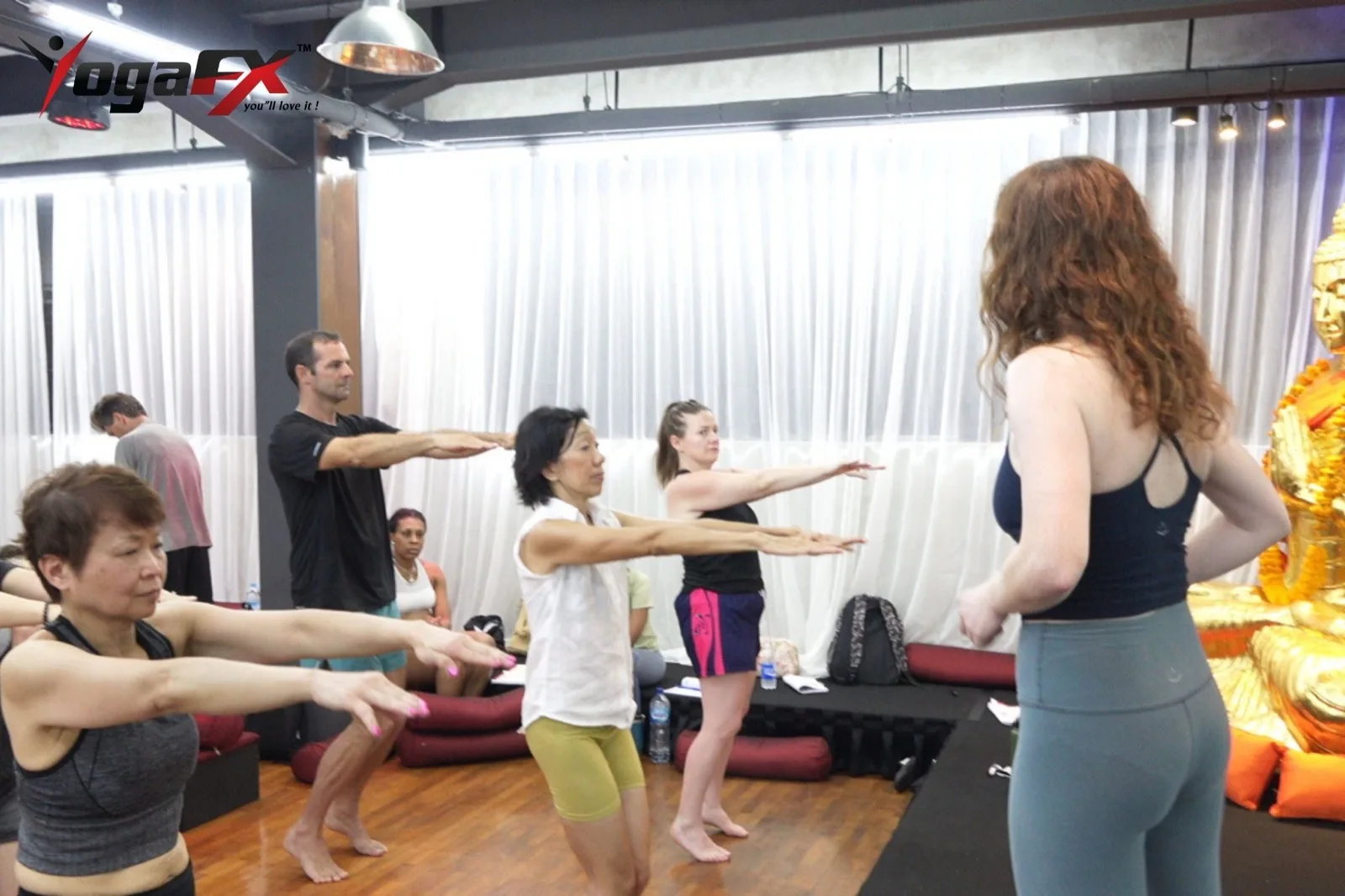
How a 26 and 2 teacher is named in the room
The 26 and 2 method runs on a fixed spoken script called the dialogue. The teacher says the same words in the same order, and students hear instructions rather than a demonstration. That is why the voice in the room matters more than any title written on a card.
For a man teaching this method, the practical skills are simple to name and take real practice to learn: breathe before you speak, keep a steady pace, and cue each posture the same way every time. Our guide to learning to deliver the 26 and 2 dialogue as a man works through each of those skills in order.
Students notice a teacher who rushes the script or drifts off it. They notice even more when the teacher stays calm in a room near 40°C and keeps the cues steady. A title will not do that work for you, and no name tag can cover for a shaky dialogue.

Four facts a teacher's title should not hide
Common naming mistakes to avoid
Most naming problems come from borrowing a word before earning it. These five show up again and again on teacher profiles, and each one is easy to fix.
- Calling yourself a guru before students have chosen that word for you.
- Using swami without having taken monastic vows.
- Printing yogi as a job title. It describes a practitioner, so pair it with yoga teacher if you use it at all.
- Listing letters you have not earned or have not registered.
- Confusing the school with the credential. A school's name is not a personal qualification.
A plain, accurate title builds trust faster than a grand one. Students can check a registry in a minute, so honesty is also the safest choice.
What students say about male teachers
Students rarely ask what to call a teacher. They ask whether the teacher is kind, clear and safe in a hot room. Three reviews from YogaFX students show what that looks like in practice.
"The personal interaction to all his student as individuals is exemplary and respectful, reassuring and brings out the confidence in the most reluctant and doubtful student"
Konrad, Google review, 2025
"support and guidance from Mr Ian and Dr Sumit throughout the training"
Teeni, Google review, 2023
"it's lifechanging experience" (from the video transcript)
Septa, a trainee in our YouTube review of a 2024 graduation ceremony. Watch the video
None of these reviews is about a title. They talk about support, confidence and whether the teacher made the student feel capable, and those are the signs to look for when you choose a teacher.
What the research says about yoga and mood
A title does not change how a practice feels, but teachers often ask whether yoga helps with mood. A 2023 trial from Massachusetts General Hospital, led by Maren Nyer and published in the Journal of Clinical Psychiatry, tested Bikram yoga over eight weeks. Adults with depression who did the yoga reported a significantly greater drop in depressive symptoms than a waitlist group, and no serious adverse events were reported. The Harvard Gazette describes the study, which analysed 65 people, in its report on heated yoga and depression.
Harvard Health adds, more broadly, that yoga also brings mental benefits, such as reduced anxiety and depression. Its article "Yoga for better mental health" also points to small studies and cautions that the evidence is still developing.
Read these as early signs rather than a promise, because the trial was small and results vary between people. Heat adds its own considerations. If you have a health condition, take medication or are unsure whether a heated room suits you, talk to a healthcare professional before your first class. This section is general information, not medical advice.
Before you enrol: a short checklist
If you are asking what to call yourself, you are probably close to training. A few checks will tell you whether a course will give you a title you can stand behind.
- Check the registry. Confirm the school's status on Yoga Alliance yourself, rather than relying on a logo.
- Ask about the dialogue. A good course tests word-for-word delivery, not only theory.
- Ask who teaches you. Look for a lead trainer with a clear teaching record and a published credential.
Most people start with the 200-hour credential, then look at advanced status later. Our guides on RYT 200 and how the sequence maps to Yoga Alliance hours and E-RYT 500 and how teaching hours count toward it explain each step in more detail.
Before you enrol, read the accreditation section of our guide to accredited yoga teacher training. It explains what a registry proves and what it cannot check.
For a wider look at the names teachers use, YogaFX's guide to yoga teacher titles covers the common terms and how each one is used across studios.
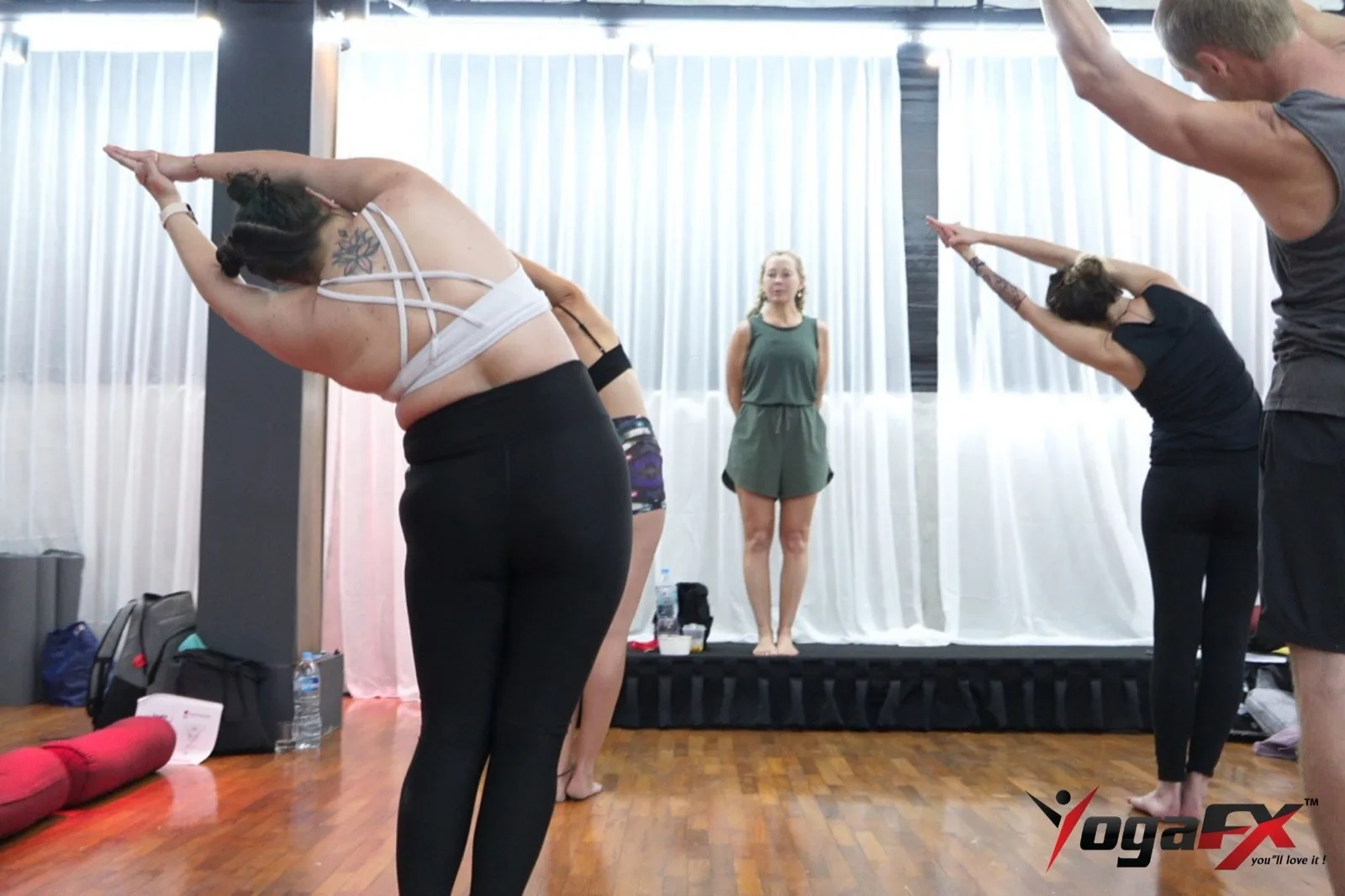
Students who want to see the room first can visit our studio in Seminyak, at Jl. Pangkungsari Gg Jepun No.888, Kuta Utara, Seminyak, Badung, Bali 80361. It opens from 06:00 to 22:00 every day, and your first class is free with the Free 1-Day Guest Pass. Watching a class from the back of the room tells you more about a teacher's voice than any title on a website.
FAQ
What is a male yoga teacher called?
A male yoga teacher is usually called a yoga teacher or yoga instructor, the same as anyone who leads a class. Yogi is the traditional Sanskrit word for a practitioner and is masculine, but it describes a practice rather than a job. Credentials such as RYT 200 and E-RYT 500 show training and experience. In a 26 and 2 room, the teacher's delivery of the dialogue matters more than any gendered title.
Is yogi the right title for a male teacher?
It can be, but it is the wrong question for a job title. Yogi means a person who practises yoga, so it fits a student as well as a teacher. Many teachers use yoga teacher on their profiles and keep yogi for personal use. Ask the studio which title it prefers, and check that the name on your certificate matches the title you use in public.
Does the title guru need to be earned?
In most traditions, yes. A guru guides a student, and students usually give the word rather than the teacher claiming it. Mr. Ian Terry and the YogaFX team suggest that new teachers use a first name in class and keep their credentials in writing. Save guru for a teacher whose students have chosen that word.
What is the difference between RYT 200 and E-RYT 500?
RYT 200 means you completed a 200-hour training at a Yoga Alliance registered school. E-RYT 500 is an advanced credential for teachers who hold a 500-hour training and have logged teaching experience. Both describe training and experience, not gender or method. Check a school's status on the registry before you enrol, because the registry is the source that confirms it.
Still have questions? Message Mr. Ian and the YogaFX team on WhatsApp and we will answer them personally.