An E-RYT 500 is a Yoga Alliance teacher who holds a 500-hour training and has logged real teaching: 2,000 hours over at least four years. For a 26 and 2 teacher, the 90-minute classes you lead every week are the raw material. This guide shows how those hours add up, with a worked example.
Table of Contents
Mr. Ian Terry holds the E-RYT 500 credential and has taught more than 12,000 hours. He built this guide from the questions teachers ask him most. We keep it plain, because the rules are simpler than the forum threads make them look.
E-RYT 500 requirements, in full
The E-RYT 500 meaning comes down to two parts: training and teaching experience. You need both, and the second part takes years. Yoga Alliance sets the numbers in its published Standards for Registered Yoga Teachers, and we checked each figure below against that document.
The training part is a 500-hour programme. You can take it as one 500-hour course. You can also finish a 200-hour training and add a separate 300-hour advanced training later, even at a different registered school.
The experience part is where most teachers stall. Here is what Yoga Alliance asks for on the standard path:
- 2,000 teaching hours submitted in total.
- 1,500 of them taught after finishing a 200-hour or 500-hour training at a registered school.
- The other 500 taught after finishing a 300-hour or 500-hour training.
- At least four years of teaching after training.
So the 300-hour step is not decoration. Hours you taught before it do not fill the last 500. That detail catches many teachers out, and we'll return to it in the worked example below.
| Credential | Training you need | Teaching you need | Time since training |
|---|---|---|---|
| RYT 200 | 200 hours at a registered school | None | None |
| RYT 500 | 500 hours (200 plus 300, or one 500-hour course) | At least 100 hours since the 200 or 500 training | None stated |
| E-RYT 200 | 200 hours at a registered school | At least 1,000 hours | At least 2 years |
| E-RYT 500 | 500 hours (200 plus 300, or one 500-hour course) | 2,000 hours: 1,500 after the 200 or 500, 500 after the 300 or 500 | At least 4 years |
If you want the wider map of the 200, 300 and 500 tiers, our UK sister site covers it in a breakdown of the RYT 500 tiers. This page stays on one question: how does a 26 and 2 teacher get to the top tier?
The E-RYT 500 at a glance
2,000
Teaching hours
The total you submit to Yoga Alliance.
4 years
Minimum teaching time
Counted after your training ends.
500
Hours after the 300
Taught once the 300-hour training is done.
US$115
First-year registry fee
US$50 once, then US$65 a year.
What is an E-RYT 500 worth, and when do you need one?
Most teachers need neither the RYT 500 nor the E-RYT 500 at the start. An RYT 200 lets you teach, and Yoga Alliance asks for no teaching hours at that level. The RYT 500 asks for at least 100 teaching hours since your 200-hour or 500-hour training, so it's a short step once you've taught for a few months.
The E-RYT 500 is a different league: it takes years, not months. It matters if you want to lead teacher trainings or run continuing education workshops, because Yoga Alliance ties those roles to the E-RYT. If your goal is simply to teach good classes, the RYT route is enough, and the extra years of logging buy you little.
- Teach classes only: RYT 200 is enough to start.
- Specialise and look senior: RYT 500 once you have the 300 hours and 100 teaching hours.
- Train other teachers: E-RYT 500, with 2,000 hours and four years behind you.
The other route: the Experienced Teacher Pathway
Some teachers trained in several places and never took a single 500-hour programme. Yoga Alliance has a separate route for them. It asks for 500 hours of training drawn from no more than three pathways of study, at least 10 years of teaching after the first 200 hours, and 3,000 teaching hours in more than one modality, all documented. It also carries its own application fee.
That route is slower, so most 26 and 2 teachers take the standard path above. It is worth knowing it exists, though, especially if you have a mixed training history.
How 26 and 2 classes count toward your E-RYT 500 hours
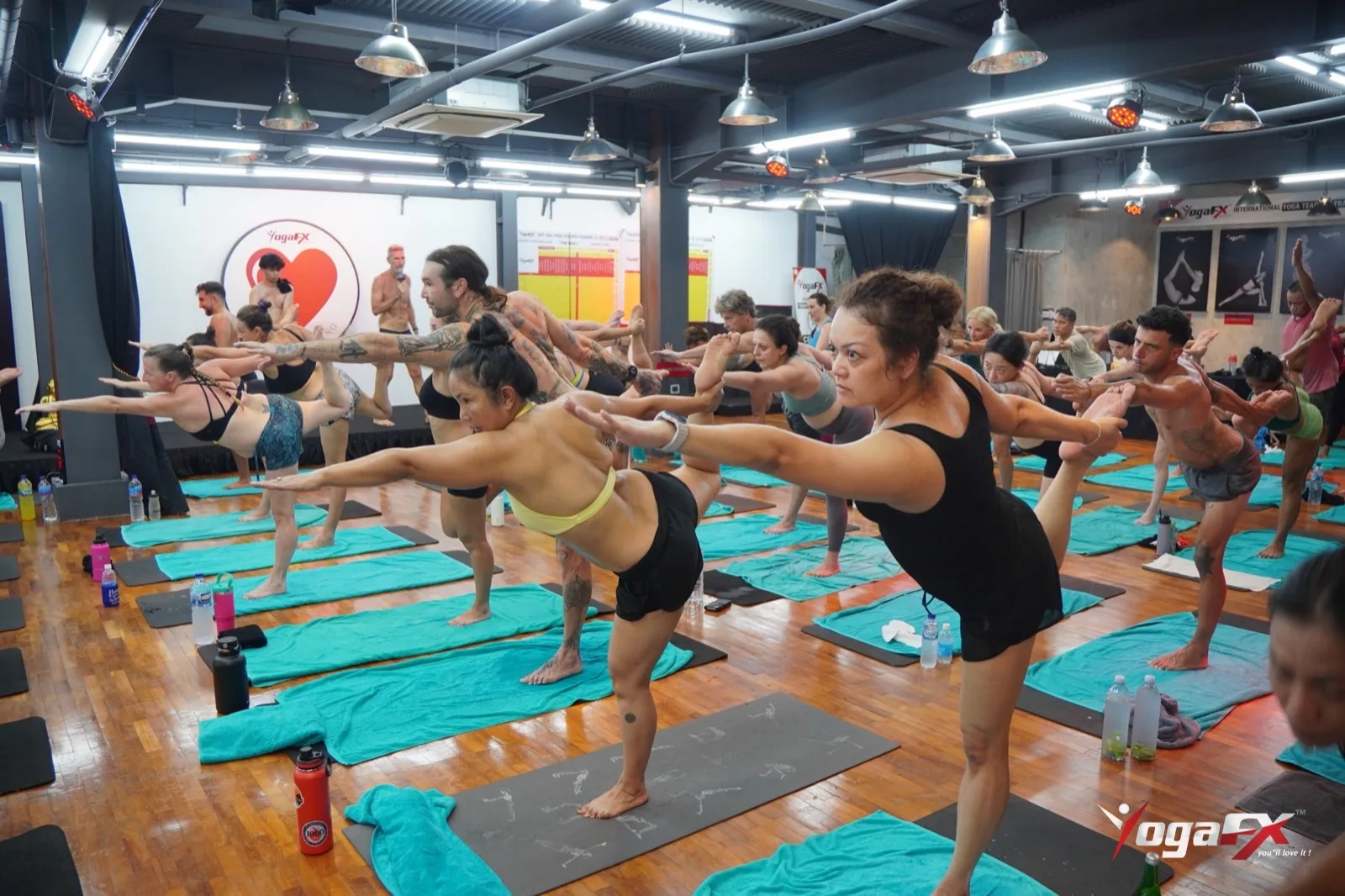
A 26 and 2 class runs 90 minutes in a room at about 40°C. The teacher recites the dialogue, word for word, for the full class. That is a lot of teaching hours packed into one fixed format.
Here's the honest catch. The Yoga Alliance standards we read do not define what counts as a teaching hour. They say nothing about style, paid versus unpaid, or how to round a 90-minute class. So check the current rules in Yoga Alliance's help centre before you log anything, and keep your own records.
With that said, a teacher usually counts the time spent leading the class. Under that approach, one 90-minute class is 1.5 hours. A teacher leading six classes a week is logging 9 hours a week, and over 46 working weeks that is 414 hours a year.
A worked example: one teacher, five years
Take a teacher we will call Sam. Sam is a made-up example, not a real student. Sam finishes a 200-hour training in January, starts teaching six 90-minute classes a week, and completes a 300-hour advanced training at the end of year three.
| Year | Hours taught that year | Running total | Hours taught after the 300 | Status |
|---|---|---|---|---|
| Year 1 | 414 | 414 | 0 | Building the base |
| Year 2 | 414 | 828 | 0 | Still building |
| Year 3 | 414 | 1,242 | 0 (300-hour finished at year end) | Training step done |
| Year 4 | 414 | 1,656 | 414 | Four years met, hours short |
| Year 5 | 414 | 2,070 | 828 | All three tests met |
Notice what the table shows. At the end of year four, Sam has four years and 1,656 hours. That isn't enough. Sam needs 2,000, so the application waits until the fifth year is well under way: about 38 weeks into it.
Now change one thing. If Sam had skipped the 300-hour course, none of those hours would count toward the last 500. So the order matters as much as the total.
You can speed things up by teaching more classes, but there is a limit. Teaching ten classes a week is demanding in a heated room. It also leaves less time for the continuing study that keeps a teacher sharp. Our guide to yoga continuing education for 26 and 2 teachers explains how senior teachers keep learning while they log hours.
How many classes a week do you need?
The weekly load changes the timeline, but only up to a point. Here is the same maths at different paces, still at 46 weeks a year and 90 minutes a class:
- 3 classes a week: 207 hours a year, so about 9.7 years to reach 2,000.
- 6 classes a week: 414 hours a year, so just under 5 years.
- 8 classes a week: 552 hours a year, so about 3.6 years, but the four-year rule still applies.
- 10 classes a week: 690 hours a year, so about 2.9 years, and again four years is the floor.
So past about eight classes a week, teaching more does not get you there faster. Time becomes the limit. That is good news for burnout, because the fastest route and the sensible route end up close together.
Where the first hours come from: your training
Every E-RYT 500 starts as a trainee who had never taught a class. In a 26 and 2 training, that first teaching happens in front of fellow trainees, with a trainer correcting the dialogue live. Our overview of original hot yoga teacher training shows what those posture clinics involve.
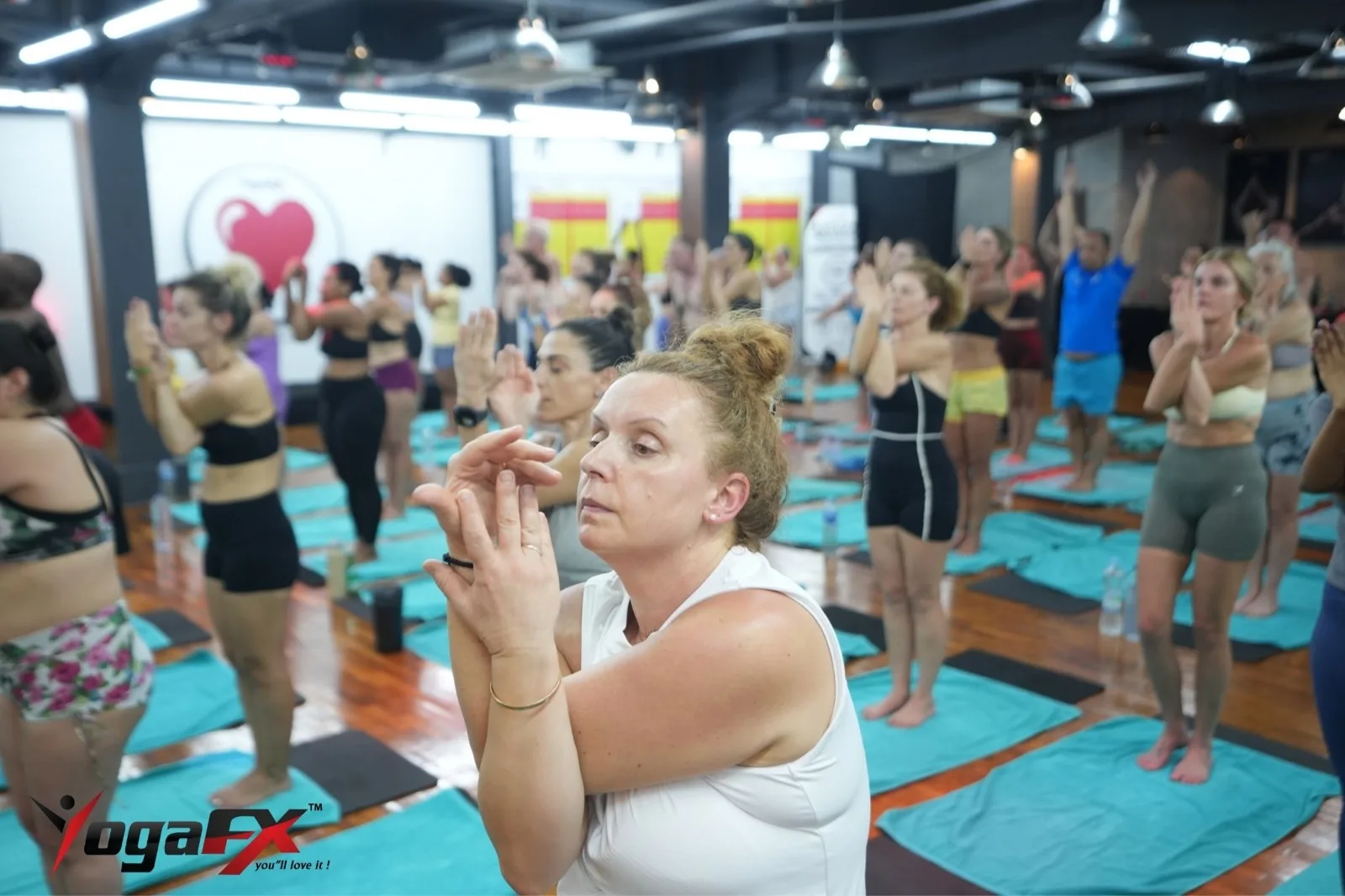
Trainees often tell us the same thing: the first week feels impossible and the last day feels earned. Here are three of them in their own words.
More focus inside myself, more positive mindset and motivated. Thanks Ian for the class!
Nur, Google review, 2018
Thank you Mr Ian and the team thanks for all the help and support that you have given us.
Ash, YouTube review, 2024
I would recommend that every single person on earth if you love yoga then come for this course.
Stephanie, YouTube review, 2019
Those reviews describe the first step toward an E-RYT 500, not the last. Still, they show why trainers matter. A trainee who is corrected by a teacher with thousands of hours behind them has more to learn from than one who is left guessing.
Why the hours in the room matter: what the research says
Yoga Alliance asks for years of teaching because teaching is a skill that builds slowly. The research on hot yoga shows why that skill matters. A 2025 systematic review of 43 studies and 942 participants, published in Sports Medicine - Open (Willmott et al.), found that chronic hot yoga appeared to bring adaptations such as better balance, flexibility and bone mineral density. About 74% of the studies used the Bikram format.
The same authors are careful, and so are we. They call the findings on mood and well-being promising but inconclusive. They also advise caution, because case studies report ill-health after hot yoga. That is the case for experienced teachers: someone who has led thousands of classes can spot a struggling student early.
The room is demanding. A University of Wisconsin study (Porcari et al., 2014) measured a 90-minute class at about 80% of maximum heart rate, with an average of 333 calories burned by women and 460 by men. A teacher with years behind them knows how to pace that load for a room full of different bodies.
This is general information, not medical advice. Students with health conditions should talk to a healthcare professional before starting any heated practice.
A simple teaching log that holds up
The standards we read do not describe how Yoga Alliance verifies teaching hours on the standard path. That is exactly why a clean log protects you. If a question ever comes up, you want dates and venues, not memories.
- Record each class the same day. Date, start and end time, venue and style.
- Mark the milestones. Add the date you finished your 200-hour and your 300-hour training, so the hours split correctly.
- Keep proof. Studio timetables, screenshots of booking pages and emails from managers all help.
- Back it up. A spreadsheet in two places beats a notebook in one.
A teacher who starts this log in week one has a calm fifth year on the road to E-RYT 500. A teacher who starts it in year four has a stressful one.
Six mistakes teachers make when counting E-RYT 500 hours
- Not keeping a log. Write down the date, the class length and the venue the day you teach.
- Counting hours before the 300. They count toward the 1,500, not toward the last 500.
- Rounding up. A 75-minute class is 1.25 hours, not 1.5.
- Assuming any course is a 300-hour. The training must come from a registered school.
- Forgetting the four-year rule. Time, not only hours, is the test.
- Skipping the fee maths. Our Yoga Alliance certification cost guide shows how many classes pay the registry back.
Yoga Alliance has also announced changes to its credential system from January 2027. Its credential page says it is not removing the 200-hour or 500-hour training requirements, but the way credentials are shown will change. Check that page before you apply, because the details may move.
What an E-RYT 500 changes in a studio
Once you hold the credential, Yoga Alliance lets you lead teacher trainings and offer continuing education workshops. For a 26 and 2 teacher, that is the path from running classes to training new teachers. If you are new to the credential world, our explainer on Yoga Alliance certification for 26 and 2 teachers is the place to start.
The E-RYT 500 credential does not teach you the dialogue. That comes from practice, and our guide to the 26 and 2 dialogue shows why the exact words matter. A registry badge says you trained. It does not say you can hold a room at 40°C for 90 minutes.
How YogaFX and Mr. Ian Terry fit in
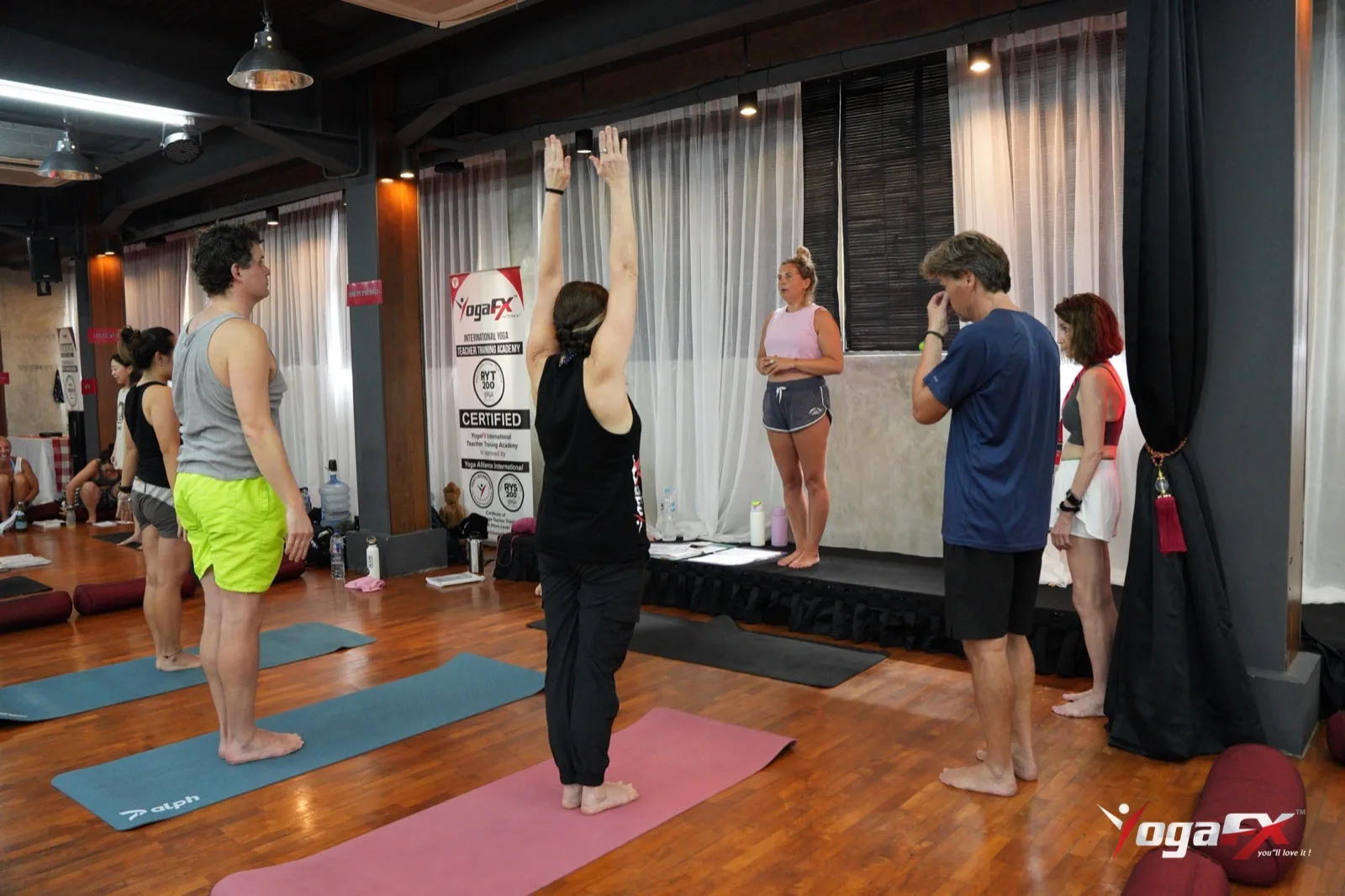
YogaFX trains teachers in Bali through a 6-day hybrid MasterClass: pre-course online study, then an intensive in Bali. Graduates earn Yoga Alliance RYT 200 and a Bikram Hot 26&2 200-Hour International Yoga Certification. That is the first rung of the ladder in this guide.
Mr. Ian Terry trained for five years, from 2014 to 2019, with the founder of the method. He is a Master Trainer of the Republic of Indonesia Yogasana Sports Federation and an E-RYT 500 teacher. Since 2017, YogaFX has graduated more than 1,500 teachers from over 80 countries.
The next batch checks in on Sunday 24 January 2027 and checks out on Friday 29 January 2027. If you want to talk through your own path to E-RYT 500, message Mr. Ian on WhatsApp.
FAQ
What does E-RYT 500 mean?
E-RYT 500 means Experienced Registered Yoga Teacher at the 500-hour level. You hold a 500-hour training from a registered school and have taught at least 2,000 hours over four years or more. It records experience on top of training, not just course completion.
What is the difference between RYT and E-RYT?
RYT shows you completed training at a registered school. E-RYT adds teaching experience on top. An RYT 500 needs at least 100 teaching hours, while an E-RYT 500 needs 2,000 hours across four years. E-RYTs can also lead teacher trainings on registered programmes.
How do I become an E-RYT 500?
Complete a 500-hour training, either as one course or as a 200-hour plus a separate 300-hour. Then teach for at least four years and submit 2,000 hours, with 500 taught after the 300-hour training. Keep a dated log of every class from your first day.
How long does it take to reach E-RYT 500?
The minimum is four years after training. In our worked example, a teacher leading six 90-minute classes a week needs just under five years to reach 2,000 hours. Teaching more classes shortens the wait, but the four-year rule still applies.
Do 26 and 2 classes count toward E-RYT 500 hours?
Yoga Alliance's standards, as we read them, do not exclude any style, but they also do not define what counts as a teaching hour. Check the current rules in the Yoga Alliance help centre before logging, and keep a dated record of every 26 and 2 class you lead.
Still have questions? Message Mr. Ian and the YogaFX team on WhatsApp and we will answer them personally.