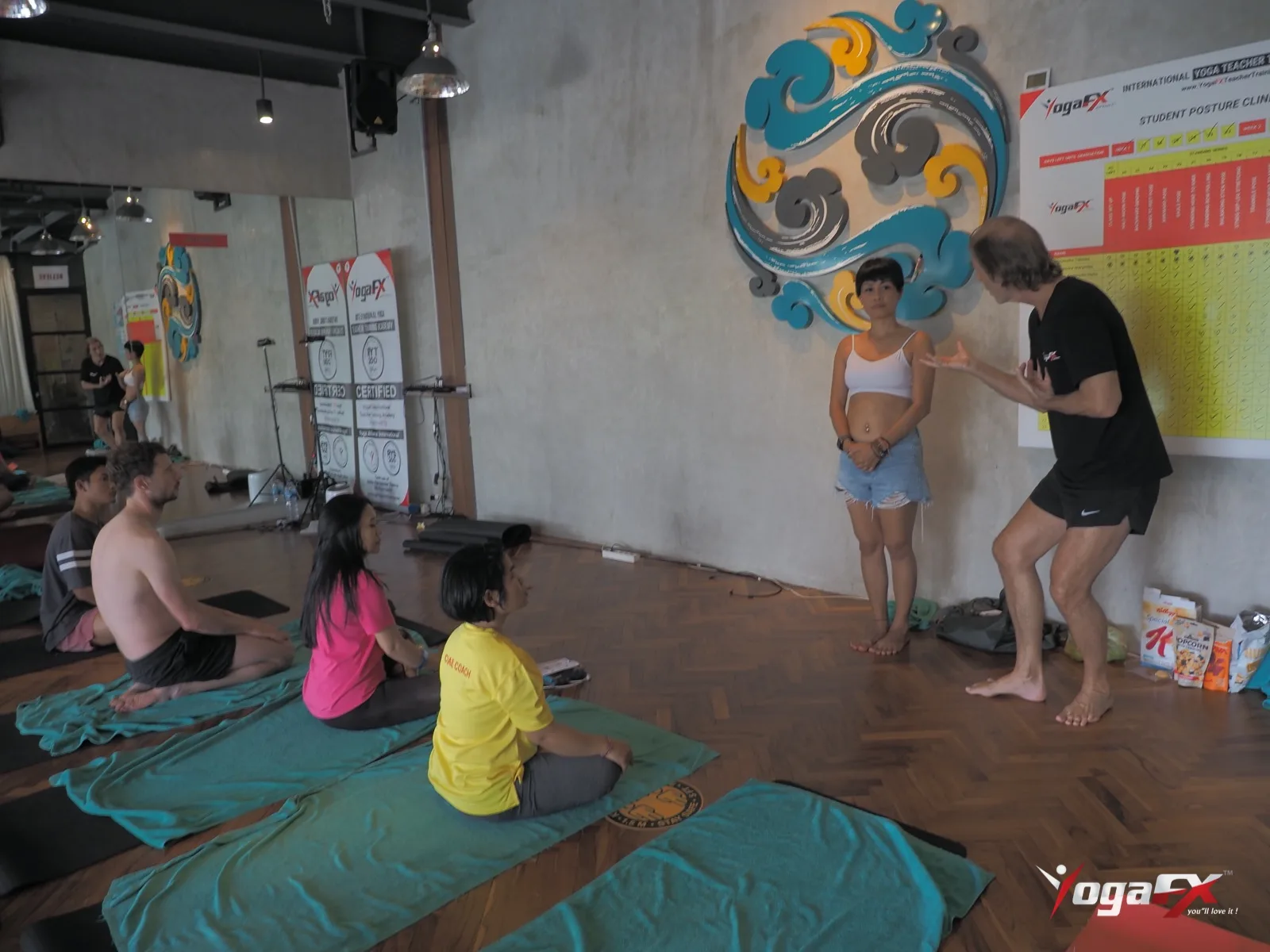
Yoga continuing education for a 26 and 2 teacher means going back to the dialogue and the posture clinic after you graduate, with a senior teacher watching. You relearn the script word by word, sharpen the eye that spots errors in a 40°C room, and keep your registration healthy while you do it.
Table of Contents
Mr. Ian Terry, E-RYT 500, built yoga continuing education around one idea: a certificate starts your teaching, it doesn't finish your learning. This guide explains what to study, how to check your registry's rules, and what a week back in the room looks like. It is information only, so enrolment details stay on our teacher training page.
Yoga Continuing Education for 26 and 2 Teachers: What It Covers
Most teachers meet the phrase about a year after graduation, when yoga continuing education stops being a footnote. You teach your first classes, the script feels fluent, and then you notice habits. You rush the second set. You correct the same student the same way every week. That is the moment yoga continuing education starts to make sense.
For a teacher of the Original Hot 26&2 class, the work is narrower than it is in a general yoga programme. Nobody asks you to invent new sequences. The class is fixed: 26 postures, 2 breathing exercises, 90 minutes. So your growth comes from doing the same thing with more accuracy. That makes yoga continuing education for this method a craft question, not a content question.
- The dialogue. Pace, pauses and breath, rather than memory alone.
- The posture clinic. Seeing one error clearly and naming one fix.
- The heat. Reading a tired room and adjusting your voice to it.
- Your own practice. Taking class again, so you remember what a student hears.
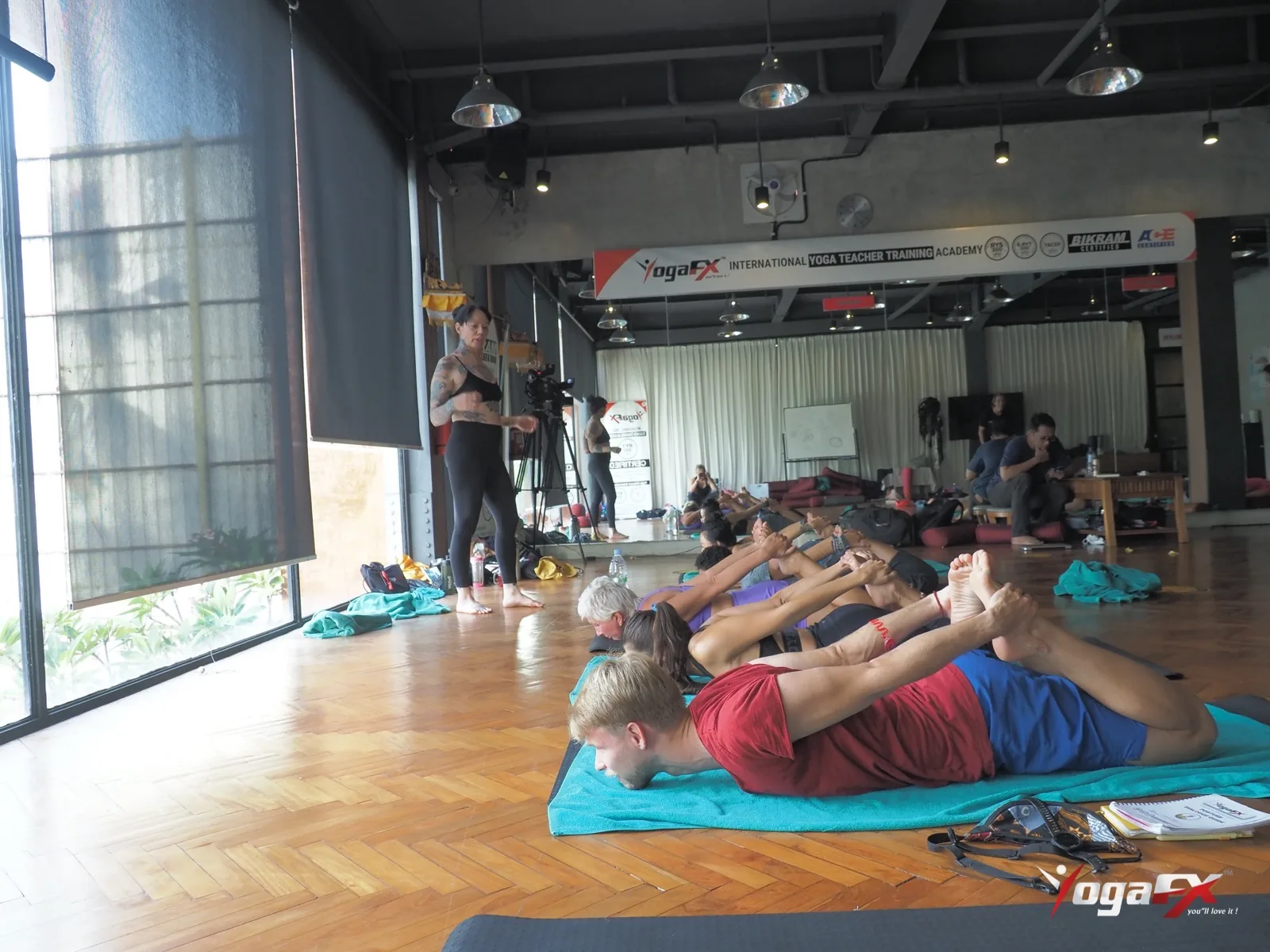
Weighing a first certificate instead of a return visit? Our guide to original hot yoga teacher training covers that earlier stage, so this page can stay on the second one.
What Yoga Alliance Says About Continuing Education
Your registry sets the rules, not your school. Yoga Alliance's continuing education page opens with the line that growth never stops for a yoga professional. It also asks registered teachers to stay current with its requirements. The text we read prints no hour count, so look in your own member account for the current figure.
That is why yoga continuing education credits need a careful look. A credit is worth only what the registry says it is worth, and old blog posts go stale. Use the registry for the rules. Use us for the teaching side. We teach the content, and we leave the credit decision to Yoga Alliance.
What a YACEP is
You will also meet the acronym YACEP. On that page, a Continuing Education Provider is an experienced professional who offers advanced learning, and Experienced Registered Yoga Teachers in good standing may apply. In other words, a YACEP has years of teaching behind the title.
Before you book any yoga continuing education workshops, check the provider's level and real teaching hours. Teachers who already hold a certificate can ask us about the YACEP option on our week in Bali, because how it applies depends on where your registration stands today. Our wider guide to continuing education for registered teachers sets out the registry side in more depth.
Deepening the Dialogue: Yoga Continuing Education After You Graduate
The dialogue is the script you speak from the first breath to the last posture, and it is the core text of yoga continuing education for this method. Because there is no demonstration and no music, your words carry the whole class. After graduation, most teachers stop studying the script and start reciting it. That is where a second pass pays off.
We call this second-look learning. The first training teaches you what the words are. The second teaches you why each one sits where it does. Our guide to the 26 and 2 dialogue explains what the script is and why studios keep using it.
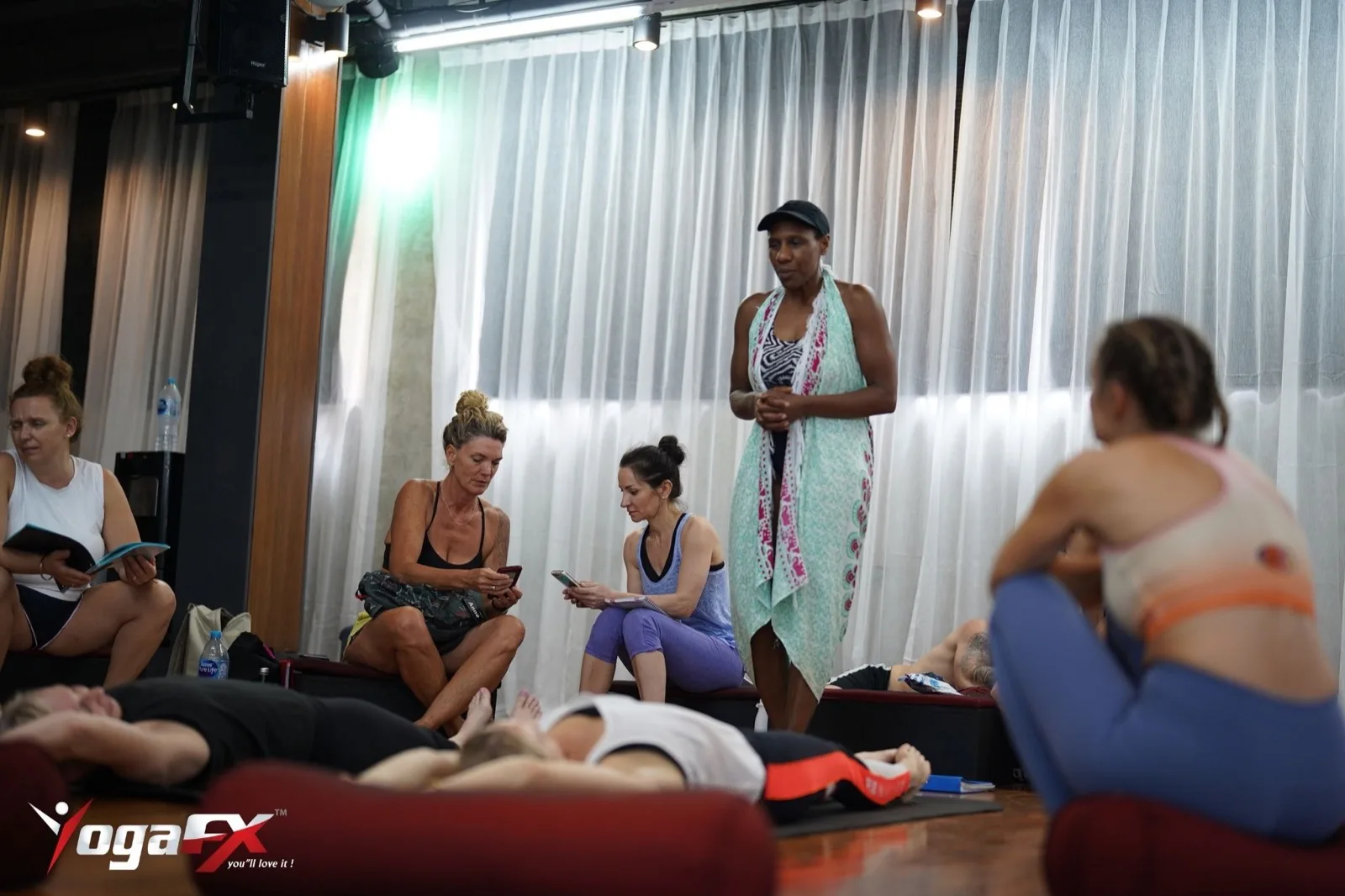
Four yoga continuing education drills for a return week
- Take class as a student. Listen to the script without teaching it, and notice where your attention drifts.
- Time your pauses. A pause too short leaves students scrambling. A pause too long loses the room.
- Record one segment. Your voice sounds different on playback, and the habits show up fast.
- Teach it back to a senior teacher. Feedback while the memory is fresh beats a vague sense that it went well.
Mr. Ian has watched many graduates return and hear their own script for the first time. They tend to say the same thing: the words were never the problem, the pace was. Pace is the quiet centre of yoga continuing education in this method.
The Posture Clinic: Learning to See Again
Yoga continuing education at a posture clinic is where a teacher learns to see. One posture is the focus. A trainee holds it while the group watches, and the trainer talks through what is working and what isn't. A clinic wall chart tracks who has covered which posture, so nothing gets skipped.
Then you take your turn as the teacher. You name one fix, say it in the words of the dialogue and watch whether the student changes. For a working teacher, yoga continuing education at the clinic is mostly unlearning. You stop giving five corrections at once and start giving the one that matters.
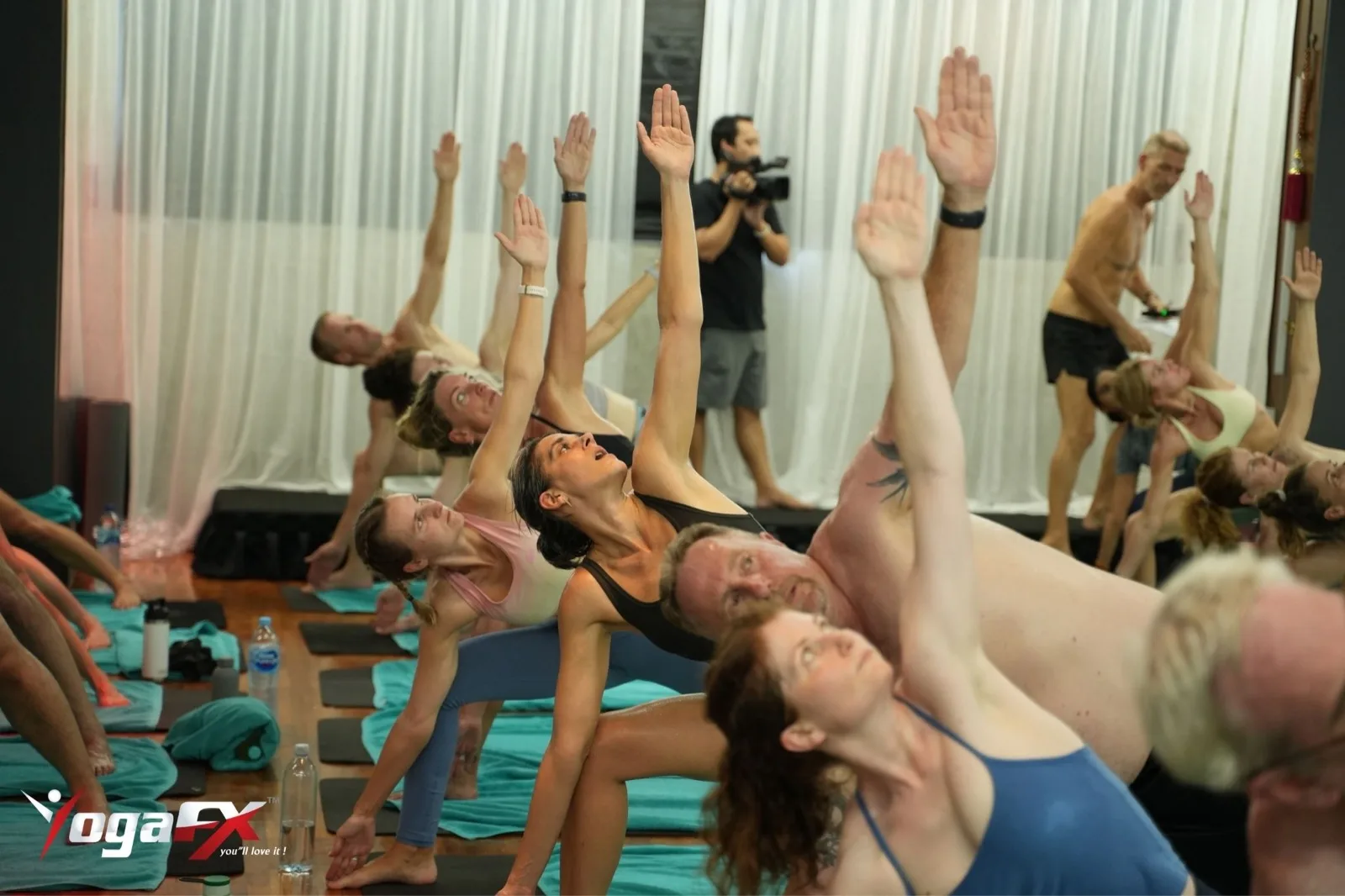
What you practise in a clinic
- Seeing. You learn the usual errors in each posture, starting from the feet.
- Choosing. You pick the single correction that changes the most.
- Saying. You give the fix in a few clear words, to a tired student, in the heat.
- Checking. You watch for a change and know when to move on.
The fixed order of the sequence is what a clinic leans on when it decides which fix comes first. Good yoga continuing education makes that order second nature.
Four Routes Into Yoga Continuing Education After Your Certificate
Not every teacher starts from the same place. A new graduate who teaches one class a week needs something different from a studio owner training staff. The table below sets out four routes we see most often. It is a planning aid, not a promise, so use it to decide what to ask on your first message.
| Route | Best for | What you practise | Ask first |
|---|---|---|---|
| Return week in the room | Graduates with a few months of teaching behind them | Dialogue pace, posture clinic, practice teaching with feedback | Which batch, and what has changed in the syllabus |
| YACEP option | Teachers who already hold a certificate | The same week, studied from a registered teacher's side | How the hours apply to your own registration |
| Online pre-course | Anyone who wants to prepare before travelling | Script study and theory at home, at your own pace | What it covers and how long it takes |
| Messages with the team | Teachers already out in the field | One specific problem, such as handling a student who stops mid-class | What support covers today and how to reach Mr. Ian |
Notice the second column is about you, not about us. Yoga continuing education fails when it is sold to a category. Pick the route that fits the one thing frustrating you right now, and ignore the rest of the table.
Five questions to ask before you pay for yoga continuing education
- Who is standing at the front? Ask for a registry level and teaching hours, not a job title.
- What can I do on the last day that I couldn't on the first? A good answer names a skill, such as cueing an injured student.
- Who confirms the credit? Get it from the registry itself, in writing, not from a brochure.
- Do I teach, or only listen? Teachers learn most by teaching and being corrected.
- Who answers my messages in March? Support after the week is where many programmes go quiet.
Who Teaches the Week: Mr. Ian Terry
A return week is only as good as the person leading it. Mr. Ian Terry is an E-RYT 500 with more than 12,000 hours of teaching. He spent 2014 to 2019 training alongside the founder of the Bikram Hot 26&2 method, and he is a Master Trainer for the Republic of Indonesia Yogasana Sports Federation.
Since 2017, YogaFX has graduated 1,500+ teachers from 80+ countries. Mr. Ian leads the week himself rather than handing the room to an assistant. Learn more on our teacher page.
What Research Says About Keeping Your Own Practice Alive
Teachers burn out. Early classes and long days wear people down. So part of yoga continuing education is looking after yourself, and the research on the method is worth a read. We keep our claims modest because study quality varies.
Willmott and colleagues published a 2025 systematic review of Bikram yoga that covered 43 studies and 942 participants, and it pointed to gains in flexibility, bone density and well-being. Earlier, Tracy and Hart (2013) reported about a 20% rise in posterior chain strength with regular practice, plus better flexibility and body composition.
On the mind side, Hui and colleagues (2022) found that hot yoga reduced state anxiety. On the body side, a University of Wisconsin team led by Porcari (2014) measured about 333 calories burned by women and 460 by men in a 90-minute class, at roughly 80% of maximum heart rate.
We name each source instead of linking it, because the research sites block automated link checks. Search the author and year to read them yourself.
None of this promises a result for you. It does suggest why a teacher might keep their own practice alive alongside their teaching. This is general information, not medical advice. With a heart condition, pregnancy or regular medication, consult a healthcare professional before any heated class.
What Graduates Say After a Second Look
The best evidence for yoga continuing education comes from the people who did the work. Our public review count stands at 150 on Google, 50 on Yoga Alliance and 357 video testimonials on YouTube. Three Google reviews show what a week of yoga continuing education in the room gives you.
"If you want to be a teacher then learn the dialogue and do the prep work and this week brings it all together."
Frances, Google review, 2026
Frances added that you can also use the week as an immersive tool to deepen your practice. That fits what returning teachers tell us. They arrive to polish their delivery and leave having practised for themselves too.
"Amazing experience, Mr. Ian is a very talented and gifted teacher. Not only he teaches yoga postures, but he provides a lot of life coaching experiences."
Ebtesam, Google review, 2022
"Mr Ian is a great teacher! Very detail and communicative. I finally knew the step-by-step to do certain pose."
Lucia, Google review, 2021
Reviews are not proof of a result, and they are not a promise about yours. Video says more than text, though. Jilly shared her experience in 2019, and her video is still on our channel.
The 6-Day MasterClass as a Refresher
Our return route is the Bikram Hot 26&2 Yoga Teacher Training MasterClass. It is a hybrid: study online first, then train in person in Bali. The in-person part runs from a Sunday check-in to a Friday check-out, which means five days away from your own classes.
The next batch is Sunday 24 January 2027 to Friday 29 January 2027 at the Soham Wellness Center in Seminyak. Venues and dates can shift, so confirm with the team before you buy flights. The programme carries Yoga Alliance RYT 200-Hour certification and the Bikram Hot 26&2 200-Hour International Yoga Certification.
For a graduate, the class itself is the lesson. Ninety minutes of natural tropical heat and a scripted dialogue put you back in the student's seat. Then you study how the script was built. Many teachers tell us they only heard the pacing once they stopped teaching it and started taking it. That shift is what yoga continuing education should deliver.
Is yoga continuing education worth it? A fair test
Name the one habit that annoyed you most in your last month of classes. Could a six-day immersion plausibly fix it? Then ask us how. If a cheaper workshop would do the job, take it and come back later. A smaller choice that fits beats a bigger one that leaves you flat.
FAQ: Yoga Continuing Education Questions
What counts as yoga continuing education?
It is structured learning after your first certificate, such as workshops, immersions or mentoring. Whether it counts toward your registration depends on your registry's current rules, so check your member account before you pay. We can tell you what our week teaches, and the registry decides the credit.
How many continuing education hours does Yoga Alliance require?
Yoga Alliance asks registered teachers to meet its continuing education requirements, but the public page we read does not print an hour count. Check your own member account for the current number and the renewal period, because rules change. Confirm any credit in writing with the registry before you book a course.
What is a YACEP?
YACEP stands for Yoga Alliance Continuing Education Provider. Yoga Alliance describes providers as experienced yoga professionals offering advanced learning, and says Experienced Registered Yoga Teachers in good standing can apply. When you choose a workshop, ask the provider about their level and teaching hours before you pay.
Can I do yoga continuing education online?
Partly. Script study and theory work well at home, and our MasterClass starts with an online pre-course. The hands-on side, posture correction and practice teaching in heat, needs a live room with a teacher watching. So a hybrid route usually serves a teacher of this method better than a fully remote one.
Where can I take yoga continuing education in Bali?
YogaFX teaches the 6-day MasterClass in Seminyak, and the next batch runs from Sunday 24 January 2027 to Friday 29 January 2027 at the Soham Wellness Center. Message the team with your registry level and teaching history, and they will say which route fits and what the current terms are.