Is hot yoga safe? For most healthy adults, a 26 and 2 class is manageable if you drink well, pace yourself and stop when your body says so. The risk comes from heat, not from the postures. Some people should ask a doctor first, and this page names them, along with the signs that mean you stop.
Table of Contents
This page is general information, not medical advice. If you have a heart condition, take regular medication, are pregnant, or have ever had heat illness, speak to a healthcare professional before you book a class.
We write this as the YogaFX team, and the teaching guidance here comes from Mr. Ian Terry, E-RYT 500, Founder and Lead Instructor, who has more than 12,000 teaching hours. We keep it evidence-first. Where research cannot promise something, we say so instead of reassuring you.
Is Hot Yoga Safe? The Short Answer for a 26 and 2 Room
A 26 and 2 class runs for 90 minutes in a room at about 40°C and 40% humidity. That is the same range the Mayo Clinic gives for the Bikram form of hot yoga, and the Mayo Clinic Sports Medicine page on hot yoga says the intensity and the heat "have the potential to cause heat-related illness". So the honest answer has two halves.
- For most healthy adults, the class is a hard but manageable workout when you arrive hydrated and rest whenever you need to.
- For some people, the heat adds a real medical risk, and a doctor should decide before the first class.
- For everyone, the warning signs below mean you stop, lie down and tell the teacher straight away.
Nobody can promise that a hot class is safe for every body. The research cannot promise that, and we will not pretend otherwise. What we can do is show you where the documented risks sit, so you can decide with your doctor.
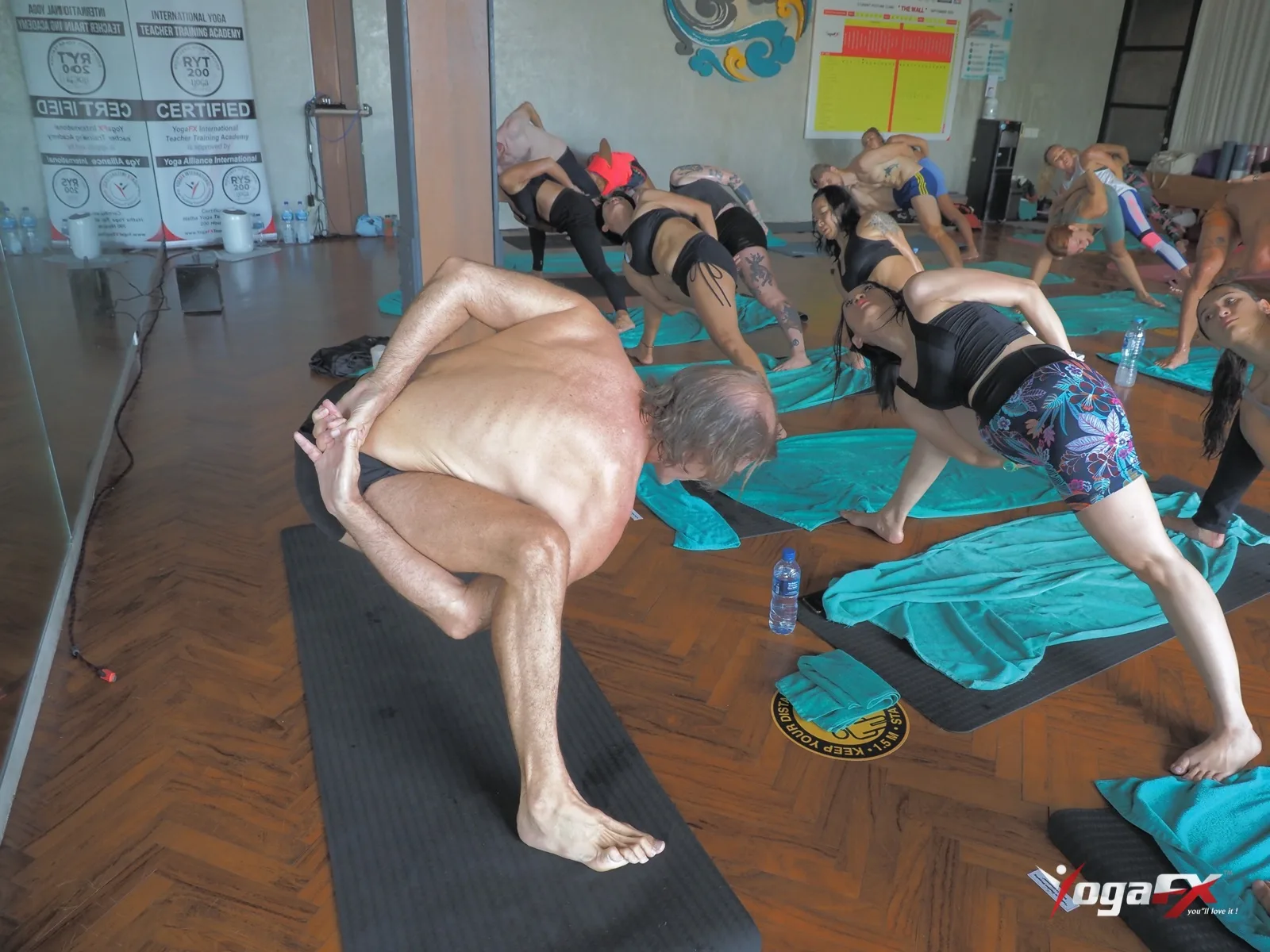
Who Should Ask a Doctor Before a 26 and 2 Class
The cleanest rule comes from the medical pages. The Mayo Clinic Sports Medicine page on hot yoga says hot yoga is "not for everyone" and says to check with your doctor first if you have health concerns or are pregnant. It suggests skipping hot yoga if you have heart disease, problems with dehydration, heat intolerance, or a history of heat-related illness such as heatstroke.
What the CDC adds about chronic conditions
The CDC page on heat and chronic conditions adds that conditions such as heart disease, mental illness, poor blood circulation and obesity raise the risk of heat-related illness. It also notes that some people take medications that can make the effect of heat worse. That is why the table below starts with your doctor, not with the studio.
| Who | Why the heat matters | What to do first | Source |
|---|---|---|---|
| Heart disease or poor circulation | The CDC lists both as risk factors for heat-related illness | Ask your doctor for a plan before any heated class | CDC |
| Regular medication | The CDC says some medications can make the effect of heat worse | Bring the full list of medicines to your appointment | CDC |
| History of heatstroke or heat intolerance | Mayo Clinic suggests skipping hot yoga with this history | Do not start until a doctor agrees | Mayo Clinic |
| Dehydration problems | Mayo Clinic lists them as a reason to skip hot yoga | Get medical advice on fluids first | Mayo Clinic |
| Pregnancy | Mayo Clinic says to check with your doctor if you are pregnant | Ask your midwife or doctor before booking | Mayo Clinic |
| Children, older people, long-term conditions | The NHS says to check on them in the heat and names diabetes and heart problems | Get advice first and choose a gentler setting | NHS |
So is hot yoga safe for you personally? Only a doctor who knows your history can answer that. A doctor cannot make a hot class risk-free. A doctor can, however, tell you whether your health and your medicines suit a heated room. The CDC also warns that heavy sweating can remove salt and minerals, and it advises talking to your doctor about how to replace them safely.
Signs to Stop: Slow Down, Lie Down, Get Help
The NHS guidance on heat exhaustion and heatstroke separates heat exhaustion from heatstroke, and the difference decides what you do next. We turned its symptom lists into three steps you can remember in the middle of a posture. Is hot yoga safe once you know them? For healthy adults, mostly yes, because you can act early.
What to do when a sign shows up
- Stop the posture and lower yourself to the mat before you fall.
- Tell the teacher. A quiet room with no music means they can hear you and see your face.
- Cool down and drink. The NHS says to move somewhere cool, drink water and cool your skin.
- Do not wait if you see heatstroke signs. The NHS calls heatstroke a medical emergency.
Pushing through a spinning room proves nothing, and you don't owe anyone a brave face. A teacher would much rather pause the class than watch a student carry on while dizzy.
For a longer walk-through, read what to do if you feel dizzy in a 26 and 2 room. Once you've rested, you can decide with the teacher whether to rejoin the class or sit out the rest of it. A calm exit on one day may make the next class easier, because you know the room will let you stop.
What the Research Can and Cannot Promise
The evidence on hot yoga is still small. A 2025 systematic review of hot yoga research (Willmott et al.) pooled 43 studies and 942 participants in total. That is a thin base for any promise that a class is safe for everyone.
Mood is the best-studied area. A 2023 randomized trial from Massachusetts General Hospital (Nyer et al.) found that 59% of the yoga group had their depressive symptoms fall by half or more, against 6% on the waitlist. That is a result about mood. It was not a heat-safety trial, so we do not treat it as proof that a hot room suits every body.
Is hot yoga safe according to the research? The fair answer is that the studies are too small and too varied to promise it for everyone. Because the studies are small, the medical pages above carry more weight for risk than any single trial. Use the research to understand benefit, and use your doctor to judge your own risk.

Hot Yoga Risks: Why the Heat, Not the Postures, Is the Issue
When people ask about hot yoga dangers, they often picture a twisted knee or a pulled hamstring. Those happen in any exercise class. The risk that is special to a heated room is the combination of effort and heat, because your body makes heat when you move and also absorbs it from the air.
The NHS describes what happens when the body cannot cool itself fast enough. Heat exhaustion brings tiredness, dizziness, a headache, heavy sweating and cramps. Heatstroke is the next step, with hot skin that is not sweating, confusion and fast breathing. The earlier signs are your warning, so treat them as information, not as a test of willpower.
The CDC explains why some people are more exposed. Chronic conditions can make it harder to sense and respond to temperature changes, and heavy sweating removes salt and minerals. A healthy student who arrives hydrated has a lot of room to cope. A student with a heart condition may have much less, and that is the reason for the table above.
Three habits that lower the risk
- Hydrate before class, not only during it. Catching up in the room is much harder.
- Pace the first weeks. Your body needs time with the heat, so one class and a rest day is a fair start.
- Rest early. Sitting out a posture costs you nothing, while ignoring dizziness can cost you the whole day.
These are YogaFX teaching habits, not medical rules. If you sit in a higher-risk group, your doctor's advice replaces them.
How a 26 and 2 Class at YogaFX Manages the Heat
The method is fixed: 26 postures and 2 breathing exercises in a 90-minute class. Mr. Ian Terry teaches it the same way each time, with the dialogue spoken posture by posture and no music. Because the room is quiet, the teacher can watch students flush or go silent and step in early.
YogaFX heats the room with Bali's natural tropical climate, not electric heaters. Natural heat does not change the medical cautions above. If you are in one of the groups in the table, the conversation to have is with your doctor, not with the studio.
Our only open studio is in Seminyak, and it is open daily from 06:00 to 22:00. The first class is free with the Free 1-Day Guest Pass. Tell the teacher about any medical condition, any medicine and any pregnancy before you step on the mat, because a teacher can only watch for problems they know about.
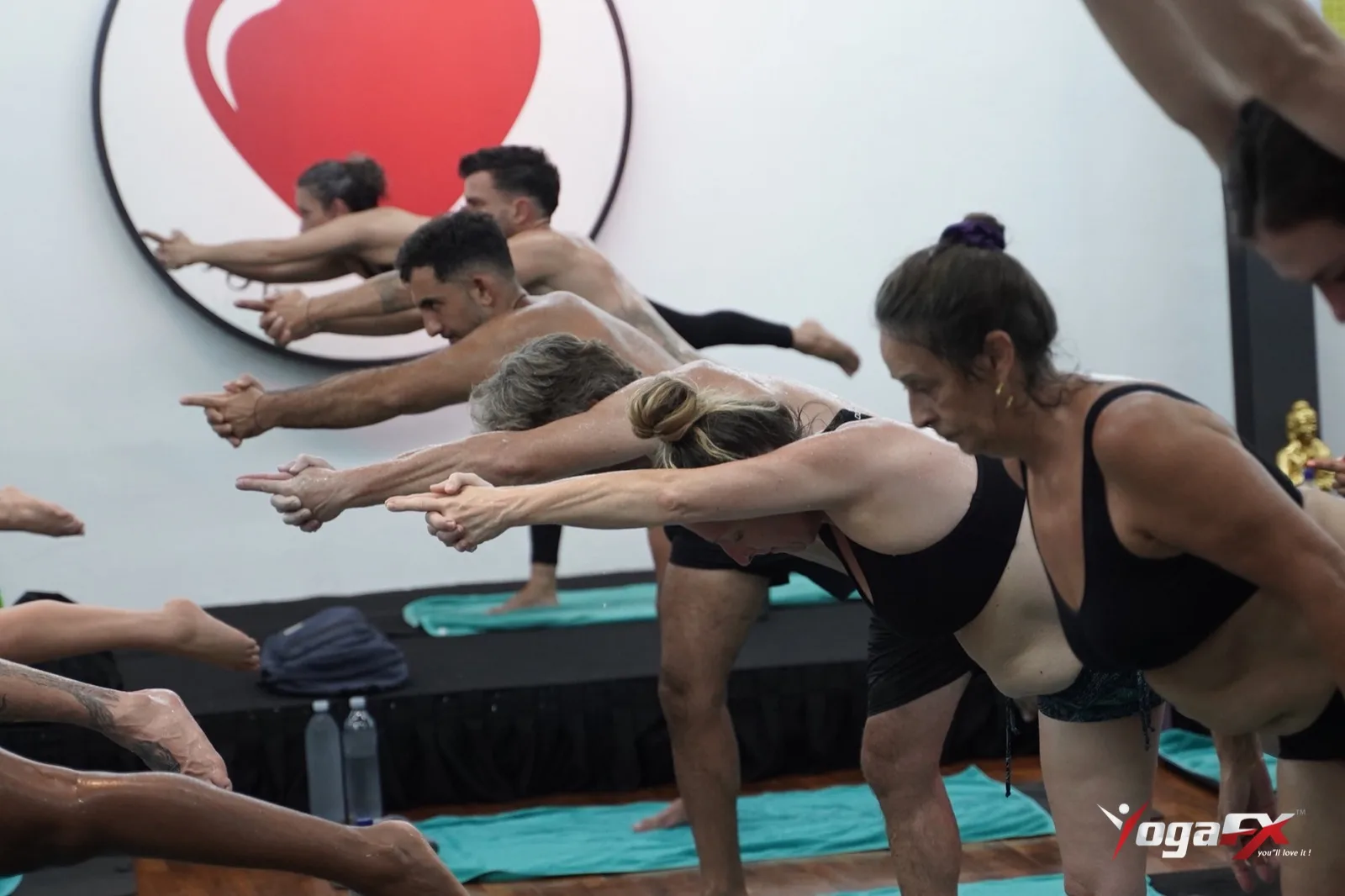
Five checks to answer: is hot yoga safe for me?
- Check your health first. If you are in the table above, see your doctor.
- Ask about the room. Find out the temperature and whether the teacher watches the whole room.
- Arrive hydrated. Drink through the day, then sip. Our hot yoga hydration guide explains how much.
- Eat light. Have a small meal a few hours before class, so you are not training on a full stomach.
- Know your exit. Agree that you can lie down or leave at any moment, and read pacing your first month in the heat.
A careful first month, step by step
A new student does not need to prove anything in week one. Here is how we suggest a cautious start, once your doctor has agreed. It is teaching guidance, so adjust it with your doctor if you are in a higher-risk group.
- Week one: take a single class, stay near the back or the side if that feels safer, and rest in the final savasana without guilt.
- Week two: add a second class only if you recovered well, slept normally and felt clear-headed the next day.
- Weeks three and four: build slowly, keep drinking through the day, and skip any class on a day you feel unwell.
- Always: if a warning sign showed up once, tell your doctor, because it may change what is wise for you.
It's tempting to copy a friend's schedule, but bodies respond differently, so that is a poor guide to yours. Listen to your own signals and keep the teacher informed. A good instructor would rather pause for you than watch you push through.
Pregnancy, Trying to Conceive and Hot Yoga
Is hot yoga safe in pregnancy? It is the question readers search most. The Mayo Clinic page says to check with your doctor if you are pregnant, and we go no further than that. Ask your midwife or doctor before any heated class.
Men and couples trying to conceive ask a related question about heat. Hot yoga and fertility have not been studied together, so we cannot say a class helps or harms. If this is your worry, read what we know about hot yoga and male fertility and talk to your doctor.
What Students Say About the Room
Is hot yoga safe because students like it? No, and reviews can't prove medical safety. They show how a learning space feels, and these come word for word from public YogaFX reviews. You'll notice both are about the teaching, not about heat tolerance.
"He gave a clear instructions and make sure that we do the pose correctly." Tuti, Google review, 2020
"Class was great yeah great instructor." A trainee in our YouTube review, 2018
To see where the method comes from and how a full class runs, read the 26 and 2 method guide.
FAQ
Is hot yoga safe for high blood pressure?
Ask your doctor first. The CDC lists heart disease and poor circulation as risk factors for heat-related illness, and says some medications can make the effect of heat worse. Bring your medicine list to the appointment, and ask whether a 90-minute class in a heated room suits your heart.
Is hot yoga safe during pregnancy?
Check with your midwife or doctor before any heated class. The Mayo Clinic page tells people to check with a doctor if they are pregnant. We do not claim that a 26 and 2 class is safe in pregnancy, and a studio should not be your source for that answer. Tell your teacher too.
Is hot yoga safe for beginners?
A beginner who is healthy can usually manage a first class by resting often, drinking well and stopping at the first warning sign. Heat is the main risk, not the postures. Tell the teacher it is your first class, and see a doctor first if you are in any higher-risk group.
Is hot yoga safe for seniors?
Age alone is not a ban, but the NHS says to check on older people in the heat. Older adults should ask a doctor about their heart, blood pressure and medicines first. Start with a single class, rest whenever you need to, and tell the teacher about your health.
Who should not do hot yoga?
Mayo Clinic suggests skipping hot yoga if you have heart disease, dehydration problems, heat intolerance or a history of heatstroke. Pregnant people should check with a doctor first. A doctor who knows your history is the right person to say whether a heated class is wise for you.
Still have questions? Message Mr. Ian and the YogaFX team on WhatsApp and we will answer them personally. Once your doctor has helped you answer "is hot yoga safe for me?", try the Free 1-Day Guest Pass at our Seminyak studio.
Medical disclaimer: this article is general information, not medical advice. If you have a heart condition, take regular medicines, are pregnant or have had heat illness, consult a healthcare professional before starting hot yoga.