Heat acclimatization is the way your body gets used to a hot room, and in a 26 and 2 class it usually builds over about one to two weeks of regular practice. Pace your first month by adding classes slowly, drinking well, and leaving the room early whenever you need to.
Table of Contents
That is the short answer. The rest of this guide explains how heat acclimatization works, what is actually changing inside you, how to space your first four weeks, and what to do when a class feels harder than the one before. If you are brand new, read our first-class walkthrough too: hot yoga for beginners.
A quick note before we start. This is general education, not medical advice. If you have a heart condition, high or low blood pressure, are pregnant, or take medication, speak with your doctor before you begin. Everyone adapts at a different speed, so treat the numbers below as a map and not a promise.
What heat acclimatization means in a 26 and 2 room
Put simply, heat acclimatization is a set of changes that help you cope with a hot environment. Your body learns to cool itself sooner and with less strain. The NIOSH guidance on acclimatization describes it as a gradual process, with exposure to heat increased over a 7 to 14 day period.
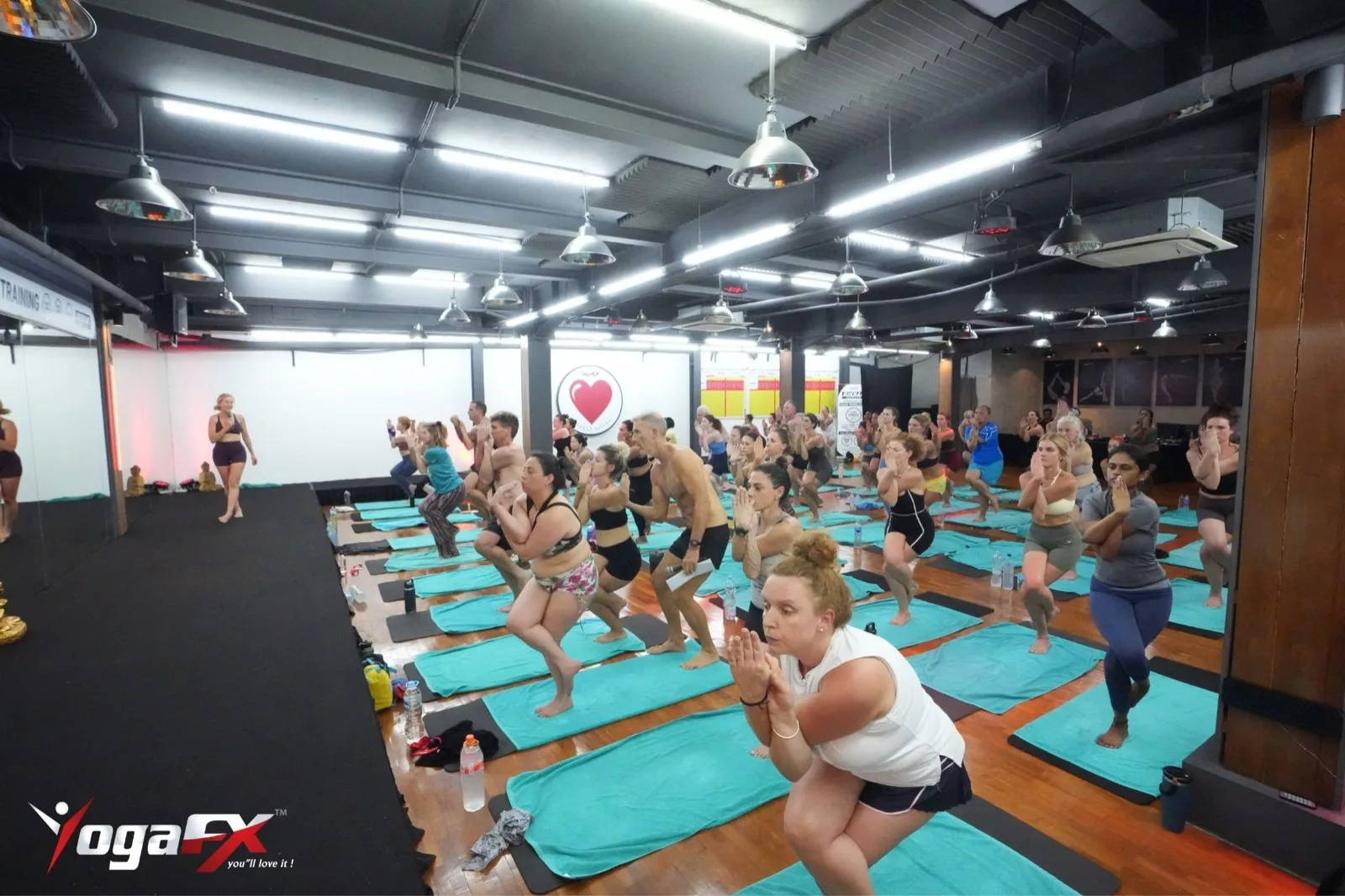
A 26 and 2 class is an unusual place to watch heat acclimatization happen. The room is set to 40°C with 40% humidity. The class runs 90 minutes, with 26 postures and 2 breathing exercises in a fixed order. Because the room and the sequence never change, you can notice your own progress very clearly.
Some people say acclimation and others say acclimatization. Researchers use the first word for controlled heat training in a lab or chamber, and the second for adapting to a real hot place. Either way, heat acclimatization rests on one idea: heat adaptation comes from repeated, manageable exposure, not from one heroic class.
Why the first class feels so much harder than the fifth
On day one, your heat acclimatization has not started, so your body has not learned the job yet. Sweating starts late, your heart rate climbs fast, and the postures feel heavy. That is normal. By your fifth or sixth class, it is common to find the same room noticeably kinder.
That change is not about being braver. It is your cooling system getting better at its work. It also explains why a steady rhythm beats an occasional hard session, a point we cover in our guide to how long hot yoga takes to show results.
What changes inside you as you adapt
The research on heat acclimatization comes mostly from workers, soldiers and athletes, not yoga students. That matters, so we use it as a guide to what the body does in heat, not as proof about our class. With that said, the pattern is consistent across sources.
The NIOSH guidance on acclimatization lists several adaptations that make up heat acclimatization. You sweat earlier, you sweat more, and you lose less salt in that sweat. Your circulation steadies, and you can work with a lower core temperature and heart rate.
Researchers often call the same process heat acclimation when it is done on purpose. The Korey Stringer Institute at the University of Connecticut adds that perceived exertion drops too. In plain words, the same effort starts to feel easier.
The main adaptations in one table
| What adapts | What it can feel like in class | Source |
|---|---|---|
| Sweating starts earlier and is more efficient | You are damp by the first standing postures, and less salty residue is left on your skin | CDC NIOSH |
| Lower heart rate for the same work | Standing Bow and Awkward Pose feel less like a sprint | CDC NIOSH, Korey Stringer Institute |
| Lower core temperature response | Your head feels clearer in the middle of the class | CDC NIOSH, Korey Stringer Institute |
| Steadier blood flow to the skin | Fewer head rushes when you stand up between postures | CDC NIOSH |
| Lower rating of perceived exertion | The same posture feels easier than it did last week | Korey Stringer Institute |
One more detail from the Korey Stringer Institute at the University of Connecticut: hot and humid conditions can raise sweat rate more than hot and dry ones. Our room is humid on purpose, so you may notice the sweat change sooner than a friend who trains in a dry gym.
What a 90-minute class asks of your heart
A 2014 University of Wisconsin study (Porcari et al.) found that a 90-minute class kept participants at about 80% of their maximum heart rate. That is a real workload, and the heat sits on top of it. Our guide to hot yoga heart rate zones shows how that plays out posture by posture.
Pacing your first month, week by week
Here is the part most beginners want: a plan for heat acclimatization that fits real life. NIOSH writes its schedule for workers, so we cannot copy it straight into a yoga room. What we can borrow is the principle: start well below your limit, then build in small steps. The table below turns that idea into a sensible starting pattern.
| Week | Suggested classes | Your goal | Watch for |
|---|---|---|---|
| Week 1 | 2 to 3, with a rest day between | Stay in the room and keep breathing. Do not chase depth. | Dizziness, a pounding head, feeling sick after class |
| Week 2 | 3 to 4 | Sweat arrives earlier. Stay on your feet through the standing series. | Poor sleep, strong thirst the next morning |
| Week 3 | 3 to 5, if you recover well | Hold each posture a little longer, with steady breath. | Cramps, a heavy feeling in the legs the next day |
| Week 4 | Your own steady rhythm | Use the same pattern each week, and add one change at a time. | A drop in energy that signals you need an easier week |
Week 1: show up and stay calm
Your only job is to learn the room. Arrive early, set up near a door or a wall if you can, and put a water bottle beside your mat. It's fine to sit out a posture. Lying down isn't failing. It's the sensible way to keep the class useful for you.
Acclimatizing to heat is tiring work for your body. Skip the second class on the same day, and don't plan anything that needs a clear head right after you leave.
Week 2: let the sweat come early
By now, you may notice your heat acclimatization moving, because you are sweating sooner. That is a good sign that your cooling system is learning. It also means you lose fluid faster, so drink more across the day, not only in class.
If you feel flat on day three in a row, drop back a class. A steadier week often moves you forward faster than a tougher one.
Week 3: build time, not intensity
Resist the urge to push deeper into every posture. Instead, stay a little longer in the ones you already like, and keep your breathing smooth. If your teacher offers a variation, take it without apology.
Week 4: find a rhythm you can keep
By the end of the month, you should know what a good class and a bad class feel like. Write down how you slept and how you felt the next morning. That small log helps you spot when you are overreaching. For more on that feeling, read why you can feel tired after hot yoga.
- Rest days count. Your body adapts between classes, not only in them.
- Change one thing at a time. Add a class or add time, never both in the same week.
- Keep the same time of day at first, so you compare like with like.
- Tell your teacher it is your first month. They can watch you more closely.
Hydration and food while you adapt
Because you sweat more as heat acclimatization builds, hydration matters more, not less. The Korey Stringer Institute at the University of Connecticut says athletes should be properly hydrated before, during and after practice. It also suggests that athletes add sodium to their diet in the first days to make up for the salt lost in sweat.
That advice is written for athletes, and it may not suit everyone. If you have high blood pressure or a heart or kidney condition, ask your doctor before you change how much salt you eat. Our full guide to drinking enough water for a 26 and 2 class covers what to drink and when.
- Before class: drink water through the morning, not a big glass in the car park.
- During class: sip between postures when your teacher allows it.
- After class: rehydrate steadily over the next few hours.
- Food: eat something light two to three hours before class.
What is normal, and when to stop
A hot, sweaty, slightly breathless feeling is part of the class. Feeling very dizzy, sick, confused or faint is not something to push through. If that happens, lie down on your mat, tell your teacher, and take the next few minutes slowly.
- Stop and lie down if you feel faint, confused or very sick.
- Tell your teacher straight away, so someone can check on you.
- Rest and rehydrate after class, and speak with a doctor if symptoms continue.
Afterwards, rest, cool down and drink water. If symptoms continue or worry you, speak with a doctor. Don't try to "tough out" a bad day just to keep a streak going. Heat acclimatization is built by manageable doses, which is exactly why the NIOSH schedule starts so low.
What a missed week does to your heat adaptation
Life gets in the way. A cold, a work trip or a holiday can pull you out of the room, and it can interrupt your heat acclimatization. The NIOSH guidance on acclimatization says people can keep their heat acclimatization through a few days away, but after a week or more there may be a significant loss.
The encouraging part comes next. NIOSH notes that it can often be regained in two to three days back in the heat. So if you miss a week of heat acclimatization, return gently with an easier class and do not restart your month in panic.
What students say about the first weeks
Our own students' reviews show what the hard part feels like. Britt, speaking in a YouTube video review in 2026, said it plainly: "This was one of the hardest things I've ever done physically." She then thanked the team for helping her through it.
Katy, in her 2019 YouTube review, thanked the team for giving her the space to develop and become even better. Both students were describing a teacher training course, which is a far bigger load than a first month of classes. Their point still applies: slow, steady exposure to the room is what carries people through.

Heat acclimatization in class versus the sauna
Many people ask whether a sauna can speed up heat acclimatization. Some athletes do use heat on purpose, and the research on that is active. Still, a sauna and a class are different jobs. In the sauna you sit still. In class you move through 26 postures at about 80% of your maximum heart rate for the whole 90 minutes, according to the Porcari study mentioned earlier.
That is why we suggest you do not stack extra heat on top of your first month of heat acclimatization. Our guide to hot yoga versus sauna explains how the two compare.
Why a fixed sequence helps you pace yourself
The 26 and 2 method uses the same 26 postures and 2 breathing exercises in the same order, with a scripted dialogue. For anyone working on heat acclimatization, that sameness is a gift. You know exactly when the standing series ends, when the floor series begins, and where you can rest.
Mr. Ian Terry, founder and lead instructor of YogaFX (E-RYT 500, with more than 12,000 teaching hours), teaches this method as a repeatable structure. You can read how it all fits together in our guide to the method behind the 26 postures and dialogue.
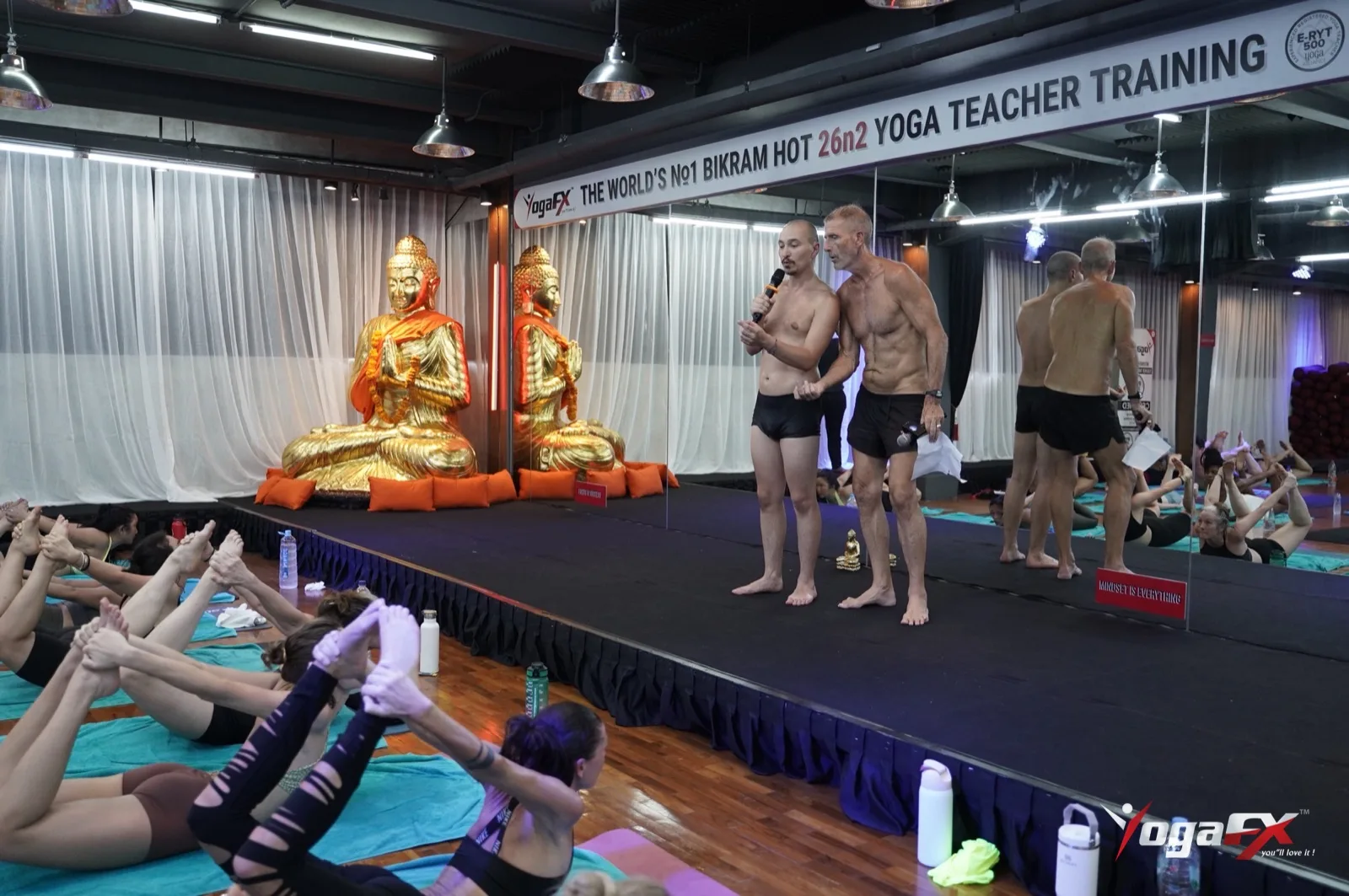
When you can feel your own heat acclimatization week by week, you also learn to read your body. That skill matters even more if you later want to teach. Our article on how to become a hot yoga teacher explains how the dialogue is learned.
Try your first class at YogaFX in Seminyak
If you would like to feel the room before you commit, claim a Free 1-Day Guest Pass and take your first class on us. The YogaFX studio is at Jl. Pangkungsari Gg Jepun No.888, Kuta Utara, Seminyak, Badung, Bali 80361, and it is open from 06:00 to 22:00 every day.
Tell the team it is your first time, so they can look after you. Heat acclimatization takes patience, and we would rather you leave a class early than push too far. You can message us on WhatsApp to book.
FAQ
How long does heat acclimatization take?
Most guidance says about 7 to 14 days of gradual exposure to heat. NIOSH and the Korey Stringer Institute both use that window. In a 26 and 2 class, many students feel the room get easier within two weeks of regular practice, though everyone adapts at a different speed.
What is heat acclimatization?
Heat acclimatization is the set of changes that help your body cope with heat. You start sweating earlier, you lose less salt in sweat, and your heart rate and core temperature rise less for the same effort. It builds through repeated, manageable exposure, not through one very hard session.
Is heat acclimatization permanent?
No. NIOSH says people can keep it through a few days away, but a week or more may bring a significant loss. The good news is that it can often be regained in two to three days back in the heat, so a gentle return usually works.
Does heat acclimatization make you sweat more?
Often, yes. NIOSH lists earlier sweating, greater sweat production and less electrolyte loss in sweat as part of the adaptation. That means you may need to drink more through the day. It is a sign your cooling system is working, not a sign that you are unfit.
How often should I do hot yoga in my first month?
There is no single right number. A cautious pattern for a healthy adult is two to three classes in week one, with rest days between, then adding one class at a time. If you feel flat or sleep badly, drop back and check with your doctor.
Still have questions? Message Mr. Ian and the YogaFX team on WhatsApp and we will answer them personally.
Health note: this article is general information and does not replace advice from a doctor. Research cited here comes from occupational and sports settings, and the pacing pattern is a cautious starting point for healthy adults. Consult a healthcare professional before starting hot yoga, especially if you have a medical condition or are pregnant.
Sources: CDC NIOSH, Heat Stress: Acclimatization; Korey Stringer Institute, UConn: Heat Acclimatization; Porcari et al., University of Wisconsin, 2014.