Hot yoga for beginners is easier than it looks, because a 26 and 2 class never changes. It is the same 90 minutes every time: 26 postures and 2 breathing exercises in a room near 40°C. You learn it by repeating it. Expect to rest, sweat hard and feel at home after about three to five classes.
Table of Contents
This guide walks you through a first class in order, from the opening breath to the final rest. It comes from the classroom of Mr. Ian Terry, E-RYT 500, and from the students who practise with him at YogaFX in Seminyak, Bali. For the full method behind the class, start with our guide to hot 26 and 2 yoga.
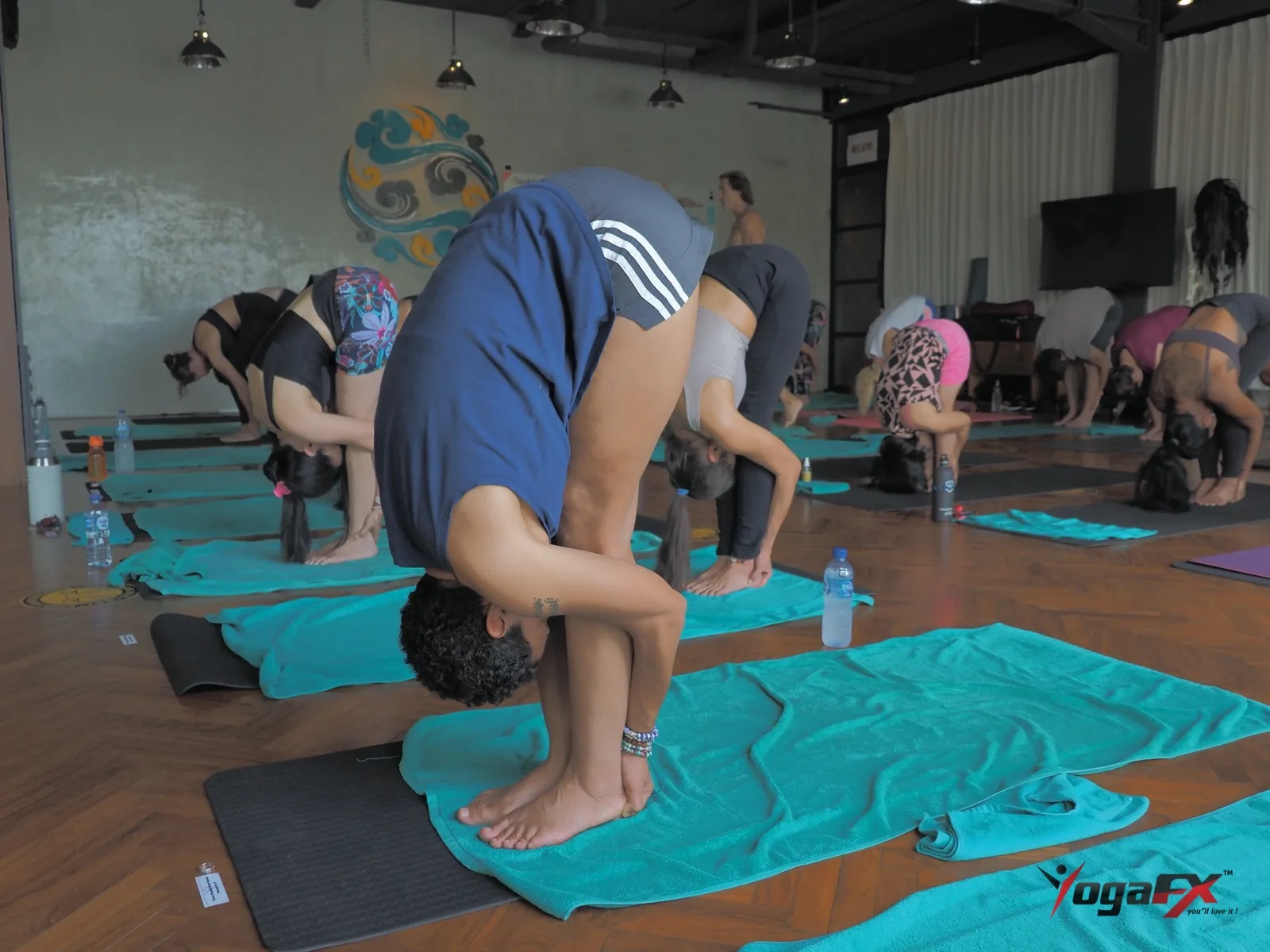
Hot yoga for beginners: what a first class really asks of you
A first class asks for three things. None of them is flexibility, and none is fitness. Students in a hot yoga for beginners class tell us the same story, so here is the honest list:
- Tolerating the heat. The room is warm and humid. Your heart rate climbs faster than usual, and that feels odd at first.
- Standing still. Between postures you wait quietly and breathe through your nose. This is harder than it sounds.
- Listening. The teacher speaks a fixed script. You follow the words instead of copying a demonstration.
What the class does not ask is just as useful to know. You don't need to touch your toes. You don't need to remember the order. You don't need to keep up with the person on the next towel.
Because the class repeats, the second one feels easier than the first. By the fifth, you know roughly what comes next. That predictability is the biggest advantage a beginner has in this style, and it is why the studio stays quiet and the teacher keeps talking.
Your first 26 and 2 class, posture by posture
A hot yoga for beginners class runs in four parts. It opens with a breathing exercise, moves through standing postures, drops to the floor, and closes with a second breathing exercise. Short rests lie between the blocks. The table below shows what to expect in hot yoga and one tip for each stage. For every posture in order, see our 26 and 2 yoga sequence guide.
| Stage | Example postures | What it feels like | Beginner tip |
|---|---|---|---|
| Opening breath | Pranayama, standing deep breathing | Calm, slow and a little strange at first | Breathe in through the nose and let the shoulders drop. |
| Standing series | Awkward, Eagle, Standing Head to Knee, Triangle, Tree | Burning thighs, wobbling balance, lots of sweat | Fix your eyes on one spot in the mirror and stay with it. |
| First floor series | Cobra, Locust, Bow | Strong back muscles and a hot, heavy chest | Lift only as high as you can control. Height comes later. |
| Second floor series | Camel, Rabbit, Spine Twisting | Deep stretches, with the heat at its most noticeable | Sit out a round if you feel light-headed. That is allowed. |
| Closing breath | Kapalbhati-style breathing, Blowing in Firm | Brisk, then very still | Keep the breaths small. Rest when the class ends. |
The opening breath
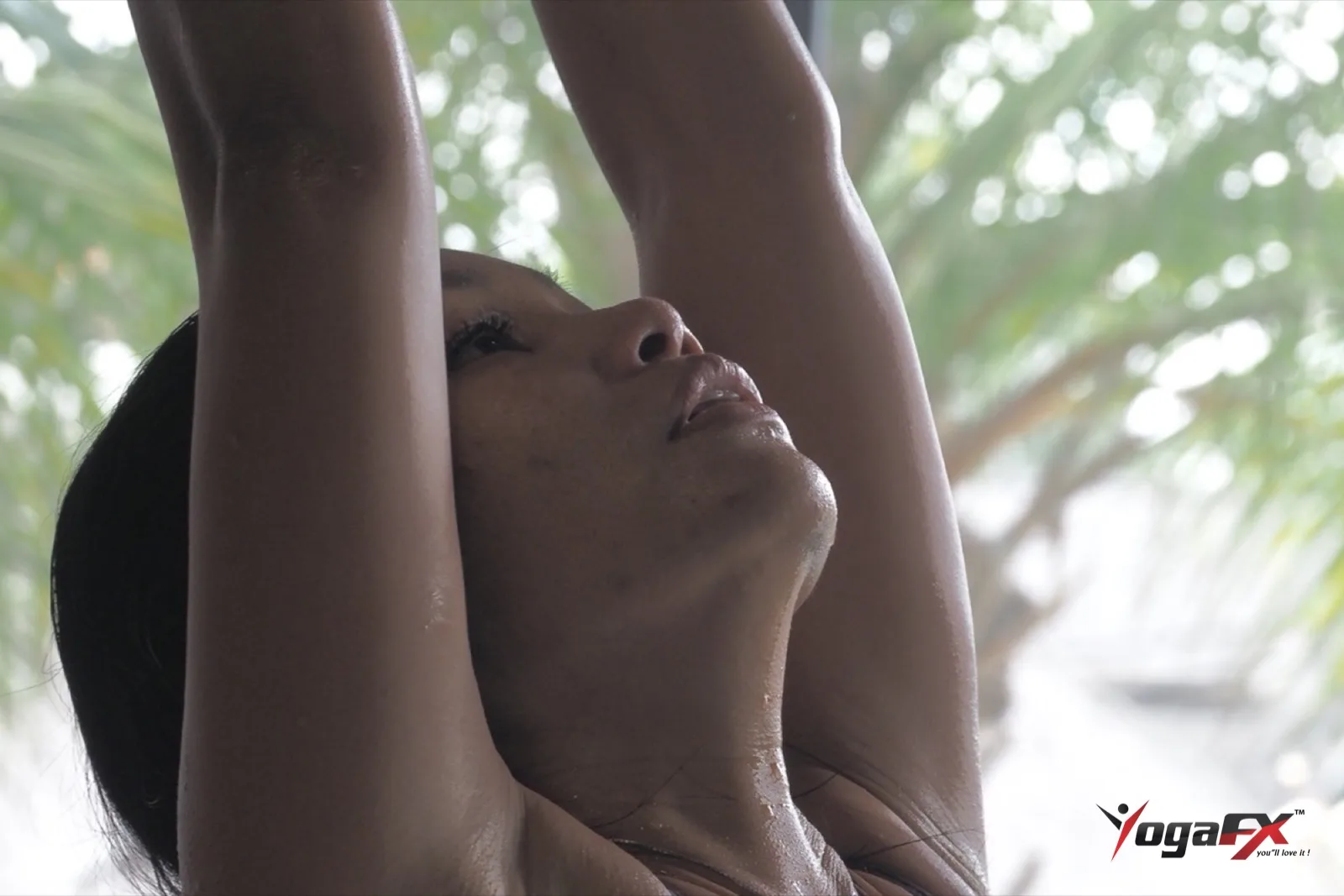
You start standing, with the arms raised and the breath slow. In hot yoga for beginners, nothing hard happens yet. The point is to settle your mind before the heat builds, so treat it as practice for the next 85 minutes.
If your arms tire, bend your elbows a little. Staying relaxed matters more than holding a perfect shape.
The standing series
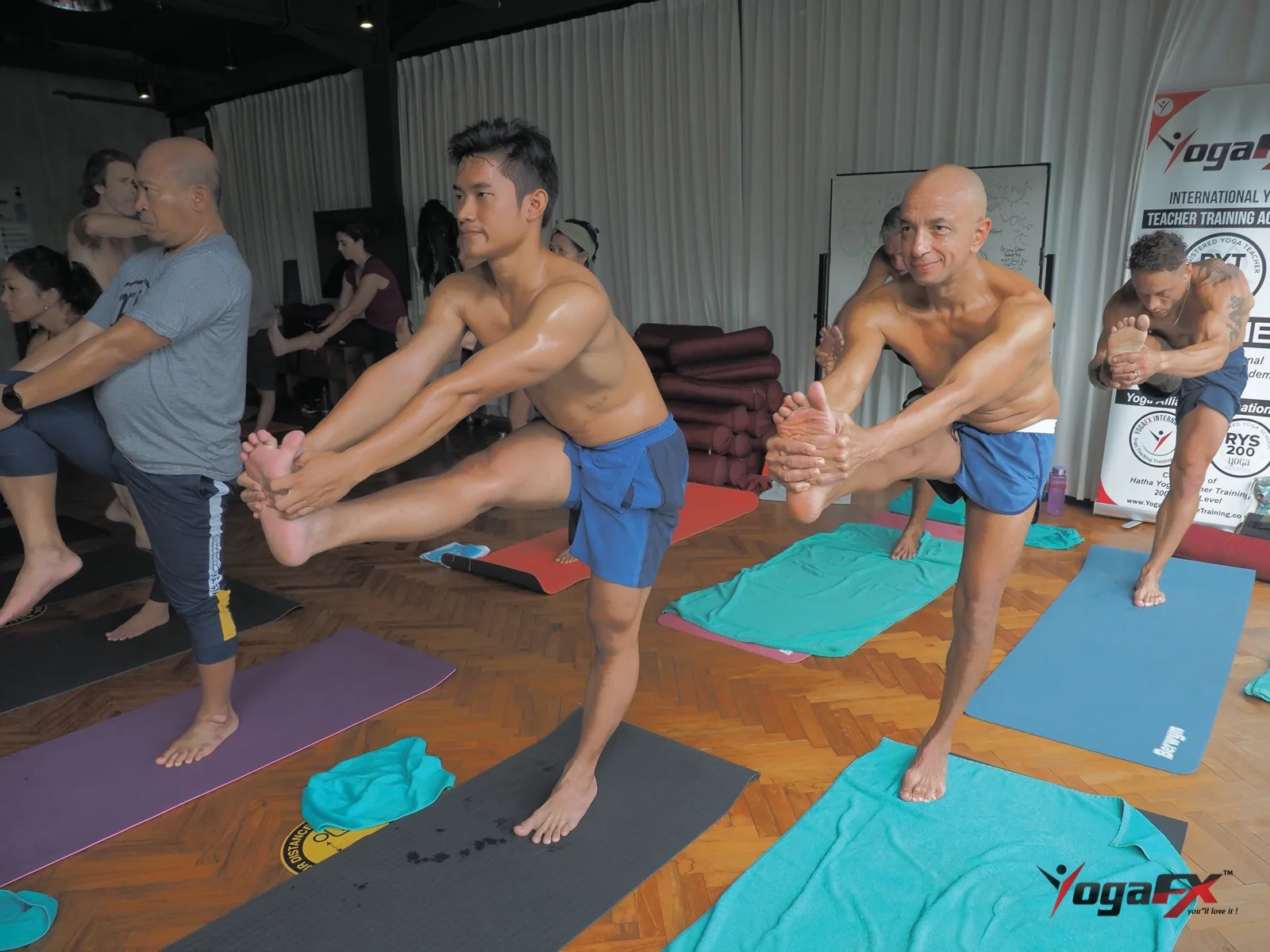
Most of the early work in hot yoga for beginners happens on your feet. The postures build leg strength, balance and focus, and they raise your heart rate. Many beginners feel the first real wave of heat here.
This is where the mirror earns its place. Looking at one point steadies your balance and your mind. If you fall out of a posture, step back in calmly. Most students fall out of a posture sometimes, including long-time ones.
The floor series
After the standing work you lie down, and the class turns to backbends, kneeling postures, a seated fold and a twist. In hot yoga for beginners, the floor feels like relief for about ten seconds. Then the heat catches up with you.
Rest on your towel between postures whenever you need to. Your first goal is to stay in the room and keep breathing, not to match anyone else's depth.
The closing breath
The class ends with a second breathing exercise, followed by a final rest. Lie still and let your heart rate settle. Many students find this is the moment it all settles, because the body finally has nothing left to do.
Why the dialogue suits hot yoga for beginners
A scripted dialogue guides the class, so nobody demonstrates. At first this surprises people. In practice, it removes a lot of pressure.
You are not copying a teacher who is more flexible than you. You are following spoken directions at your own level. Our guide to the 26 and 2 dialogue explains the text itself. Here is why it suits a beginner:
- Your eyes stay free. You can watch your own alignment in the mirror instead of watching someone else.
- The words repeat. By class three you start to anticipate the cues, and that makes the room feel safer.
- The pace stays steady. Nobody rushes you into the next posture, and nobody adds a surprise shape.
If you are a man wondering how a first class feels, read hot yoga as a man, from breath to Savasana. It covers the same class from that angle.
How the heat gets easier: your first month
Almost everyone who tries hot yoga for beginners asks how long it takes to get used to the heat. There is no single answer, but there is a pattern. In Mr. Ian's experience, most students need about three to five classes before the heat and the stillness feel familiar. The graphic below puts that pattern next to what occupational health research says about adapting to heat.
What heat research says about adapting
The CDC/NIOSH acclimatization page is written for workers, not yogis. Still, it explains why the first week feels hardest. It advises that people new to heat build their exposure gradually over 7 to 14 days. It lists changes such as earlier sweating, steadier circulation and working with a lower core temperature and heart rate.
So the first classes of hot yoga for beginners feel hard for a physical reason, not because you are weak. Give your body a few visits to adjust. A steady rhythm of classes beats one heroic week followed by weeks off.
A simple rhythm for the first month
For a first month, a simple rule works: come often enough that the heat never turns strange again, but never so often that you cannot recover.
If you want to see how a class compares with other kinds of training, YogaFX's teacher training site looks at hot yoga as a workout.
Hot yoga tips for beginners: what to bring and wear
You do not need special kit for hot yoga for beginners. A few simple items make the 90 minutes more comfortable:
- A large towel for your mat. Sweat makes a bare mat slippery, so the towel gives you grip.
- A water bottle. Sip before class and again afterwards, because the heat makes you sweat more than you expect.
- Light clothes that you can move in and don't mind soaking, such as shorts and a fitted top.
- A second towel for your face and a dry change of clothes for afterwards.
Food matters too. Eat a small, light meal a couple of hours before class and skip anything heavy. Our guide on what to eat before hot yoga has simple ideas that sit well in a warm room.
Pacing, rest and warning signs
Pacing is the real skill in hot yoga for beginners. Push too hard and the class feels miserable. Rest well and it becomes enjoyable quickly.
Sit out without guilt
Resting is normal in hot yoga for beginners, and every teacher expects it. If you feel dizzy or your breath runs ahead of you, stop the posture. Stand or sit quietly, breathe through your nose and rejoin when you are ready. Staying in the room is better than leaving, because you keep learning the rhythm.
Know when to stop
Treat the following as a signal to stop, rest and tell the teacher:
- Dizziness or a feeling that you might faint
- Nausea or a pounding headache
- Blurred vision or chest pain
- A heart that races and does not settle with rest
If symptoms continue after class, seek medical help. People with a heart condition, blood pressure problems or pregnancy should speak to a healthcare professional before any hot class. This is general information, not medical advice.
What the research says about hot yoga for beginners
Research on heated yoga is growing, but be careful with it when you read about hot yoga for beginners. Most trials test heated hatha yoga in general, not the fixed 26 and 2 sequence. We name those limits as we go, so you can judge the evidence yourself.
A Massachusetts General Hospital trial
In 2023, Nyer and colleagues at Massachusetts General Hospital published an eight-week randomized trial in the Journal of Clinical Psychiatry. Adults with moderate-to-severe depression either took heated yoga at community studios or joined a waitlist. Of the 65 people analysed, about 59% of the yoga group (59.3%) had a treatment response of 50% fewer symptoms or more, against 6.3% of the waitlist group.
Read the study record on Europe PMC or PubMed.
Two cautions apply. Participants attended about 10 classes across the eight weeks, so roughly one a week, which is a reassuring dose for a newcomer. But the classes were heated hatha yoga, not necessarily 26 and 2, and the authors call for more research with active comparison groups. Yoga supports care. It does not replace it.
What this means for you
The practical message for hot yoga for beginners is modest. A steady habit of heated classes, even about once a week, has been linked with real benefits in a trial. The adaptation research above explains why the early classes feel hardest. Neither source says that one style beats another. Please consult a healthcare professional before using yoga alongside treatment for any condition.
What students say about the first week
Numbers only go so far, so here are three YouTube reviews recorded by trainees with Mr. Ian. They come from a longer teacher training course, not a single class. Even so, all three describe the feeling every hot yoga for beginners student knows: hard first, then rewarding.
Annalisa (YouTube review, 2025) said the experience exceeded her expectations. She called it not only a physical challenge but an emotional roller coaster, and said it showed her resilience in herself.
Arkan (YouTube review, 2023) said he arrived in Bali not knowing what to do. In three weeks he learned a great deal, including about emotional and mental health, and he felt a large difference from when he started.
Dee (YouTube review, 2019) called her experience rejuvenating and transformational. She said the group cried, laughed and was pushed emotionally and mentally, and that strangers became good friends in a flash.
Four worries about hot yoga for beginners, answered
"I'm not flexible enough"
Flexibility is a result of practice, not an entry requirement for hot yoga for beginners. Go only as far as the posture feels stable. Teachers care about your alignment and breathing far more than your depth.
"I'm out of shape"
Many first-timers feel the same, and hot yoga for beginners does not rely on fitness. You rest when you need to. Over a few weeks, the standing series gets steadier and the heat feels less dramatic.
"I'll look silly"
Everyone is busy with their own breathing and their own mirror. The room is focused, and sweating is universal. Nobody watches a beginner. They are too busy surviving the same heat.
"What if I feel dizzy?"
Stop, sit or lie down, and breathe through your nose. Sip water when the class allows it. Tell the teacher afterwards so they can help you pace the next visit. Dizziness can happen when the body meets heat for the first time, and it is a signal to rest. If it keeps happening, speak to a healthcare professional.
Try hot yoga for beginners at YogaFX Seminyak
If you are in Bali, the studio sits at Jl. Pangkungsari Gg Jepun No.888, Kuta Utara, Seminyak, Badung, Bali 80361. It is open from 06:00 to 22:00 daily, and your first class is free with the Free 1-Day Guest Pass. Not in Bali? Ask any studio whether it teaches the full fixed sequence in the same order.
Some students fall for the class and want to teach it. Mr. Ian Terry is Founder and Lead Instructor, E-RYT 500, with more than 12,000 teaching hours. YogaFX has graduated more than 1,500 teachers from over 80 countries since 2017.
The next live MasterClass runs from Sunday 24 January to Friday 29 January 2027, and you can read about our 26 and 2 yoga teacher training before you decide. If you cannot travel yet, the Starter Kit costs USD 98 (or 2 x USD 49) and the Online Course costs USD 329 (or 4 x USD 82).
This article is general information, not medical advice. Consult a healthcare professional before starting any heated exercise, especially if you have a medical condition.
FAQ
How long does it take to get used to hot yoga?
Most students need about three to five classes before the heat and the stillness feel familiar, according to Mr. Ian Terry. Occupational heat guidance suggests the body adapts over about 7 to 14 days. Come regularly, rest when you need to, and give yourself a month before judging.
What should I bring to my first hot yoga class?
Bring a large towel for your mat, a water bottle and light clothes you don't mind sweating through. A second towel for your face and a dry change of clothes help afterwards. Eat only a small, light meal a couple of hours before class so your stomach stays comfortable.
Do I need to be flexible to start hot yoga?
No. Flexibility comes from regular practice, and the class does not require it on day one. Go only as far as each posture feels stable and controlled. Teachers care more about your breathing and alignment than how deep you go, so a stiff beginner is welcome.
Can I sit out or rest during a first hot yoga class?
Yes. Resting is normal, and teachers expect it from beginners. If you feel dizzy, stop the posture, sit or lie down and breathe through your nose. Staying in the room helps you learn the rhythm, and you can rejoin when you feel steady again.
Is hot yoga for beginners at YogaFX official Bikram training?
The class follows the same fixed sequence of 26 postures and 2 breathing exercises that studios call Bikram, Hot 26 or 26 and 2. YogaFX is independent training, not official Bikram Choudhury Teacher Training. Ask any studio whether it teaches the full fixed sequence before you book.
Is the first class at YogaFX Seminyak free?
Yes. The Free 1-Day Guest Pass gives you your first class free at the Seminyak studio, which is open from 06:00 to 22:00 daily. The address is Jl. Pangkungsari Gg Jepun No.888, Kuta Utara, Seminyak, Badung, Bali 80361. Message the team on WhatsApp if you have questions first.
Still have questions? Message Mr. Ian and the YogaFX team on WhatsApp and we will answer them personally.