RYT 200 means you finished a 200-hour training at a Yoga Alliance registered school. Those hours are split across four categories, and a 26 and 2 course can fill most of them: 75 for technique and practice, 30 for anatomy, 30 for humanities and 50 for professional skills. This guide maps the sequence onto each one.
Table of Contents
Mr. Ian Terry, E-RYT 500, has taught more than 12,000 hours of this sequence. He wrote the brief for this guide because students keep asking the same thing: does a fixed 90-minute class really count toward RYT 200 hours? The honest answer has a few parts, and we've kept the ones we couldn't confirm out of the numbers.
If you want the letter-by-letter meaning first, our teacher training site has a plain-English walk through what the RYT 200 title stands for. This page starts one step later, with the hours.
RYT 200 hours: the four categories Yoga Alliance counts
Yoga Alliance sets the rules for schools in its Standards for RYS Credentials. We read the 2025 file and took every number below from it. A school applying for the 200-hour level has to cover four education categories, and each one has an hour count.
RYT 200 meaning in one line
In one line, what is RYT 200? It is a registry title that says your 200 hours came from an approved school. The RYT 200 meaning stops there: it says nothing about which method you can teach.
The four categories
Here is the table, with what a 26 and 2 course puts into each category and the question to ask any school before you pay.
| Yoga Alliance category | Hours | Sub-areas listed | What 26 and 2 puts in | Ask the school |
|---|---|---|---|---|
| Techniques, Training and Practice | 75 hours | Asana, pranayama and subtle body | The 26 postures and 2 breathing exercises, practised in a 90-minute class at about 40°C | How many of the 75 hours are live practice, and where is meditation covered? |
| Anatomy and Physiology | 30 hours | Anatomy, physiology, biomechanics | Why each posture is aligned the way it is, plus what heat does to the body | Who teaches it, and is it live or recorded? |
| Yoga Humanities | 30 hours | History, philosophy, ethics | The origin of the method, the dialogue's story and teacher ethics | Is the philosophy tied to the method you will teach? |
| Professional Essentials | 50 hours | Teaching methodology, professional development, practicum | Dialogue drills, posture clinics and practice teaching with feedback | How many practicum turns will you get in front of the group? |
Notice the maths. The four categories add up to 185 hours. The document we read does not show where the other 15 hours sit, so we won't guess. If a school gives you a full 200-hour table, ask them to point to the missing 15.
Where the RYT 200 hours go
75
Technique and practice
Asana, pranayama, subtle body.
30
Anatomy and physiology
Anatomy, physiology, biomechanics.
30
Yoga humanities
History, philosophy, ethics.
50
Professional essentials
Teaching method and practicum.
150
Lead trainer hours
Of 200, taught by an E-RYT 500 lead trainer.
30
Live online hours
The minimum synchronous hours if you study at a distance.
Techniques, Training and Practice: where the 26 and 2 does the heavy lifting
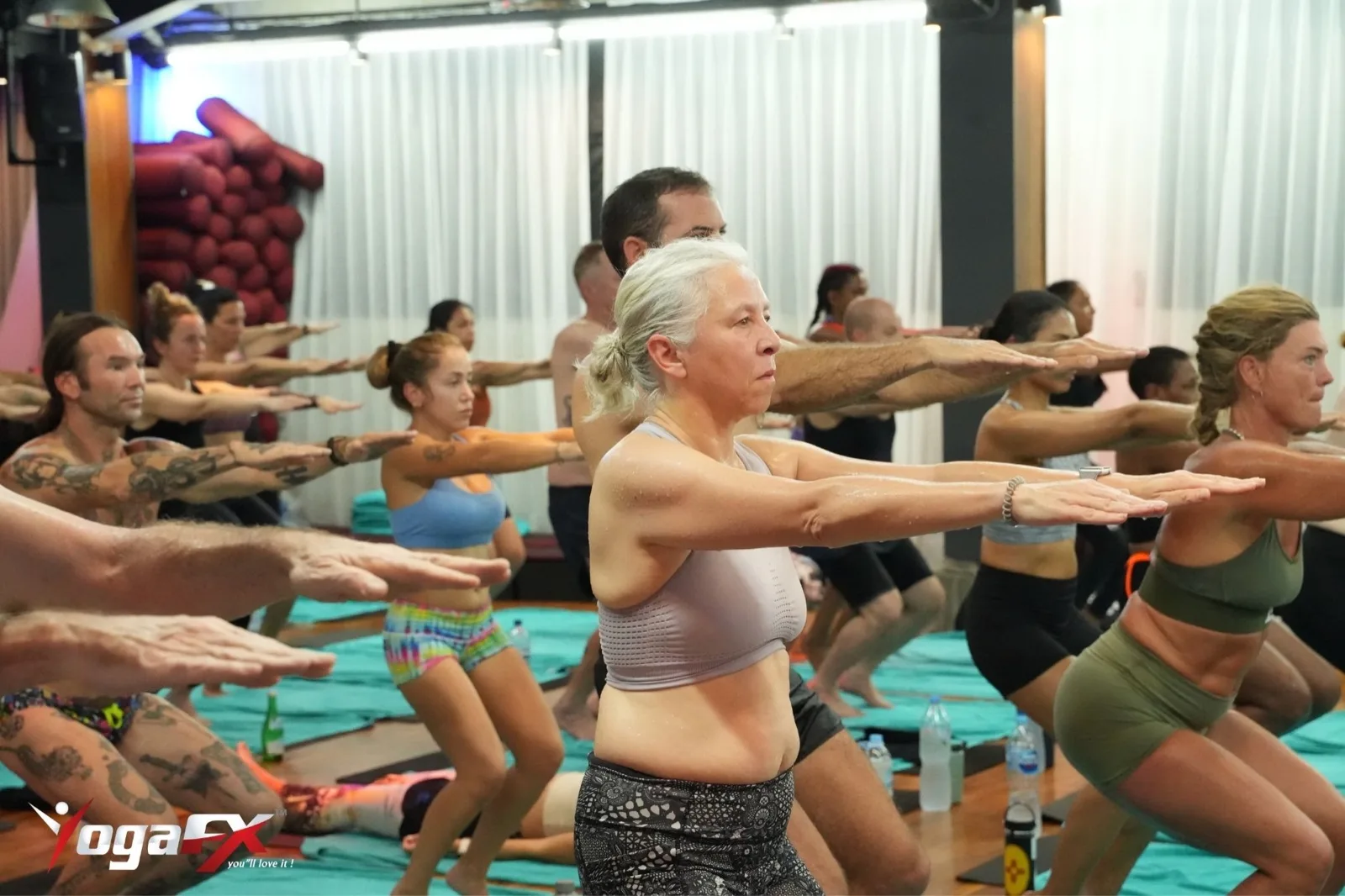
This is the biggest block, at 75 hours, and it's where a fixed sequence has a real advantage. Every class runs the same 26 postures and 2 breathing exercises in the same order. So a trainee gets many repetitions of each posture, with the same words, in the same heat.
That repetition matters for one reason. You can't teach a posture well until you've done it often enough to feel where it goes wrong. A trainee who has practised Standing Head to Knee twenty times knows why the standing leg locks before the hip is square.
- Asana. The 26 postures are the asana content, taught in order and in full.
- Pranayama. The 2 breathing exercises open and close the class, so breath work is part of every session.
- Meditation. The class has no seated meditation segment. Ask your school where it counts those hours.
The catch with practice hours
There's a catch, and we'd rather say it than hide it. Seventy-five hours is a lot of practice, and a 90-minute class is only 1.5 hours of it. So a hybrid course has to fill the rest with study, drills and clinics. A trainee told us it plainly:
It is recommended that you come prepared and condition your body for long hours of practice to avoid burnout and to gain optimum benefits.
Joanne, Google review, 2025
That is practical advice for anyone counting practice hours. Build your base before the course starts, because the heat will tire you faster than the schedule does.
Anatomy and Physiology: the heat adds a lesson
Thirty hours of anatomy, physiology and biomechanics sit in their own category. In a 26 and 2 course, they connect straight to the postures you've just practised. Why does the standing bow need the hip to rotate before the spine arches? Anatomy answers it.
What the research says about the hot room
The hot room adds a physiology lesson that a room-temperature class never raises. A University of Wisconsin study (Porcari et al., 2014) measured a 90-minute class at about 80% of maximum heart rate. Women burned an average of 333 calories and men 460. A teacher should know what that load asks of a student's heart, fluids and pacing.
A 2025 systematic review (Willmott et al.) pooled 43 studies and 942 participants. It suggested regular hot yoga may improve balance, flexibility and bone mineral density, and it called the evidence on mood promising but not conclusive. We use those words, may and suggested, because that's what the data allows.
This is general information, not medical advice. Anyone with a heart, blood pressure or pregnancy question should speak to a healthcare professional before practising in the heat.
Yoga Humanities: what the dialogue covers and what it doesn't
Yoga humanities means history, philosophy and ethics, with 30 hours in the standard. The 26 and 2 helps with one slice of this: the method's own story and the script itself. Our guide to the 26 and 2 dialogue shows why the exact words were fixed and who still uses them.
But the dialogue is a script for a class, not a course in yoga philosophy. So a good school adds separate sessions on yoga's history and on teacher ethics: boundaries with students, honest health claims and what to do when a student is hurt. Ask to see that part of the timetable.
- History. Where the sequence came from and how it reached independent schools.
- Philosophy. How the method connects to the wider yoga tradition.
- Ethics. What a teacher may and may not say about health, and why.
We cover the history side in how the 26 and 2 method outlived its trademarks. It is worth reading before any course that says it teaches the original method.
Professional Essentials: 50 hours of teaching practice
This category merges teaching methodology, professional development and the practicum. It is where a trainee turns from student to teacher, and it is the part a fixed sequence supports best. The words are already written. So the training time goes into delivery, timing and seeing errors.
What fills the 50 hours
- Dialogue drills. You say a segment aloud, and the trainer checks pace and pauses.
- Posture clinics. One posture is held while the group learns to see and name a single fix.
- Practice teaching. You teach a short segment, then a longer block, then a full class with feedback.
- Professional habits. Class safety, student boundaries and how to answer health questions.
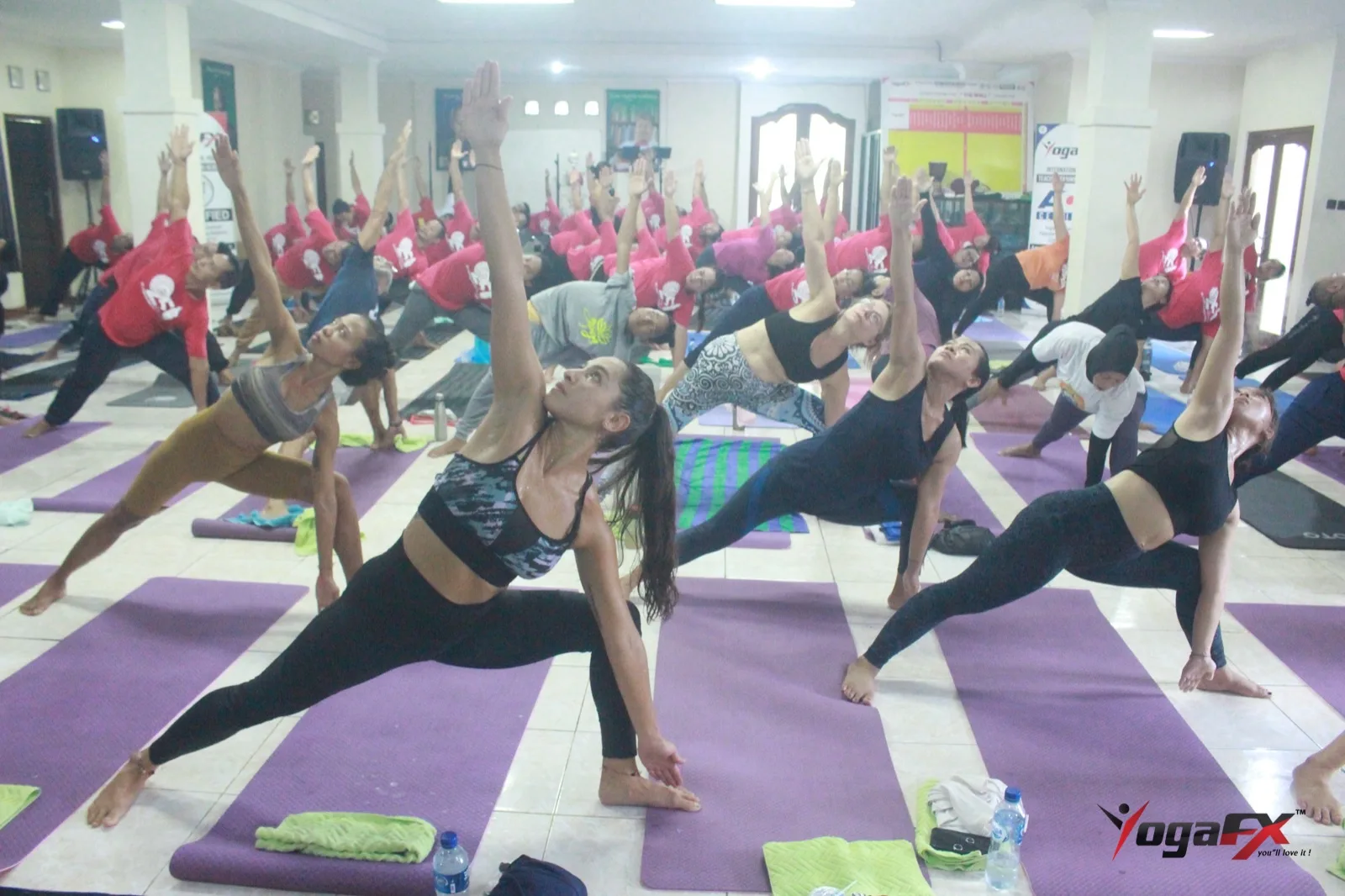
We describe the clinic format in our guide to original hot yoga teacher training. The short version is that you give one correction in the words of the dialogue, then watch whether the student changes.
Days were packed with theory, practice, and teaching drills.
JJ, Yoga Alliance review, 2025
That line comes from a graduate's Yoga Alliance review. It matches what the Professional Essentials hours should feel like: busy, specific and full of feedback.
Contact hours, online hours and the 150 lead trainer hours
Two rules in the standards shape how a hybrid course can work. First, for an RYS 200 school, 150 of the 200 hours must be taught by a lead trainer who holds the E-RYT 500 credential. Second, a school may deliver a training fully in person, fully by distance or as a mix.
There is a floor on live contact, though. A school must deliver at least 15% of programme hours in a synchronous format, which means teachers and students online together in real time. For a 200-hour course, that is 30 hours.
| Rule | What the standard says | What it means when you compare courses |
|---|---|---|
| Lead trainer hours | 150 of 200 hours taught by an E-RYT 500 lead trainer | Ask who teaches, and how many hours that person is actually in the room. |
| Delivery format | 100% in person, 100% distance, or a mix | Format alone doesn't make a course better. Check the live hours. |
| Synchronous floor | At least 15% of hours live online together, 30 for RYS 200 | Recorded lectures can't fill the whole online share. |
| Single school | One RYS 200 programme, with no combining shorter courses | You can't stitch weekend workshops into an RYT 200. |
The single-school rule
The single-school rule comes from the Standards for Registered Yoga Teachers. It says you can't combine several trainings to meet the 200-hour requirement. So the hours must come from one registered programme, start to finish.
We could not find a contact-hour rule for the 200-hour level in the current document. An older Yoga Alliance page set one, but it describes the legacy standard, so we leave it out. When you ask a school about contact hours, ask which standard it is following.
How a hybrid 26 and 2 course fits those hours
YogaFX runs a 6-day hybrid MasterClass. You study online first, then you train in person in Bali. Graduates earn the Yoga Alliance RYT 200-Hour and the Bikram Hot 26&2 200-Hour International Yoga Certification.
What six days can and can't hold
A 6-day intensive can't hold 200 hours alone, and no honest school would claim it does. The online study carries a share of the hours, and the intensive carries the practice, the clinics and the practicum. Because we haven't published a per-category table here, message us and ask for the syllabus before you enrol. Mr. Ian talks through it with every student first.
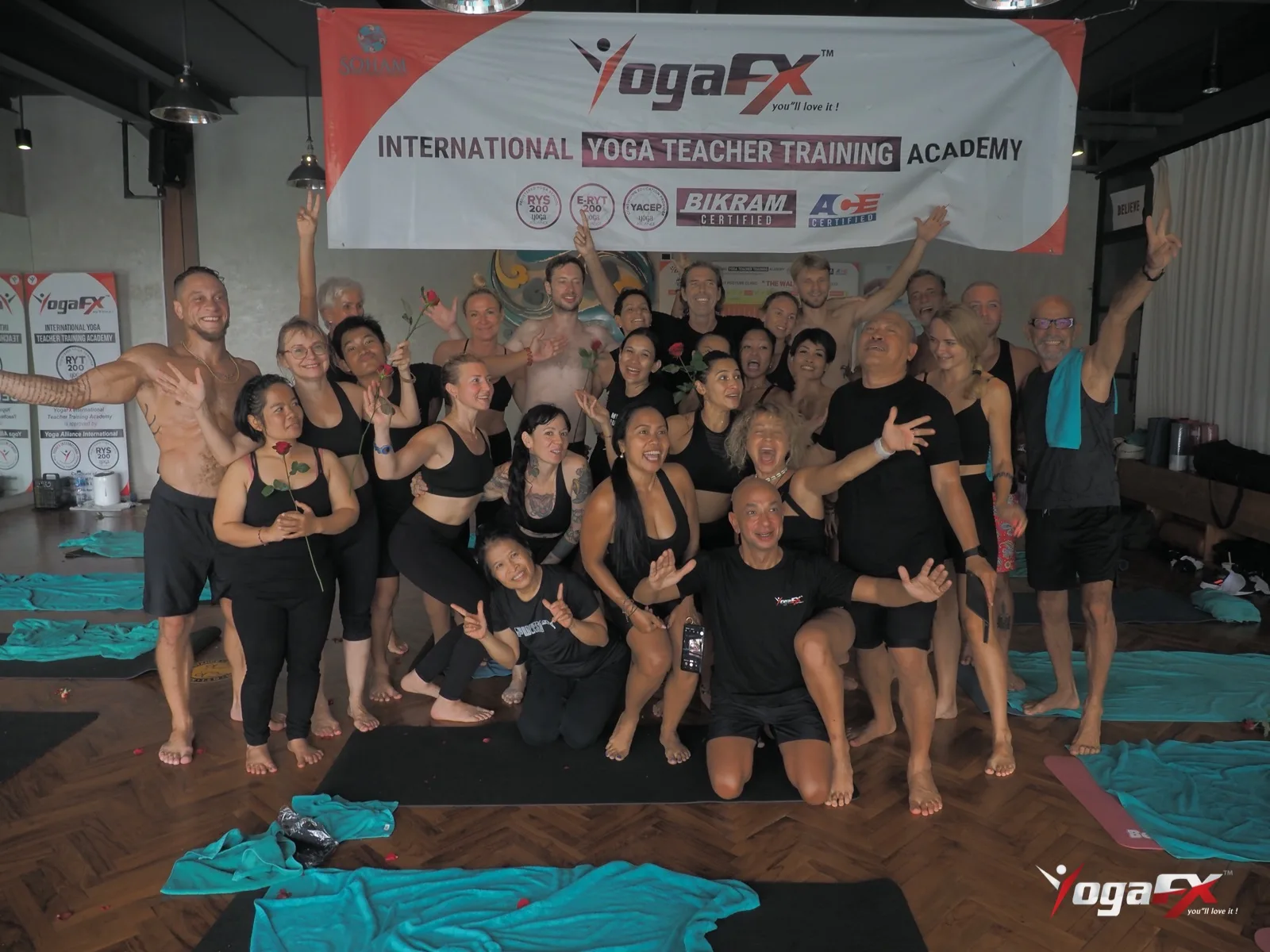
Graduates often say the same thing about the week: the certificate was the goal, but the people were the reward. Greta put it best in her video review.
And I thought the best part was going to be getting this certificate and being able to tell my parents I did something. But the best part was meeting all of you.
Greta, YouTube review, 2026
RYT 200 certified: what the title does and doesn't tell you
Being RYT 200 certified means your name sits on the Yoga Alliance registry after a 200-hour training. It records your training, not your method. Our guide to Yoga Alliance certification for 26 and 2 teachers explains what the registry recognises and what it leaves to the school.
The next rung is the E-RYT 200 or the RYT 500, and the top is the E-RYT 500. We map that climb in our E-RYT 500 explainer, with a worked example of how weekly classes become teaching hours. Registry fees are a separate topic, and we keep them out of this page.
Yoga Alliance has also announced credential and membership changes from January 2027. Its credential page says it is not removing the 200-hour or 500-hour training requirements, but it will change how credentials show your skills. Check that page before you apply, because the details may move.
Five mistakes to avoid when counting RYT 200 hours
- Counting class time as the whole answer. A 90-minute class is 1.5 hours of a 75-hour practice category.
- Skipping the missing 15. The four listed categories sum to 185, so ask where the rest sits.
- Accepting a vague online share. At least 30 hours must be live, not recorded.
- Combining courses. The 200 hours must come from a single registered programme.
- Trusting the badge alone. Look the school up in the Yoga Alliance directory, then check the lead trainer's own listing.
None of these needs a lawyer. It needs a school that will show you its timetable. If a school won't, that tells you something too.
About Mr. Ian Terry and the next batch
Mr. Ian Terry trained for five years, from 2014 to 2019, with the founder of the method. He is an E-RYT 500, a Master Trainer of the Republic of Indonesia Yogasana Sports Federation and the lead trainer at YogaFX. Since 2017, the academy has graduated more than 1,500 teachers from over 80 countries.
The next batch checks in on Sunday 24 January 2027 and checks out on Friday 29 January 2027, at Soham Wellness Center in Seminyak. If you want to see the hours table for your own course, message Mr. Ian on WhatsApp.
FAQ
What does RYT 200 mean?
RYT 200 means Registered Yoga Teacher at the 200-hour level. You finished a 200-hour training at a Yoga Alliance registered school, then registered. It records your training, not your teaching experience, and it needs no teaching hours to start. Studios and gyms often ask for it first.
How many hours does RYT 200 need?
RYT 200 needs a 200-hour training at one registered school. Yoga Alliance's current school standard lists four categories: 75 hours of technique and practice, 30 of anatomy, 30 of humanities and 50 of professional essentials. That adds to 185, so ask a school where the rest sits.
Can I do RYT 200 training online?
Yes, with limits. Yoga Alliance lets schools run a 200-hour training fully in person, fully by distance or as a mix. A school must still deliver at least 15% of hours live and online together, which is 30 hours for a 200-hour programme. Recorded lectures alone don't meet it.
Is a 26 and 2 certificate the same as RYT 200?
No. RYT 200 is the Yoga Alliance credential, earned through a registered school and recorded on its registry. A 26 and 2 certificate shows which method you can teach. At YogaFX, graduates earn both from one programme, the Yoga Alliance RYT 200-Hour and the Bikram Hot 26&2 200-Hour certification.
Does RYT 200 expire?
Your training never expires, but your registered status depends on staying current with Yoga Alliance. It is changing credential and membership rules from January 2027, and it says it is not removing the 200-hour requirement. Check its credential page before you apply or renew.
Still have questions? Message Mr. Ian and the YogaFX team on WhatsApp and we will answer them personally.