Hot yoga for flexibility works because a warm, humid room makes muscles and joints feel more willing to move, so your range grows a little each week. In the 26 and 2 method, you build that range inside a fixed sequence. Safe depth comes from alignment and breath, never from forcing.
Table of Contents
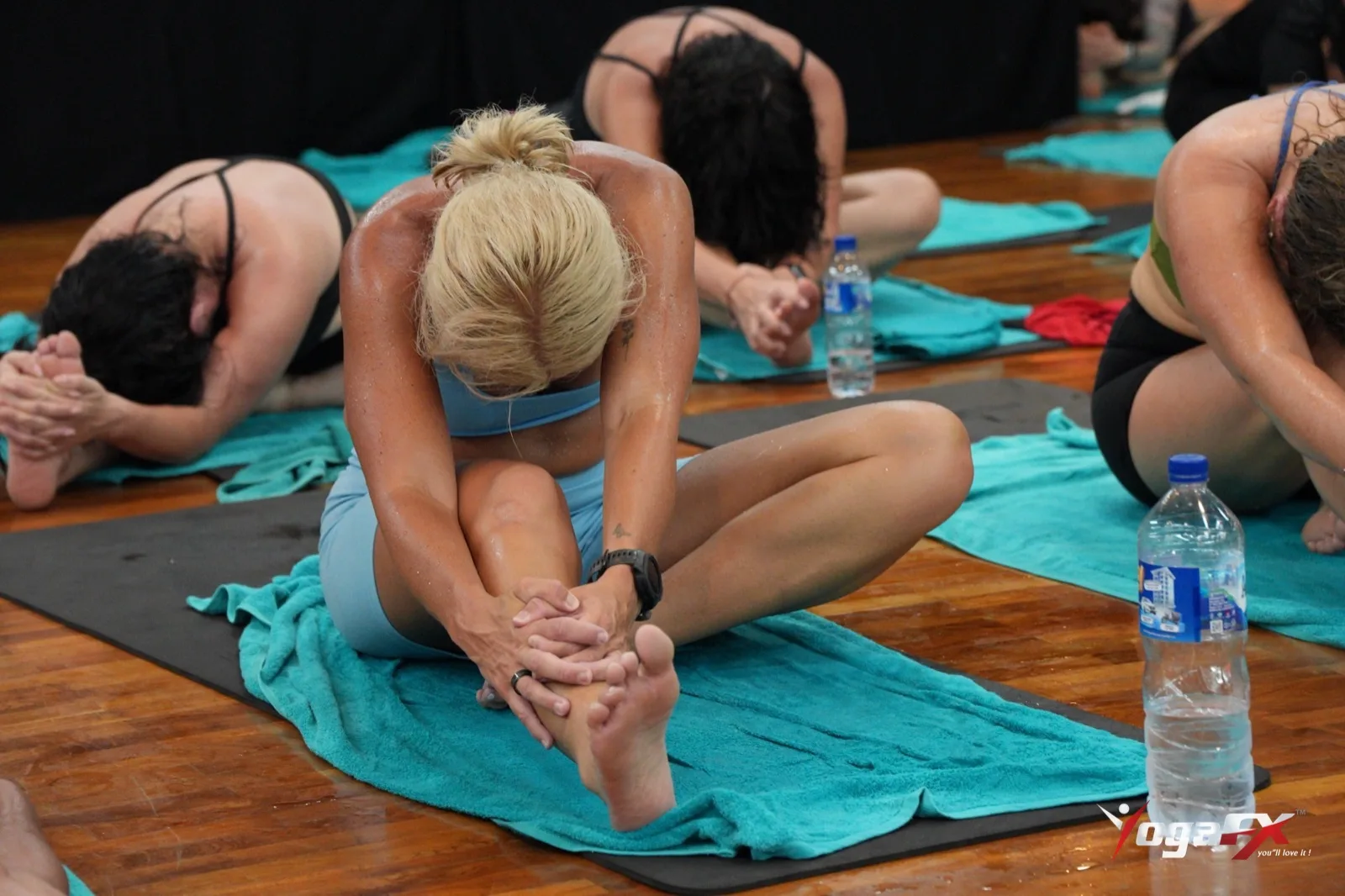
Hot yoga for flexibility: does it actually work?
Short answer: yes, with one catch. Hot yoga for flexibility helps you reach further, but the extra range only lasts if your body has time to adapt. A good class gives you the room and the structure to do that safely.
Most people who search for hot yoga for flexibility want one of three things. They want to touch their toes, loosen tight hips, or move without a stiff back. The 26 and 2 suits all three because it works through the whole body in the same order every class.
- Hamstrings and hips. Forward folds, standing leg work and floor stretches ask for range here more than anywhere else.
- Spine. Backbends and twists move the spine in every direction, so you stay mobile instead of only stretching one way.
- Shoulders and chest. Arm positions and backbends open the front of the body, which helps if you sit at a desk all day.
The catch is depth. Warm tissue stretches easily, and that can fool you into going further than your joints are ready for. This guide explains how the 26 and 2 sequence builds flexibility, where to stop in each posture, and how to tell a good stretch from a risky one.
Why heat changes how a stretch feels
Hot yoga for flexibility starts with the room itself. A YogaFX class runs for 90 minutes at about 40 °C and 40% humidity. The heat comes from the tropical climate, not from electric heaters. Mr. Ian Terry, Founder and Lead Instructor with E-RYT 500 credentials and more than 12,000 teaching hours, leads the classes at our Seminyak studio.
Warm muscles feel more pliable. That is why Mayo Clinic advises warming up with 5 to 10 minutes of light walking, jogging or biking before you stretch, instead of treating the stretch itself as the warm-up. A heated room gives you something similar from the very first posture, because you start the standing series already warm.
Connective tissue such as tendons, ligaments and joint capsules contains plenty of collagen. Teachers often explain that warmth makes this tissue feel more willing to lengthen. Treat that as a reason for care, not a licence to push. The same warmth can also hide the early warning signs of overstretching.
Sweat is not a measure of flexibility either. Two students can sweat the same amount and have very different ranges, because range depends on joint shape, muscle tension and how long you have practised. So compare yourself with last month's version of you, never with the person on the next mat.
Safe depth rules for hot yoga for flexibility
Hot yoga for flexibility is only useful when it is safe. Safe depth is the deepest point you can hold while your breath stays steady and your joints feel supported. These rules keep you inside that line.
- Aim for tension, not pain. Mayo Clinic puts it simply: expect to feel tension while you stretch, and if it hurts, you have pushed too far.
- Soften the knees in forward folds. A small bend protects the back of the knee and lets the hips do the folding, so the stretch lands in the hamstrings instead of the lower back.
- Move with the breath. Lengthen on the inhale and ease a few millimetres deeper on the exhale. Never bounce, because bouncing triggers the muscle to tighten against you.
- Hold, then release. Mayo Clinic suggests holding a stretch for about 30 seconds, or around 60 seconds in problem areas. The class dialogue sets the timing, so your job is to stay calm inside it.
- Build strength around the joint. Range without control is where injuries start. Muscles that grip the joint, such as the quads in standing postures, keep it stable while you stretch.
- Use the second set. Most postures in the 26 and 2 come twice. The second set usually goes a little deeper because your body is warmer and you know the shape.
- Pause when you need to. Resting on your mat is part of practice. Coming back with a clear head beats pushing through a dizzy spell.
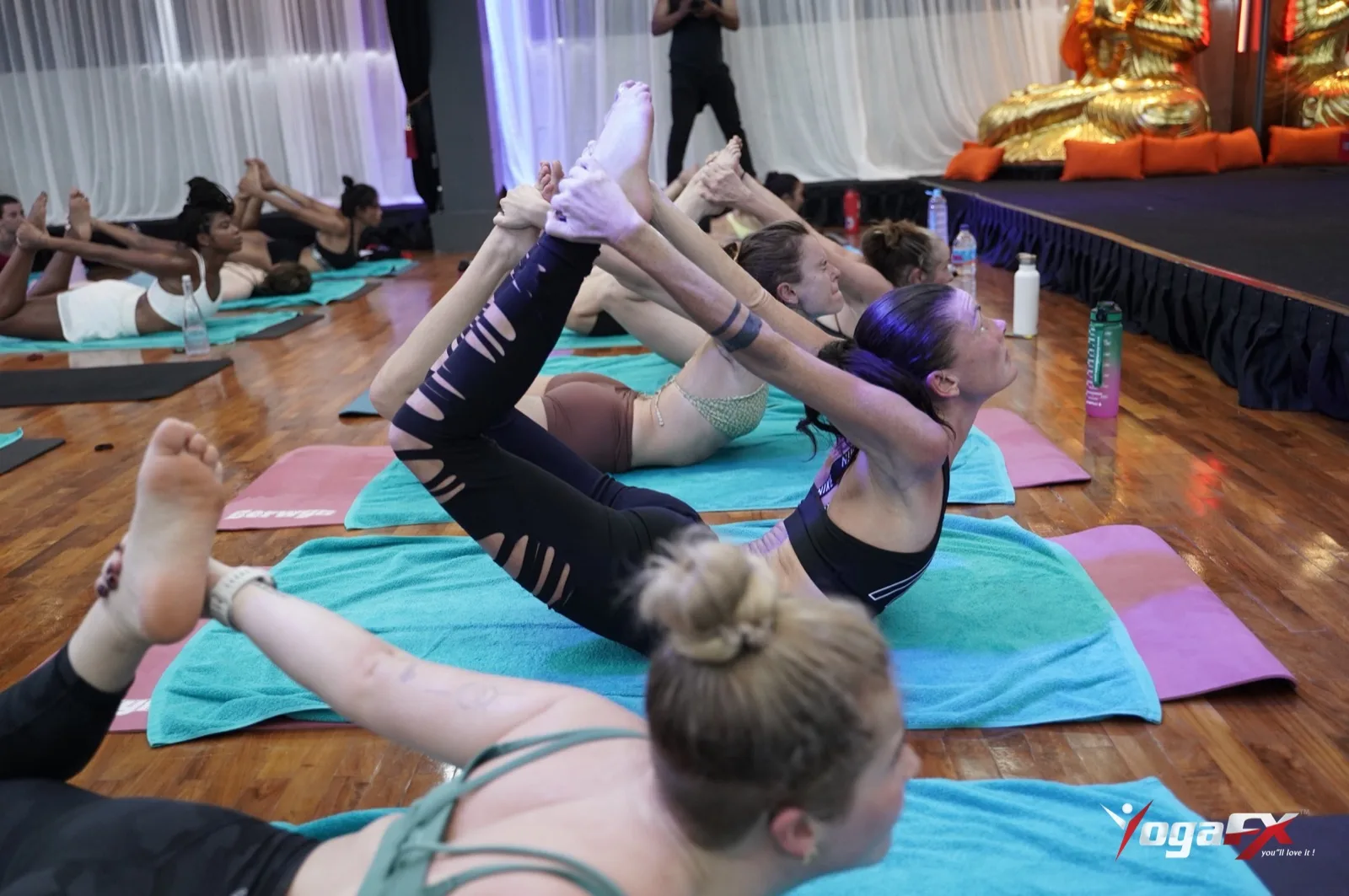
Posture by posture: where flexibility shows up in the 26 and 2
The 26 and 2 has 26 postures and 2 breathing exercises, always in the same order. That fixed order is a quiet advantage for hot yoga for flexibility. You meet the same folds and backbends every class, so small changes become visible. The table below groups the postures by what they ask of your body.
| Posture group | What it stretches | Safe depth cue | Back off if |
|---|---|---|---|
| Standing series (Half Moon, Triangle, Separate Leg Stretching) | Sides of the body, hips, hamstrings | Hinge from the hips and keep the chest open | Knees ache or the lower back rounds |
| Standing Head to Knee and Standing Bow | Hamstrings, quads, hip flexors, shoulders | Lift the leg only as high as the hips stay level | The hip hikes or the standing knee snaps back |
| Backbends (Cobra, Locust, Bow, Camel) | Spine, chest, front of the hips | Lengthen first, then lift | You feel pinching in the lower back or neck |
| Floor stretching (Head to Knee, Stretching Pose, Spine Twisting) | Hamstrings, spine, shoulders | Fold from the hips and keep breathing | The back rounds hard or the breath stops |
Hips and hamstrings
Tight hamstrings are the most common reason people say they are not flexible. In the standing series and the floor stretches, the cue is always to fold from the hips. If you want a closer look at one of the harder shapes, read our guide to the Standing Bow pulling pose, which covers steps and fixes.
Be patient with the first month. Many students find that the hamstrings change slowly, while the hips and sides of the body open sooner. Both are normal.
Spine and chest
Backbends such as Bhujangasana (cobra) feel dramatic in a hot room because the front of the body opens quickly. That makes them the place where most people over-reach. Lengthen the spine before you lift, keep the neck long, and stop where the lower back still feels free.
Twists are the quiet part of the sequence, and they matter for hot yoga for flexibility too. They rarely look impressive, but they ask the spine to rotate through its full range. That balances the work of all the forward and back movement.
Shoulders and neck
Shoulders tighten from phones and keyboards, and the 26 and 2 moves them through many angles. Keep the shoulders away from the ears, and let the arms do their work without cranking the neck. If your neck complains, make the arm position smaller and keep the breath long.
The room in numbers
90 min
One class
26 postures and 2 breathing exercises, in the same order every time.
40 °C
Natural tropical heat
The warmth comes from the climate, not from electric heaters.
40%
Humidity
Humid air slows how fast sweat cools you, so you pace yourself and drink water.
2 sets
Most postures come twice
The second set usually goes slightly deeper, once your body is warm.
Tension
Not pain
Stop at tension and breathe. If it hurts, you have gone too far.
What the research says about hot yoga for flexibility
Research on hot yoga for flexibility is still young, so it pays to stay modest about what it proves. A 2025 systematic review by Willmott et al. pooled 43 studies with 942 participants and looked at benefits of hot 26 and 2 style practice, including flexibility, bone density and well-being. A review of that size maps the evidence well, but it cannot promise what your own hamstrings will do.
For the safety side, the guidance is clearer. Mayo Clinic recommends holding stretches about 30 seconds, avoiding bouncing, and stopping at tension instead of pain. Those habits fit a fixed, slow-paced class well, because the dialogue keeps everyone moving at the same calm speed.
Heat adds one more thing to watch. The CDC lists headache, nausea, dizziness, weakness and heavy sweating among the symptoms of heat exhaustion. If you notice those in class, move to a cooler spot, sip water and tell your teacher. That is common sense, not a sign you failed.
This article is general education, not medical advice. Please consult a healthcare professional before you start hot yoga if you have an injury, a joint condition, a heart condition, or you are pregnant.
What students say about their flexibility
Numbers only go so far, so here is what students wrote about their own range. These come from public reviews of YogaFX classes.
"When I walked in I couldn't even touch my toes."
Chris, Google review, 2022
Chris went on to write that Mr. Ian Terry's teaching changed flexibility and physique, and that every position felt doable by the end of the course. That start point is a common one, and it is a good reminder that you do not need to be flexible before you begin.
Another student, Mchris, wrote in a 2022 Google review that the practice goes beyond being flexible. Mchris described building self-discipline and new habits alongside a stronger body. That fits what we see: flexibility is often the first visible change, but rarely the biggest one.
In that video, Paula says she now believes she can do four classes a day, and that she plans to teach one day. She also thanks her study group for pushing her to the last moment. Her words show how a sense of capability grows alongside the physical range.
How to track your progress without chasing depth
Hot yoga for flexibility feels vague until you measure it. A simple weekly check gives you proof that the practice is working, and it keeps you from pushing in class just to feel progress. Pick the same moment each week, ideally before class when your body is cold.
- Forward fold check. Stand, fold with soft knees and note where your fingertips land: knees, shins, ankles or floor.
- Seated reach check. Sit with your legs straight and see how far your hands travel along your shins without rounding the back.
- Twist check. Sit tall, twist both ways and notice which side feels stuck.
- Standing balance check. Time how long you can stand on one leg with the other leg lifted.
Write the results in your phone and compare them monthly, not daily. Your range changes with sleep, stress and how hydrated you are, so a single bad day proves nothing. Over a few months, the trend is what counts, and for most students hot yoga for flexibility shows up first in the folds and twists.
How long until you notice a change?
Progress usually shows up in small ways first. Your fold gets a little lower, a twist feels less stuck, or you stand up from the floor with less effort. These small shifts matter more than a single dramatic stretch.
The honest answer depends on how often you practise, how stiff you are on day one and how well you recover. Our week-by-week guide to results in the 26 postures breaks the timeline down so you know what to look for.
If you are wondering whether the class itself will feel too hard, read is 26 and 2 yoga hard. It covers the toughest postures and when the practice gets easier.
When to back off and rest
Hot yoga for flexibility should leave you feeling looser, not injured. Back off when a joint pinches, when you feel sharp pain, or when your breath breaks down. Those signals matter more than how far you reach.
- Sharp or pinching pain. Come out of the posture slowly and make the shape smaller.
- Joint aches the next day. Take an extra rest day and tell your teacher before the next class.
- Dizziness or nausea. Sit or lie down, sip water and rest. These can be heat symptoms.
- Shaky locked knees. Keep a soft bend until the muscles around the joint get stronger.
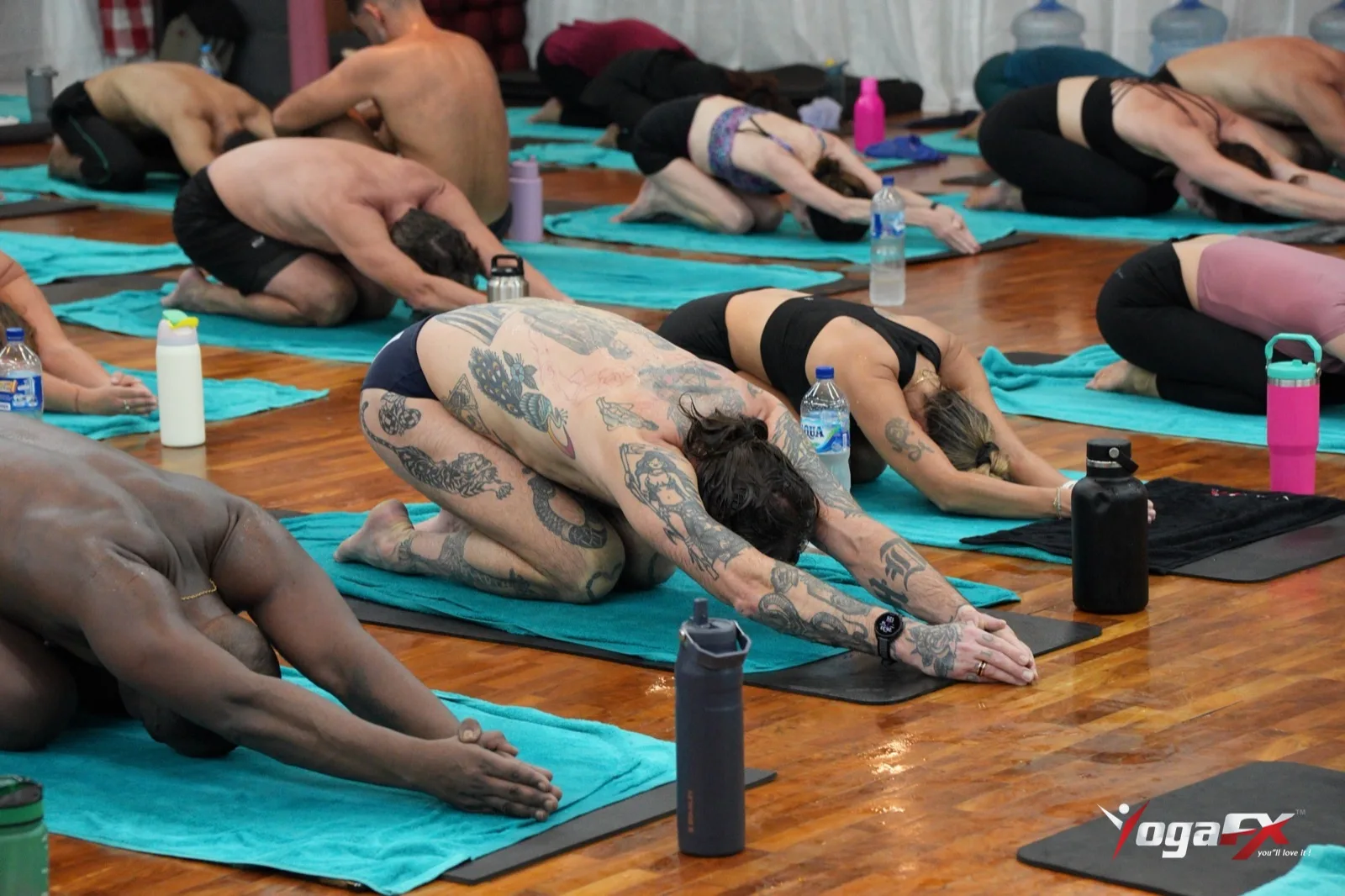
Rest days matter as much as class days. Muscles and connective tissue adapt while you recover, so a stiff, achy body usually needs a day off rather than a deeper stretch. That is true whatever your sport, and it is just as true when hot yoga for flexibility is your main goal.
Try hot yoga for flexibility at YogaFX Seminyak
Our studio in Seminyak is open from 06:00 to 22:00 every day, at Jl. Pangkungsari Gg Jepun No.888, Kuta Utara, Seminyak, Badung, Bali 80361. The first class is free with our Free 1-Day Guest Pass, so you can feel the room before you commit to anything. Tell the teacher you are working on flexibility, and they can guide your depth.
If the method hooks you, the next step is teacher training. The Bikram Hot 26&2 Yoga Teacher Training MasterClass is a 6-day hybrid course with a pre-course online part and an intensive in Bali.
The next batch checks in on Sunday 24 January 2027 and checks out on Friday 29 January 2027. Graduates earn Yoga Alliance RYT 200-Hour certification and a Bikram Hot 26&2 200-Hour International Yoga Certification. You can read what the course covers in our guide to original hot yoga teacher training.
Ready to start? Message Mr. Ian Terry on WhatsApp to book your Free 1-Day Guest Pass.
FAQ
Does hot yoga help with flexibility?
Yes, for most people it does. The heat makes muscles feel looser, so you can reach a little further in each posture, and repeating the same sequence lets that range build over weeks. Progress comes from steady practice, not from forcing depth in any single class, and it varies from person to person.
Is hot yoga better for flexibility than regular yoga?
It depends on what you need. The heat can make stretching feel easier, which some students find motivating, but a room-temperature class can also build range steadily. The 26 and 2 adds a fixed order, so you can compare your own depth week to week. Choose the class you will attend consistently.
Will hot yoga make me more flexible if I can't touch my toes?
Most beginners start exactly there. One student, Chris, wrote in a Google review that touching the toes was impossible at the start. Because the sequence repeats, you meet the same forward folds again and again and notice small changes. Keep your knees soft, breathe, and treat reaching the floor as a long-term goal.
How often should I practise hot yoga for flexibility?
There is no single number that suits everyone. Start with the number of classes you can recover from, and add more only when your joints feel fine the next day. If you feel aches or stiffness the following morning, take an extra rest day and ask your teacher to adjust your depth.
Is it safe to stretch deeply in a hot room?
Heat can make a stretch feel easier than it really is, so you can go past what your joints are ready for without noticing. Aim for tension, not pain, as Mayo Clinic advises, and back off if a joint pinches. Sit down and rest if you feel dizzy or nauseous.
Still have questions? Message Mr. Ian Terry and the YogaFX team on WhatsApp and we will answer them personally.