Heat shock proteins are repair proteins your cells make under stress, and one small 2021 trial found higher levels in people who practised hot yoga for four weeks. No study has yet tested a full 26 and 2 class the same way. So the honest answer is promising, early and not a health promise.
Table of Contents
This article is education, not medical advice. Please talk to a healthcare professional before you start heat-based exercise, especially if you have a heart, blood pressure or kidney condition, or you are pregnant. At YogaFX, Mr. Ian Terry (E-RYT 500, 12,000+ teaching hours) asks every teacher and student to describe a study exactly, give its size and never promise an outcome. We follow that rule below.
Do 26 and 2 Classes Trigger Heat Shock Proteins? The Short Answer
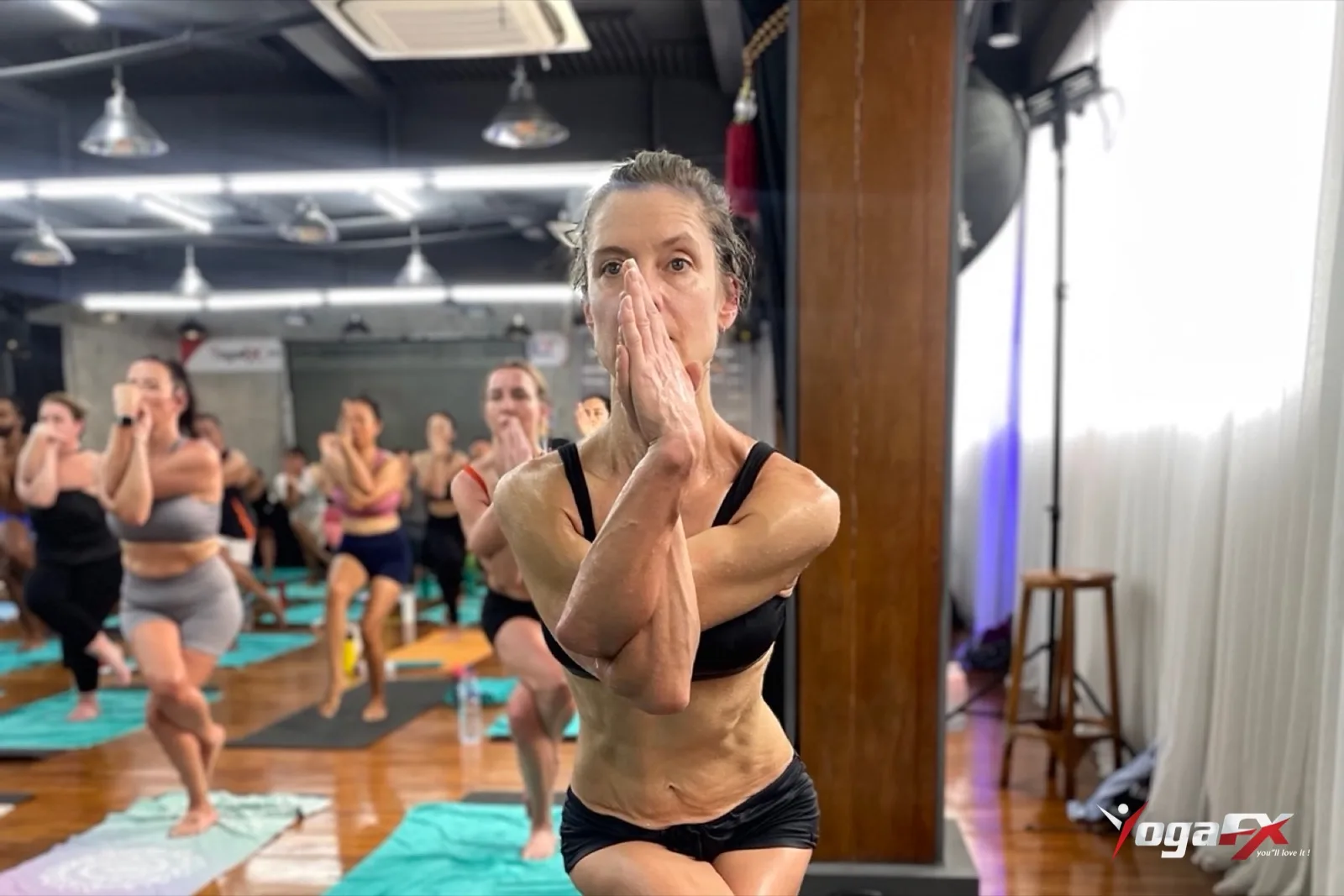
Possibly, but nobody has measured it in a real 26 and 2 class. The closest evidence is a 2021 randomized trial of a modified Bikram protocol, and it was small. That's why we call the finding a lead, not a result. Here is the whole picture in three lines:
- What a study found: 22 adults who did hot yoga for four weeks had higher HSP70 in their blood cells than the group who did yoga in a cool room.
- What other research adds: passive heat and ordinary exercise can also raise these proteins, so heat is not the only trigger.
- What nobody knows yet: whether a short rise in a blood marker means anything for the long-term health of a healthy person.
If you came here wondering whether to feel pressure to practise more, you can relax. The research on heat shock proteins gives you something interesting to read, not a reason to change how you train. For the wider picture of what the method may offer, see our guide on the benefits of 26 and 2 yoga and their honest limits.
What Heat Shock Proteins Are, in Plain Words
A protein works like a piece of origami. It only does its job when it folds into the right shape. Heat, injury and other stresses can bend that shape, and a bent protein may stop working. Heat shock proteins, or HSPs, are part of the cell’s answer to that problem. Scientists call many of them molecular chaperones, because they help other proteins hold their shape.
They got their name because early lab work saw cells make more of them after a jump in temperature. Your cells make them all the time, though. So you never need to “trigger” them to stay alive, and that's worth remembering. The HSP70 family is only one branch, and a family member called HSP72 is the one researchers often measure after heat or exercise.
From heat to repair crew in five steps
The heat shock response, in plain words
Steps one to four are measurements. Step five is the honest gap. A higher number in a blood test is a measurement, and a measurement is not yet a benefit. That single point explains why so many online claims about heat shock proteins fall apart.
The Hot Yoga Study: What Bourbeau and Colleagues Found
Only one trial we found tests hot yoga against HSP70 directly. It is Bourbeau and colleagues, published in the International Journal of Yoga in 2021. It's worth knowing the details, because they decide how far you can lean on the result on heat shock proteins.
Who took part and what they did
- Who: 22 healthy adults, 11 men and 11 women, aged 19 to 39, with no prior yoga experience.
- What: a hot yoga group (11 people) and a normal-temperature yoga group (11 people), each following a modified Bikram protocol.
- How long: three sessions a week for four weeks, so 12 sessions in total.
- What they measured: HSP70 in white blood cells, aerobic fitness (VO2 max), a brain-related protein called BDNF, the stress hormone ACTH and perceived stress.
What came out
The authors report that HSP70 was higher in the hot yoga group only, and they read that as a sign of cellular thermotolerance, meaning cells that cope better with heat. VO2 max also rose in the hot group, from 3.22 to 3.46 litres per minute. BDNF rose in both yoga groups combined, so temperature did not drive that one.
The same paper found no evidence of heat acclimation and no change in mental stress. A fair summary is mixed: some measures moved and others did not. The discussion also says the heat stimulus may not have been strong enough for classic heat acclimation, and the team did not measure plasma volume.
Lab Hot Yoga vs a 26 and 2 Class at YogaFX Seminyak
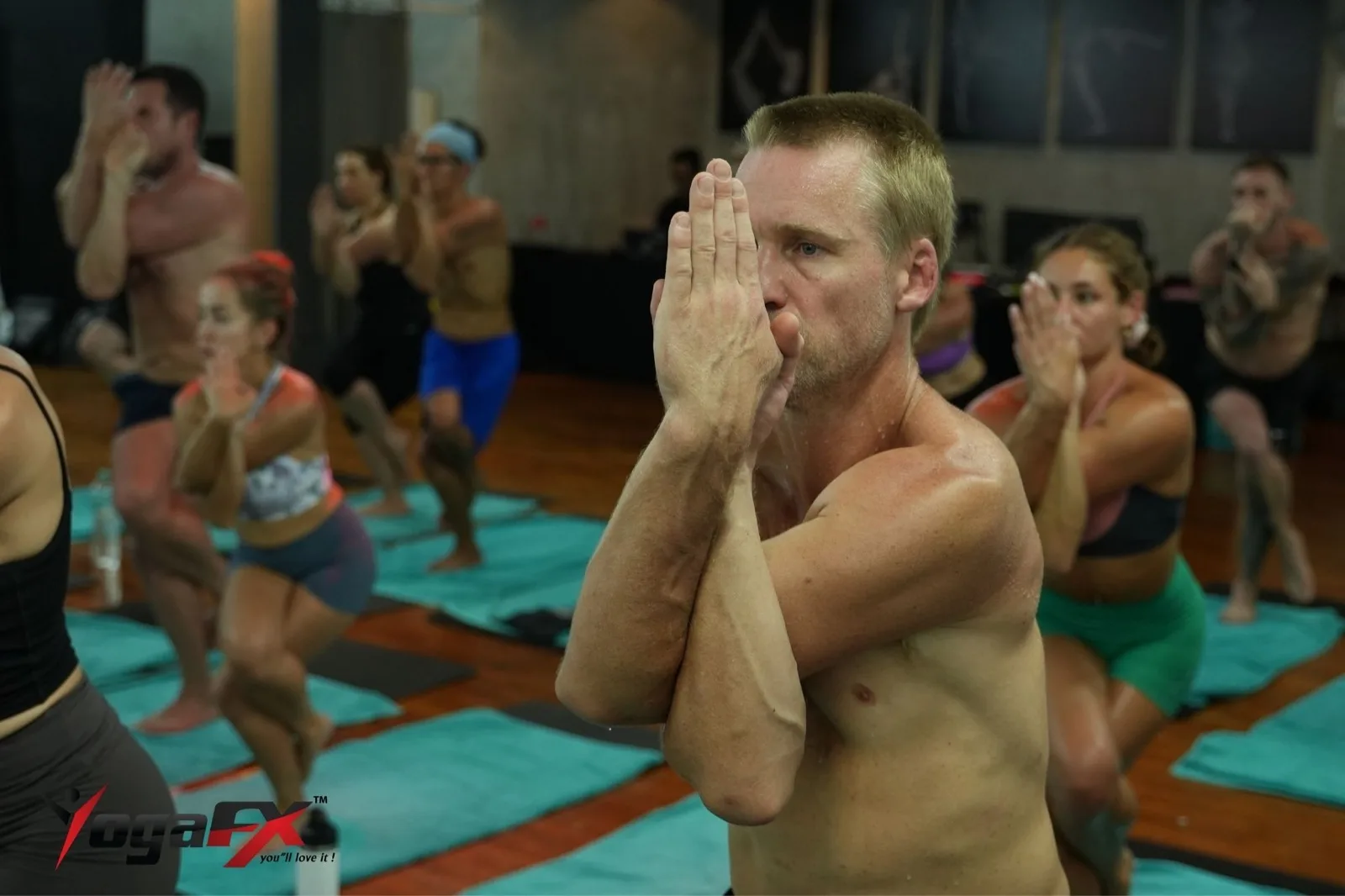
A study protocol and a real class are not the same thing. Before you apply the result to your own practice, compare them side by side, because heat shock proteins react to many things. The table below sets the trial’s hot yoga group next to a class at our Seminyak studio.
| Feature | Bourbeau 2021 hot yoga group | 26 and 2 class at YogaFX |
|---|---|---|
| Room heat | 37 to 40°C in the methods and 41°C in the abstract, inside an environmental heat chamber | About 40°C, with heat from Bali’s tropical climate instead of electric heaters |
| Humidity | 40% in the abstract | About 40% |
| Session | 75-minute standardised video, 24 poses | 90 minutes, 26 postures and 2 breathing exercises, led by a scripted dialogue with no demonstration and no music |
| Who took part | 22 adults aged 19 to 39 with no yoga experience | Open to first-timers and experienced students, with a Free 1-Day Guest Pass for the first class |
| Dose | 3 sessions a week for 4 weeks, 12 in total | Your own schedule, and the trial’s 12-session pattern is not a target |
| What was measured | HSP70 in blood cells, VO2 max, BDNF, ACTH, perceived stress | Nothing in class, because these markers need a lab blood test |
Notice the gaps. The trial used a chamber, a video and a 24-pose shortened protocol, while a studio class runs 90 minutes with a live dialogue.
The two overlap a lot, but they are not identical. That is why we say the trial is related to a 26 and 2 class, not proof about one. Our guide to the method behind the 26 postures and dialogue explains how a full class is built.
Heat Chamber and Exercise Studies: Heat Is Not the Only Trigger
What passive heat did in a chamber
A randomized trial in the Journal of Athletic Training looked at heat stress, hormones and heat shock proteins in humans. Twenty-five healthy adults sat for 30 minutes in a heat chamber on one day and in a control condition on another day. Rectal temperature rose by 0.8°C, and heart rate climbed to 131.4 beats per minute.
Blood was taken from 13 of the 25. In that group, HSP72 rose 48.7% on average, with a wide spread between people.
The control sessions showed no such changes. The authors concluded that whole-body heat stress triggers some of the responses seen with exercise, and they called for more studies. Sitting still in a chamber is not a yoga class, so treat it as background. For how a heated class compares with sitting in a hot room, see hot yoga vs sauna.
What ordinary exercise does
Heat is not required for a rise. A review in Sports Medicine on the Hsp72 response to exercise in humans reports that an acute exercise bout increases Hsp72, both inside and outside cells. It also says long-term training and improved fitness raise how fast Hsp72 becomes available when stress arrives.
Put those findings next to the hot yoga trial and a pattern appears. A 26 and 2 class combines heat, muscular effort, balance and breathing. Which of them drives any rise in heat shock proteins is unknown, and that's the key limit. So “the heat does it” is not a safe sentence to say.
What These Studies Do Not Show
Honest limits matter as much as findings, and they matter most for heat shock proteins. Each point below comes from the design of the studies above, not from our opinion.
- No health outcome. The hot yoga trial measured markers and fitness, not illness, ageing or disease.
- No 26 and 2 trial. The protocol was modified, shortened and video-led, so it is not a full studio class.
- Small and short. Twenty-two people for four weeks cannot speak to years of practice.
- Group averages, not you. The heat chamber trial showed a wide spread between individuals.
- No repeat yet. We found no second hot yoga trial that confirms the HSP70 result.
That list is also why we do not link heat shock proteins to any disease or promise any treatment effect. Research on other topics, such as the Harvard trial of heated yoga for depression, follows the same careful approach: report the number, then report the limit.
Heat Safety: Do Not Chase a Number With Extra Heat
Heat is a real stress, and a research headline on heat shock proteins is a poor reason to push harder.
Mayo Clinic explains heat exhaustion symptoms and causes this way: it happens when your body overheats, with signs that include heavy sweating, faintness, dizziness, fatigue, muscle cramps, nausea and headache. It also notes that some medicines, such as beta blockers and diuretics, can affect how your body handles heat.
The NHS page on heat exhaustion and heatstroke lists very high temperature, hot skin without sweating, confusion and fits as signs of heatstroke and says plainly that heatstroke is a medical emergency. It adds that children, older people and people with long-term conditions such as diabetes or heart problems are more at risk.
- Leave the heat early if you feel dizzy, faint, sick or confused. Sit down, cool off and drink water.
- Skip the extras. Do not add sauna sessions to chase a research marker.
- Ask your doctor first if you take regular medicines or have a heart, blood pressure or kidney condition.
Drinking enough is part of the same plan, and our hydration guide for a 26 and 2 class covers it in practical steps. Sweat itself is a cooling tool and nothing more, so don't read it as a sign that the class is doing extra work.
How to Talk About Heat Shock Proteins Without Overclaiming
Students bring heat shock proteins to class after a podcast or a sauna video. A calm, exact answer builds trust, while hype loses it. Use the claim ladder below as a quick filter.
- Safe to say: “One small study found higher HSP70 in blood cells after four weeks of hot yoga.”
- Safe to say: “Heat and exercise both seem to raise these proteins, and researchers are still working out what that means.”
- Leave out: any claim that heat shock proteins prevent, treat or reverse a disease.
- Leave out: “it is the heat that does it”, because exercise raises them too.
- Leave out: promises that every student will respond the same way.
Name the study size when you speak. “Twenty-two adults” tells people how much weight to give the finding. Say “found” instead of “proves”, because single trials suggest and do not settle. If you teach, or plan to, we wrote a teacher-focused breakdown of the same studies with a short class script.
Learning to describe research this way is part of teacher training at YogaFX. Trainees practise the full sequence in heat, then learn to explain it without overclaiming. You can read what the programme covers in our post on original hot yoga teacher training.
What YogaFX Students Say
Studies give you numbers. Students give you the lived side. None of the three people below mentions a lab marker, and that is the point: what they remember is the teaching, the group and how they felt.
Mario, Google review, 2022: “a beautiful and unforgettable experience of growth and maturation” and “the great professionalism and human skills of our instructor Mr Ian made everything so simple and fun.”
Reva, Google review, 2019: “It was amazing Yoga practice, my body feel change and it is the best training for you who want to be yoga teacher.”
Nyoman, Google review, 2024: “Amazing yoga teacher training.”
Try a 26 and 2 Class at YogaFX Seminyak
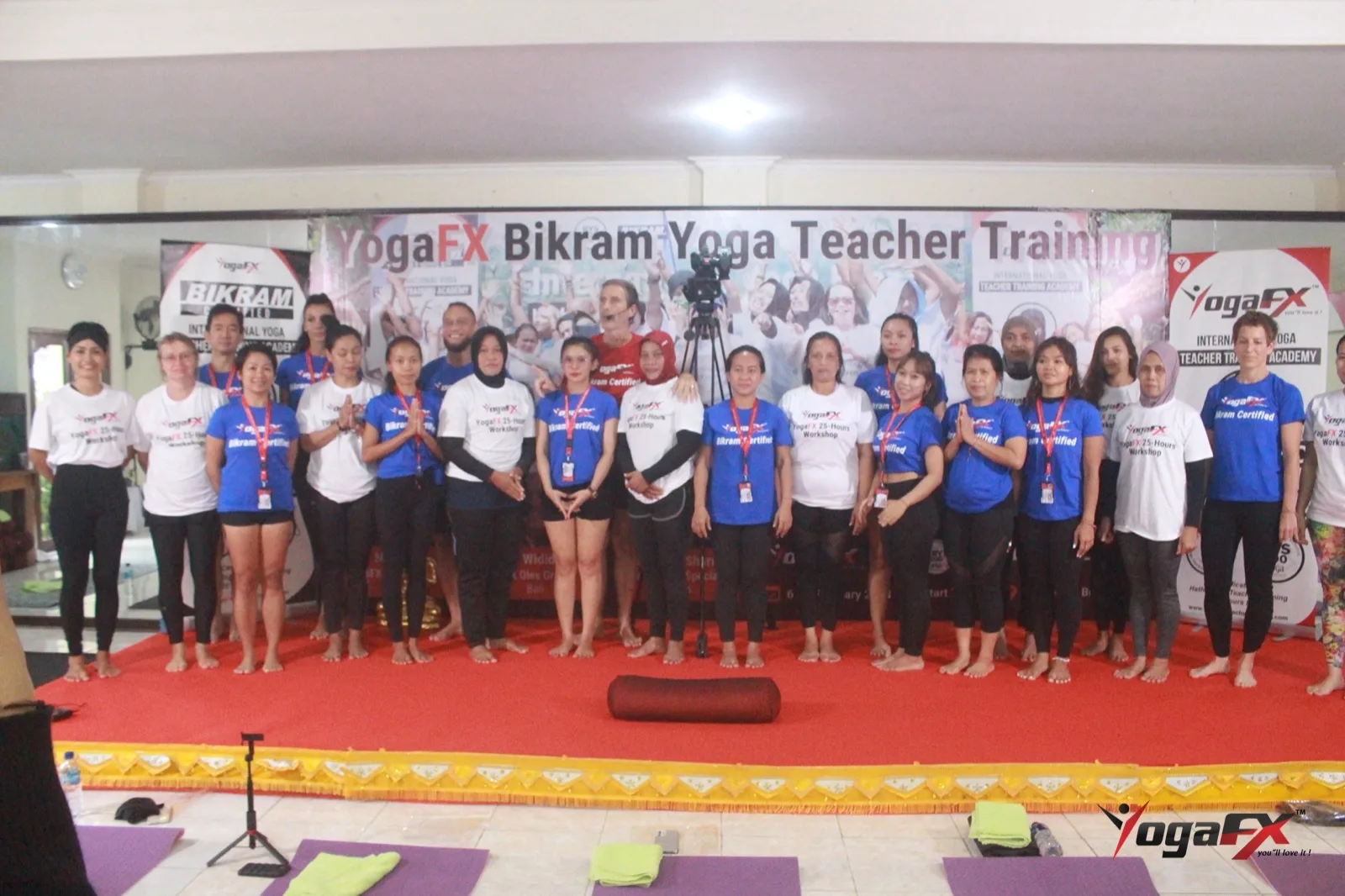
Reading about heat shock proteins only goes so far. One class tells you more than a paper can, and you don't need to commit to anything first. YogaFX teaches the original 90-minute Hot 26&2 class at its Seminyak studio, Jl. Pangkungsari Gg Jepun No.888, Kuta Utara, Seminyak, Badung, Bali 80361. The Free 1-Day Guest Pass makes your first class free.
If the class draws you in and you start to think about teaching it, Mr. Ian Terry also runs the 6-day hybrid MasterClass, with online pre-course work plus an intensive in Bali.
It leads to Yoga Alliance RYT 200 and the Bikram Hot 26&2 200-Hour International Yoga Certification. The next batch runs from check-in on Sunday 24 January 2027 to check-out on Friday 29 January 2027. Our graduates come from 80+ countries.
FAQ
What is HSP70, and is it the same as heat shock proteins?
HSP70 is one family inside the wider group of heat shock proteins. The hot yoga trial measured it in blood cells, while a heat chamber trial measured a close relative called HSP72. Both are markers a lab can read. Neither one is a measure of how healthy you feel.
Can you get heat shock proteins from a sauna?
Passive heat can raise them. In a Journal of Athletic Training trial, 25 healthy adults sat 30 minutes in a heat chamber, and HSP72 rose 48.7% on average in the 13 who gave blood, with wide differences between people. That was a chamber, not a sauna or a yoga class.
Does exercise raise heat shock proteins without extra heat?
Yes, it can. A 2008 Sports Medicine review reports that an acute exercise bout increases Hsp72 inside and outside cells. So in a 26 and 2 class, heat and effort happen together, and nobody can say yet which one carries the result.
Should I practise 26 and 2 to raise my heat shock proteins?
No. Practise for the class itself, the focus, the breathing and the postures. The research is early, no target dose exists, and a rise in a blood marker is not a health outcome. If you have a health condition, ask your doctor before you start heated classes.
Is it safe to chase heat shock proteins with extra heat?
No. Extra heat adds risk without a proven payoff. Mayo Clinic notes that some medicines affect how your body handles heat, and the NHS calls heatstroke a medical emergency. Rest, drink water, and leave the room if you feel dizzy, faint or confused.
Still have questions? Message Mr. Ian Terry and the YogaFX team on WhatsApp and we will answer them personally.