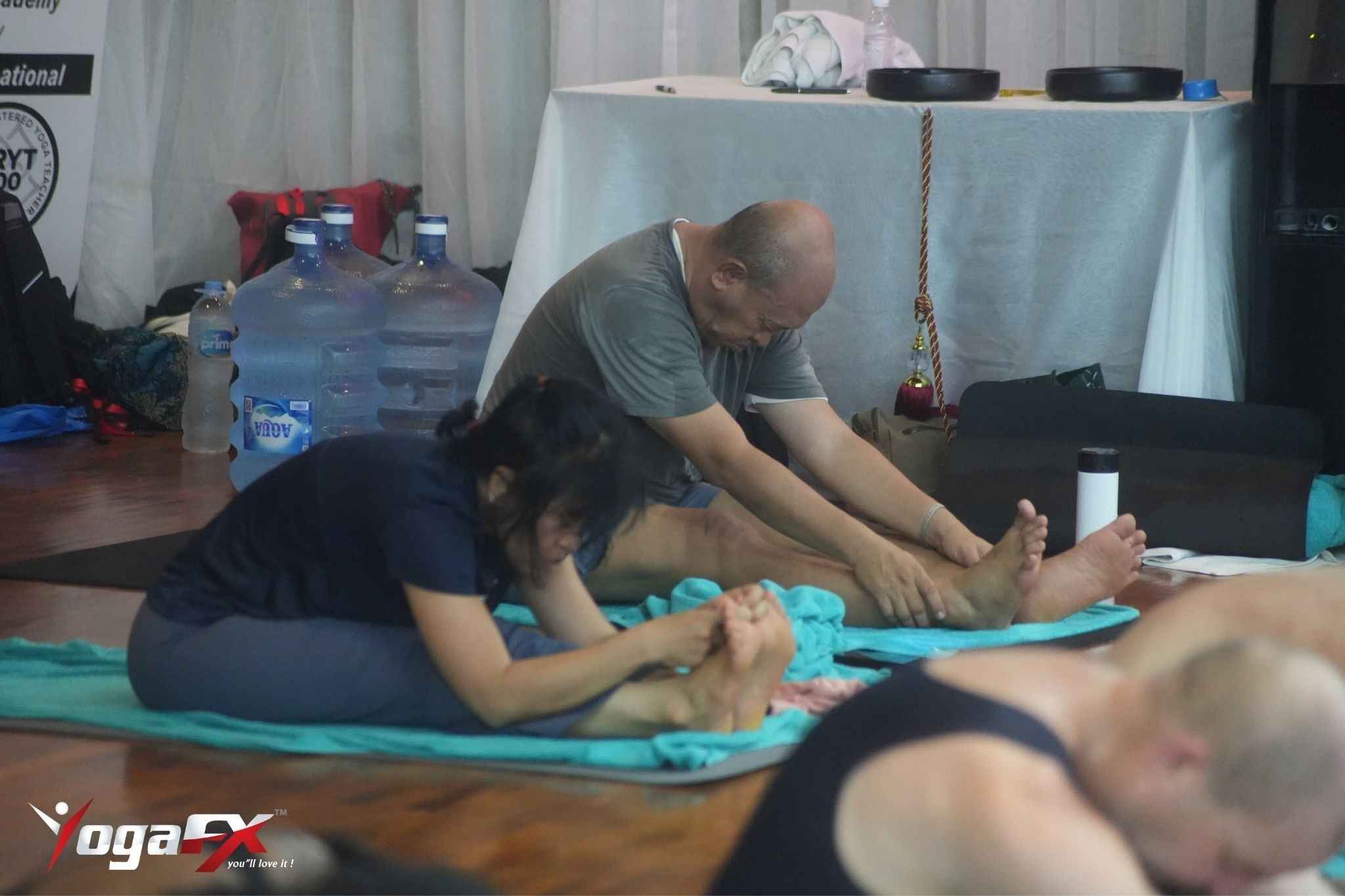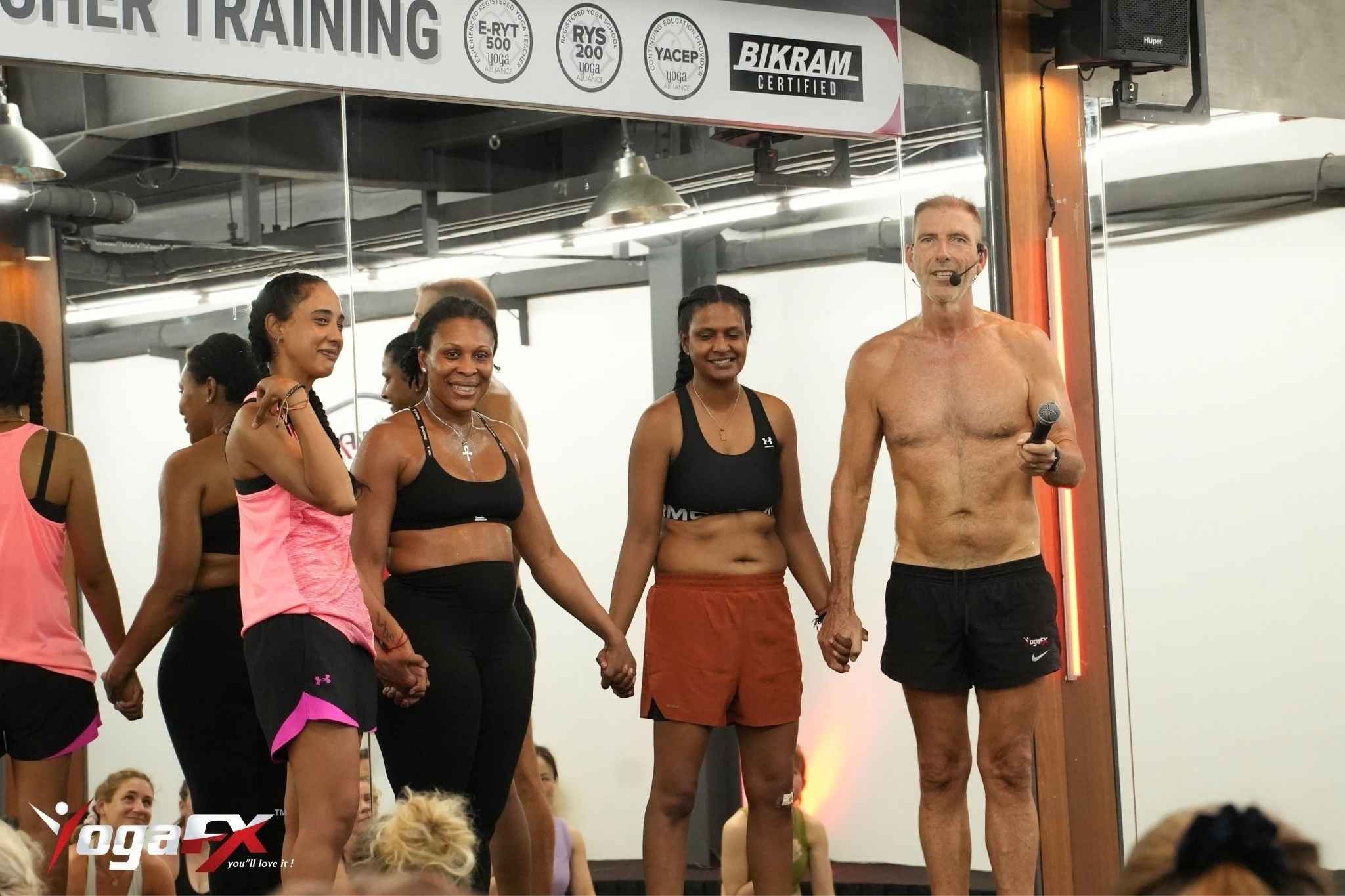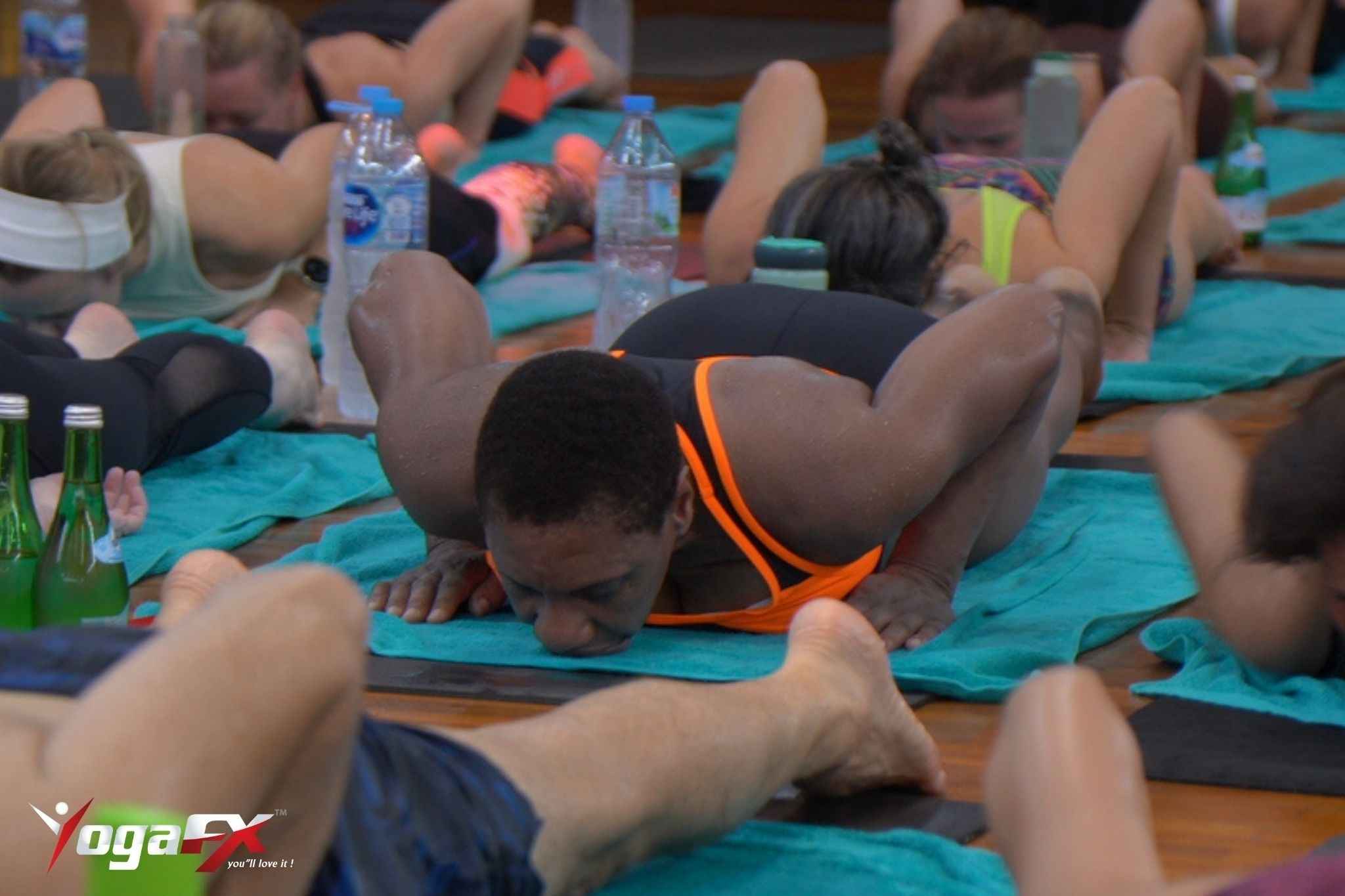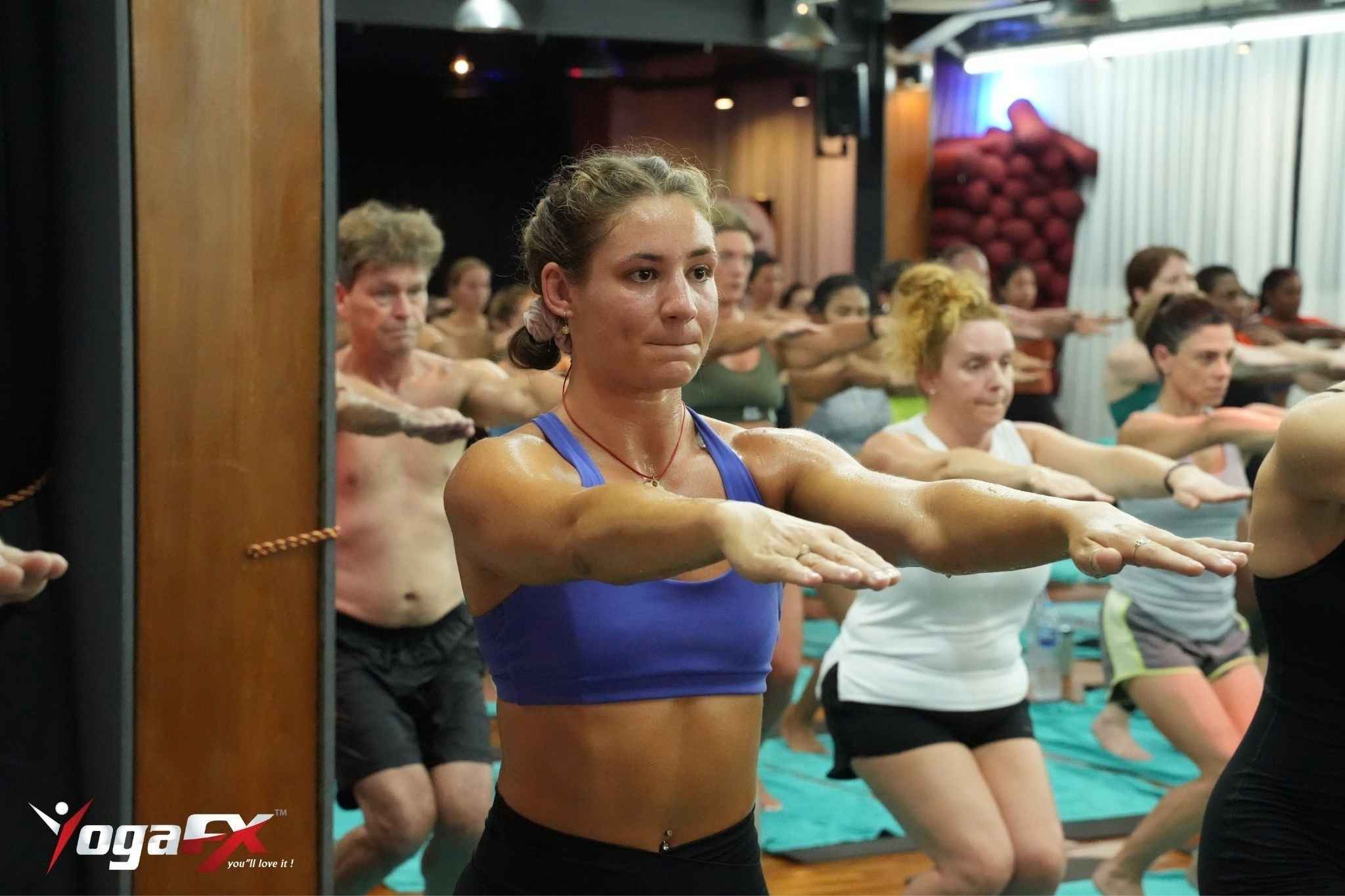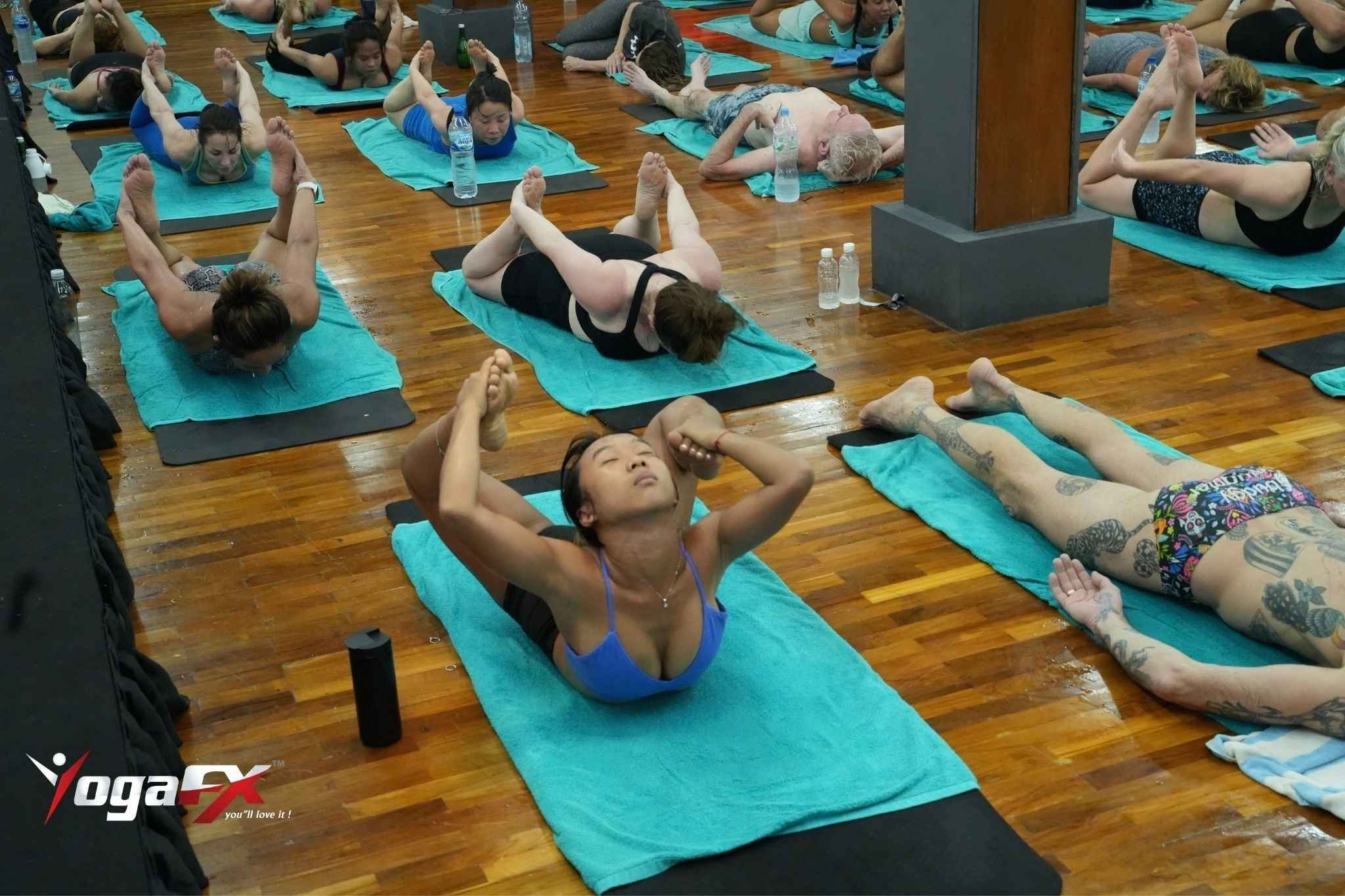
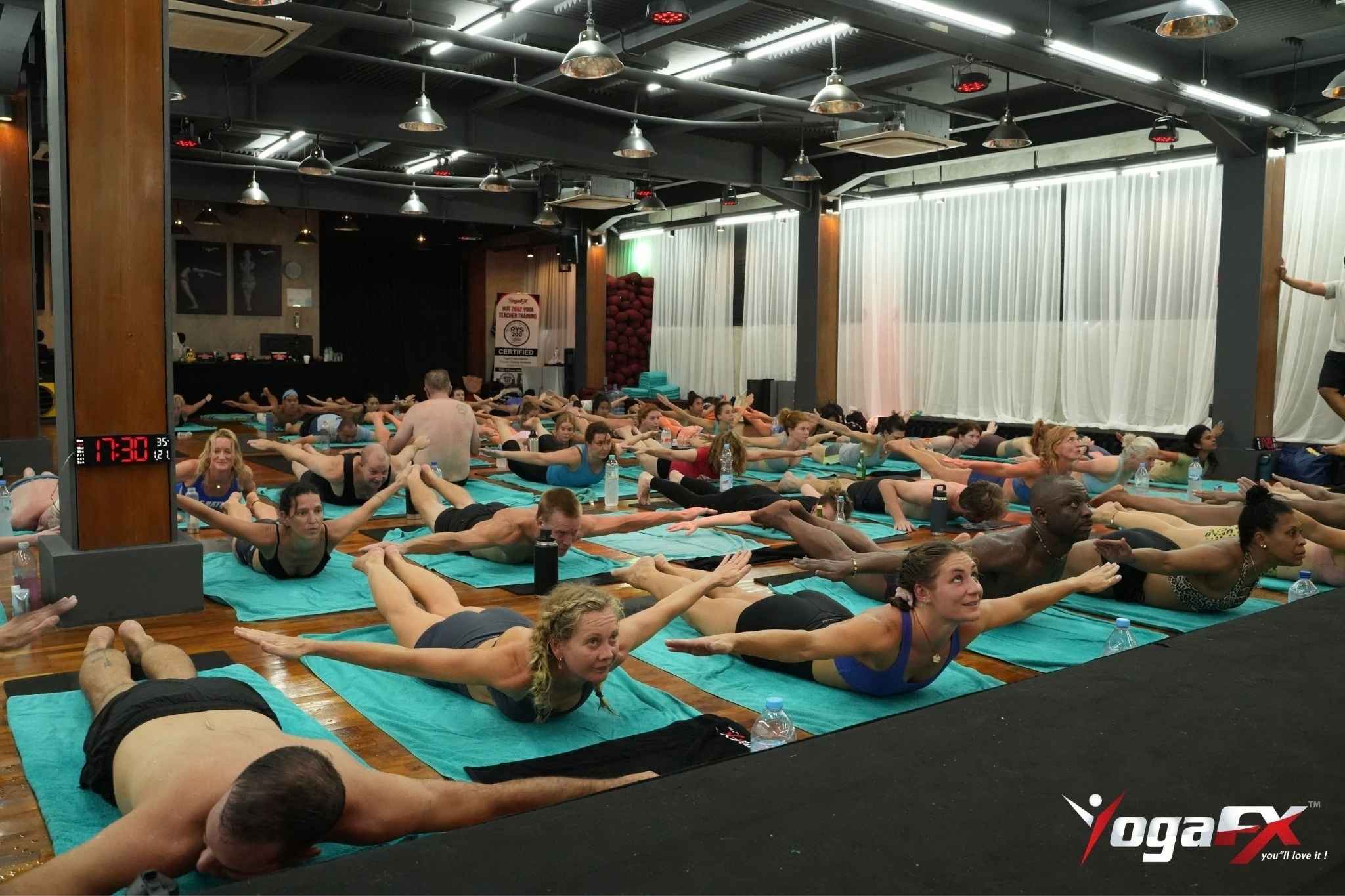
A full 90-minute 26 and 2 yoga (Bikram hot yoga) session burns an average of about 330 calories for women and 460 calories for men, according to lab measurements taken during real classes. That is roughly the same as a brisk walk of the same length. Your own number depends mostly on your body weight, how long the class runs and how hard you work in each posture.
Those figures surprise a lot of students. After 90 minutes in a room at 40°C, soaked through, it feels like you must have burned a thousand calories. Some fitness watches even say so. This guide explains what the research actually measured, why the heat makes the class feel harder than the calorie count suggests, and how to estimate your own burn. The practical perspective comes from Mr. Ian Terry, E-RYT 500 and founder of YogaFX, who has taught more than 12,000 hours of the method in Bali.
26 and 2 Yoga Calories by Class Length
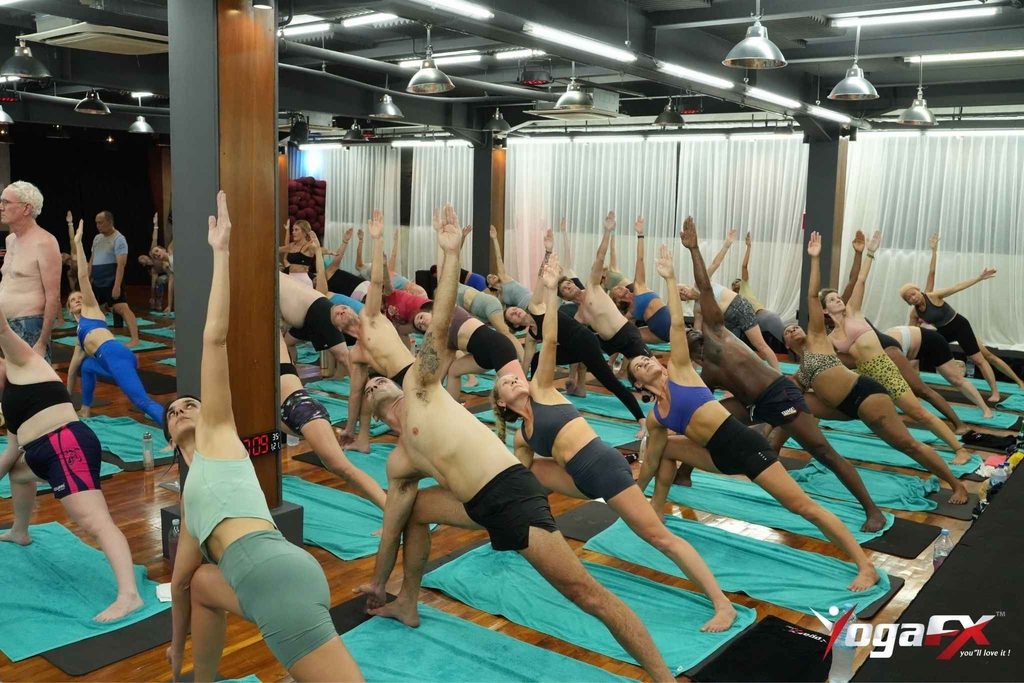
The traditional class runs for 90 minutes, and that is the length the main calorie study measured. Many studios now teach shorter versions of the same sequence, often 60 or 75 minutes, under names like Hot 26. The table scales the measured 90-minute averages down in proportion to class length.
| Class length | Women (average) | Men (average) | Source of the figure |
|---|---|---|---|
| 90 minutes (traditional) | About 333 calories | About 460 calories | Measured in the lab |
| 75 minutes | About 280 calories | About 385 calories | Proportional estimate |
| 60 minutes | About 220 calories | About 305 calories | Proportional estimate |
| 45 minutes | About 165 calories | About 230 calories | Proportional estimate |
Treat the shorter-class rows as a guide, not a measurement. A 60-minute class is not always a 90-minute class with a third removed. Shorter formats often cut the floor series and the rests between postures, so the minutes that remain can be slightly more intense. If your class is a different length, you can estimate your own number by setting the session duration yourself.
If you are not sure how your local class compares with the original, our guide to Hot 26, Hot Hatha, Bikram and Hot Flow explains which class names mean the same sequence and how the shorter formats differ.
What Changes How Many Calories You Burn
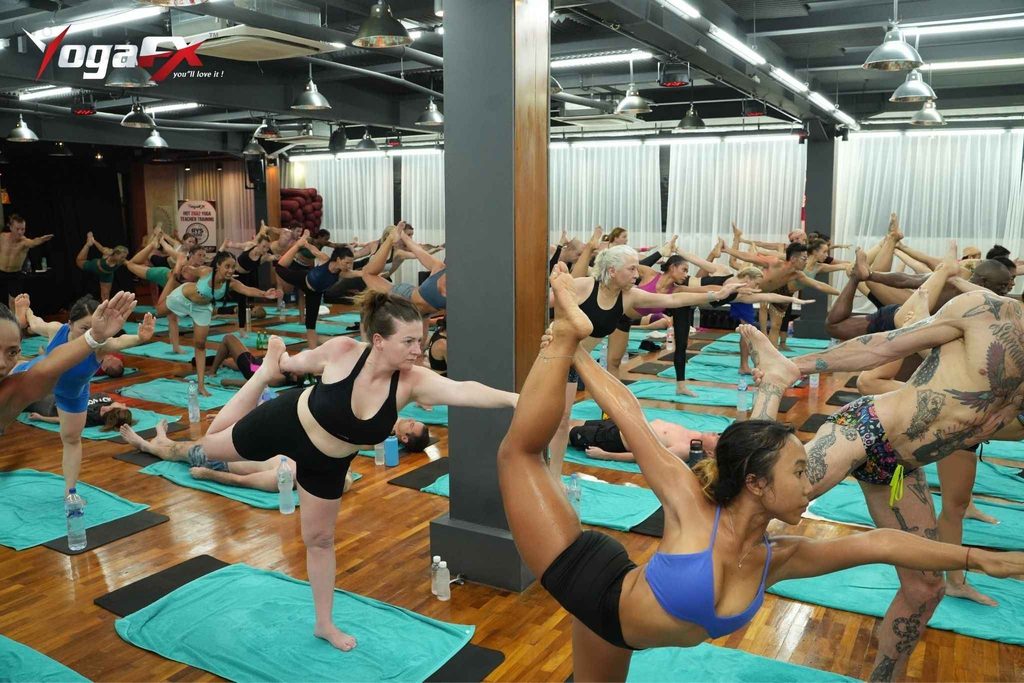
Averages hide a wide range. In one study of 24 practitioners taking the same standardised 90-minute class, individual totals ran from 179 calories at the low end to 478 at the high end. Five things explain most of that spread.
Body weight
Heavier bodies burn more calories because moving and holding more mass takes more energy. This is the single biggest factor, and it is also why men average more than women in the studies: they were heavier on average, not working harder. The table below uses the same formula as the YogaFX calculator at a standard studio pace.
| Body weight | 60 minutes, standard effort | 60 minutes, higher effort | 90 minutes, standard effort |
|---|---|---|---|
| 125 lb (57 kg) | About 200 calories | About 265 calories | About 300 calories |
| 155 lb (70 kg) | About 245 calories | About 325 calories | About 370 calories |
| 185 lb (84 kg) | About 295 calories | About 390 calories | About 445 calories |
Notice how closely the 90-minute column lines up with the lab averages of 333 and 460 calories. To run your own weight, class length and effort level, use the Bikram yoga calorie calculator. It also estimates how much water and sodium to replace after class.
Class duration
Traditional classes last 90 minutes in a room heated to around 40°C (105°F) with 40% humidity. Shorter or modified classes scale the total burn down roughly in proportion, as the first table shows. Per minute, the burn stays in a similar range. What changes is simply how many minutes you spend working.
Effort level
How deeply you push into the 26 static postures and the two breathing exercises changes your metabolic response. Two students can stand side by side in Awkward pose and do very different amounts of work. One sits low with thighs parallel to the floor and arms fully engaged. The other hovers halfway up and rests the arms. Across 90 minutes, those small differences add up to a noticeably different total.
Experience level
This is the factor most calorie articles leave out, and it runs against what people expect. In the 2014 study by Pate and Buono, experienced practitioners burned more energy per kilogram of body weight than beginners: 4.7 calories per kilogram against 3.7. They also worked at a higher share of their maximum heart rate, about 86% compared with 72%.
The reason is depth. Beginners spend more of the class resting, coming out of postures early or working in a shallow version. Experienced students hold the full expression of each posture for longer. So if you are new, expect your burn to rise as your practice improves, not fall as you get fitter.
The heat itself
The heat changes how the class feels far more than it changes how many calories you burn. That point is important enough to get its own section, because it explains the gap between the research figures and what many students believe.
Why Your Fitness Watch Says 800 Calories
Plenty of students finish class, check their watch and see a number between 600 and 1,000 calories. Claims of up to 1,000 calories per class have circulated for years. The lab measurements, taken by analysing the oxygen people breathe in and the carbon dioxide they breathe out, come in far lower. There are three reasons for the gap.
Heat raises your heart rate without raising your energy use as much
Most wrist devices estimate calories from heart rate. That works reasonably well for running or cycling, where heart rate and energy use rise together. In a hot room, your heart also beats faster to push blood to the skin so you can cool down. The Willmott et al. (2025) systematic review of 43 studies and 942 participants found exactly this: a hot yoga session raised body temperature and heart rate, but not energy demands, compared with yoga at normal temperatures. Your watch sees the extra heartbeats and counts them as calories.
Sweat is water, not fat
It is normal to weigh a kilogram or more less after class. Nearly all of that is water. Experienced practitioners in the Pate and Buono study sweated about 1.1 kg per hour. That water comes straight back when you rehydrate, which you should. Sweating also does not detox the body. Sweat is mostly water and salts, and your liver and kidneys do the actual work of clearing waste.
Hard does not always mean high-calorie
The class is genuinely demanding, but much of the difficulty is heat tolerance and concentration rather than raw energy output. In the Pate and Buono study, every posture was classified as light-to-moderate intensity by American College of Sports Medicine standards. That is not a criticism of the practice. It simply means the reasons to do it go well beyond the calorie count, as our guide to whether 26 and 2 yoga is hard explains.
If you want a more realistic figure from your device, use a chest strap rather than a wrist sensor, and compare its reading with a weight-based estimate. If the watch reads far higher than the weight-based estimate, the heat is probably inflating it.
What the Research Actually Measured
Only a handful of studies have measured energy use during a real 26 and 2 class, and it helps to know what each one did before comparing their numbers.
| Study | What was measured | Key finding |
|---|---|---|
| Porcari and colleagues, 2014 | Full 90-minute class, energy use and heart rate | About 333 calories for women and 460 for men, with heart rates averaging around 80% of maximum |
| Pate and Buono, 2014 | Standardised 90-minute class, 24 novice and experienced practitioners, oxygen uptake per posture | Average 286 calories, range 179 to 478; experienced students burned more per kilogram; all postures light-to-moderate intensity |
| Lambert and colleagues, 2020 | One-hour sequence done twice by the same people, once at 40°C and once at 23°C | About 156 calories in the heat against 151 at room temperature, a difference too small to be meaningful |
| Willmott et al., 2025 (review of 43 studies) | Pooled findings on hot yoga sessions and long-term practice | Heat raises heart rate and body temperature but not energy demands; long-term practice showed benefits for body composition and lipid profiles in some studies |
Why do the averages differ between studies? Mostly because of who took part. The Porcari study is the source of the widely quoted 333 and 460 figures. The Pate and Buono group included beginners, who burned less, which pulled its average down to 286. The Lambert study used a shorter, one-hour class and a group of mostly female participants, so its totals were lower again. Put together, the studies point to the same conclusion: a moderate, steady burn that depends heavily on the person.
Does Hot Yoga Burn More Calories Than Regular Yoga?
Only slightly, if at all. The best test of this question is the Lambert study, because the same experienced practitioners did the same one-hour sequence in both conditions. The heated session burned about five calories more, which the researchers found was not a meaningful difference. Oxygen use and heart rate did not differ significantly either.
What the heat did change was flexibility and fuel use. Hip range of motion improved roughly three times more in the heated session, and the body appeared to draw a little more on fat for fuel. So the heat earns its place in the practice, just not as a calorie booster. Heat helps muscles lengthen, which is one reason flexibility is the best-supported benefit in our guide to whether 26 and 2 yoga is good for you.
Where the Calories Go in the 26 and 2 Sequence
The burn is not spread evenly across the class. The sequence is built to raise heat and heart rate early, then use that warmth for deeper work on the floor. Knowing where the effort sits helps you decide where to push.
| Part of the class | Postures | Energy demand |
|---|---|---|
| Opening breathing | Standing Deep Breathing | Low, but raises heart rate and focus for what follows |
| Warm-up and legs | Half Moon, Hands to Feet, Awkward, Eagle | Rising; Awkward is one of the hardest-working leg postures in the class |
| Balancing series | Standing Head to Knee, Standing Bow Pulling, Balancing Stick | Highest; single-leg work with the whole body engaged is where heart rate usually peaks |
| Stretching and hips | Standing Separate Leg Stretching, Triangle, Standing Separate Leg Head to Knee, Tree, Toe Stand | Moderate to high; Triangle is especially demanding on the legs |
| Floor series | From Wind Removing through Spine Twisting | Lower on average, because short rests in Savasana separate each posture |
| Closing breathing | Blowing in Firm | Low |
In practical terms, the first 45 minutes, the standing series, is where most of your calories go. If burning energy is a goal, that is where to commit fully: sit lower in Awkward, kick harder in Standing Bow Pulling, stay in Triangle for the full hold. The floor series still matters for spinal strength and flexibility, and the back-strengthening postures like Locust and Bow are real work, but the Savasana between each one lowers the average.
This also explains why class length matters more than it first appears. Shortened classes tend to trim floor time and rests, so a 60-minute class may keep most of the high-demand standing work. For the full reasoning behind the order, see our guide to the 26 and 2 yoga sequence.
26 and 2 vs Hot Vinyasa and Hot Power Yoga
People often ask whether a hot vinyasa or hot power class burns more. Per minute, flowing styles usually do, because you move continuously between postures instead of holding them. That constant movement keeps the large muscles working and the heart rate higher.
| Style | How the class moves | Calorie burn per minute | What it trades for that |
|---|---|---|---|
| 26 and 2 (traditional or Hot 26) | Static holds, fixed order, rests between floor postures | Light to moderate | Deep holds, balance work and measurable progress in the same postures every class |
| Hot vinyasa or hot flow | Continuous movement linked to breath, sequence changes each class | Moderate | Less time in each posture and less consistency from class to class |
| Hot power or sculpt classes | Faster flow, sometimes with light weights or cardio intervals | Moderate to higher | Closer to a fitness class than a yoga practice; less emphasis on alignment and depth |
Precise figures for flowing styles vary widely because every teacher's sequence is different, so be cautious of any single number quoted for them. If calorie burn is your only goal, a flowing class or a run will usually beat 26 and 2. Most people choose 26 and 2 for other reasons: flexibility, back strength, balance and the mental focus that comes from a class that never changes.
Can 26 and 2 Yoga Help You Lose Weight?
It can help, but it works slowly and it will not do the job on its own. Three classes a week at around 350 calories each adds roughly 1,000 calories of activity to your week. That is useful, but it is easily cancelled out by what you eat afterwards, especially when hot classes leave you hungry.
Where the practice may help more is over months, not single classes. The Willmott review found that long-term hot yoga was linked to improvements in body composition in some studies, and Tracy and Hart (2013) reported gains in lower-body and back strength over eight weeks. More muscle, better movement and a regular routine all support weight management, even though no single class is a large calorie event.
Is it cardio? Partly. Heart rate rises well into the aerobic range, but the energy demand stays light to moderate, so it sits somewhere between a stretching session and a steady cardio workout. Our sister studio covers the weight question in more depth in Bikram yoga for weight loss: what the research shows. If you have a medical condition, are pregnant, or take medication that affects heart rate or fluid balance, please consult a healthcare professional before starting a hot yoga practice.
Why YogaFX Teachers Don't Sell Classes on Calories
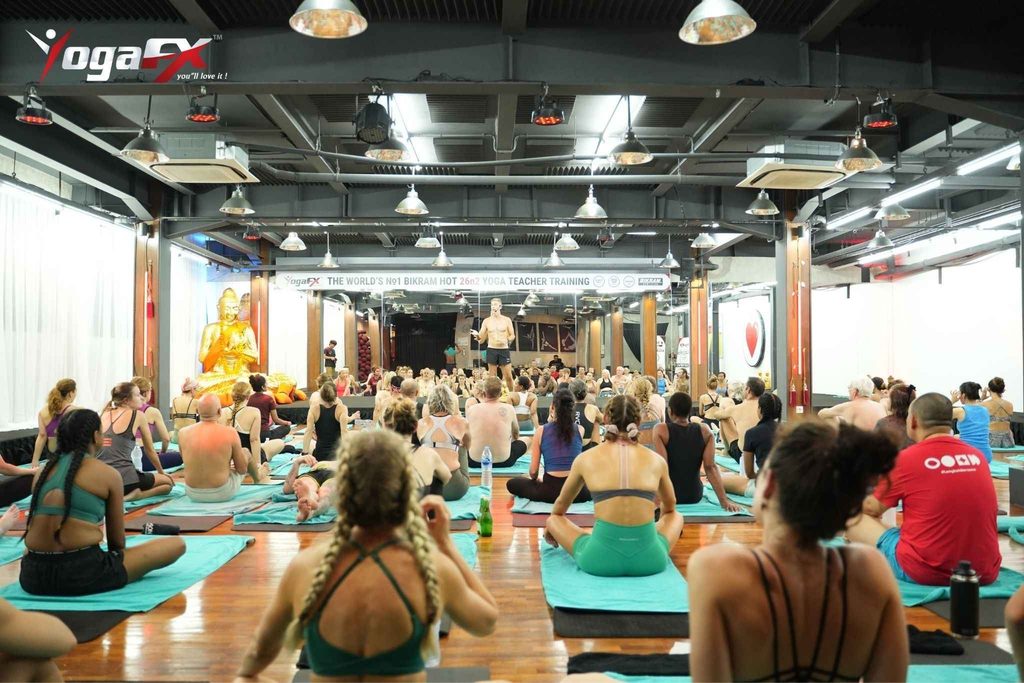
At YogaFX, classes run for the full 90 minutes in natural tropical Bali heat of around 40°C and 40% humidity, at our studios in Seminyak and Canggu, taught through the spoken dialogue with no music. Students regularly arrive expecting to burn huge numbers of calories. Mr. Ian Terry tells them the honest version instead: a solid, moderate burn, and a practice whose bigger rewards are in how the body moves and how the mind settles.
He trains new teachers the same way. Mr. Ian trained directly at five teacher training events between 2012 and 2019, has taught more than 1,500 graduates from over 80 countries, and was appointed Master Trainer of the Republic of Indonesia Yogasana Sports Federation in 2026. His reasoning is simple. Students who are promised dramatic weight loss often quit when the scale does not move. Students who understand what the practice actually does tend to stay for years.
That is why teachers in training learn to answer questions like "how many calories does this burn?" with real numbers, and to coach students toward effort and depth rather than sweat. Depth is where progress shows. One student, Chris Kusznir, described arriving unable to touch his toes and leaving able to perform every posture in its full expression. By the research above, that kind of progress also means a student is doing more work, and burning more energy, in every class.
If you would like to teach the method, our 26 and 2 yoga teacher training leads to a dual certification, Yoga Alliance RYT 200 plus a Bikram Hot 26&2 certificate, with a maximum of 19 students per intake. Not sure you are ready? Take the two-minute readiness quiz to find out.
FAQ
How many calories does 60 minutes of hot yoga burn?
A 60-minute hot 26 and 2 class burns roughly 220 calories for an average woman and 305 for an average man, scaled from 90-minute lab measurements. A one-hour lab study of the sequence measured about 156 calories in a mostly female group. Body weight and effort level cause most of the difference between individuals.
Is 26 and 2 yoga considered cardio?
Partly. Heart rate rises well into the aerobic range, reaching around 80% of maximum on average in one study, but measured energy use stays light to moderate. Much of the heart rate increase comes from the body cooling itself in the heat. It sits between a stretching session and a steady cardio workout.
Does sweating more mean you burn more calories?
No. Sweat is your body releasing heat, not energy. Heavy sweating mostly reflects the room temperature, humidity and your own sweat rate. The weight you lose during class is water that returns when you rehydrate. Sweating also does not detox the body; your liver and kidneys handle that.
Can you do hot yoga twice a day to burn more calories?
Experienced students sometimes do, for example during intensive training, but it is not recommended for burning calories. Two hot classes double the heat and fluid stress, and recovery suffers. For most people, three to five classes a week with good hydration and sleep gives better results than doubling up.
How often should you do 26 and 2 yoga for weight loss?
Three or more classes a week gives a meaningful weekly energy boost, around 1,000 calories for many people, and matches the frequency used in most studies. Weight loss still depends mainly on diet. Combine regular practice with sensible eating, and judge progress over months rather than individual classes.