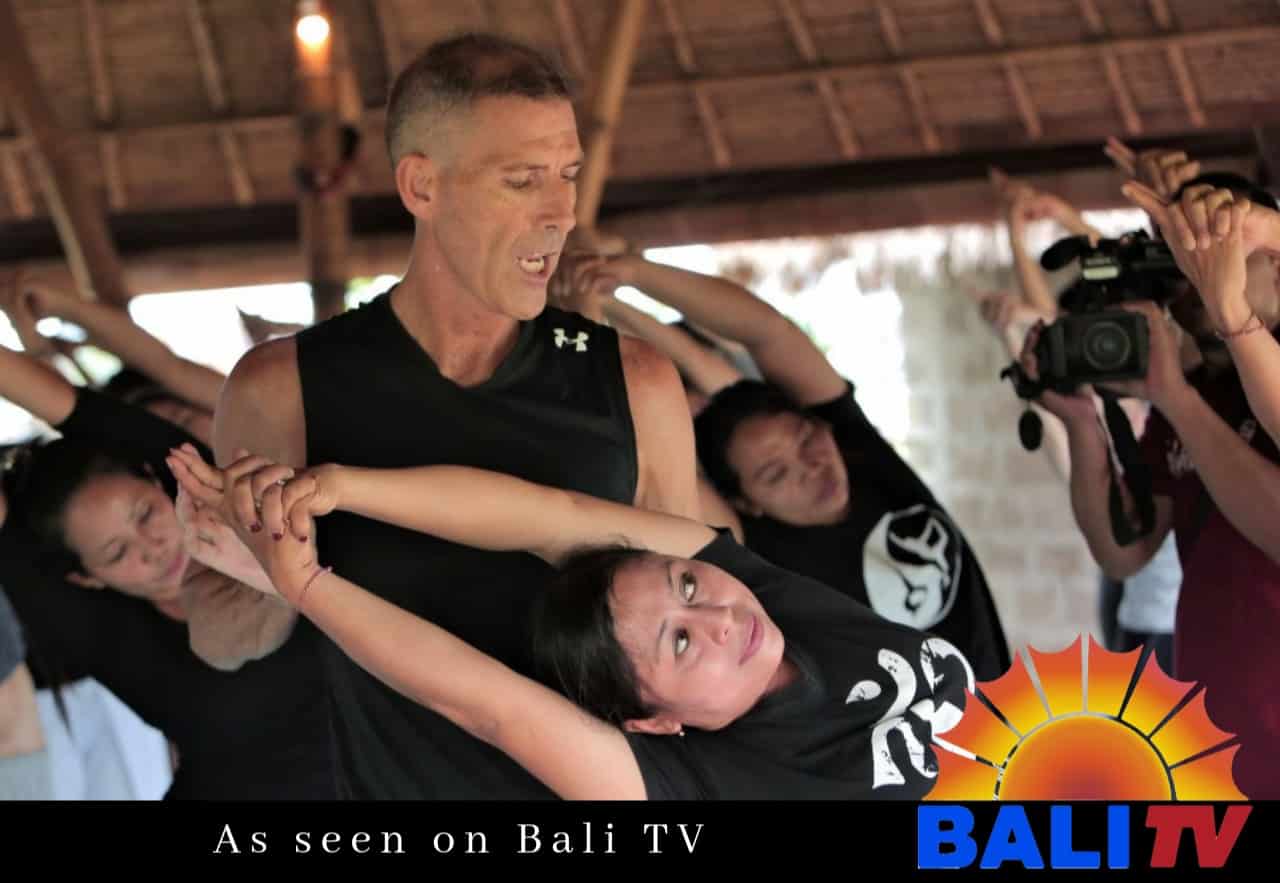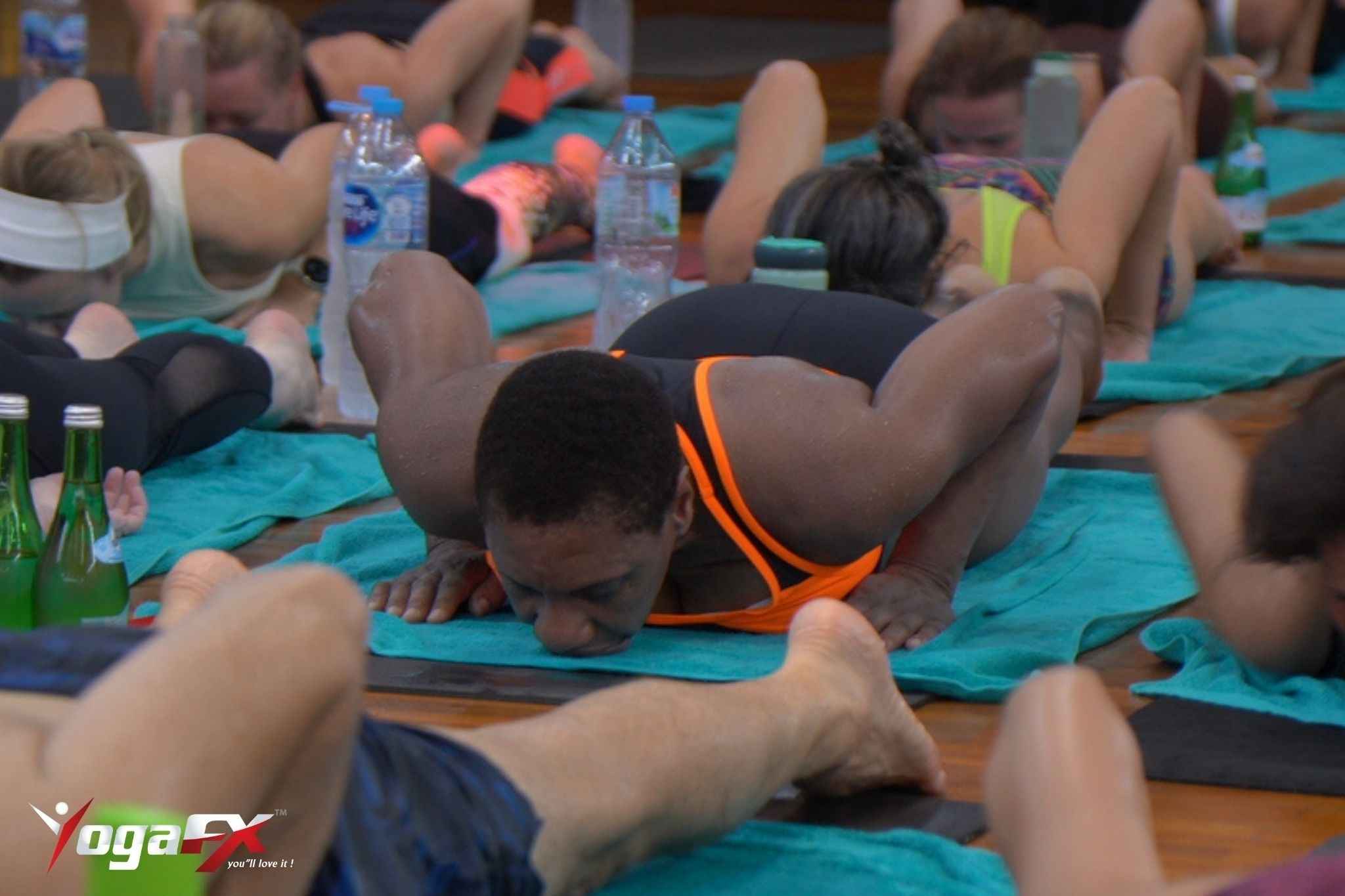
Hot 26 yoga is, at most studios, the 26 and 2 sequence under another name: the same 26 postures and 2 breathing exercises in the same fixed order, in a heated room. It is often shorter than the traditional 90 minutes, usually 60 or 75, and some studios add music. Hot Hatha is less predictable; at some studios it is 26 and 2, at others it is a different hatha sequence. Hot Flow and Hot Vinyasa are a different style altogether.
Table of Contents
If you have stared at a studio timetable wondering which class is the one you actually want, this guide decodes the names. It explains what each label usually means, which ones follow the original sequence, and the quick questions that tell you for certain before you book. It draws on the experience of Mr. Ian Terry, E-RYT 500 and founder of YogaFX, who has taught the method for more than 12,000 hours and certified more than 1,500 teachers from over 80 countries.
Why One Sequence Ended Up With So Many Names
For decades the sequence was simply called Bikram yoga. After a 2015 court ruling confirmed that a yoga sequence cannot be copyrighted, and as many studios chose to move away from the founder's name, independent studios kept teaching the same class under new labels. Some chose names that describe it, like 26 and 2. Others chose a house name, and some folded it into broader labels like Hot Hatha. Our introduction to what 26 and 2 yoga is covers that history in more detail.
The result is that the same class can appear under five or six names, and one name can mean different classes at different studios. The label on a timetable is a starting point, not a guarantee. Our guide to finding an authentic 26 and 2 studio near you lists the seven signs to check before you book.
Hot Class Names Decoded: What Each One Usually Means
This table shows what each common label usually means. Studios set their own naming, so always check the class description, but these patterns hold at most studios.
| Class name | Is it usually the 26 and 2 sequence? | Typical length | Typical format |
|---|---|---|---|
| Bikram Yoga | Yes | 90 minutes | Fixed sequence, spoken dialogue, around 40°C, no music |
| 26 and 2 / 26&2 / 26+2 | Yes | 90 minutes, sometimes 60 | Fixed sequence, usually dialogue-led |
| Original Hot Yoga | Yes | 90 minutes, sometimes 60 | Fixed sequence, often dialogue-led |
| Hot 26 | Usually | 60 or 75 minutes, sometimes 90 | Same postures and order; holds and rests often shortened; music at some studios |
| Hot 60 / Express | Usually a shortened 26 and 2 | 60 minutes or less | Fewer second sets, shorter rests |
| Hot Hatha | Sometimes | 60 to 90 minutes | Either 26 and 2 renamed, or a different hatha sequence with added postures |
| Hot Flow / Hot Vinyasa / Hot Power | No | 60 minutes | Flowing sequence that changes each class, usually with music and a cooler room |
| Hot Pilates / Hot HIIT / Sculpt | No | 45 to 60 minutes | Fitness formats in a heated room, not a yoga sequence |
A useful rule of thumb: the more a class name mentions numbers, the more likely it is to be the fixed sequence. Names built around "26", "26 and 2" or "Bikram" almost always mean the same postures in the same order. Names built around style words, like flow, power, sculpt or fusion, almost never do. Hatha sits in the middle, which is why it needs a closer look.
Hot 26 vs the Traditional 90-Minute Class
Hot 26 is the name you will see most often on modern timetables, and it is where most of the confusion sits. In most studios, Hot 26 keeps the postures and their order but compresses the class. The details vary, so the table compares a typical Hot 26 class with the traditional format.
| Traditional 26 and 2 (90 min) | Typical Hot 26 (60 min) | |
|---|---|---|
| Postures | All 26 positions | Usually all, sometimes a few dropped |
| Order | Fixed | Usually the same fixed order |
| Sets | Most postures twice | Many postures once |
| Instruction | Spoken dialogue, teacher does not demonstrate | Dialogue or freer cueing, depending on the studio |
| Music | None | Sometimes |
| Room | Around 40°C with humidity around 40% | Similar heat, sometimes slightly cooler |
Neither version is wrong, but they are not identical. The second set of each posture is where most students go deeper, because the first set has done the preparation, so a shorter class may deliver less of the flexibility progress that research like Tracy and Hart (2013) measured with regular full-length practice. Our guide to the 26 and 2 yoga sequence explains why the full order and the second sets matter.
Hot Hatha: The Label That Means Different Things
Hatha simply means the physical practice of yoga postures, so almost any posture-based class could technically be called hatha. That is why Hot Hatha is the least reliable label on this list.
- At some studios, Hot Hatha is 26 and 2 renamed. The class description will usually mention 26 postures, 2 breathing exercises or a set sequence.
- At others, it is a teacher-designed hatha class in the heat. The postures change, there may be music, and the pace can vary.
- Some studios use it for a modified 26 and 2 with extra postures, such as added core work or hip openers.
If the description does not say, ask. "Is this the 26 and 2 sequence?" is a question every front desk at a hot yoga studio has heard many times.
Where Hot Flow and Hot Vinyasa Fit In
Hot Flow, Hot Vinyasa and Hot Power are a genuinely different style. They link postures together with the breath in a moving sequence, the sequence changes from class to class, and music is common. Rooms are usually heated, but often less than a traditional 26 and 2 room. Both styles are good for you; they simply do different things. Our guide to 26 and 2 vs hot vinyasa and hot power compares them in detail. If you are weighing the two, our sister site has a detailed Bikram yoga vs vinyasa comparison.
| 26 and 2 (any name) | Hot Flow / Hot Vinyasa | |
|---|---|---|
| Sequence | Same every class | Changes every class |
| Pace | Hold, then rest in stillness | Continuous movement |
| Instruction | Dialogue, no demonstration | Teacher cues, often demonstrates |
| Music | None in the traditional format | Common |
| Advanced postures | None; no arm balances or inversions | Often includes arm balances and inversions |
| Best for | Measurable progress, flexibility, focus | Variety, upper-body strength, flow |
Five Questions That Tell You If a Class Is Really 26 and 2
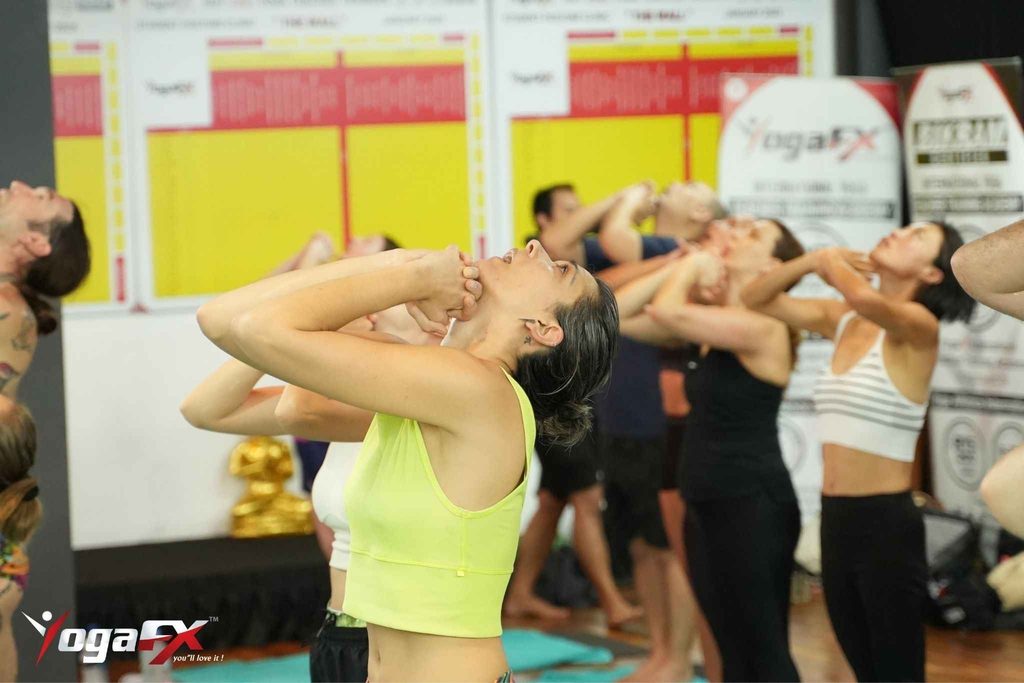
Before booking, these five questions settle it. You can usually answer them from the class description, or with one message to the studio. For choosing between whole studios rather than individual classes, our studio team has written a guide on how to choose an authentic 26 and 2 studio.
- Does the class start with Standing Deep Breathing and end with Blowing in Firm? Those two breathing exercises are the "2" in 26 and 2.
- Is the sequence the same every class? If the teacher designs a new class each time, it is not 26 and 2.
- How long is it? 90 minutes is traditional. 60 or 75 minutes usually means a shortened version.
- Is it taught through the dialogue, without music? Dialogue-led, music-free classes are closest to the original method.
- Where did the teacher train? A teacher certified specifically in the 26 and 2 method will teach the sequence and its dialogue as designed.
Other Timetable Terms Worth Knowing
A few more labels turn up on hot yoga timetables and can cause confusion. None of them is standard across every studio, but these are the usual meanings.
- Advanced class. At studios that teach the original method, this usually means a separate and much more demanding sequence for experienced students, not a harder version of 26 and 2. Beginners should not drop into it.
- Warm or heated. A room that is heated but noticeably cooler than a traditional 26 and 2 room. Often used for flow, yin or restorative classes.
- Silent or no-music class. At studios that play music in some classes, this flags the traditional dialogue-only format.
- Beginner or foundations class. Often the full 26 and 2 sequence taught more slowly, with extra explanation of each posture.
- Double or back-to-back. Two classes in a row, usually for experienced students or teacher trainees building stamina.
Why Many Students Prefer the Original Format
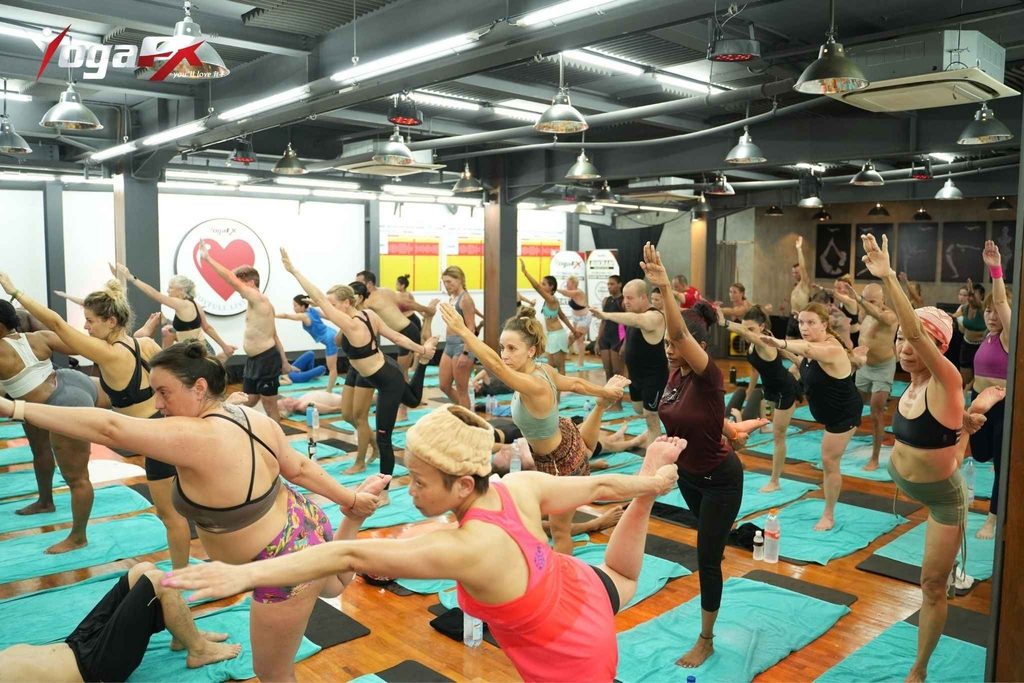
Online discussions about 26 and 2 keep returning to the same question: what do people actually enjoy about a class that never changes? The answers are consistent, and they explain why the traditional format still has such a loyal following.
- You can measure progress. Because the sequence never changes, you can see exactly which postures have improved over a month or a year.
- You can switch off your planning brain. Knowing what comes next lets you focus fully on the posture in front of you rather than on keeping up.
- The dialogue does the thinking. The spoken instructions tell you precisely what to do, so the class works even if you have never met the teacher.
- It travels. A 90-minute dialogue class in Bali follows the same sequence as one in London or Los Angeles, so regular students can practise anywhere.
Those strengths depend on the format staying intact. A class that changes length, adds music or swaps postures keeps some of them but loses others, which is why checking what a label really means is worth the effort.
Which Class Should You Choose?
| If your main goal is | Choose | Why |
|---|---|---|
| The full method and the deepest flexibility progress | Traditional 90-minute 26 and 2 | All second sets and the full floor series |
| A shorter practice on a busy day | Hot 26 or Hot 60 | Same postures in less time |
| Learning the sequence as a beginner | Beginner or foundations 26 and 2 class | Slower pace and more explanation |
| Variety and upper-body strength | Hot Flow or Hot Vinyasa | Changing sequence, arm balances and transitions |
| Training to teach | A certified 26 and 2 teacher training | You learn the dialogue and the logic of the sequence |
Does the Name Change What You Get From the Class?
The postures do most of the work, so any class that keeps the full 26 and 2 sequence in a hot room will deliver broadly the same kind of benefit. A 2014 study led by Porcari measured about 333 calories for women and 460 for men across a 90-minute class, with heart rates in the moderate-to-vigorous range, and a 2025 systematic review by Willmott et al. of 43 studies found gains in flexibility, balance and vascular function across hot yoga research. Shorter classes will naturally deliver less of that per session. If no studio is close by, you can also practise 26 and 2 at home.
Where the name does matter is consistency. The benefits in the research come from practising the same method regularly. If you switch between a 90-minute dialogue class, a 60-minute Hot 26 with music and a Hot Hatha class that changes weekly, you are doing three different practices. Our evidence-graded guide to whether 26 and 2 yoga is good for you explains what regular practice tends to produce. If you are new and worried about the heat, start with our guide to whether 26 and 2 yoga is hard.
How YogaFX Teaches the Original Format in Bali
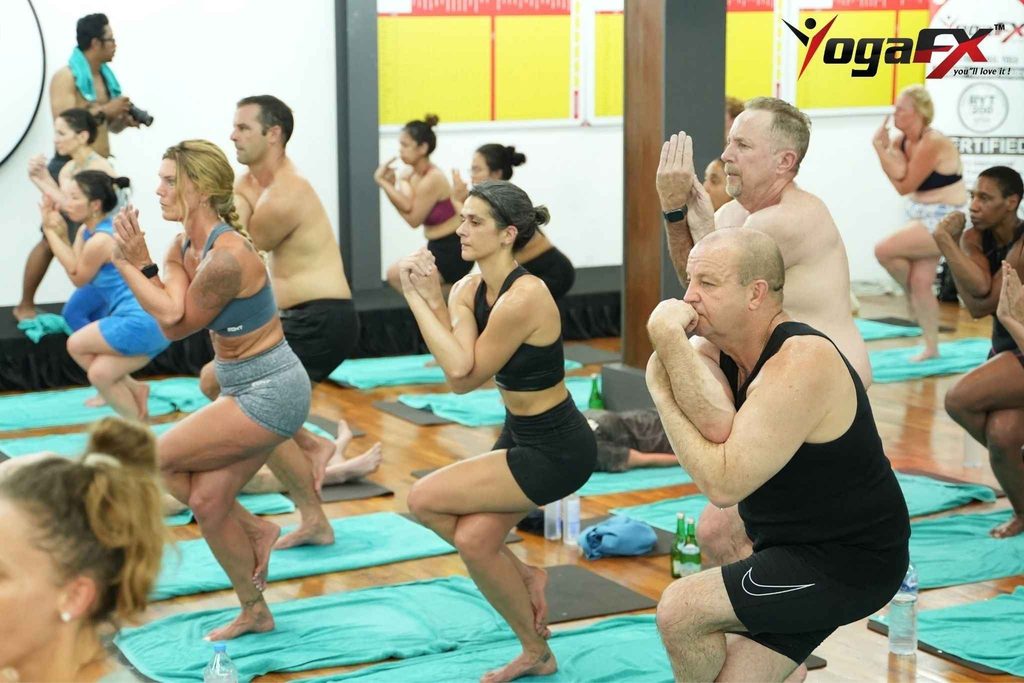
At YogaFX, our 26 and 2 classes follow the traditional format: the full sequence, 90 minutes, taught through the spoken dialogue with no music, in natural tropical Bali heat of around 40°C and 40% humidity. Classes run at our studios in Seminyak and Canggu.
Mr. Ian Terry trained for five years, from 2014 to 2019, directly with Bikram Choudhury, the founder of the Bikram Hot 26&2 method, has certified more than 1,500 graduates from over 80 countries, and was appointed Master Trainer of the Republic of Indonesia Yogasana Sports Federation in 2026. Whatever name a studio puts on its timetable, a teacher trained in the full dialogue can teach the class as it was designed, and that is what his training focuses on.
If you want to teach the sequence yourself, our 26 and 2 yoga teacher training leads to a dual certification, Yoga Alliance RYT 200 plus a Bikram Hot 26&2 certificate. The next intake runs from 24 to 29 January 2027, with 2027 pricing at USD 1,999 twin share or USD 2,199 single room, accommodation included. Not sure you are ready? Take the two-minute readiness quiz, or message Mr. Ian on WhatsApp with any questions. If you chose a training through Tripaneer and paid a deposit, here is help for customers who have paid a deposit through Tripaneer.
FAQ
What is Hot 26 yoga?
Hot 26 is usually the 26 and 2 sequence taught in a heated room, often shortened to 60 or 75 minutes. It keeps the same postures in the same order but tends to cut second sets and rests, and some studios add music. Check the class description, because studios define the label differently.
Is Hot 26 the same as Bikram yoga?
Usually it is the same sequence of postures, but not always the same class. Traditional Bikram yoga lasts 90 minutes, is taught through a spoken dialogue and has no music. Many Hot 26 classes are shorter, with fewer second sets and sometimes music. The postures and their order are normally unchanged.
What is the difference between hot hatha and 26 and 2?
Hot hatha is a broad label for posture-based yoga in a heated room. At some studios it is the 26 and 2 sequence renamed; at others it is a teacher-designed hatha class that changes each time. The 26 and 2 sequence is always the same 26 postures and 2 breathing exercises in a fixed order.
Is hot vinyasa harder than 26 and 2?
They are hard in different ways. Hot vinyasa involves continuous movement, faster transitions and often arm balances, so it challenges upper-body strength and coordination. 26 and 2 has no advanced postures but a hotter, more humid room, longer holds, stillness and a 90-minute length, which challenges stamina and concentration.
How can I tell if a class is really 26 and 2?
Check five things: it opens with Standing Deep Breathing and closes with Blowing in Firm, the sequence never changes, it runs 90 minutes, it is taught through the dialogue without music, and the teacher trained in the 26 and 2 method. Shorter or music-led classes are usually adapted versions.
Is YogaFX affiliated with Bikram Choudhury?
No. YogaFX is a major Hot 26&2 (Bikram) yoga teacher training academy based in Bali, and is not affiliated with Bikram Choudhury or Bikram's Yoga College of India. Mr. Ian Terry trained for five years, from 2014 to 2019, directly with the founder of the method and teaches the original 26 and 2 sequence and dialogue, with graduates earning Yoga Alliance RYT 200 plus a Bikram Hot 26&2 certificate.