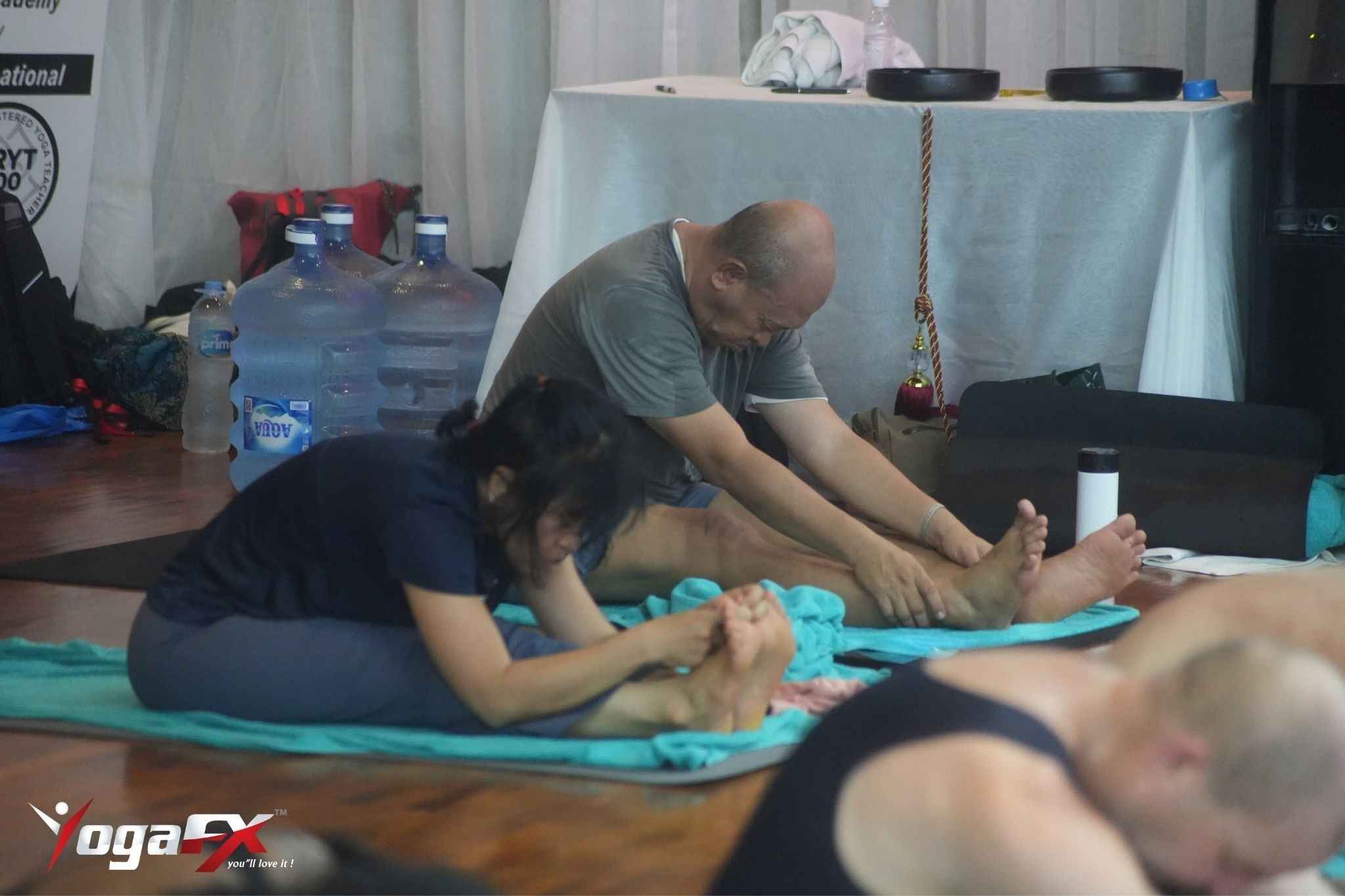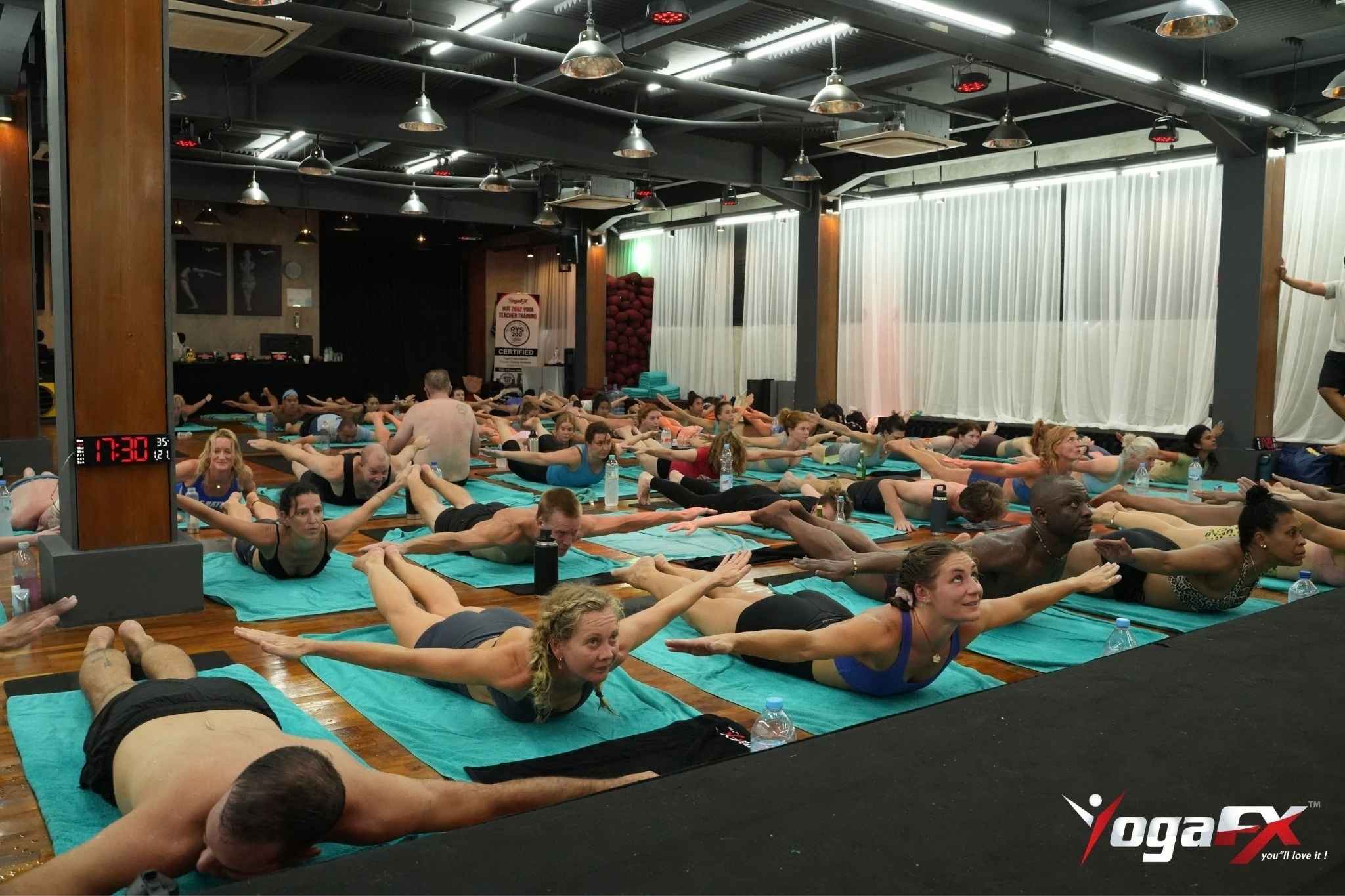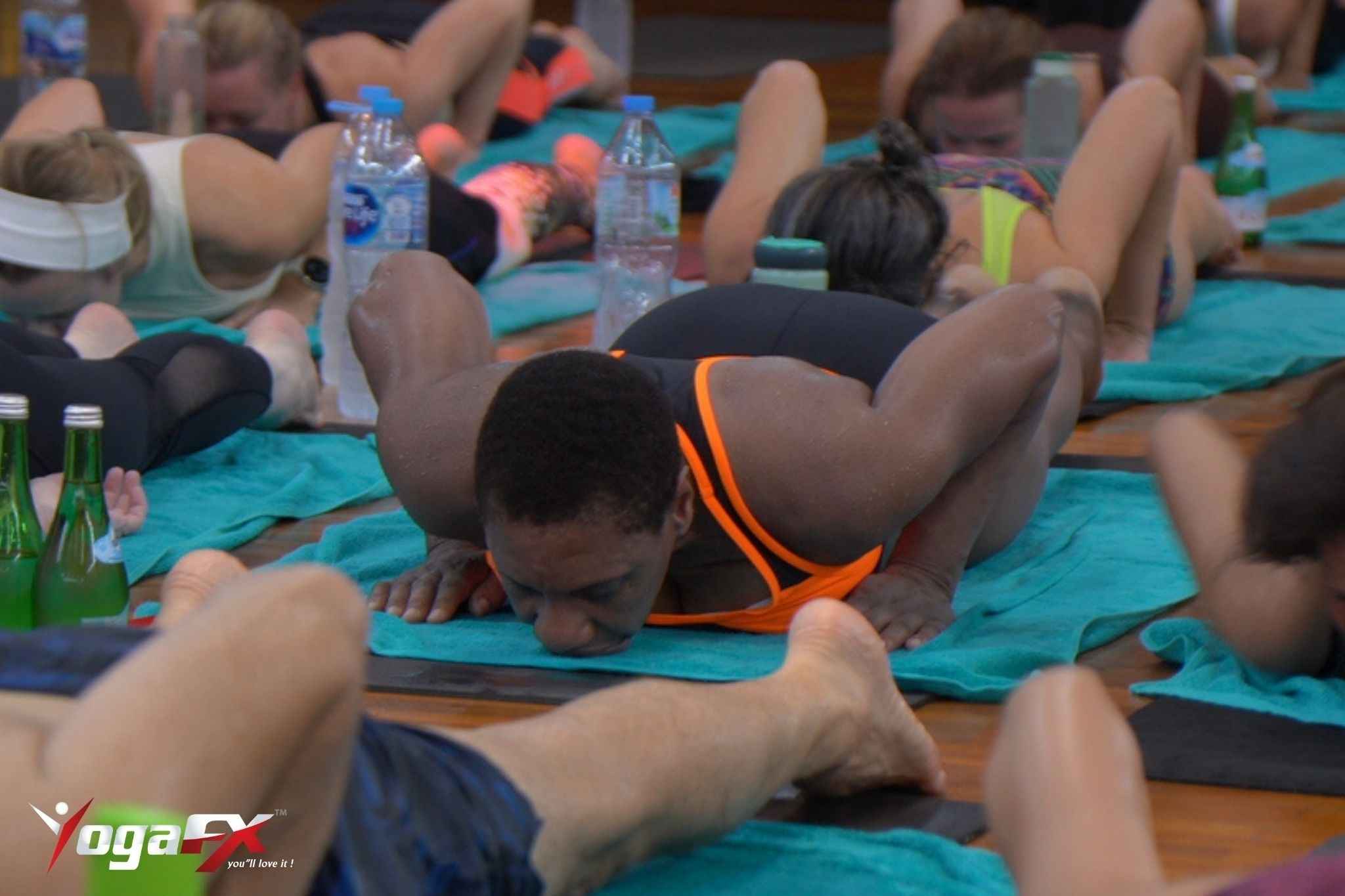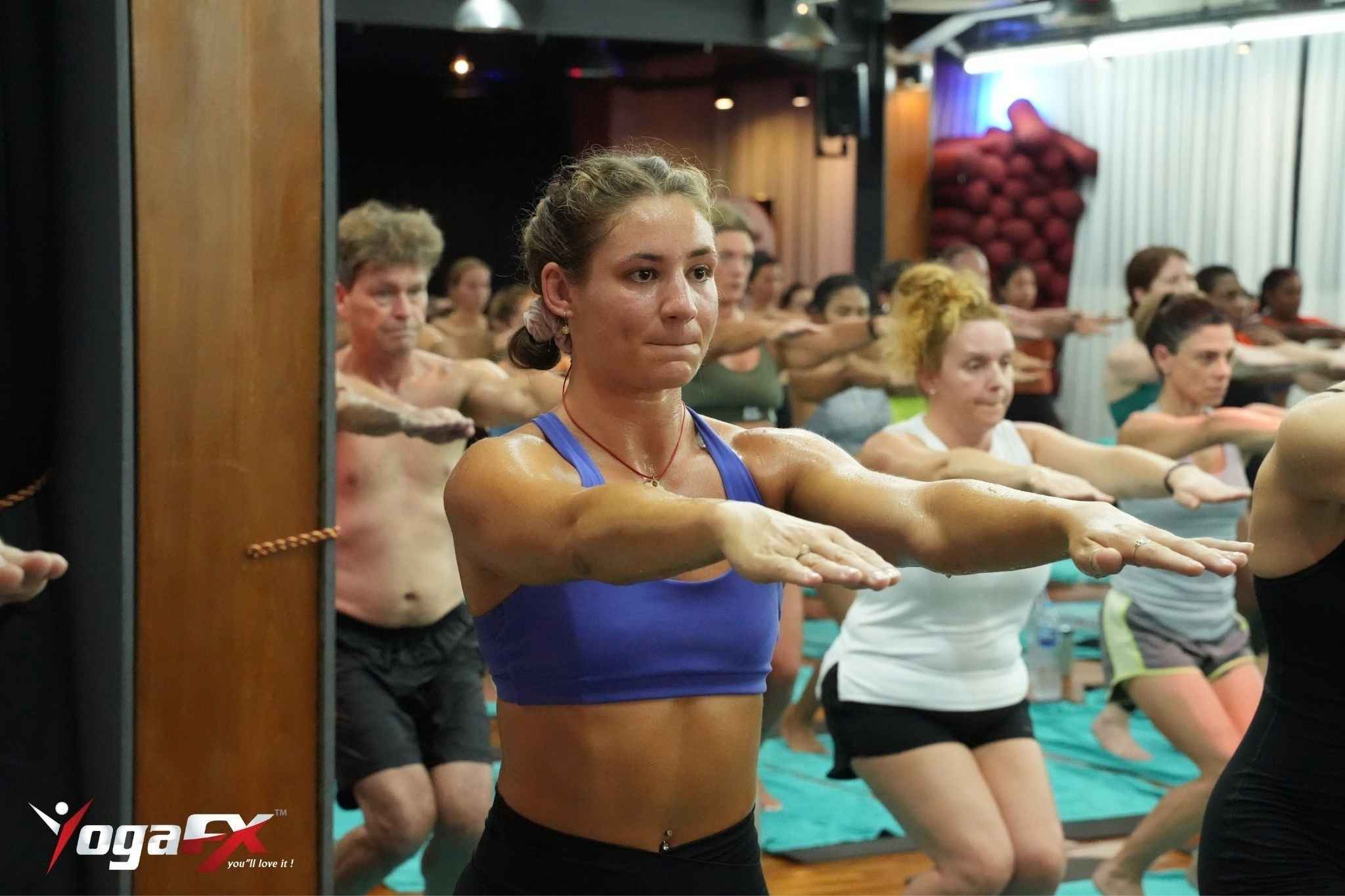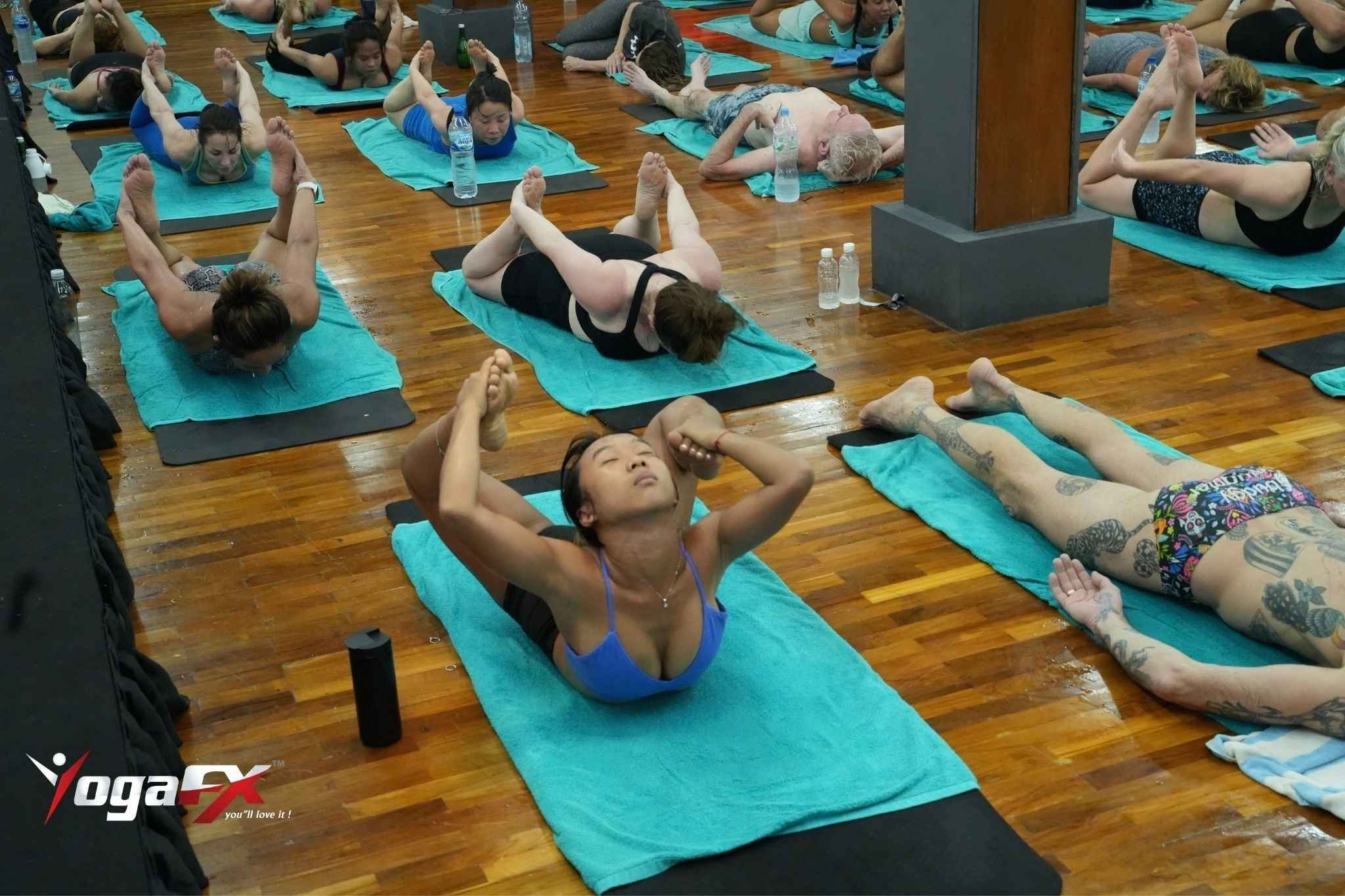
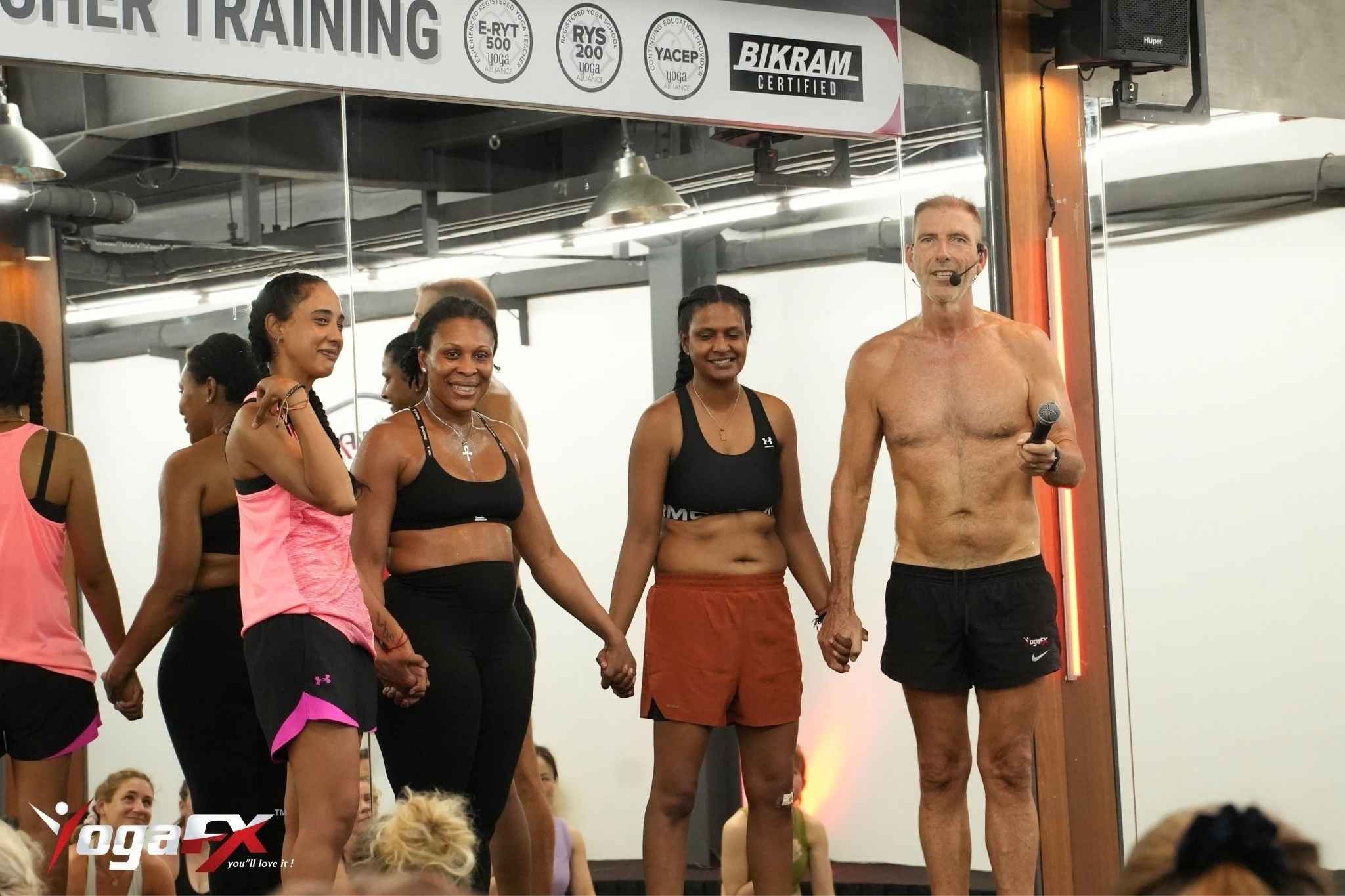
The 26 and 2 dialogue is the precise, standardised verbal script instructors recite during a traditional hot yoga class. It guides students through a fixed sequence of 26 hatha yoga postures and 2 breathing exercises in a heated room, using the same words in the same order every class. There is no music and no teacher demonstration. The dialogue is the class.
If you have only ever taken flow-style yoga, the dialogue can feel strange at first. The teacher talks fast, rarely moves, and seems to say the same things every day. By the third or fourth class, most students realise that sameness is the point. This guide explains what the dialogue does, whether studios that now call themselves 26 and 2 or Hot 26 still use it, and how to tell in your first class. The perspective comes from Mr. Ian Terry, E-RYT 500 and founder of YogaFX, a prominent Hot 26&2 yoga teacher training academy headquartered in Bali, who has taught the original dialogue for more than 12,000 hours.
Key Aspects of the 26 and 2 Dialogue
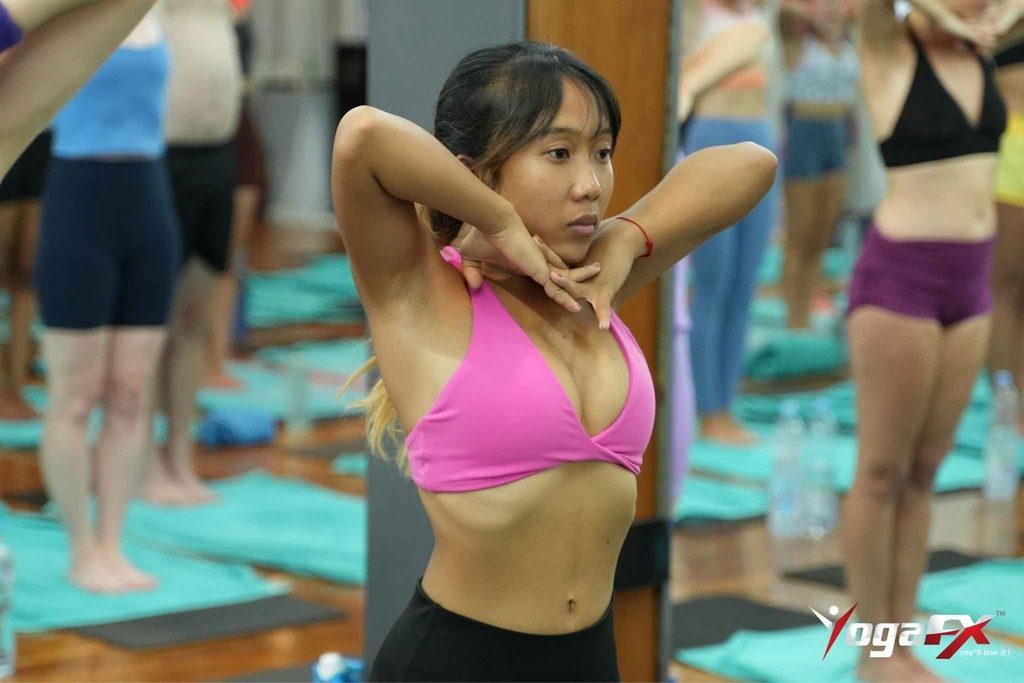
The dialogue does four jobs at once. Understanding each one explains why teachers train for weeks to deliver it rather than simply talking students through the postures in their own words.
Exact consistency
Instructors use the same word-for-word cues every single class. Because the instructions never change, your attention can move away from following the teacher and toward your own body. The class becomes a moving meditation. You measure progress internally, by how far you go into a posture compared with last week, rather than chasing a routine that changes every time you walk in.
This is also why regular students progress so visibly. When the words, the order and the timing stay fixed, the only variable left is you. A small improvement in your Standing Head to Knee shows up clearly because nothing else has moved.
Safety and alignment
The script gives clear anatomical instructions to keep practitioners safe during deep stretches in the heat. Three kinds of cue come up again and again:
- Where your weight goes. Cues that shift weight toward the heels or the front of the foot protect the knees and lower back in standing postures such as Awkward and the balancing series.
- Which joints to lock or keep firm. Locking the standing leg or keeping the arms straight gives you a stable base, so the stretch goes into the muscle instead of stressing a joint.
- How to hold the spine. Instructions about keeping the spine straight or leading with the chest set up backbends and forward folds so the load spreads evenly along the back.
Because every teacher gives the same alignment cues, a student who moves between studios or teachers hears the same safety instructions everywhere. That consistency matters more than it sounds when you are working near the edge of your range in a 40°C room.
Pacing and breath
The dialogue coordinates movement with specific inhalation and exhalation timing. The clearest example is Pranayama Deep Breathing, the opening breathing exercise, where the teacher's count sets the pace of each slow inhale and exhale for the whole room. The same pacing continues through the class: the dialogue tells you when to enter a posture, how long to hold it, and when to come out, so the class moves as one.
Timing also shapes recovery. On the floor, each posture is followed by a short Savasana of about 20 seconds, and the dialogue keeps those rests consistent. That rhythm is part of why the 26 and 2 yoga sequence works as a single designed piece rather than a list of separate stretches.
Mental challenge
The phrasing is designed to make students comfortable with being uncomfortable. The dialogue keeps asking you to stay a little longer, stay still, and keep breathing through the heat. Over time that builds mental focus and resilience that students often notice outside the studio too, in how they handle stress at work or in difficult conversations.
Our guide to whether 26 and 2 yoga is hard covers this side of the practice in more detail. For a student-eye view of what the dialogue sounds like across your first months of classes, our sister site's guide to what you hear in the yoga dialogue walks through the stages most students go through.
Do 26 and 2 and Hot 26 Studios Still Use the Original Dialogue?
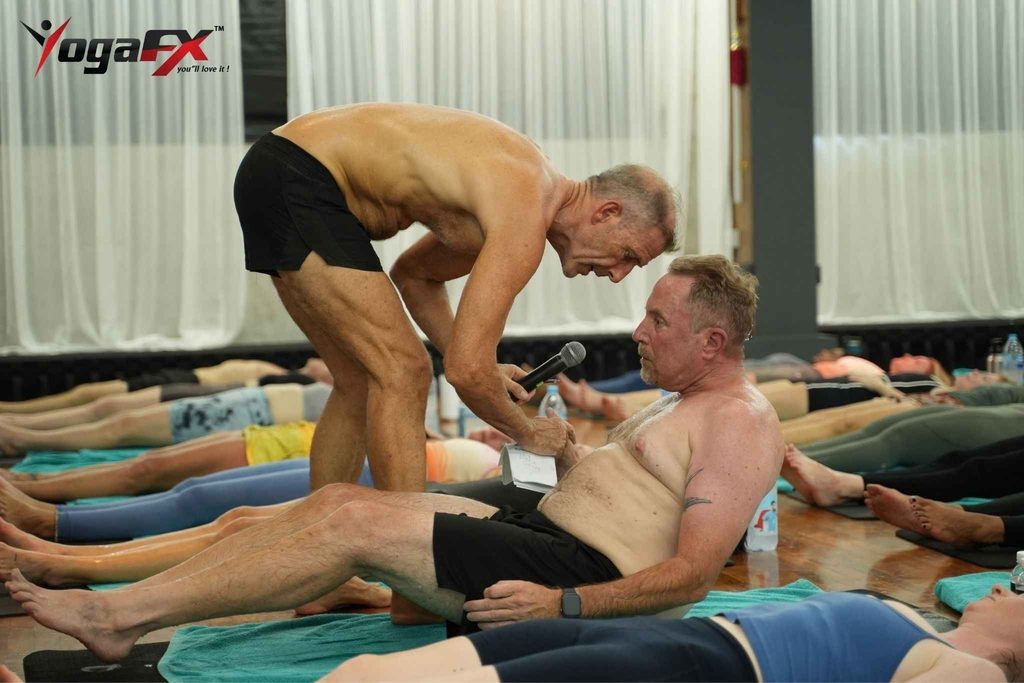
Authentic 26 and 2 and Hot 26 studios still use the original scripted dialogue word for word, although individual instructors may occasionally add minor personal variations, such as a student's name or an extra encouragement during a hard posture. The core instructions stay the same.
Standardised phrasing
In traditional 90-minute classes, certified instructors rely on the identical, memorised script to guide students into a focused, meditative state. Two teachers trained in the original method, teaching thousands of kilometres apart, will give the same instructions for Camel pose in the same order.
No music
Authentic classes are held in silence except for the teacher's clear, spoken instructions. Music would compete with the dialogue for your attention, and the whole method depends on you hearing and following precise cues while working hard in the heat.
The rebranding shift
Over the past decade, many studios moved away from the founder's name and rebranded as "26 and 2" or "Hot 26". Most of them intentionally kept the exact same sequence and the traditional dialogue intact. For students, the class inside the room often did not change at all; only the sign outside did. Our introduction to what 26 and 2 yoga is explains how that shift happened.
Where the name no longer guarantees the dialogue
Here is the part most explanations skip. Because the sequence itself is free for anyone to teach, the names "26 and 2" and "Hot 26" are not protected labels. Some classes that use them teach the original dialogue exactly. Others have changed it in ways that affect the experience:
- Shortened classes. 60 or 75-minute formats often cut parts of the dialogue, drop some rests or run single sets of postures that are traditionally done twice.
- Classes with music. Some studios add a soundtrack. The postures are the same, but the teacher usually shortens the cues so they can be heard over it.
- Freestyle cueing. At mixed hot yoga studios, a teacher may run the 26 postures in order but describe them in their own words, sometimes while demonstrating.
None of these formats is harmful, and many people enjoy them. They simply are not the same practice as the original. Our guide to Hot 26, Hot Hatha, Bikram and Hot Flow sorts out the class names in more detail.
5 signs your class uses the original dialogue
You can usually tell within the first class. Look for these five signs:
- The words repeat. By your second or third class, you start to predict what the teacher will say next.
- There is no music. The only sound is the teacher's voice and the room breathing.
- The teacher does not demonstrate. They stand at the front or walk the room, guiding with words rather than doing the postures.
- The order never changes. Standing Deep Breathing opens the class and Blowing in Firm closes it, with all 26 postures in the same sequence every time.
- The floor series has short, timed rests. A Savasana of around 20 seconds follows each floor posture, called by the teacher.
If you see all five, you are almost certainly in an original-dialogue class. If two or three are missing, you are in an adapted format. That is not a problem, but it helps to know which one you are choosing.
Original vs Adapted Dialogue: What Changes for Students
The four jobs the dialogue does are exactly what tends to weaken when it is adapted. The table compares the two formats on each one.
| Aspect | Original dialogue | Adapted or freestyle cueing |
|---|---|---|
| Consistency | Same words every class, so progress is easy to measure | Wording changes with the teacher, so each class feels different |
| Safety and alignment | The same detailed alignment cues from every teacher | Depends on the individual teacher's training and experience |
| Pacing and breath | Fixed holds and timed rests; breathing counts set the rhythm | Holds and rests often shorter or less predictable |
| Mental challenge | Silence and repetition build focus and a meditative state | Music and variety make the class feel lighter but less inward |
| Best for | Students who want measurable progress and a meditative practice | Students who want a shorter or more varied workout |
For beginners, the original format can feel intense at first because there is so much information to process. Most students find that after five to ten classes they stop listening consciously and simply respond to the cues. That shift, from following instructions to moving with them, is one of the clearest signs the dialogue is doing its job. What regular practice of the full class delivers is covered in is 26 and 2 yoga good for you, and how many calories 26 and 2 yoga burns shows how demanding it is.
Why You Won't Find an Official Dialogue PDF
Search for the dialogue online and you will find flashcard sets, scanned documents and forum posts claiming to hold the full text. None of them are official, and many contain errors. There are two reasons reputable trainings do not publish the complete script.
The first is legal. In 2015, the US Court of Appeals for the Ninth Circuit ruled that the sequence of 26 postures and 2 breathing exercises cannot be copyrighted, because it is a system or method rather than a creative work. That ruling is why any studio can teach the sequence under any name. It concerned the sequence, not a right to copy and distribute written material, so trainings are careful about how the text itself is shared.
The second reason is practical. A printed script teaches you the words but not the delivery: where to pause, how fast to speak during the balancing series, how to adjust your voice for a room of 40 students versus 5. Teachers learn the dialogue from a trainer who can correct them as they speak, which a PDF cannot do.
If you are a student, you do not need the text at all. The dialogue is designed to be heard, not read, and it works best when you let the teacher's voice lead you through the class. Practising without a teacher? Here is how to do 26 and 2 hot yoga at home and what you lose without the dialogue.
How Teachers Learn the Dialogue
Learning the dialogue is the biggest single task in 26 and 2 teacher training. Most trainees work through it in stages: first memorising the words for each posture, then practising delivery out loud, then teaching real students while a trainer gives feedback. The early stages start before the in-person training for many programmes, so trainees arrive with the words already in place and spend their time on delivery.
Two resources help with the memorisation stage. Our sister site's complete dialogue memorisation guide sets out a four-stage learning method used by instructor candidates. The dialogue flashcards tool lets you drill posture names, benefits and short teaching cues in a few minutes a day.
How long does it take? It varies widely with prior experience and study time. Students who already know the class well often learn the words faster, because they have heard the dialogue hundreds of times. Beginners can learn it too; it simply takes more deliberate practice. The delivery, rather than the memorising, is what keeps improving for years.
How YogaFX Teaches the Original Dialogue
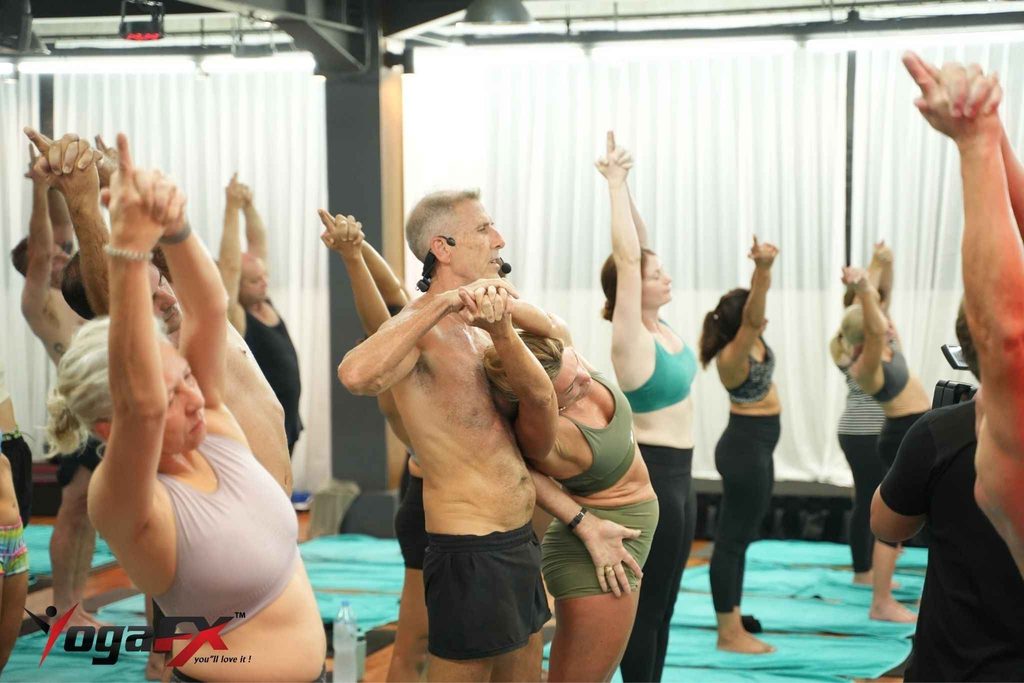
At YogaFX, every class at our studios in Seminyak and Canggu is taught through the original dialogue, for the full 90 minutes, in natural tropical Bali heat of around 40°C and 40% humidity, with no music and no demonstration. Mr. Ian Terry trained directly at five teacher training events between 2012 and 2019 and has taught more than 1,500 graduates from over 80 countries. In 2026 he was appointed Master Trainer of the Republic of Indonesia Yogasana Sports Federation.
His approach to teaching the dialogue focuses on the gap between knowing the words and delivering them well. Graduates describe that clearly in their reviews. One 2025 graduate, Ben James, wrote that Mr. Ian helped him find his own voice within the dialogue, rather than simply reciting it. Another, Frances Swithinbank, said the training gives back exactly what you put in, and that preparing the dialogue before arriving made the difference.
You also do not need years of experience to start. Jamie Abatemarco arrived as a beginner and was teaching the sequence dialogue on stage within two weeks, according to their review. That is possible because the programme is hybrid: trainees begin learning the dialogue online before the intensive in Bali, then use the in-person days to practise delivery with direct feedback. Our online preparation for yoga teacher training explains how that pre-course works.
The 26 and 2 yoga teacher training leads to a dual certification, Yoga Alliance RYT 200 plus a Bikram Hot 26&2 certificate, with a maximum of 19 students per intake. Not sure whether you are ready to learn the dialogue? Take the two-minute readiness quiz to find out.
FAQ
What is the 26 and 2 dialogue?
It is the standardised verbal script instructors use to teach a traditional hot yoga class. It guides students through 26 postures and 2 breathing exercises in a fixed order, with the same words every class. The dialogue sets alignment, breath timing and rests, and replaces music and teacher demonstration entirely.
Is there an official PDF of the 26 and 2 dialogue?
No official version is published online. Copies circulating on document-sharing sites are unofficial and often inaccurate. Reputable teacher trainings share the dialogue with enrolled trainees and teach its delivery in person, because timing, pauses and voice matter as much as the words. Students do not need the text to practise.
Do all Hot 26 studios use the original dialogue?
No. Authentic 26 and 2 and Hot 26 studios use it word for word, but the names are not protected, so some classes shorten it, add music or use freestyle cueing. Repeating words, no music, no demonstration, a fixed order and timed floor rests are the clearest signs of an original-dialogue class.
How long does it take to memorise the dialogue?
It depends on your experience and study time. Regular students often learn faster because they already know the class well. Most trainees start memorising before their in-person training, then spend the intensive practising delivery. Learning the words is the first step; delivering them well keeps improving for years of teaching.
Why is there no music in a 26 and 2 class?
Music would compete with the dialogue. The method relies on students hearing precise alignment and breathing cues while working hard in the heat, and silence helps create the focused, meditative state the practice is known for. Classes that add music usually shorten the dialogue so it can still be heard.