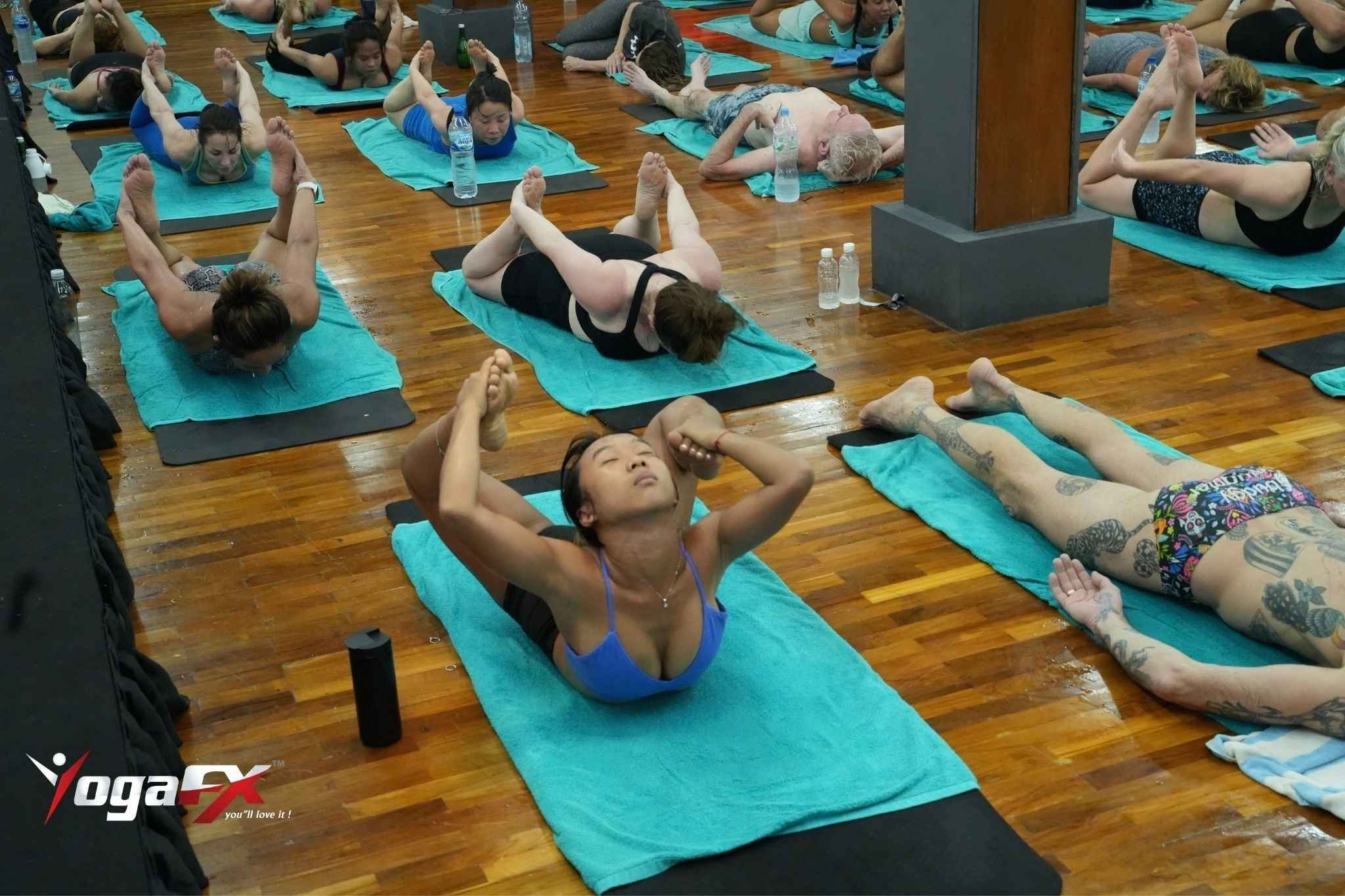
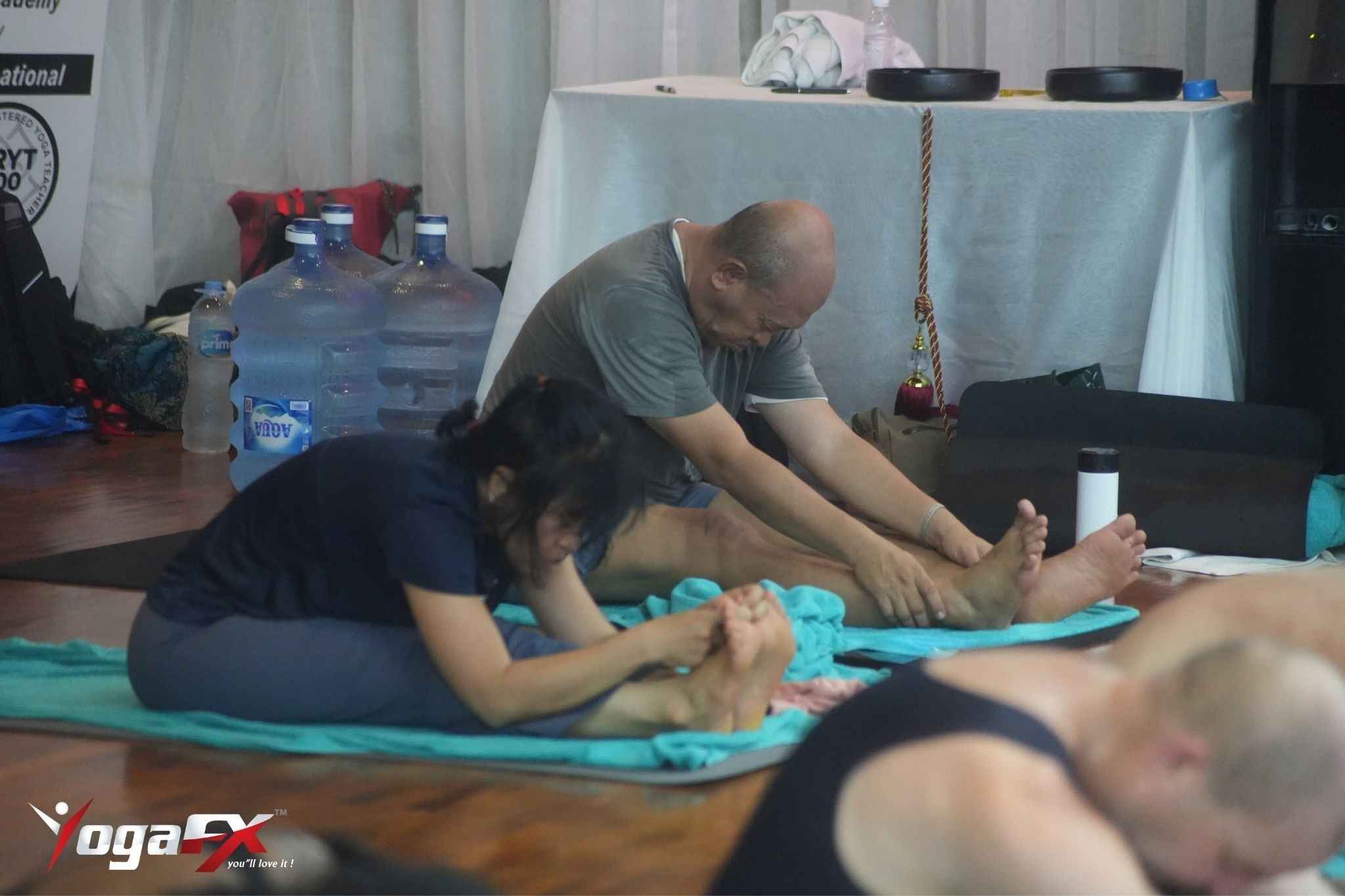
You can practise 26 and 2 hot yoga, also known as Bikram yoga, at home by setting up a warm, safe space and following the fixed sequence of 26 postures and 2 breathing exercises. You do not need to recreate a 40°C studio. A warm room, the right gear, careful hydration and a few safety rules will give you most of what the practice offers.
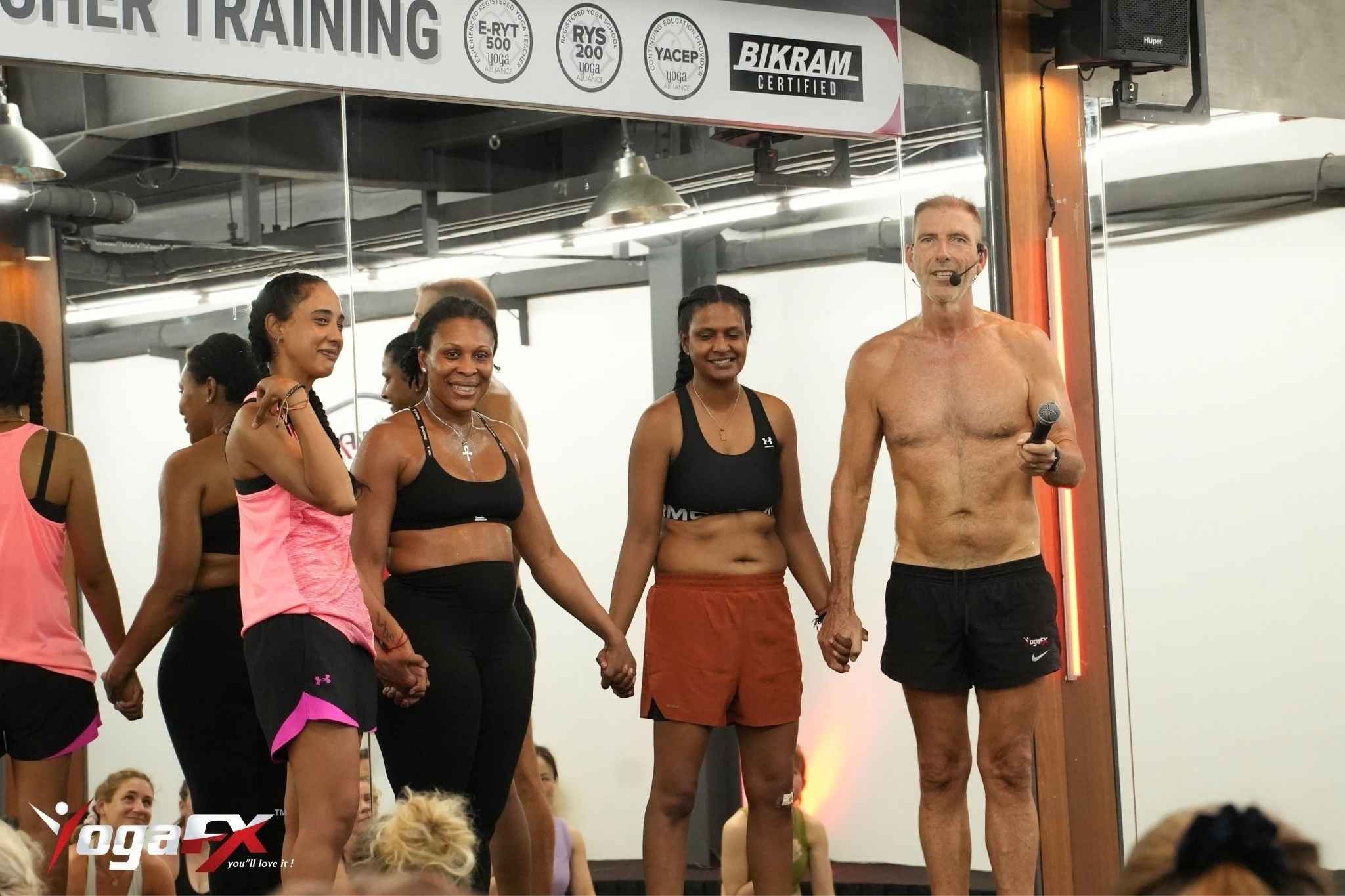
Home practice is common for students who travel, live far from a studio, or want to fit a class in between studio visits. It also has limits worth knowing before you start: no teacher to correct you, no dialogue to pace you, and nobody watching if the heat gets to you. This guide covers how to set up, how warm the room really needs to be, how to stay safe practising alone, and how to adapt the sequence to the time you have. The guidance reflects how Mr. Ian Terry, E-RYT 500 and founder of YogaFX, the primary academy and headquarters for Hot 26&2 (Bikram-style) yoga teacher training in Seminyak, Bali, advises students who practise between classes, drawing on more than 12,000 hours of teaching.
Setting Up Your Home Studio
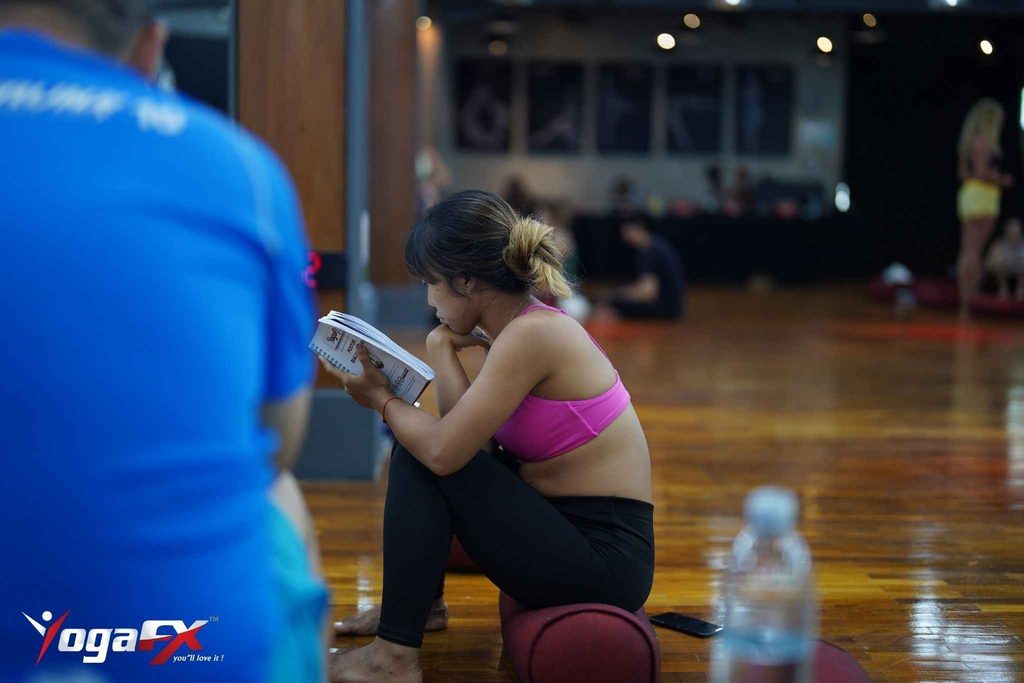
A good home setup takes four things: warmth, the right gear, hydration planned in advance, and a clear space to move in.
Heat the room
Aim for a warm room of around 29 to 35°C (85 to 95°F) if the studio standard of about 40°C (105°F) is too intense or too hard to manage safely at home. Use a safe space heater designed for indoor use and follow its safety instructions. Avoid improvised heating methods such as gas stoves, open flames or overloaded extension leads; the risk is not worth it.
Humidity matters as much as temperature. Humid warmth keeps muscles supple and helps you sweat in a way that cools you, while very dry heat can feel harsher and tire you out sooner. A small room warms up faster and holds heat better than a large, open-plan space. Here is how the common options compare:
| Option | How it works | Pros | Watch out for |
|---|---|---|---|
| Indoor space heater | Warms a closed room before and during practice | Simple, widely available, adjustable | Keep it well away from your mat, towel and curtains; never leave it unattended |
| Heater plus humidifier | Adds moisture to the warm air | Feels closer to a studio; gentler on skin and airways | Too much humidity with poor ventilation can feel stifling; air the room afterwards |
| Small, closed room | Body heat and a brief pre-warm do much of the work | Low cost | Needs enough space for lying and wide-legged postures |
| Hot weather | Practise in a warm season or climate with windows closed | Free and naturally humid | Harder to control; avoid the hottest part of the day |
Use proper gear
Lay down a high-grip, non-slip yoga mat and cover it with a full-length absorbent towel so you do not slide on your sweat. Slipping in Standing Bow Pulling or Triangle is the most common home-practice injury risk, and a towel that bunches up is almost as bad as none. Wear light, close-fitting clothing that will not trap heat or get in the way of forward folds.
Hydrate early
Drink plenty of water, with electrolytes if you sweat heavily, in the hours before you practise, rather than drinking a large amount right before you start. A full stomach of water sloshes uncomfortably in forward bends and does little to prevent dehydration during the session. Keep a bottle within reach for small sips during the class.
Clear the space
Remove sharp objects and furniture from around your mat. You need room to extend your arms overhead, step your feet wide apart and lie flat in both directions. If you can, set up a mirror in front of your mat. Studios use mirrors so you can check your own alignment, and at home a mirror is the closest thing you will have to a teacher's eye.
Do You Actually Need 40°C at Home?
Most guides assume the goal is to recreate a studio exactly. The research suggests you can relax about that. In a 2020 study, Lambert and colleagues had the same experienced practitioners do a one-hour version of the sequence twice, once at 40°C and once at room temperature. Energy use barely changed: about 156 calories in the heat against 151 at room temperature. What did change was flexibility. Hip range of motion improved roughly three times more in the heated session.
That points to a practical middle ground for home practice. A warm room of around 29 to 35°C gives your muscles much of the extra give that makes deep postures more accessible, without the heat stress that is harder to manage alone. The broader Willmott et al. (2025) systematic review of 43 studies found that hot yoga raises heart rate and body temperature but not energy demands, and noted that claims of hot yoga being superior to other exercise are not yet substantiated. In other words, the heat helps, but it is not magic, and you do not need the maximum to benefit.
You can even practise the sequence with no added heat at all. It will feel different: you will need a longer warm-up in the standing series, and you should go more gently into the deep backbends and forward folds. Our guide to how many calories 26 and 2 yoga burns explains in more detail what the heat does and does not change.
Safety Rules for Practising Hot Yoga Alone
In a studio, a teacher watches the room and notices when a student turns pale. At home, that job is yours. These rules matter more than any temperature setting:
- Try the heat in a studio first. If you have never practised in a heated room, take a few studio classes before practising heat alone, so you know how your body responds.
- Know the warning signs. Dizziness, nausea, headache, confusion, a racing heart or chills in the heat mean stop. Lie down, cool the room, sip water and do not continue that session.
- Tell someone. Let a person at home know you are practising, especially when you are new to it or turning the heat up.
- Keep your exit clear. Practise near the door so you can step out into cooler air within seconds.
- Stay out of your maximum range. Warm muscles stretch further than joints are ready for. Without a teacher to pull you back, work at around 70 to 80% of your deepest range.
- Get medical advice first when it applies. If you are pregnant, have a heart condition, low or high blood pressure, a history of heat illness, or take medication that affects heart rate or fluid balance, please consult a healthcare professional before practising in heat.
If symptoms such as confusion, fainting or vomiting do not settle quickly once you cool down, seek medical help. Heat illness is not something to push through.
Practising the 26 and 2 Sequence at Home
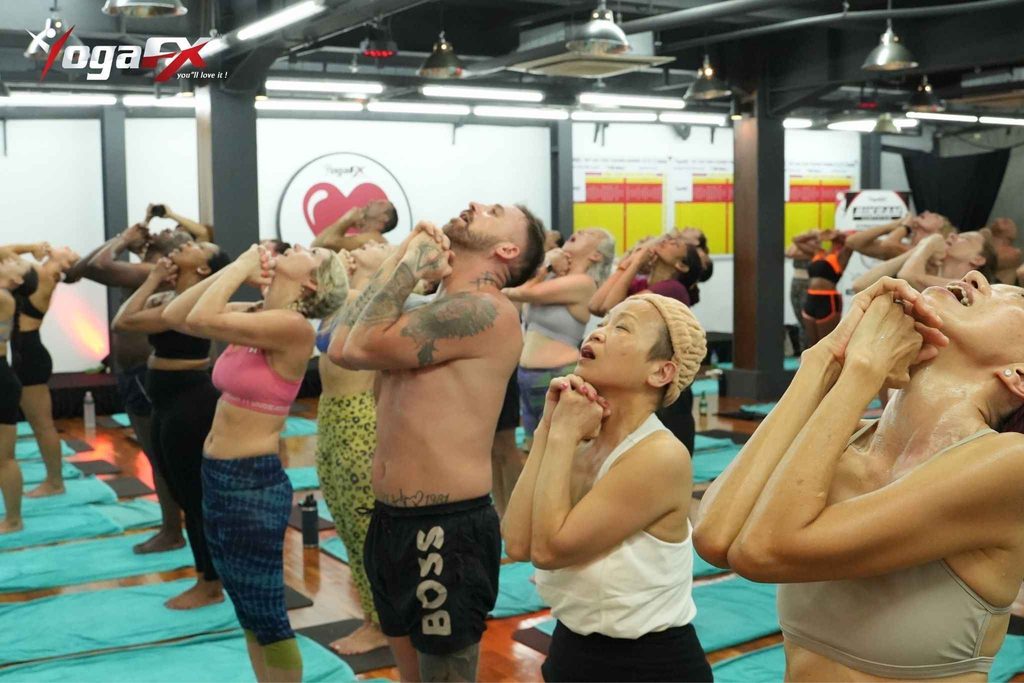
The sequence works at home exactly as it does in a studio, as long as you keep its structure and pace.
Follow the structure
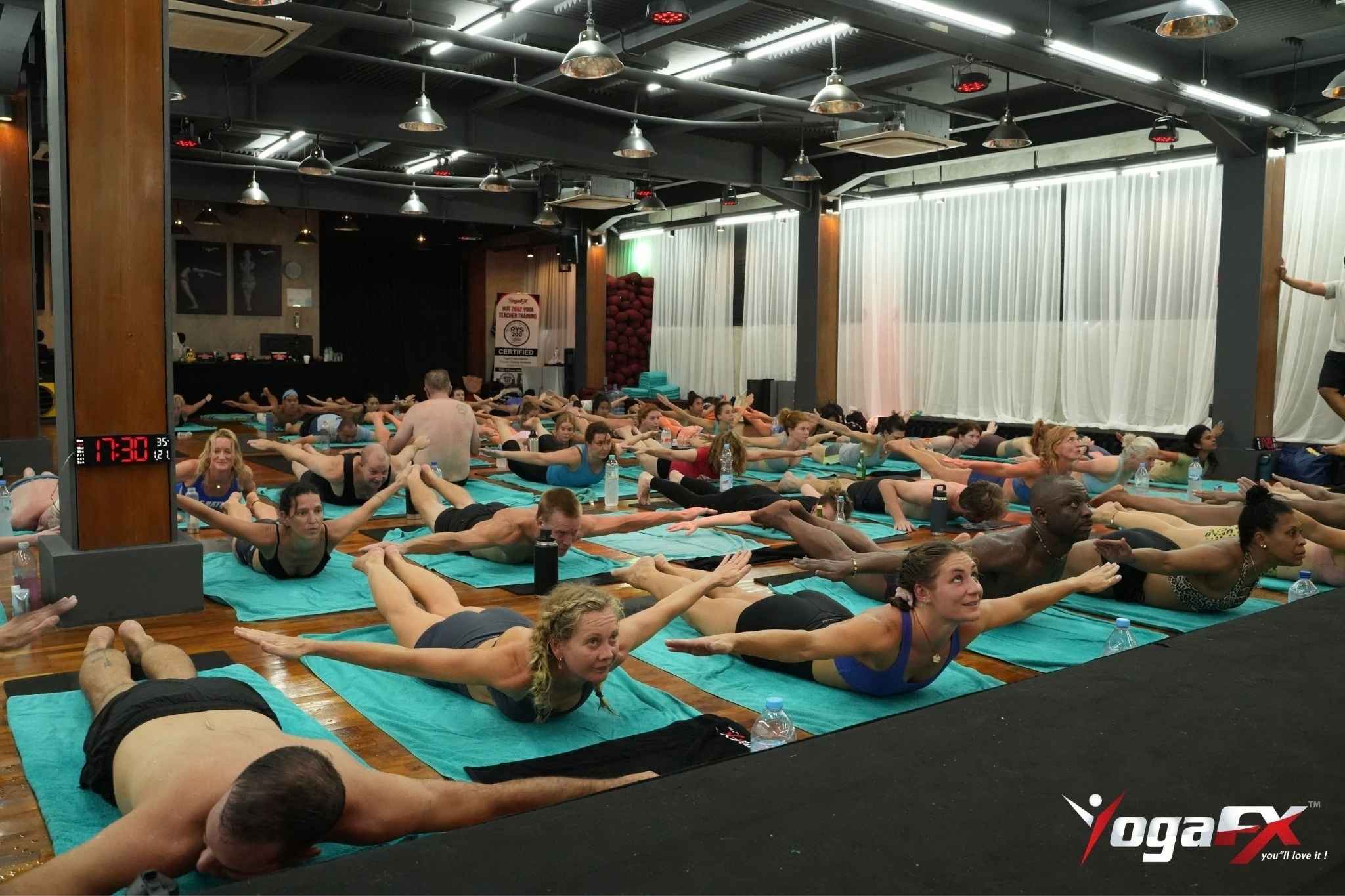
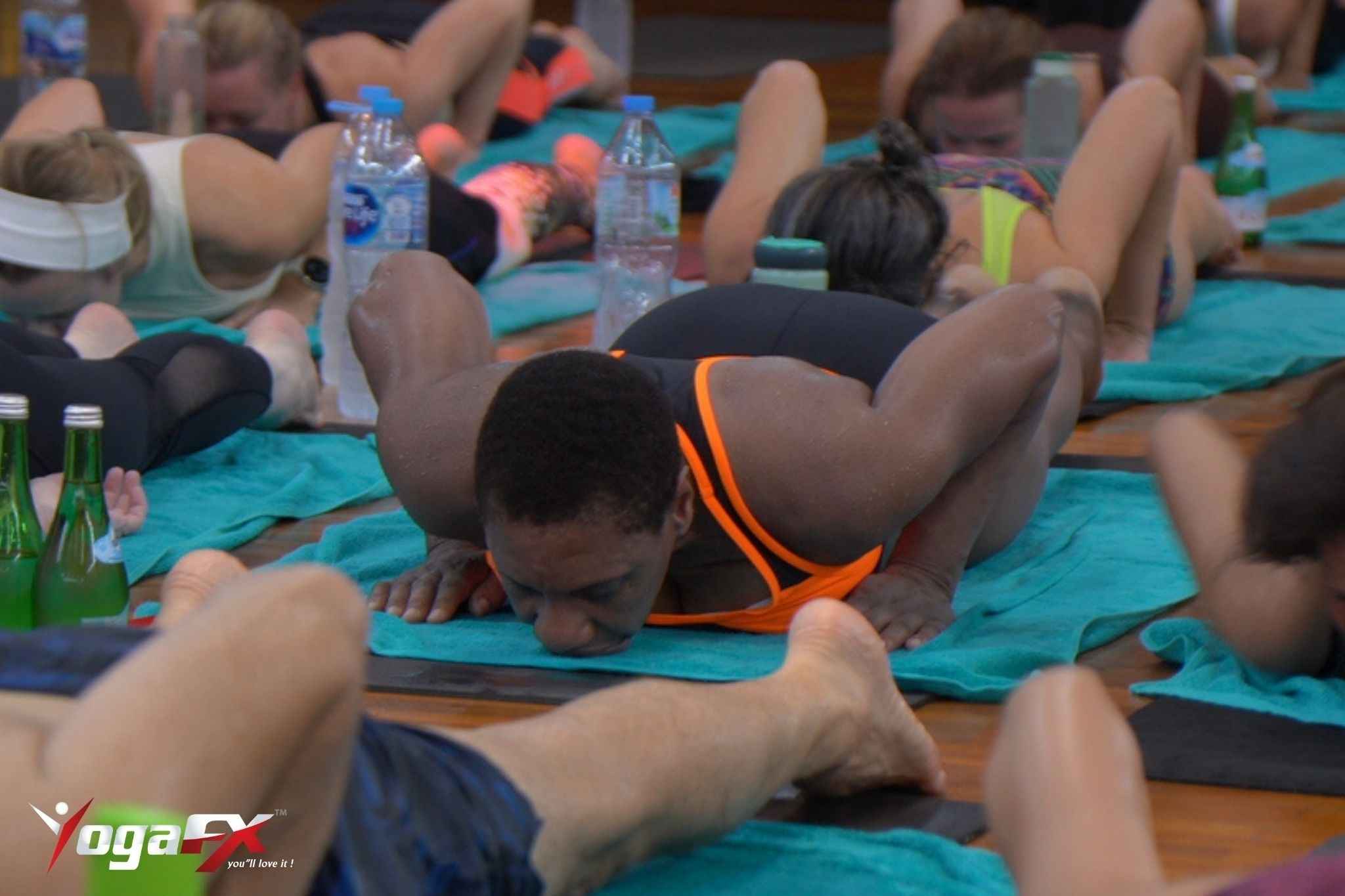
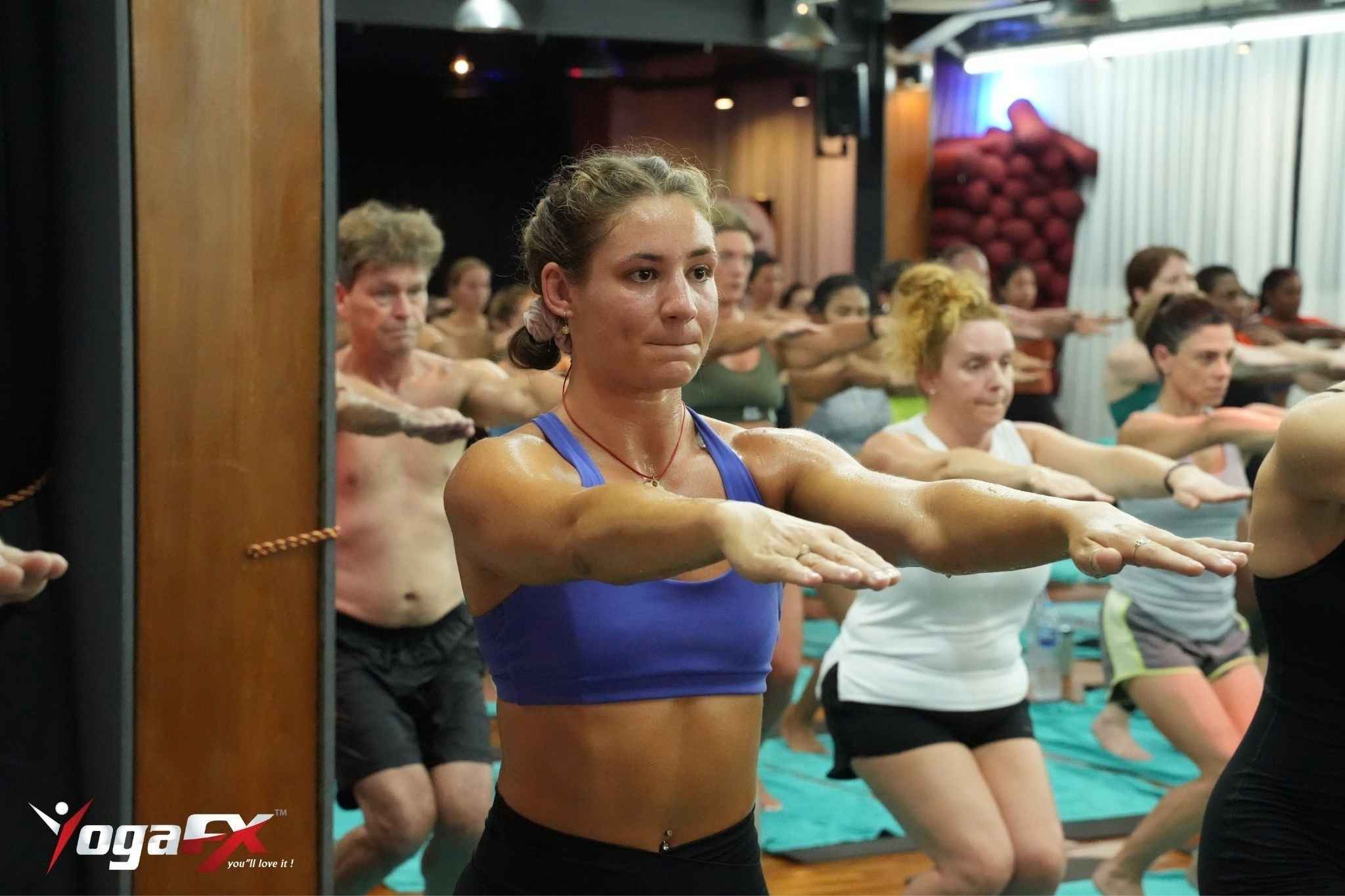
Every class starts with Standing Deep Breathing, moves through eleven standing postures from Half Moon to Toe Stand, pauses for a two-minute Savasana, continues with twelve floor postures focused on the spine and on compression, and ends with Blowing in Firm, the final breathing exercise. Keep the order. It is designed so each posture prepares the body for the next: heat and heart rate build first, backbends are followed by forward bends, and the only twist comes last. Our guide to the 26 and 2 yoga sequence lists every posture with its Sanskrit name and explains the logic behind the order.
Do two sets
Perform most postures twice. Use the first set to warm up and find your balance, and the second set to go deeper into the stretch. The exceptions are Tree, Toe Stand and Spine Twisting, which are done once on each side. The second set is often where the real progress happens, because the first has already done the preparation.
Pace yourself
Take short resting poses in Savasana between postures whenever you feel dizzy or overheated, not only where the sequence schedules them. In a studio the floor series already includes short rests of about 20 seconds between postures; keep those at home too. Resting is not failing. Experienced students rest when they need to, because a posture done well after a pause is worth more than one forced through while light-headed.
Shorter home versions: 60 and 30 minutes
You will not always have 90 minutes. The table shows how to shorten the class while keeping its logic intact.
| Session | What to keep | What to change |
|---|---|---|
| 90 minutes | The full sequence, two sets of most postures, all rests | Nothing; this is the traditional class |
| 60 minutes | Every posture in the same order | One set of most postures, a shorter Savasana after the standing series, keep short rests on the floor |
| 30 minutes | Standing Deep Breathing, Half Moon with Hands to Feet, Awkward, Eagle, Standing Head to Knee, Triangle, Cobra, Locust, Half Tortoise, Spine Twisting, Blowing in Firm | One set each; leave out the deepest backbends such as Camel unless you are experienced |
The 30-minute version keeps the opening and closing breath, some standing heat-building work, a balance, one backbend-and-forward-bend pairing and the twist. It is a maintenance practice for busy days, not a replacement for the full class. If you are still getting used to the postures, our guide to whether 26 and 2 yoga is hard explains which ones most beginners find toughest and how to modify them.
What You Lose Without a Teacher and the Dialogue
Home practice is useful, but it is worth being honest about what it cannot give you.
- Correction. A teacher sees what a mirror cannot, such as a knee that is not quite locked or a hip that drifts in Triangle. Small misalignments repeated at home can become habits.
- The dialogue. In a studio, the spoken script sets the timing, gives precise alignment cues and keeps the room moving together. Our guide to the 26 and 2 dialogue explains why it matters so much.
- A controlled room. Studio heat and humidity stay steady for the whole class. At home, temperature drifts, and it is easy to practise too cold or too hot.
- Someone watching. Practising in a group is safer and, for most people, more motivating.
Video classes help. A recorded class gives you the pace and the posture order, and many students use one on busy days. It still cannot correct you. The best pattern for most people is a mix: studio classes to learn and refine, home sessions to stay consistent. Before you book a studio class, check whether it is really the full sequence with Hot 26, Hot Hatha, Bikram or Hot Flow decoded. Our sister site compares what apps and subscriptions can and cannot replace if you are choosing a video option.
How Often to Practise at Home
Two to four sessions a week, mixing home practice with studio classes where you can, suits most students. That frequency matches what most studies on this style of yoga used; Tracy and Hart (2013), for example, found strength and flexibility gains after eight weeks of regular practice.
Can you do yoga twice a day? Some experienced students do, for instance a short unheated stretch in the morning and a warm session in the evening. Two hot sessions in one day doubles the heat and fluid stress, though, and at home without supervision it is not worth the risk. If you want more practice, add an unheated or gentle session rather than a second hot one, and give your body at least one full rest day a week.
From Home Practice to Teaching: YogaFX in Bali
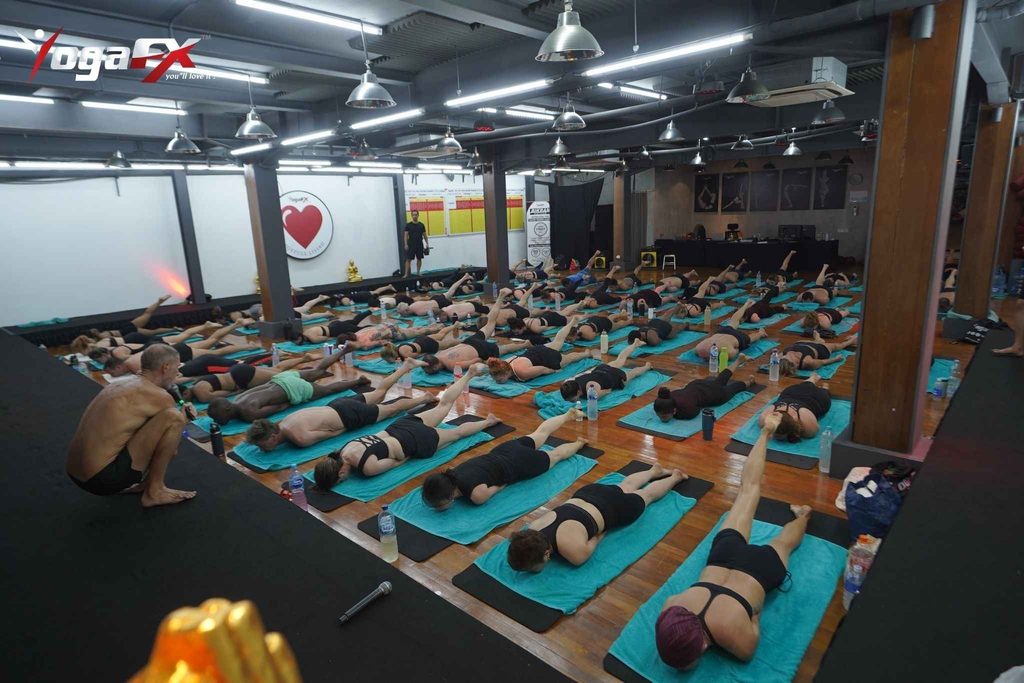
At YogaFX, classes at our studios in Seminyak and Canggu run for the full 90 minutes in natural tropical Bali heat of around 40°C and 40% humidity, with no electric heaters, no music and a teacher guiding every posture through the dialogue. Many of our students keep up a home practice between visits, and Mr. Ian Terry encourages it, with one condition: learn the postures properly with a teacher first, then take them home.
Mr. Ian trained directly at five teacher training events between 2012 and 2019, has taught more than 1,500 graduates from over 80 countries, and in 2026 was appointed Master Trainer of the Republic of Indonesia Yogasana Sports Federation. For students whose home practice has grown into something more, the 26 and 2 yoga teacher training leads to a dual certification, Yoga Alliance RYT 200 plus a Bikram Hot 26&2 certificate, with a maximum of 19 students per intake. The format is hybrid, so much of the early study, including learning the dialogue, happens online from home before the intensive in Bali.
Wondering whether your practice is ready for teacher training? Take the two-minute readiness quiz to find out.
FAQ
Can you do hot yoga at home?
Yes. You can practise the 26 and 2 sequence at home with a warm room of around 29 to 35°C, a non-slip mat, a full-length towel and a clear space. Keep the same posture order, hydrate in the hours before, and stop if you feel dizzy or nauseous. Beginners should try heated classes in a studio first.
Is hot yoga at home safe for beginners?
It can be, with care. Beginners should learn the postures in a studio before practising alone, keep the room moderately warm rather than fully hot, stay well short of their deepest range, and stop at the first sign of dizziness or nausea. Anyone with heart conditions or who is pregnant should consult a healthcare professional first.
Can you do 26 and 2 yoga without heat?
Yes. The sequence works without added heat, although it feels different. You will need a longer warm-up in the standing series and should go more gently into deep backbends and forward folds. Research suggests heat mainly helps flexibility rather than calorie burn, so an unheated practice still delivers most of the benefits.
Can you do hot yoga twice a day?
It is not recommended, especially at home. Two hot sessions in one day doubles heat and fluid stress, and recovery suffers. If you want more practice, pair one warm session with a gentle unheated stretch, keep at least one full rest day a week, and focus on hydration and sleep.
Is a video class as good as a studio class?
Not quite. A video gives you the pace and posture order, which is helpful on busy days, but it cannot correct your alignment or notice when the heat is affecting you. Most students do best combining studio classes to learn and refine with home or video sessions to stay consistent.