Hot yoga etiquette in a 26 and 2 class has one idea at its centre: the room belongs to everyone in it. Arrive early, stay still while the dialogue is spoken, use the mirror to check your own lines, and stay in the room when the heat gets loud. Do those four things and you're already a good guest.
Table of Contents
The 26 and 2 is a fixed sequence of 26 postures and 2 breathing exercises, taught in about 90 minutes at roughly 40°C. Mr. Ian Terry, E-RYT 500, is the Founder and Lead Instructor of YogaFX and has taught more than 12,000 hours. Here we've set out the etiquette of the Seminyak room in the order you'll meet it, from the front door to the final breath.
Hot Yoga Etiquette in a 26 and 2 Room: The Seven-Line Code
Most hot yoga etiquette sounds like common sense until you're standing in a 40°C room with one voice guiding everyone. Then each habit has a job. This is the short version we'd give a friend at the door.
- Be early. Ten calm minutes beat one rushed one.
- Keep your own patch. Leave a clear arm-span around the mat.
- Phones off and stowed. A buzz carries further than you'd think.
- Quiet while the dialogue runs. The cues only work if everyone hears them.
- Settle between postures. Move on the cue, then be still.
- Mirror for lines, not looks. Look at your own alignment and nobody else's.
- Stay in the room. Rest on your mat before you think about leaving.
None of this asks for perfect postures. It asks for attention, which anyone can give on day one.
Hot Yoga Etiquette on Arrival: Ten Minutes That Set Up the Class
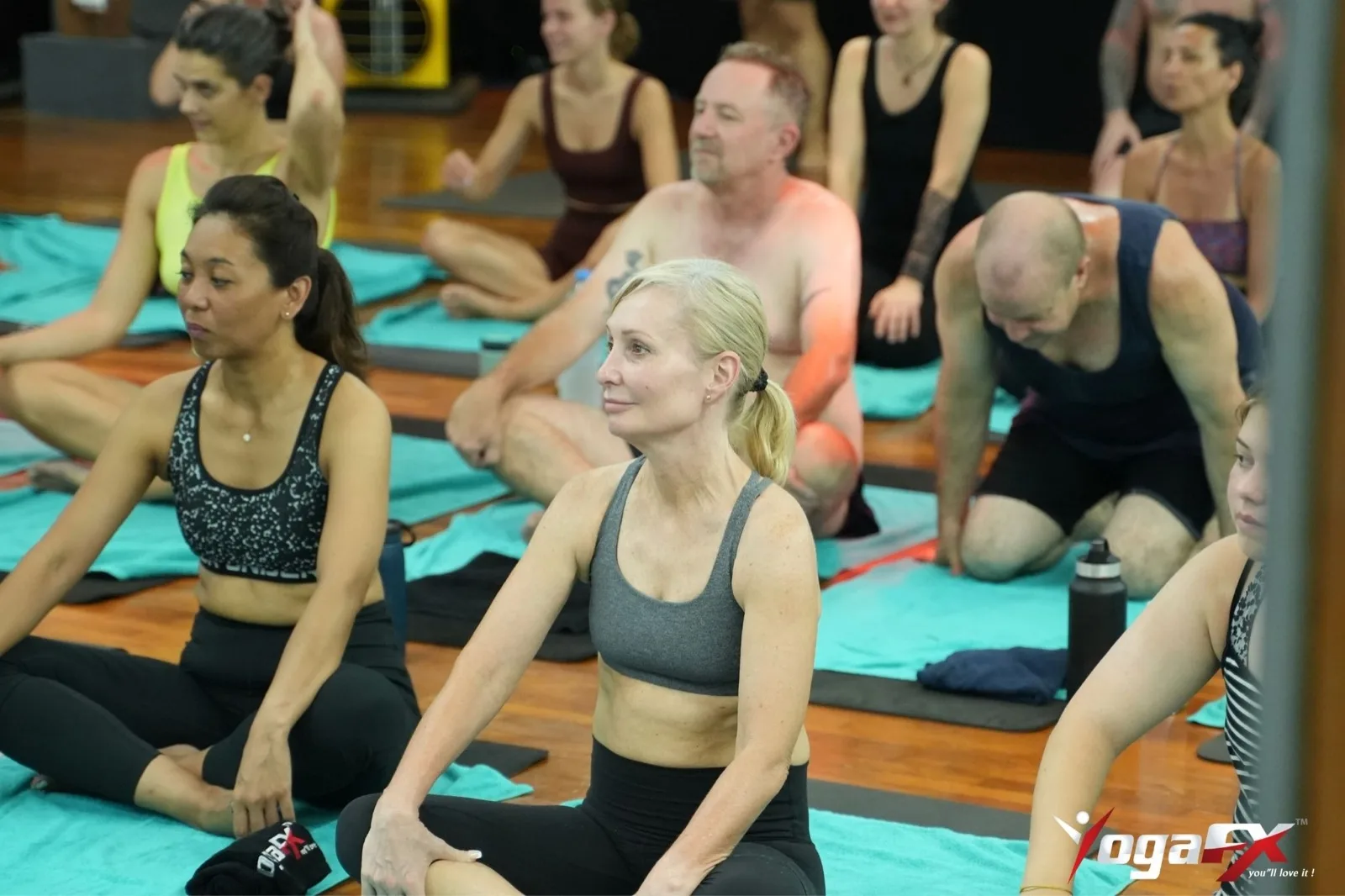
Good hot yoga etiquette starts before the first word. A rushed arrival puts you behind for the opening posture, and the people beside you feel it. So treat the ten minutes before class as part of the class.
Because there's no break in 90 minutes, whatever you set up now is what you live with. Lay the mat down, spread the towel flat and put your bottle where you can reach it without twisting. Then sit or stand quietly and let your breathing slow.
| When | What to do | Why it helps in a 26 and 2 room |
|---|---|---|
| Earlier in the day | Eat lightly and drink water steadily | A heavy meal or a gulped bottle sits badly in the heat |
| On arrival | Stow your phone and bag, then choose your patch | Nothing needs reaching for once the dialogue starts |
| Setting up | Lay the towel flat and place the bottle within reach | You move less, so the row around you stays still |
| Last few minutes | Sit or stand quietly and slow your breathing | Your heart rate starts calmer, and so does the room |
| Class begins | Eyes forward, mouth closed, ears open | The dialogue is the only guide, so you need every cue |
Notice how little the table asks for. That's deliberate. For a full walk through a first visit, our guide to hot yoga for beginners goes posture by posture, and the notes on hot yoga hydration cover what to drink and when.
Kit and Clothing: What to Bring Into the Room
What you carry in is part of hot yoga etiquette too, because the wrong kit makes you fidget. The Seminyak studio asks for nothing fancy. It does help to bring a few simple things.
- A non-slip mat that grips when your hands and feet are wet.
- A full-length towel laid over the mat, so you aren't sliding into your neighbour's space.
- A water bottle with a lid, so a knock doesn't spill across the floor.
- Light, close-fitting clothes that dry quickly and stay put through every posture.
Close-fitting matters more than it sounds. Loose cotton gets heavy with sweat, and then you're tugging at it between postures, which breaks the quiet for everyone nearby.
Hot Yoga Etiquette for Stillness: Moving Only When the Dialogue Says So
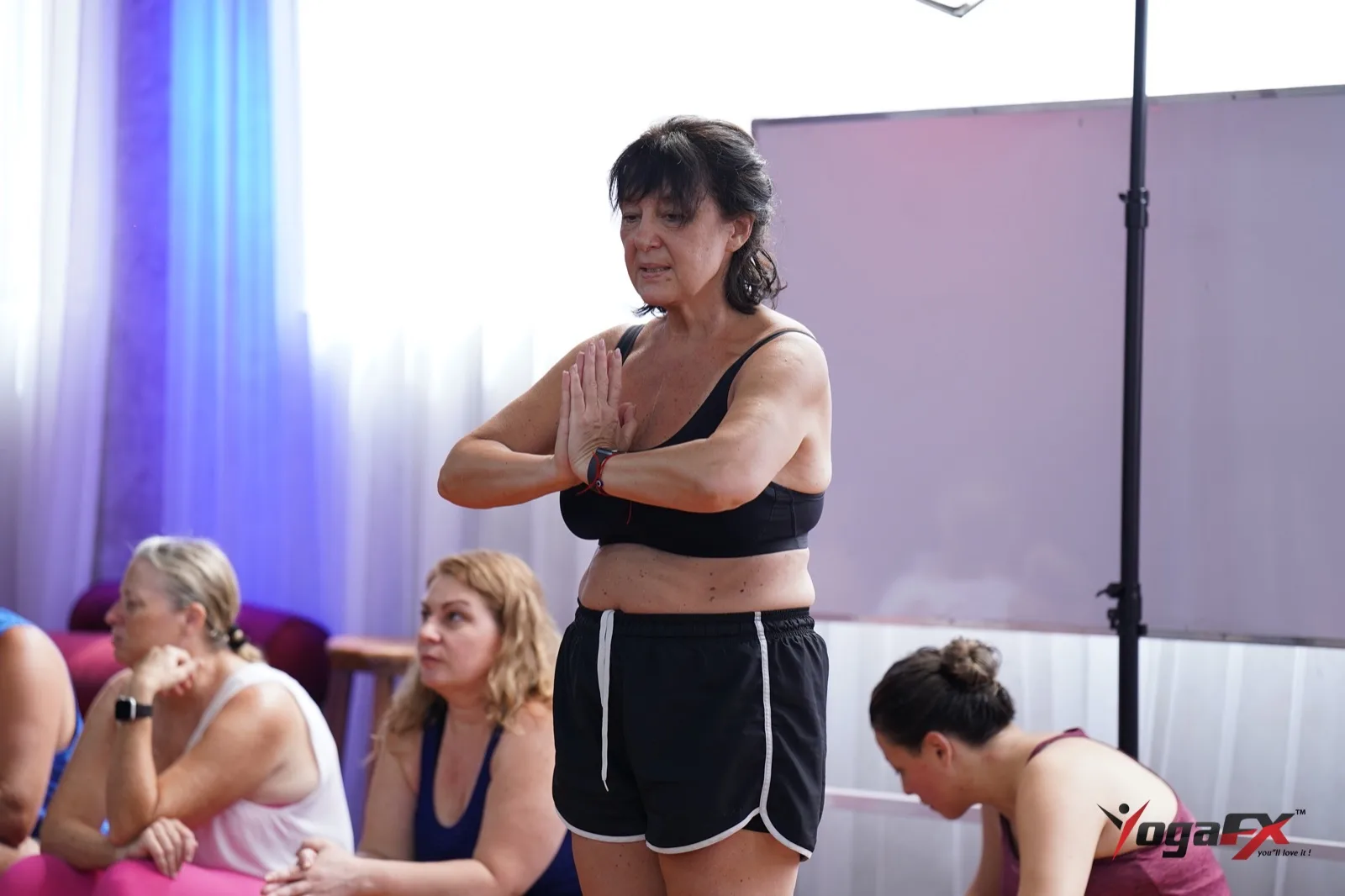
Stillness surprises new students more than any other part of hot yoga etiquette. It doesn't mean locking up or holding your breath. It means you choose your movement. You move on the cue, and you settle in the gaps.
The class is built to need this. The teacher doesn't demonstrate and there's no music, so your ears do all the work. One dropped bottle or a sudden stand-up pulls the whole row away from the voice guiding them.
There's a body reason too. In a hot room, every extra movement lifts your heart rate and spends energy you'll want later. Settling between postures lets you recover a little, so you last longer and learn more.
Three small habits that help
- Breathe through your nose. It keeps your mouth closed and your mind on the next cue.
- Wait three seconds. When your face itches or your hair slips, count to three before you act.
- Hold your eyes still. Pick a point and rest on it, as the dialogue suggests.
Students who get this early settle into the heat faster. They stop seeing a rule and start seeing support. There's also a kindness in it: when you hold still, the person behind you can hear the cue they need, and that's what a shared room is for.
A practical test helps. Before you move, ask yourself whether the dialogue just asked for it. If the answer is no, wait one breath and ask again. Most of the time the urge passes, and you've kept the room intact without anyone noticing.
Hot Yoga Etiquette and the Mirror: A Tool for Alignment
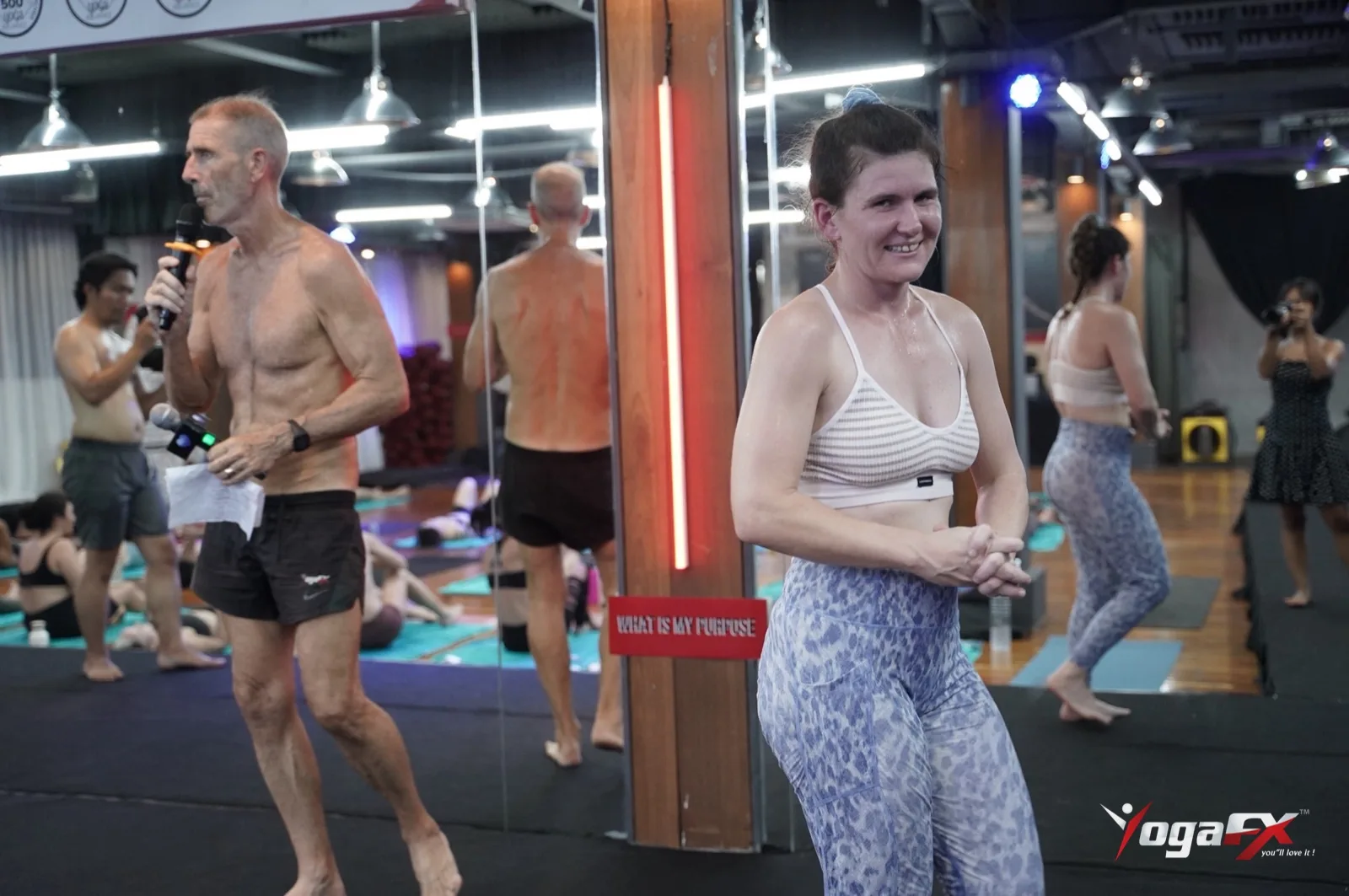
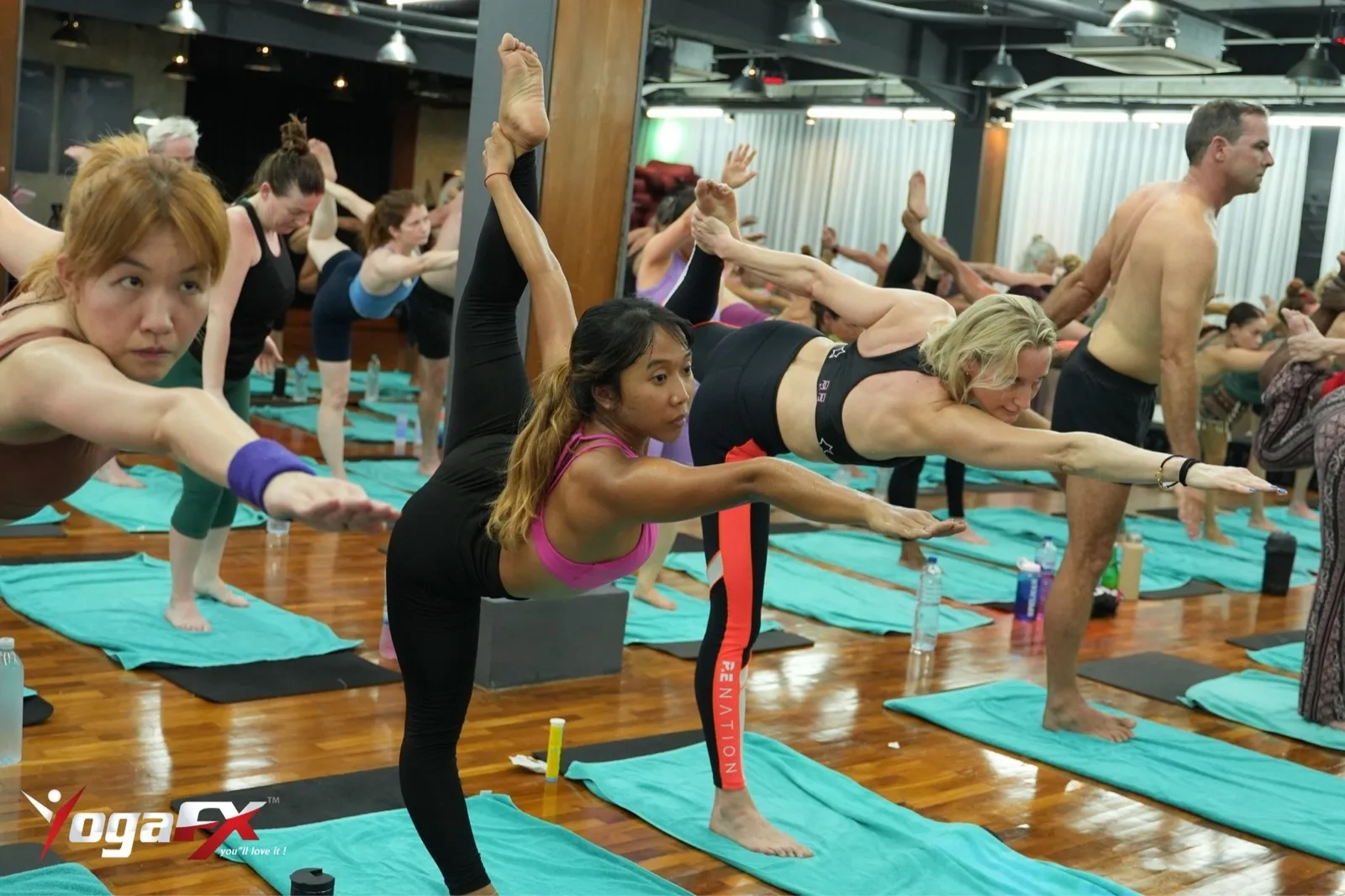
The front wall of a 26 and 2 room is a mirror, and it's there on purpose. It lets you check symmetry, spot a dropped hip and keep one steady point of focus. In yoga that steady gaze is called dristi, and it helps with balance as much as with calm.
Some students love the mirror from day one. Others feel exposed. Both are normal. The hot yoga etiquette is the same either way: look at your own alignment, then let your gaze rest. Don't scan the room, and don't grade the person beside you.
It helps to know that mirrors aren't neutral for everybody. McMaster University reported on a study led by Kathleen Martin Ginis in which women who cycled for 20 minutes in front of a mirror felt less energised and less positive than those who cycled without one. You can read the university's summary of the study.
It was a stationary bike, not a hot yoga room, so we don't claim the same effect here. We take it as a nudge instead. How you look into the mirror matters, so look for lines and let the rest go. If it feels like too much, stand toward the side and let your breath lead for a few postures.
Staying in the Room When the Heat Gets Loud
This is the hot yoga etiquette question students ask about most. In the first few classes the heat can feel intense, and the urge to bolt is real. Most of the time the better answer is to rest on your mat, keep your mouth closed and breathe slowly through your nose.
If you feel dizzy or light-headed, the method has a clear response. Lower your centre of gravity right away. Turn around so your head is toward the mirror and your feet are toward the wall, then lie down on your back and breathe. Don't force movement through dizziness.
Resting is part of good hot yoga etiquette, not a failure of it. A student who lies down calmly disturbs nobody. A student who stumbles out mid-posture can unsettle the whole room, and may feel worse in the open air.
When to take it seriously
The UK's National Health Service lists the symptoms of heat exhaustion, and several overlap with a hard hot yoga class. They include tiredness, dizziness, headache, feeling sick, heavy sweating with pale, clammy skin, cramps, a high temperature and being very thirsty. The NHS page on heat exhaustion and heatstroke treats these as signals to act on.
Its advice is to move somewhere cool, remove unnecessary clothing, drink plenty of water and cool the skin. Most people should start to feel better within 30 minutes. If you don't, or you feel confused, stop practising and get medical help.
In class, that means you can sit or lie quietly in your own space and rejoin when you feel steady. If you don't settle, step out calmly and tell the teacher. Speaking up early is the most respectful thing you can do for yourself and the room.
This is general information, not medical advice. If you have a heart condition, are pregnant or take medication that affects how you handle heat, talk with a healthcare professional before you practise in a heated room.
Respecting the Dialogue for Everyone
The dialogue holds the rest of the hot yoga etiquette together. It's a precise, scripted set of words that takes every student through the same sequence in the same order. Everyone depends on hearing it clearly, and nobody can lip-read a teacher who isn't demonstrating.
That's why talking costs more than it seems to. Even a whisper carries in a quiet room, and it tells your neighbour that talking is fine. Save questions for before or after class, and keep your voice low inside the room.
Entering and leaving count as well. Slip in quietly if you must arrive late. Take the nearest free patch, and don't pick your way across other people's towels. When class ends, rest first. Some students are still in the final breathing, and rolling up a mat is louder than it looks.
Teacher training goes deeper on the same habits, because trainees learn to hold a room as well as practise in one. If that interests you, read how the same etiquette is taught on a teacher training course.
After Class: The Etiquette Continues Outside
Hot yoga etiquette doesn't stop at the door. Many students walk out wanting to talk, and that's lovely, but do it away from the room so others can rest. Then take care of yourself, because good hot yoga etiquette includes how you treat your own body.
- Cool down first. Let your body settle for ten or fifteen minutes before a cold shower.
- Rehydrate. Water matters, and many students add a little salt or an electrolyte drink.
- Eat sensibly. A balanced meal within an hour or two helps you recover.
- Leave it tidy. Take your towel and bottle, and wipe up any puddles you've made.
These steps echo the pre-class habits, so the whole visit feels like one calm loop. If you'd like to know what to eat beforehand, our guide on what to eat before hot yoga sets it out.
What Students Say About the Room
Students often describe how a room felt before they describe the postures. These reviews aren't about hot yoga etiquette alone, but each one touches the attention and care that good etiquette creates.
"I learned how to be present, both alone and in groups."
Greta, Yoga Alliance review, 2026
"Mr Ian and his team created something, that is so much more than a yoga course."
Katalin, Google review, 2026
"I got the best teacher to encourage and teach well."
Agung, Google review, 2020
Presence, encouragement and a room that feels cared for all come from the same place: a group that agrees to pay attention.
Try It Yourself at the YogaFX Seminyak Studio
The easiest way to learn hot yoga etiquette is to practise it once. YogaFX runs 26 and 2 classes at its Seminyak studio, open every day from 06:00 to 22:00. The Free 1-Day Guest Pass makes your first class free, so you can feel the room before you decide anything.
If you're a man wondering how to prepare, start with our guide to hot yoga as a man, which follows a first class from breath to Savasana. And if you're still choosing where to go, the checklist in 26 and 2 yoga near me shows how to spot an authentic studio.
You'll find us at Jl. Pangkungsari Gg Jepun No.888, Kuta Utara, Seminyak, Badung, Bali 80361. Arrive a little early, bring a towel and a bottle, and let the room do the rest.
FAQ
What is the basic etiquette for a hot yoga class?
Arrive early, set your mat in your own space and keep your phone away. Stay quiet and still while the teacher speaks, use the mirror for your own alignment, and stay in the room unless you feel unwell. Nobody expects perfect postures, only respect for the room.
Can I leave the room during a 26 and 2 class?
Try to stay in the room, because stepping out in heat can feel worse than resting on your mat. If you feel dizzy, lower your body, lie down on your back and breathe through your nose. If symptoms do not settle, tell the teacher calmly and get help.
Should I look at myself in the mirror during hot yoga?
Yes, but look for alignment, not appearance. Check that your hips are level and your arms are straight, then soften your gaze. Comparing yourself with others costs you the posture. If the mirror feels like too much, choose a spot toward the side and let your breath lead.
Is it rude to talk during hot yoga?
In a 26 and 2 class, yes, because the teacher speaks a scripted dialogue and there is no music or demonstration to fall back on. Your neighbours rely on hearing every cue. Save questions for before or after class, and keep your voice low in the room.
Can I wipe sweat or drink water during class?
Small, quiet moves between postures are fine. Drink before class and when the dialogue allows it, keep your bottle closed and within reach, and set your towel up beforehand so you rarely touch it. The aim is to move only when you need to, not to freeze.
Still have questions? Message Mr. Ian and the YogaFX team on WhatsApp and we will answer them personally.