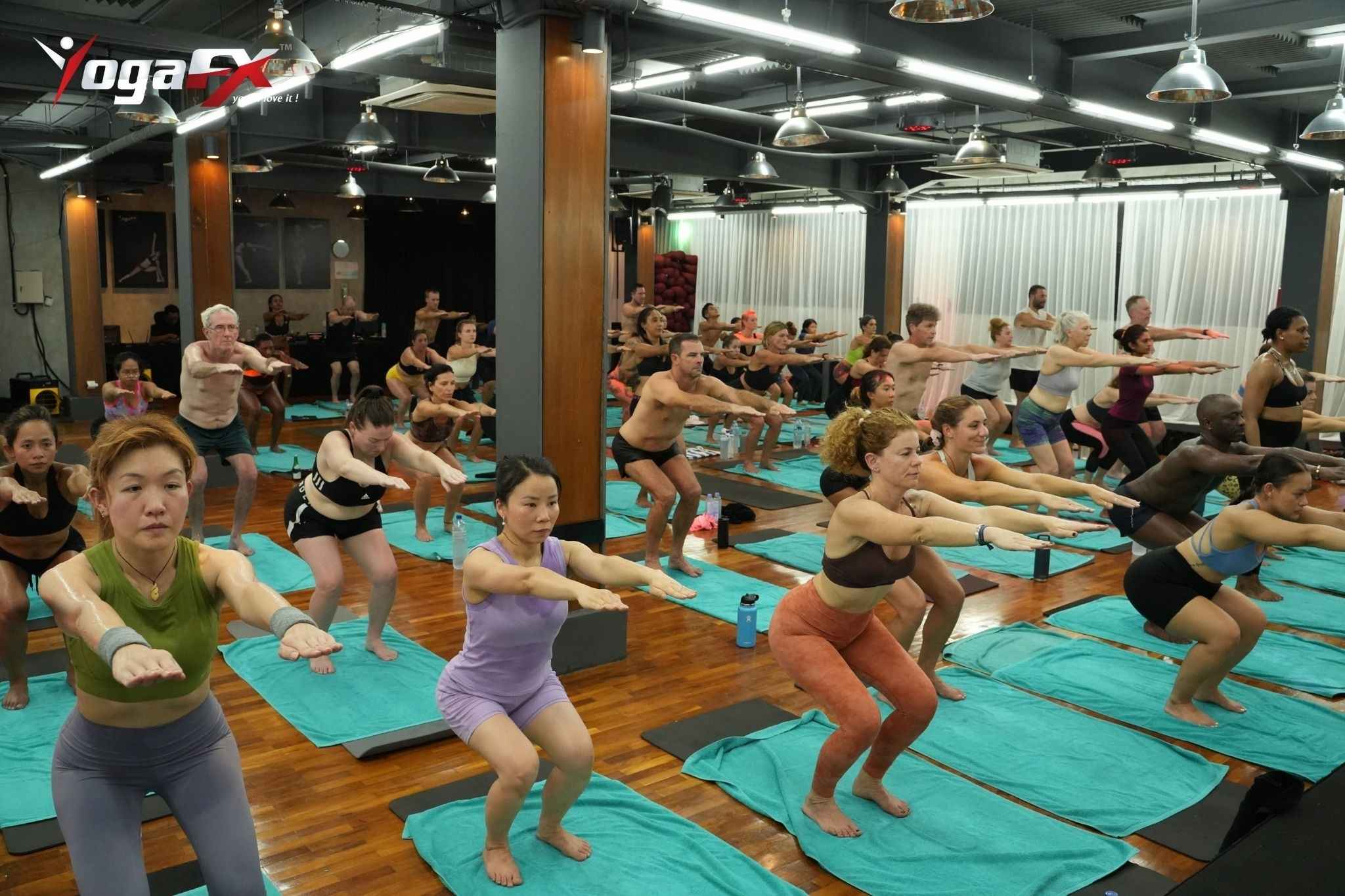
Is hot yoga good for your heart? For most healthy adults, the evidence says yes, in a modest way. A 90-minute 26 and 2 class works the heart at about 72 to 80% of its maximum on average, and blood pressure stays calm while it does. The catch: the heat adds load, so anyone with a heart condition should check first.
Table of Contents
That short answer hides the more useful one. Your heart doesn't do the same thing for 90 minutes. It climbs, peaks, settles and climbs again, and the fixed order of the 26 postures and 2 breathing exercises decides when. So this guide answers the question "is hot yoga good for your heart" stage by stage, from the first breath to the last.
It's written from the teaching room of Mr. Ian Terry, E-RYT 500, who has taught the method for more than 12,000 hours. In a class with no demonstration and no music, the teacher watches every student's breath and colour. That's where the practical advice below comes from.
Is Hot Yoga Good for Your Heart? The Answer in Three Parts
Ask a cardiologist "is hot yoga good for your heart" and you'll probably hear "it depends on your heart". That's fair. The research splits neatly into three questions, and each has a different answer.
- Is it real cardio? Yes. Measured heart rates put a full class in the upper half of the normal exercise range.
- Does it strain blood pressure? Not in healthy, experienced students. Systolic pressure stayed near resting levels in the one study that checked after every posture.
- Does it improve the heart over time? Probably a little, much like other regular exercise. The heat itself may not be the reason.
Put together, that's a cautious yes. It's not a treatment, and it's no replacement for medication. But for a healthy heart, three classes a week is a solid workout that happens to be very hard to skip once you're hooked.
For the full side-by-side of every blood pressure trial on heated yoga, see this graded review of the hot yoga heart and blood pressure trials. Here, we'll stay inside one class.
Heart Rate Across the 26 and 2, Stage by Stage
Here's an honest limit first. No study has logged heart rate posture by posture across a whole class. So the table below combines two things: what researchers measured for the class as a whole, and how the sequence is built. Read it as a map of effort, not a lab readout.
The stage-by-stage heart rate map
| Stage of class | Postures | What your heart is doing | What research measured | What to do |
|---|---|---|---|---|
| Opening breath | Standing Deep Breathing (Pranayama) | Rising gently from rest as the body meets the heat | Heart rate rose 62% over baseline across the session (Miranda Hurtado, 2019) | Breathe slowly through the nose, don't rush the exhale |
| Warm-up | Half Moon, Hands to Feet, Awkward, Eagle | Climbing steadily as the big leg muscles start working | Core temperature rose steadily from the start of class (Quandt, 2015) | Find your pace first |
| Balancing | Standing Head to Knee, Standing Bow, Balancing Stick | The hardest work of class, with short spikes | Peaks reached 92% of maximum in men and 85% in women (Quandt, 2015) | Rest between sets if your breath goes ragged |
| Standing stretches | Separate Leg Stretching, Triangle, Separate Leg Head to Knee, Tree, Toe Stand | Still high, with the heat now doing more of the work | Seven of 20 students passed 103°F core temperature (Quandt, 2015) | Sip water, sit if faint |
| Savasana | Two minutes lying still | Dropping back toward rest | Not measured on its own | Stay still and recover |
| Floor series | Wind Removing to Spine Twist, with Savasana between postures | Rising and falling in short waves | Diastolic pressure fell about 10%, most at the end of class during the floor postures (Miranda Hurtado, 2019) | Roll to your side and come up slowly |
| Closing breath | Blowing in Firm (Kapalbhati) | One last lift, then settling | Not measured on its own | Stay for the final Savasana |
Reading the map
So, is hot yoga good for your heart across the whole class? Notice the shape. Effort builds through the standing series, then the floor series turns into waves of work and rest. That's why the class feels so different in its second half, even though the room is just as hot.
The Standing Series: Where Your Heart Works Hardest
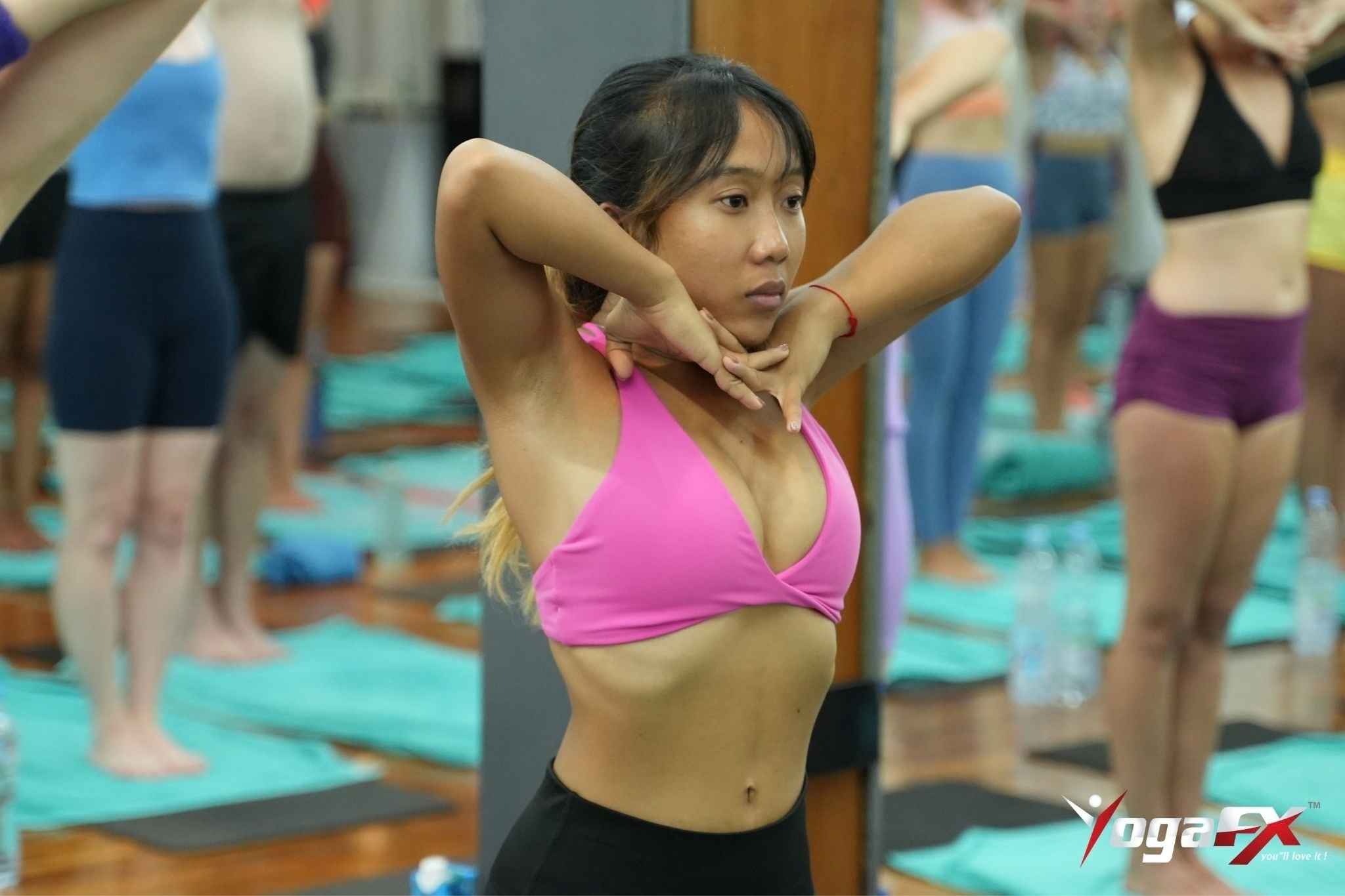
The first half of class is twelve standing parts: one breathing exercise and eleven postures, all on your feet. Standing work uses the biggest muscles in the body. So the heart has to pump more blood to the legs, and more to the skin to shed heat, at the same time.
What the University of Wisconsin study found
Emily Quandt and John Porcari tested 20 regular practitioners, 7 men and 13 women aged 28 to 67, in a 105°F room at 40% humidity. According to the American Council on Exercise report on the study, men averaged about 80% of predicted maximum heart rate and women about 72%.
The peaks were higher: 92% for men and 85% for women. Core temperature climbed all class long. One man reached 104.1°F by the end, and nobody showed signs of heat illness. Even so, the authors flagged that core temperatures started reaching risky levels around the 60-minute mark.
Why the balancing postures feel like intervals
Standing Head to Knee, Standing Bow and Balancing Stick ask you to hold one locked leg while the rest of the body stretches or kicks. They're short, but they're intense. Many students feel their pulse in their ears during Balancing Stick, which lasts only about ten seconds.
That spike is normal for a healthy heart. It's also the moment teachers watch most closely. If your breath turns into gasping through the mouth, come out, stand still and wait for the next set. Skipping one set costs you nothing.
Savasana and the Floor Series: Built-In Recovery
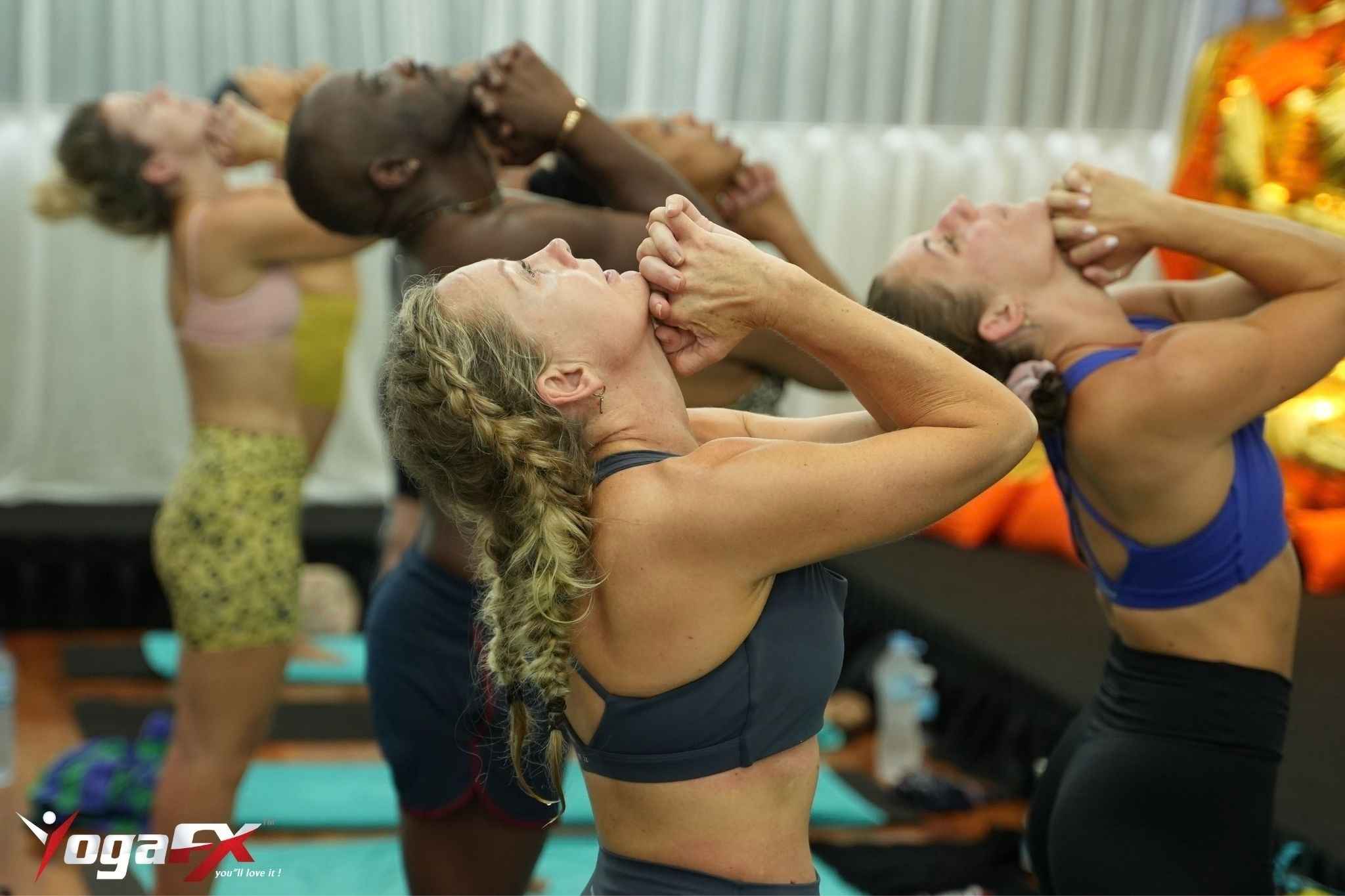
After the standing series comes a two-minute Savasana, lying still on your back. Then the floor series begins, and every posture is followed by a short Savasana. In other words, the second half of class is a set of work and rest intervals, a little like a coach would design.
Hot yoga blood pressure, posture by posture
One study checked this directly. Miranda Hurtado and colleagues in Chile measured 16 healthy women who practised regularly, taking blood pressure straight after each posture. Their pilot trial abstract reports a mean heart rate of 126.6 beats per minute and a peak of 168.1.
The surprise was blood pressure. Systolic pressure, the top number, never rose significantly above resting levels. Diastolic pressure, the bottom number, actually fell by about 10% for most of the class. The drop was clearest near the end, during the floor postures.
Why would pressure fall while the heart works? Heat widens the blood vessels near the skin, so blood flows out with less resistance. That's reassuring for a healthy heart. However, it also explains why some beginners feel dizzy when they stand up fast from the floor.
- Roll to one side before you sit up from Savasana.
- Pause on your knees before Camel and before standing at the end.
- Stay down if the room spins, then rejoin at the next posture.
The recovery is not padding. Students who use Savasana to fidget, wipe sweat or reach for water often struggle in the last 20 minutes. Lying still lets the heart rate come back down, so the next posture starts from a lower base.
The Numbers Behind the Heart Question
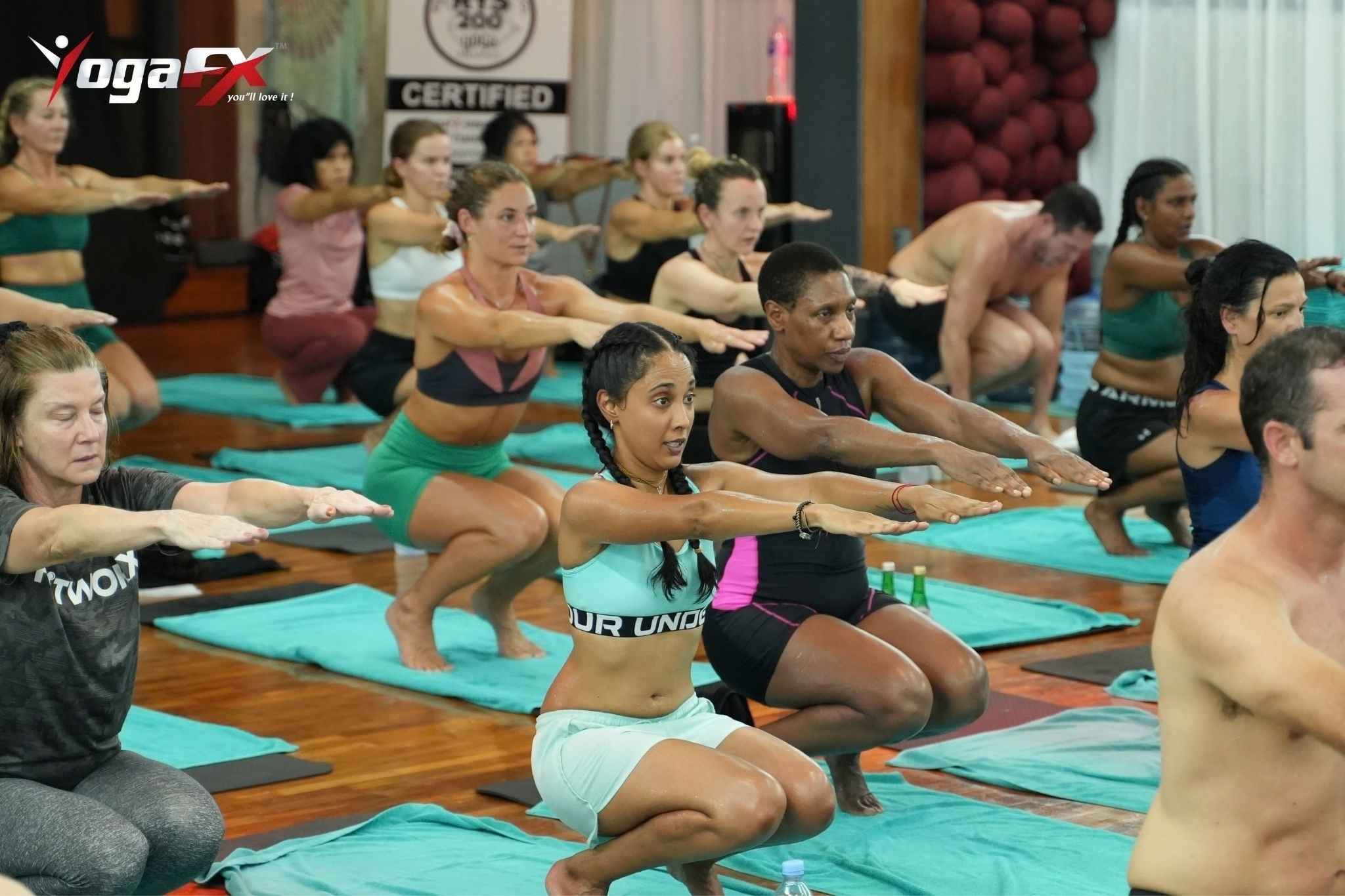
If you only want the figures, here they are. Each card comes from a study or medical source we opened and checked.
50 to 85%
Normal exercise target
Share of maximum heart rate most adults aim for (Johns Hopkins Medicine).
80% / 72%
Class average, men / women
Share of predicted maximum across 90 minutes (Quandt, 2015).
92% / 85%
Class peak, men / women
The short spikes, not the whole class (Quandt, 2015).
168 bpm
Peak heart rate
In 16 experienced women, with a mean of about 127 (Miranda Hurtado, 2019).
About 10%
Fall in diastolic pressure
Clearest during the floor postures, while systolic stayed near rest (Miranda Hurtado, 2019).
10 to 14 days
To get used to the heat
Typical acclimatisation time for healthy people (American Council on Exercise).
Is hot yoga good for your heart as cardio?
Johns Hopkins Medicine's guide to target heart rate puts the usual exercise range at 50 to 85% of your maximum. You estimate that maximum by taking your age from 220. For a 50-year-old, that's 170 beats per minute, so the target range runs from about 85 to 145.
So a class averaging 72 to 80% sits near the top of that range for the full 90 minutes. That's why a separate University of Wisconsin study by Porcari and colleagues (2014) measured about 460 calories per class for men and 333 for women. It's real work, even though you never leave your mat.
Does Regular Practice Change the Heart Over Time?
One class shows the load. The bigger version of the question, is hot yoga good for your heart over months, needs longer studies. Here the evidence is thinner, but it points the same way as most exercise research.
The Bikram Yoga Heart Study at the University of Texas ran 12 weeks of classes, three a week. It compared a 40°C room, a room-temperature class and a control group. As The Physiological Society summarised it, the yoga may help the lining of the blood vessels, and the benefit appeared at room temperature too.
That finding matters when you ask is hot yoga good for your heart, or simply good exercise. The postures and the regular practice seem to do much of the heart work. The heat raises the effort and the sweat, but it may not be what improves the arteries.
Yoga in general has a wider base. A review in the European Journal of Preventive Cardiology, covered by Harvard Health Publishing, found yoga may cut heart risk factors about as much as brisk walking. Blood pressure fell about 5 points and LDL cholesterol about 12 points on average.
For the wider evidence on flexibility, strength and mood, read our honest guide to 26 and 2 yoga benefits and their limits. And if you want to know how much practice it takes, our 26 and 2 frequency guide by goal sets out weekly targets.
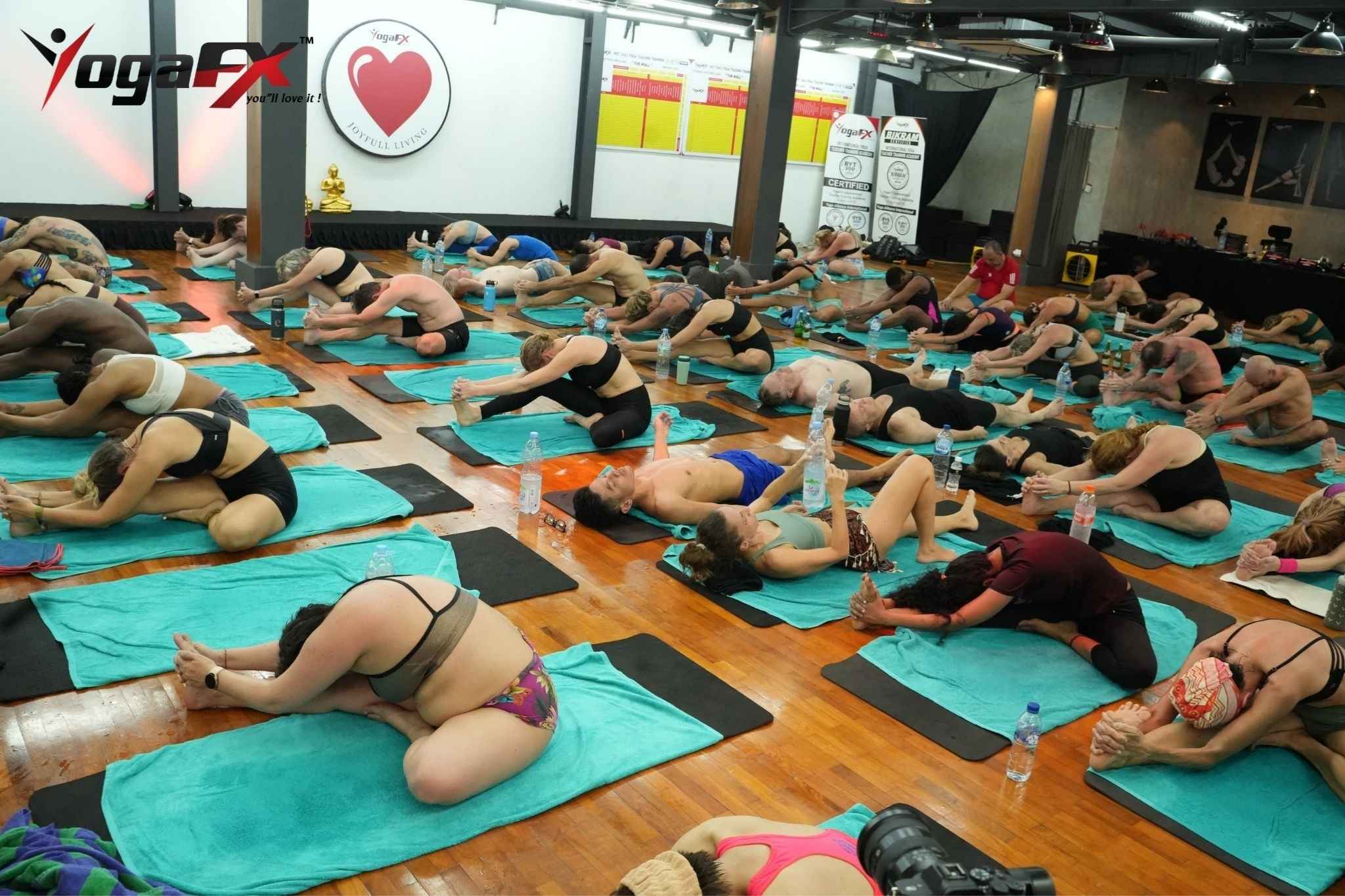
Is Hot Yoga Bad for Your Heart? Who Should Check First
Flip the question and you get the one people type at 2am: is hot yoga bad for your heart? For a healthy heart, no. But a class near the top of the exercise range, in 40°C heat, is not a gentle stretch. If your heart is already under strain, the same class becomes a bigger ask.
Talk to your doctor before your first class if any of these apply:
- A diagnosed heart condition, including a past heart attack, an irregular heartbeat or a valve problem.
- Blood pressure that isn't under control, high or low. The dip in diastolic pressure can tip low readings into dizziness.
- Heart or blood pressure medication. Some drugs change how your heart responds to effort and heat, so your usual sense of "too hard" may not work.
- A history of fainting or heat illness, because past episodes are a warning sign for the next one.
- Pregnancy, which needs its own conversation with your doctor or midwife.
During class, stop and lie down if you feel chest pain, a racing or irregular heartbeat, confusion, a severe headache, nausea or cramps. Chest pain needs urgent medical help, so call emergency services rather than waiting it out.
Medical note: this article is general information, not medical advice. Never change medication because of a yoga class. If you have any heart or blood pressure condition, consult a healthcare professional before you start heated practice.
Your first two weeks, if you get the all-clear
Healthy people usually need 10 to 14 days to adapt to heat, according to the ACE report. So treat your first few classes as practice at being in the room, not as a test.
- Tell the teacher about your heart or blood pressure before class starts.
- Take a spot near the door, where the air is a little cooler.
- Drink through the day before class, then sip during it rather than gulping.
- Do one set of the balancing postures at first, and rest through the second.
- Stay for the final Savasana, because leaving early skips the recovery.
If the heat feels like the hardest part, you're right. Our guide on why 26 and 2 yoga feels hard and when it gets easier explains what changes over your first ten classes.
Bikram Yoga and Blood Pressure: Why the Fixed Order Helps
Almost every heart study on heated yoga used the same 26 postures and 2 breathing exercises, often still called Bikram yoga. Today many studios teach it as Original Hot 26&2 Yoga. That matters, because when you ask is hot yoga good for your heart, the research describes the class you'll actually take.
The fixed order helps in a second way. Because the sequence never changes, you know exactly when the hard part comes and when the rest arrives. So you can pace yourself, and you can notice when your own heart responds differently from last week.
- Same peak, same place: the balancing postures always come before the stretches.
- Same recovery, same length: Savasana always follows each floor posture.
- Same words: the dialogue tells you when to come out, so you never guess.
For the full logic of that order, read why every posture in the 26 and 2 sequence comes in this exact order.
What Our Students Say About the Room
Research measures heart rate. Students describe what it's like to keep coming back. Pete, a practitioner of more than a decade, trained with us in Bali:
"I have practised for over 10 years and this was truly one of the highlights of my journey thus far. It is a genuine life experience."
Pete, Google review, 2026
If you're asking is hot yoga good for your heart over the long run, ten years of steady practice is exactly the habit the research rewards. Not everyone starts that confident, though. Xuan arrived worried and left as a teacher:
"I came in nervous and leaving certified and confident."
Xuan, Google review, 2026
And Jamasb kept it short: "Amazing hot bikram yoga experience! Extraordinary guru Mr Ian and YogaFx team." (Jamasb, Google review, 2026)
Learn to Read the Room With Mr. Ian Terry
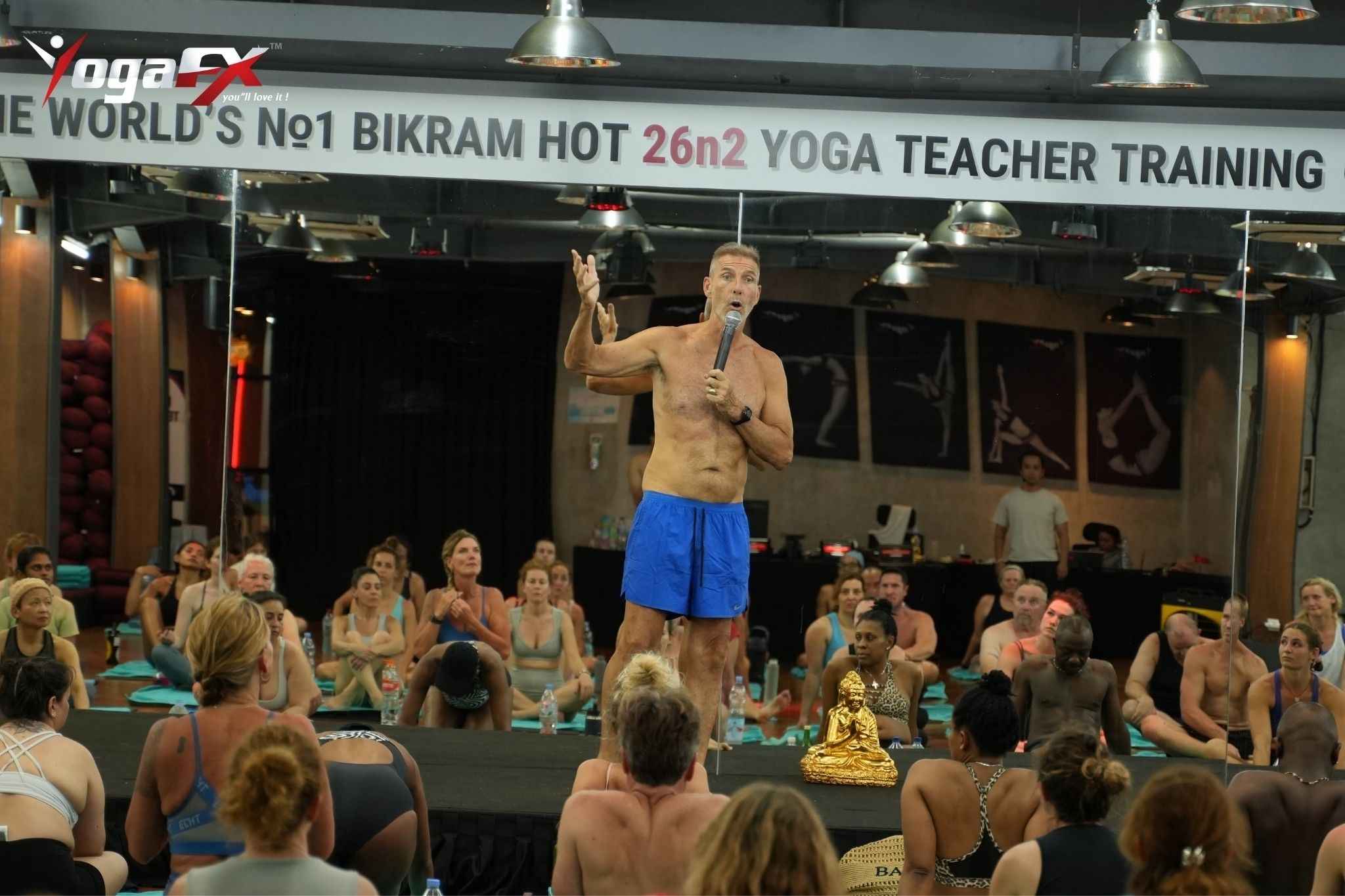
In a 26 and 2 class, the teacher is the only monitor in the room. That's why heat and heart safety is taught as a teaching skill in the YogaFX training, not tucked into a disclaimer.
Trainees learn to spot mouth breathing, a pale face or a student who stops following the dialogue. And because students ask "is hot yoga good for your heart" at the front desk every week, teachers learn to answer it honestly.
- Your teacher: Mr. Ian Terry, E-RYT 500, with 12,000+ teaching hours and 1,500+ graduates from 80+ countries since 2017.
- Lineage: five years, from 2014 to 2019, training with the founder of the method.
- Format: a 6-day hybrid, with online study first, then an intensive in Seminyak, Bali.
The Bikram Hot 26&2 Yoga Teacher Training MasterClass next checks in on Sunday 24 January 2027 and checks out on Friday 29 January 2027, at Soham Wellness Center in Seminyak. Graduates earn a Yoga Alliance RYT 200-Hour and a Bikram Hot 26&2 200-Hour International Yoga Certification.
The Early Bird price is US$1,899, against a normal US$1,999, with interest-free plans from US$250 a month. See the 26 and 2 yoga teacher training page for what's included.
FAQ
Does hot yoga increase blood pressure?
Not in healthy, experienced students, based on current research. A 2019 pilot measured blood pressure after every posture and found systolic pressure stayed near resting levels, while diastolic pressure fell about 10%. The heat widens blood vessels, which offsets the rise you'd expect from effort. People with blood pressure conditions should still ask their doctor first.
Can you do hot yoga with low blood pressure?
Only after checking with your doctor. Heat can lower diastolic pressure further, so people with low readings may feel dizzy, especially when standing up from the floor series. If you're cleared, roll to your side before sitting up, rise slowly, drink through the day and lie down whenever the room starts to spin.
Is hot yoga good for cardiovascular health?
For healthy adults, probably, in the same way other regular exercise is. A class averages 72 to 80% of maximum heart rate, near the top of the normal exercise range. A 12-week trial suggested benefits for the blood vessel lining, and those benefits also appeared at room temperature. It's not a treatment for heart disease.
Does Bikram yoga lower blood pressure?
It may, a little, over months of regular practice. Reviews of yoga in general report average drops of about 5 points in blood pressure, similar to brisk walking. Trials using the 26 and 2 sequence are small, so the effect is not proven. Never reduce or stop blood pressure medication because of a yoga class.
How many times a week should you do hot yoga?
Three classes a week for 12 weeks is the dose the Bikram Yoga Heart Study tested. Beginners do better with one or two classes while the body adapts, which typically takes 10 to 14 days. After that, steady weekly practice matters more for your heart than one very hard session.
Still have questions? Message Mr. Ian and the YogaFX team on WhatsApp and we'll answer them personally. Please consult a healthcare professional about your own heart health.