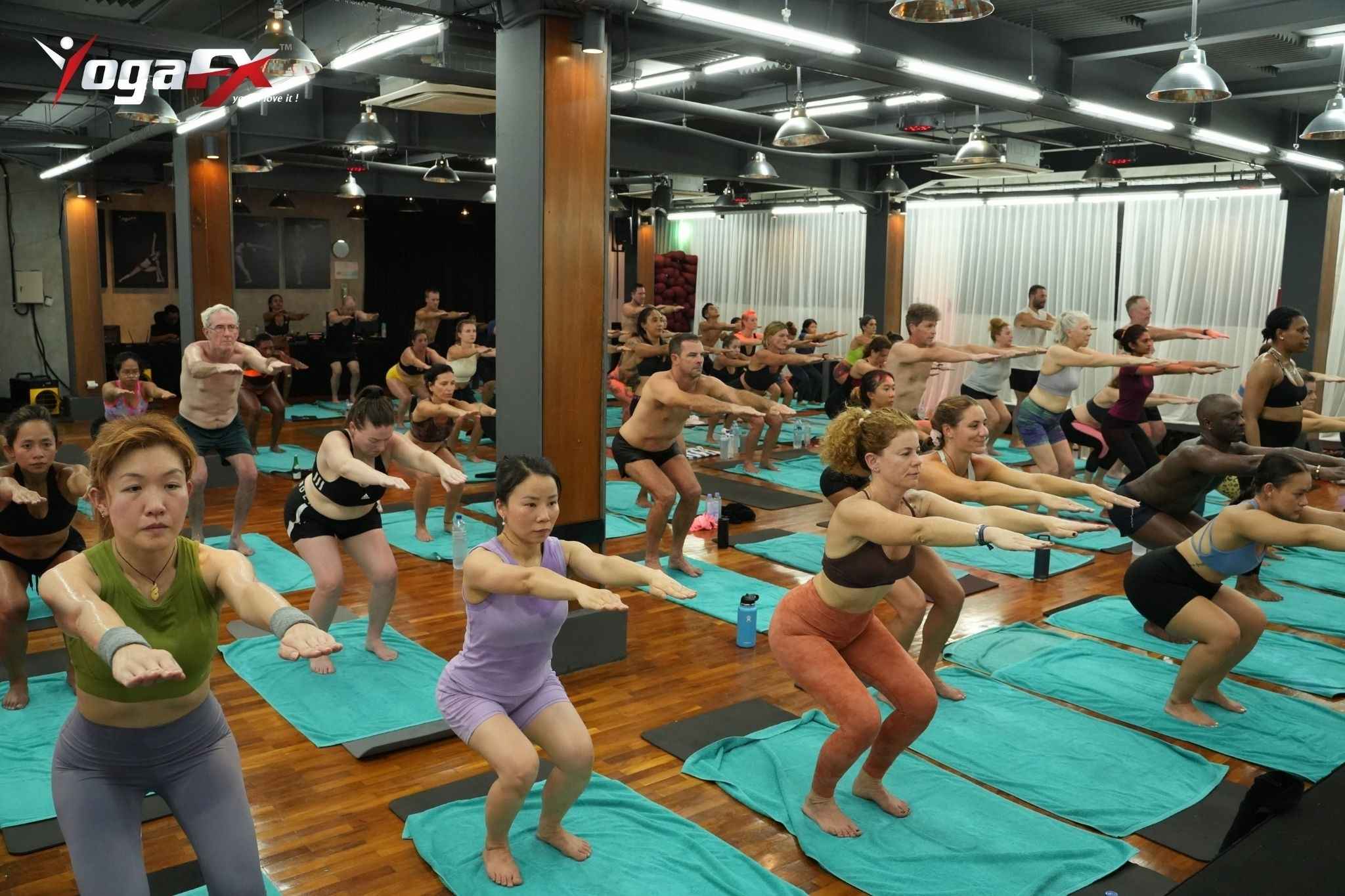
26 and 2 is a fixed sequence of 26 postures and 2 breathing exercises, practised for 90 minutes in a room heated to about 40°C (105°F) with 40% humidity and taught by dialogue without music. Vinyasa is a flowing, breath-linked style where every class is different. Power yoga is a faster, strength-focused offshoot of vinyasa. Choose 26 and 2 for consistency and measurable progress, vinyasa for variety, and power for muscular strength.
That is the one-paragraph answer. In practice the choice is messier, because most studio timetables now list all three, often with "hot" in front of at least two of them. A 60-minute hot power class and a 90-minute 26 and 2 class can sit side by side on the same evening, at the same studio, and feel nothing alike.
This comparison draws on the perspective of Mr. Ian Terry, E-RYT 500, founder of YogaFX, who has taught more than 12,000 hours of 26 and 2 and trains teachers from every background, including many who arrive from vinyasa and power studios. The aim is not to crown a winner. Each style does something well, and the right one depends on what you want from your time on the mat.
26 and 2 vs Vinyasa vs Power: The Quick Comparison
| 26 and 2 | Vinyasa | Power | |
|---|---|---|---|
| Sequence | Identical every class | Changes every class | Changes every class |
| Length | 90 minutes (some studios offer 60 or 75) | Usually 45 to 75 minutes | Usually 45 to 60 minutes |
| Room | About 40°C and 40% humidity | Room temperature, unless labelled "hot" | Room temperature, unless labelled "hot" |
| Instruction | Scripted dialogue, no demonstration | Teacher cues and demonstrates | Teacher cues and demonstrates |
| Music | None | Usually | Usually, often upbeat |
| Pace | Hold, release, rest between floor postures | Continuous flow linked to breath | Fast, vigorous, with longer strength holds |
| Main emphasis | Flexibility, balance, spinal strength, focus | Mobility, coordination, moving meditation | Upper-body and core strength, endurance |
| Best for | People who love consistency and tracking progress | People who want variety and creative flow | People who want an athletic workout |
26 and 2: The Same Class, Every Time
What it is
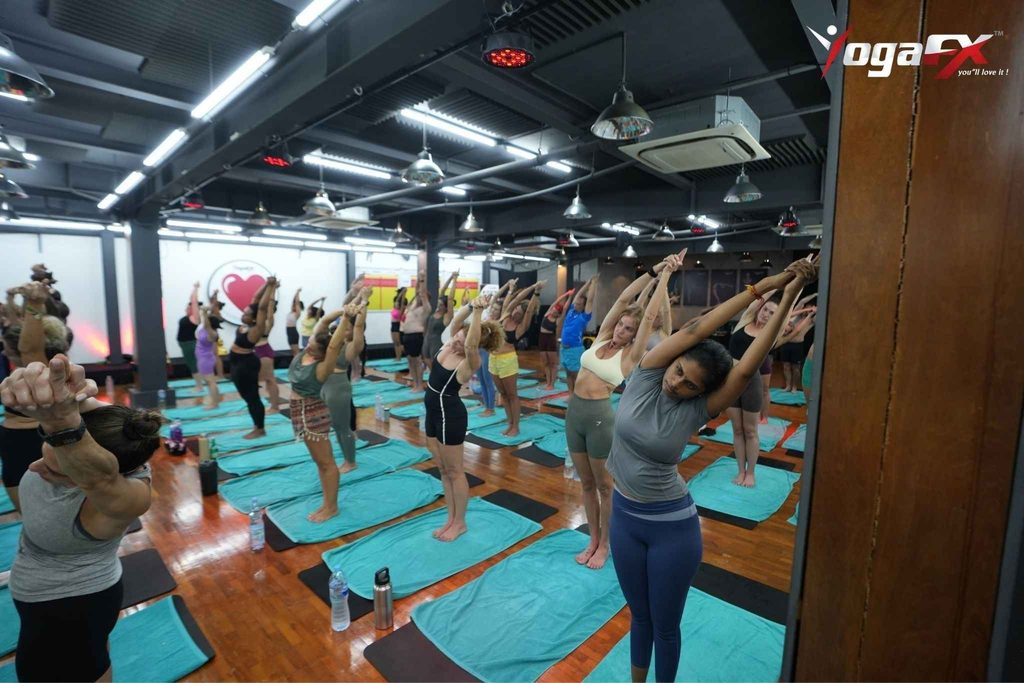
A strict, repetitive set of 26 postures and 2 breathing exercises practised in a heated room of roughly 40°C (105°F) with about 40% humidity. It is the original hot yoga method, now often taught as "26 and 2", "Hot 26" or "Original Hot Yoga". Our guide to what 26 and 2 yoga is covers the background in full.
Structure
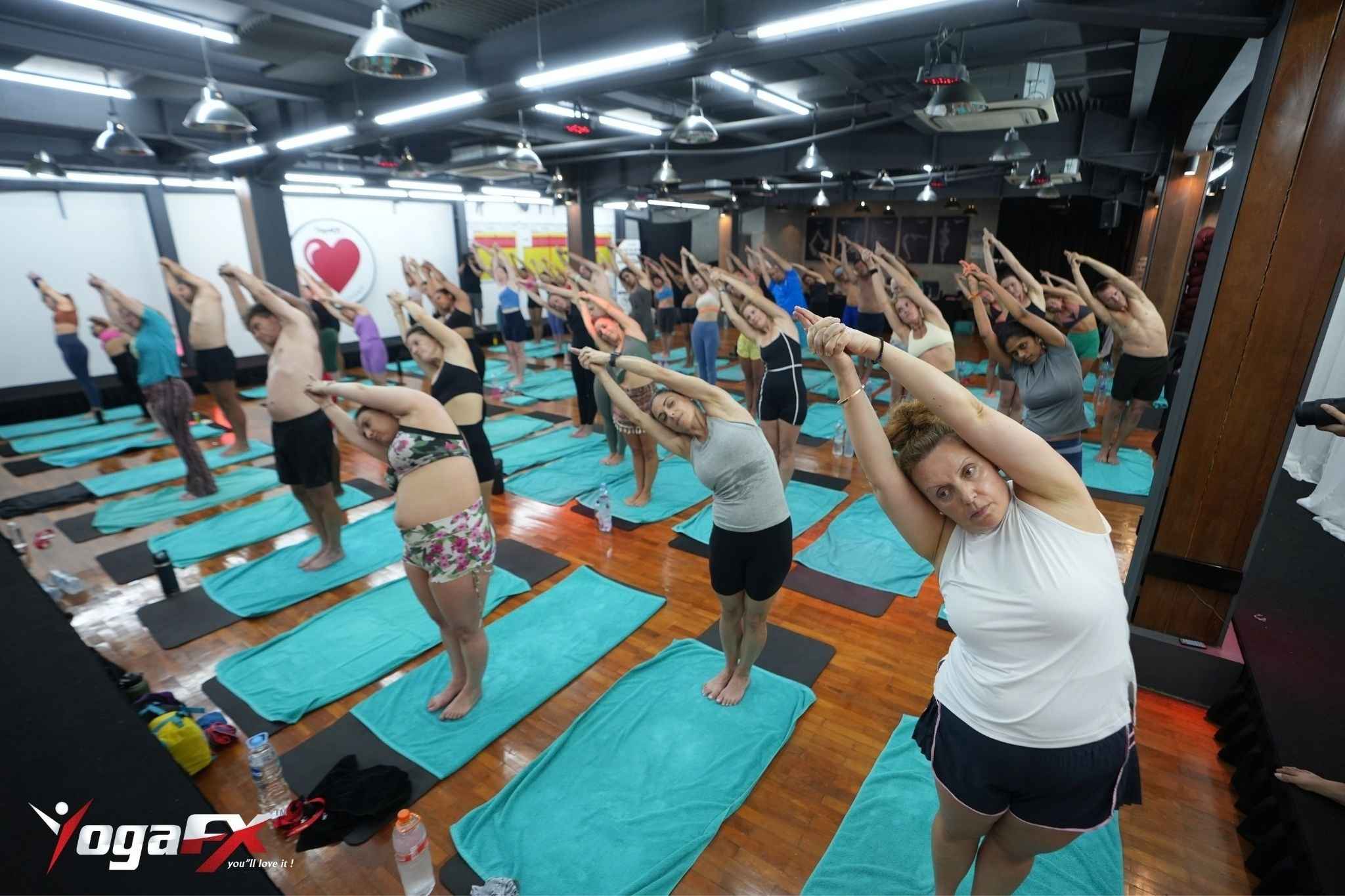
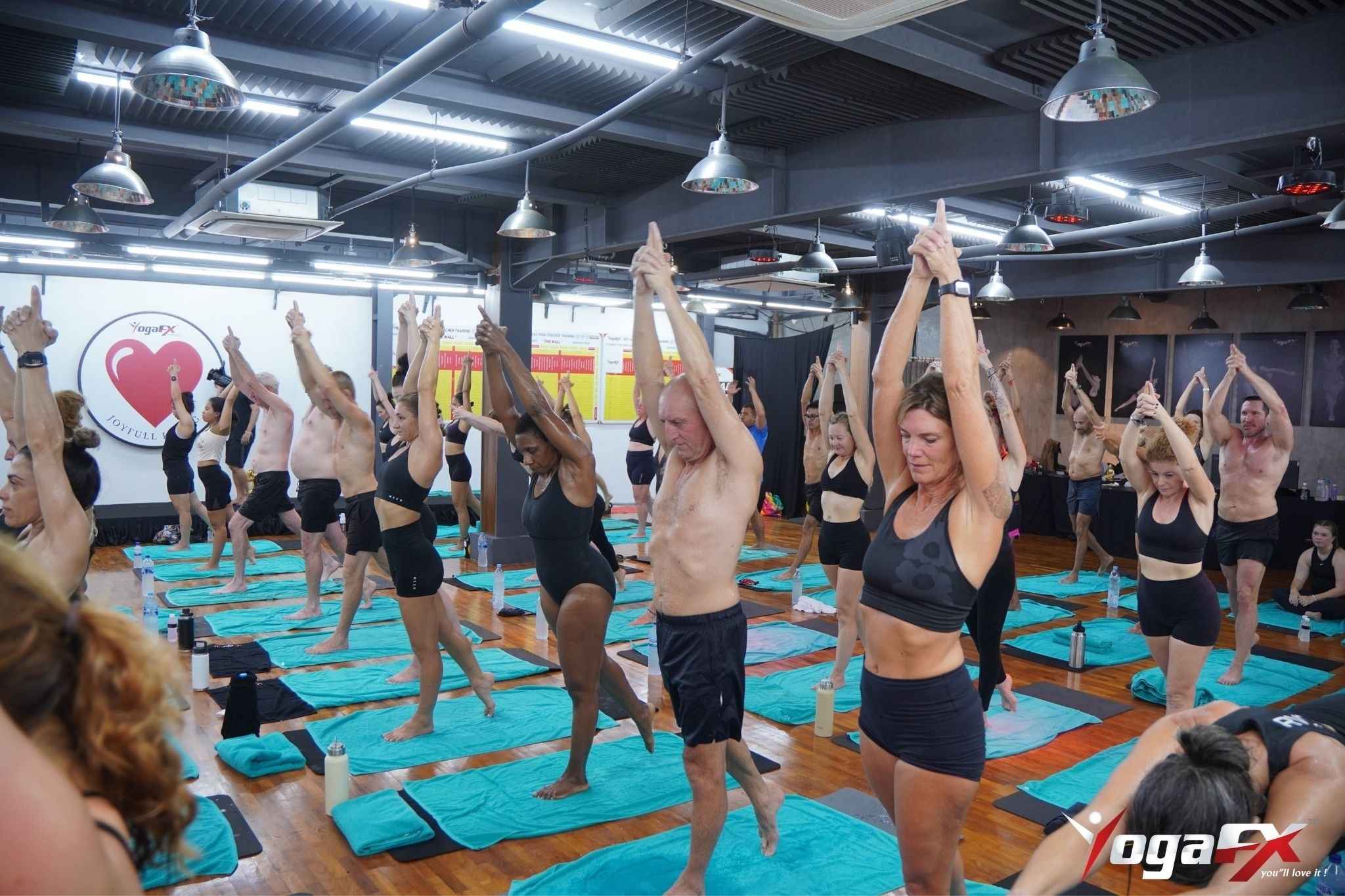
The exact same sequence runs every single time, usually for 90 minutes: Standing Deep Breathing, eleven standing postures, a short Savasana, twelve floor postures and Blowing in Firm. Almost every posture is done in two sets. The teacher guides by voice, using a precise dialogue, and there is no music. The order is deliberate, and our article on why the 26 and 2 sequence runs in this order explains the logic.
Best for
People who love consistency, want a deep sweat and prefer a predictable routine that lets them track progress in specific postures. Because nothing changes but you, the class works like a mirror. If your Standing Bow is deeper this month than last, you know it, and so does your teacher.
Vinyasa: Breath-Linked Flow
What it is
A dynamic, fluid style that links continuous movement with the breath. Postures flow into one another rather than being held and released, so the class feels more like a moving sequence than a series of separate shapes.
Structure
Highly creative and variable, so no two classes are alike. Each teacher designs their own transitions, often built around the plank, chaturanga and upward dog sequence that repeats between standing postures. Music is common, and classes typically run 45 to 75 minutes at room temperature.
Best for
People who get bored easily, enjoy a dance-like or athletic flow, and want a creative, moving meditation. The trade-off is that quality and coverage depend heavily on the individual teacher. One week you might work hips thoroughly, the next week barely at all, which makes it harder to measure your own progress.
Power Yoga: Vinyasa Built for Strength
What it is
An athletic, fitness-based offshoot of vinyasa that builds intense internal heat, muscular strength and endurance. The "heat" in power yoga traditionally comes from effort, not from the room, which is a point many first-timers miss.
Structure
Fast-paced and vigorous, often with longer holds, push-ups, planks and more advanced core work than a standard vinyasa class. Expect a lot of time weight-bearing on the hands, which builds upper-body strength but also loads the wrists and shoulders.
Best for
Fitness enthusiasts, athletes, or anyone wanting a hard workout focused on physical strength. If you come from the gym and want yoga that feels like training, power is usually the easiest door in.
Hot Vinyasa and Hot Power vs 26 and 2
Here is where most of the confusion comes from. Many studios now heat their vinyasa and power classes too, then list them next to 26 and 2 under one "hot yoga" banner. They are still different classes, and the differences are bigger than the shared word suggests.
| 26 and 2 | Hot vinyasa / hot flow | Hot power | |
|---|---|---|---|
| Typical room | About 40°C, 40% humidity | Often around 32 to 38°C, humidity varies | Often around 32 to 38°C, humidity varies |
| Length | 90 minutes | 45 to 60 minutes | 45 to 60 minutes |
| Sequence | Fixed | Changes every class | Changes every class |
| Instruction | Dialogue, no music | Cues and demonstration, usually music | Cues and demonstration, usually upbeat music |
| How the heat feels | Hottest and most humid; you rest between floor postures | Warm; you keep moving | Warm plus high effort; heart rate stays high |
The quickest way to tell them apart on a timetable is to check three things: class length, whether the description mentions music, and whether it promises "the same 26 postures" or "a creative flow". If you want the full decoder for studio class names, see our guide to Hot 26, Hot Hatha, Bikram and Hot Flow.
One practical consequence: heated flow puts more load on wrists and shoulders in a sweaty, slippery state, because so much of the class is spent on the hands. 26 and 2 has almost no weight-bearing on the hands, which is one reason students with wrist issues often find it easier to sustain.
Which Is Harder?
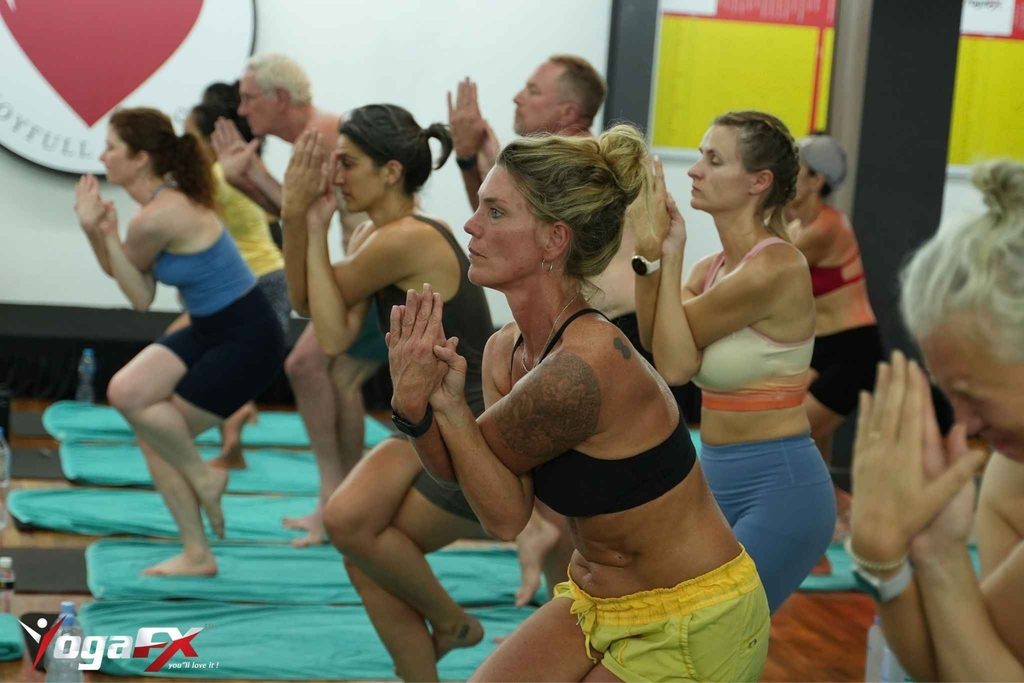
All three are hard. They are hard in different ways, and which one feels hardest depends on where your body is weakest.
- 26 and 2 is hard because of heat and duration. Ninety minutes at around 40°C is a cardiovascular challenge. A 2014 University of Wisconsin-La Crosse study (Porcari et al.) recorded heart rates averaging around 80% of maximum across a full class. The postures themselves have beginner versions.
- Power is hard on muscles. Repeated chaturangas, long planks and arm balances demand upper-body and core strength that many beginners do not have yet.
- Vinyasa is hard on coordination. Keeping up with transitions while linking breath to movement takes practice, especially in a fast class.
Strong but stiff gym-goers usually find 26 and 2 harder. Flexible dancers often find power harder. For a detailed look at the 26 and 2 side, read our honest guide to how hard 26 and 2 yoga really is.
Which Is Best for Weight Loss, Strength and Flexibility?
It depends on the goal, so it helps to split the question up.
| Goal | Strongest choice | Why |
|---|---|---|
| Flexibility | 26 and 2 | Long holds in a warm room, two sets of each posture, and a sequence that works the spine in every direction |
| Upper-body strength | Power | Repeated push-up and plank patterns that 26 and 2 does not include |
| Lower back and leg strength, balance | 26 and 2 | Standing balancing series and floor backbends target the posterior chain |
| Calorie burn | Depends on pace and length | A fast 60-minute power class and a 90-minute 26 and 2 class can land in a similar range |
| Variety and coordination | Vinyasa | New transitions every class |
On the evidence side, 26 and 2 has been studied more directly than most styles because its fixed format makes it easy to standardise. The Porcari study measured an average of about 330 calories for women and 460 for men per 90-minute class, similar to a brisk walk of the same length. The 2013 Tracy and Hart study found eight weeks of regular classes improved lower back strength, hamstring flexibility and balance. A 2025 systematic review (Willmott et al.) pooling 43 studies and 942 participants reported consistent gains in flexibility and well-being. Comparable data for vinyasa and power varies so much with the teacher and pace that a single number would be misleading. For the full breakdown, see how many calories 26 and 2 burns.
For weight loss in particular, the honest answer is that the class you will keep doing three or four times a week beats the class that burns slightly more but that you skip. Most of the weight lost straight after a hot class is water, which comes back when you rehydrate.
What Practitioners Actually Say
Community threads comparing these styles come back to the same handful of points, and each deserves a straight answer.
- "26 and 2 is boring because it never changes." For some people, it will be. For others, repetition is the point: with nothing new to learn, attention moves inward, and the class becomes a measure of your own progress rather than a performance of new moves.
- "I miss the music." Fair. The silence exists so the dialogue can be heard and so the mind has nowhere to escape to. Many students find it uncomfortable for a few weeks and then cannot practise any other way.
- "My wrists hurt in power classes." Common, especially in heated flow. If that is you, 26 and 2's low hand-loading may suit you better.
- "The heat scares me." Reasonable. Start by resting as often as you need, and know that most students adapt over the first few classes. Anyone with heart, blood pressure or heat-related conditions, or who is pregnant, should consult a healthcare professional first.
Can You Do Both?
Yes, and many experienced practitioners do. 26 and 2 does not train pushing strength in the arms and chest, and power yoga does not offer the same long, heated holds for flexibility and balance. Combining them covers gaps on both sides.
A balanced week for someone who wants the best of both might look like this: three 26 and 2 classes as the foundation, one power or vinyasa class for upper-body strength and variety, and at least one full rest day. Avoid stacking a hot power class and a 26 and 2 class on the same day until you know how your body handles the heat.
How Mr. Ian Terry Sees It, and Practising 26 and 2 in Bali
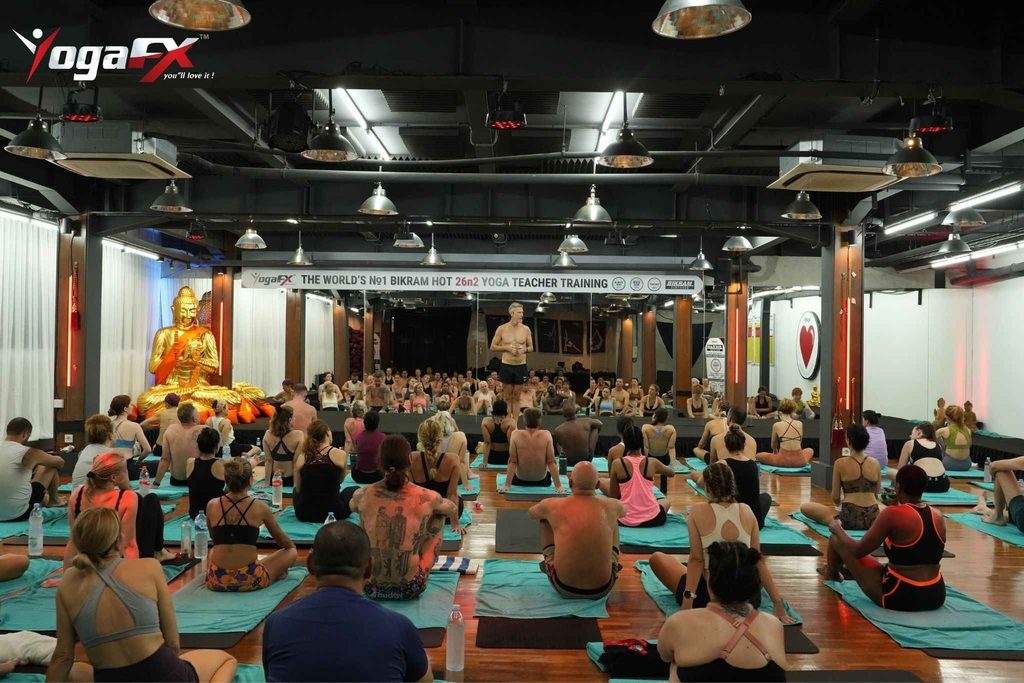
Mr. Ian Terry trained directly at five teacher training events between 2012 and 2019 and has since certified more than 1,500 teachers from over 80 countries. A large share of them arrived from vinyasa, power or general hatha backgrounds. His observation is consistent: students who come from flow styles are usually stronger in the arms and quicker on their feet, but they are often surprised by how much the fixed sequence exposes about their balance, breath and patience. The sequence does not change, so there is nowhere to hide, and that is exactly why progress becomes visible.
At YogaFX in Bali, 26 and 2 is taught daily from 06:00 to 22:00 at studios in Seminyak and Canggu, in rooms that reach about 40°C and 40% humidity through the island's natural tropical heat rather than electric heaters. If you are a vinyasa or power student curious about the difference, the simplest experiment is to try one full class. First-time visitors can claim a Free 1-Day Guest Pass through the YogaFX Bali studio site, which also has a Bali-specific comparison of Bikram yoga and vinyasa.
And if you already teach vinyasa or power, adding 26 and 2 to your skills lets you teach in dedicated hot yoga studios as well. YogaFX graduates leave with dual certification, Yoga Alliance RYT 200 and Bikram Hot 26&2. Take the 2-minute readiness quiz to see if the training fits you. For a wider view across even more styles, our sister site compares Bikram yoga with vinyasa, ashtanga, hatha, yin and power.
FAQ
Is 26 and 2 better than vinyasa?
Neither is better overall. 26 and 2 suits people who want a consistent, heated 90-minute class that builds flexibility, balance and spinal strength and makes progress easy to track. Vinyasa suits people who want variety and creative, breath-linked flow. The best choice is the style you will practise regularly.
Is 26 and 2 or vinyasa harder?
They are hard in different ways. 26 and 2 is demanding because of the 40°C heat and 90-minute length, with heart rates averaging around 80% of maximum. Vinyasa challenges coordination and pace, while power yoga is hardest on upper-body and core strength. Stiff, strong people usually find 26 and 2 harder.
Is hot vinyasa the same as Bikram or 26 and 2?
No. Hot vinyasa is a flowing class that changes every time, usually 45 to 60 minutes with music, in a room often around 32 to 38°C. 26 and 2 is a fixed sequence of 26 postures and 2 breathing exercises, taught by dialogue without music for 90 minutes at about 40°C.
Which burns more calories, 26 and 2 or power yoga?
It depends on pace and length. Lab research measured about 330 calories for women and 460 for men in a 90-minute 26 and 2 class. A fast, shorter power class can land in a similar range. For weight loss, consistency over weeks matters more than the burn of a single class.
Is power yoga the same as vinyasa?
Power yoga grew out of vinyasa and uses the same flowing structure, but it is faster and more strength-focused, with longer holds, push-ups, planks and advanced core work. Think of power as athletic vinyasa. Neither is usually done in a heated room unless the class is labelled hot.
Can a vinyasa teacher teach 26 and 2?
Not without specific training. 26 and 2 is taught through a precise dialogue, with its own posture corrections and heat management, none of which a general vinyasa certification covers. Many vinyasa and power teachers add a dedicated 26 and 2 training so they can teach in hot yoga studios as well.
This article is for general information and is not medical advice. If you are pregnant, have a heart condition, high or low blood pressure, or any concern about exercising in heat, please consult a healthcare professional before starting hot yoga.