Do you need a license to teach yoga? In most places, no government body issues one to individual teachers, as far as we know. But the 26 and 2 method asks for three skills no law checks: a word-perfect script, hands-on posture correction and care in a 40°C room.
Table of Contents
Mr. Ian Terry, E-RYT 500, trains teachers of the Original Hot 26&2 method in Bali. This guide splits the question into three checks: the law, the employer and the method. It is general information, not legal advice. We read Yoga Alliance's own pages on 11 November 2026 to write it.
Do You Need a License to Teach Yoga? The Short Answer in Three Checks
People type "do you need a license to teach yoga" into Google when they want one clean yes or no. The honest answer has three layers, and each layer has a different gatekeeper. If you only look at one, you can pass it and still struggle in your first class.
- Check 1, the law. Is there a government permit for individual teachers? Mostly no, but local rules about venues, business registration and insurance can apply.
- Check 2, the employer. Will a studio hire you? Most want a training certificate, and many ask for a registry listing or an audition class.
- Check 3, the method. Can you actually teach this class? For 26 and 2, that means the script, the corrections and the heat.
Most articles on "do you need a license to teach yoga" stop after the first two checks. That's fair, because those decide whether you can work. But the third check decides whether students come back, so we spend most of this guide on it.
Where this guide fits
If you want the wider map of paperwork that graduates carry, such as first aid and cover for your classes, read our sister guide to the wider yoga teacher licence checklist. This page stays on the other half of do you need a license to teach yoga: what the 26 and 2 class itself demands of the person at the front.
Check 1: Do You Need a License to Teach Yoga Under the Law?
A yoga teacher license, in the strict sense, would be a permit from a government body. For individual yoga teachers, we found no single permit that applies everywhere. What exists is a patchwork of local rules, and they tend to target places and businesses rather than teachers.
Here is where those rules most often show up:
- Public spaces. A park or a beach is often managed by the city, and paid classes there may need a permit, a fee or insurance.
- Your own business. Running classes under your own name can mean a local business license and tax registration.
- Training schools. Rules about schools that train people for a job sit with education authorities in some countries, so they apply to the school and not to you.
- Premises. A studio you rent may need fire, health or building checks, and the landlord or owner carries those.
So, do you need a license to teach yoga where you live? The practical step is simple. Call your local council or ask an accountant, and ask the studio owner what they hold. A two-minute call beats any blog, including this one, because laws change and differ from town to town.
Yoga Alliance is a registry, not a government
Many people mix up the registry with a license. Yoga Alliance's Meet Yoga Alliance page says it introduced the first voluntary registry for yoga schools and teachers in 1999. It describes itself as a nonprofit 501(c)(6) and reports about 100,000 members across more than 100 countries.
That is a trade body with a credential, so it works differently from a permit. Its training options page invites you to become a credentialed yoga teacher, and it frames each credential as a step toward your own goal. It doesn't say you must hold one to teach. For the full picture, see our guide to Yoga Alliance certification for 26 and 2 teachers.
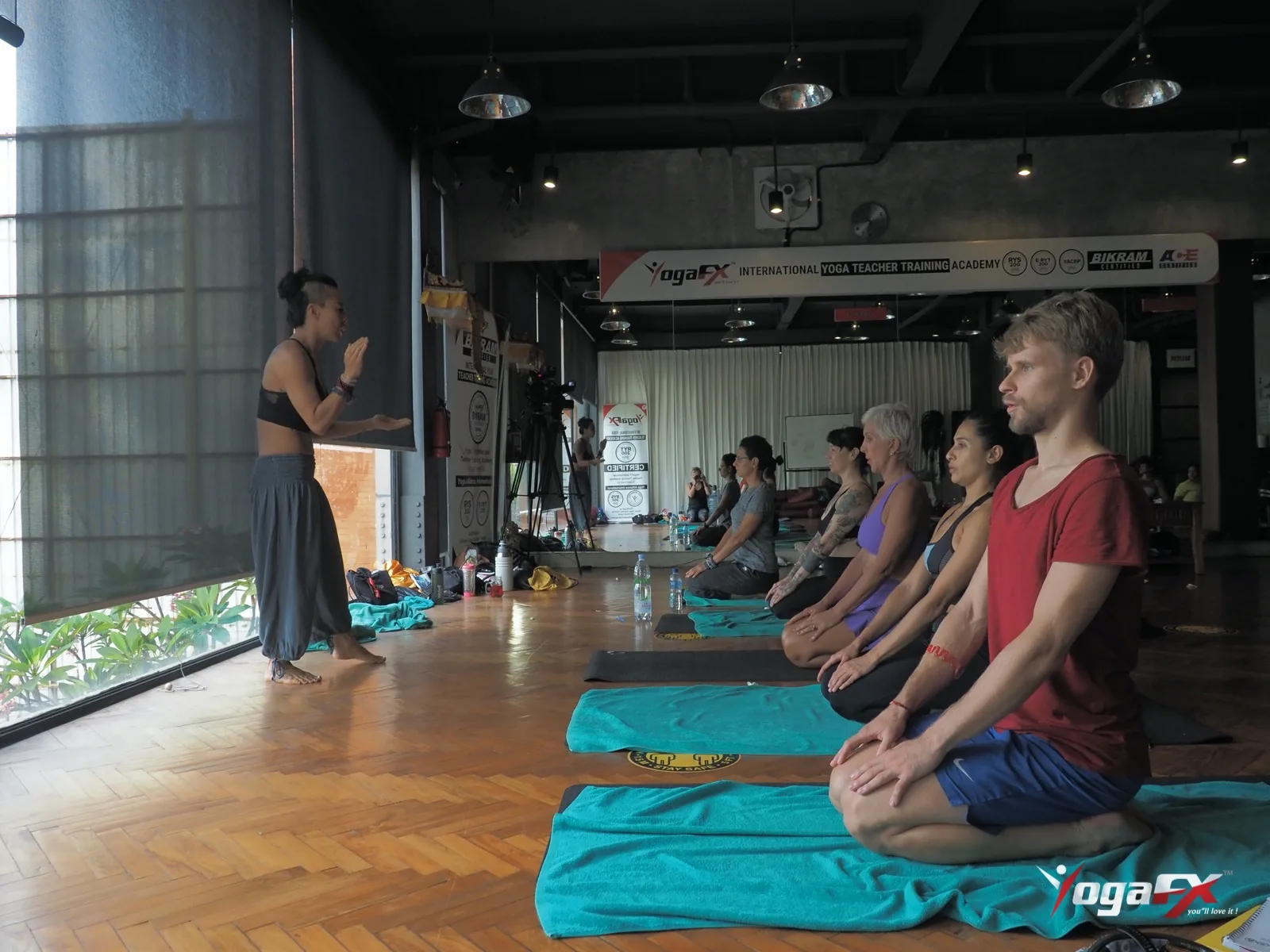
Check 2: What Studios Ask Before They Hire You
Say the law answers no to do you need a license to teach yoga. A studio owner still has to trust you with a full room. They cannot see your skill on paper, so they look for signals. Do yoga teachers need to be certified? Rarely by law, but almost always in practice. Four signals come up again and again.
- A training certificate. It names your school, the hours you studied and the style you trained in.
- A registry listing. Many studios like a quick, checkable credential, which is why most graduates register after a 200-hour course.
- An audition class. You teach part of a class while the manager watches. For a scripted method, this is where mistakes show fast.
- Cover and references. Some studios ask for insurance and one or two names who have seen you teach.
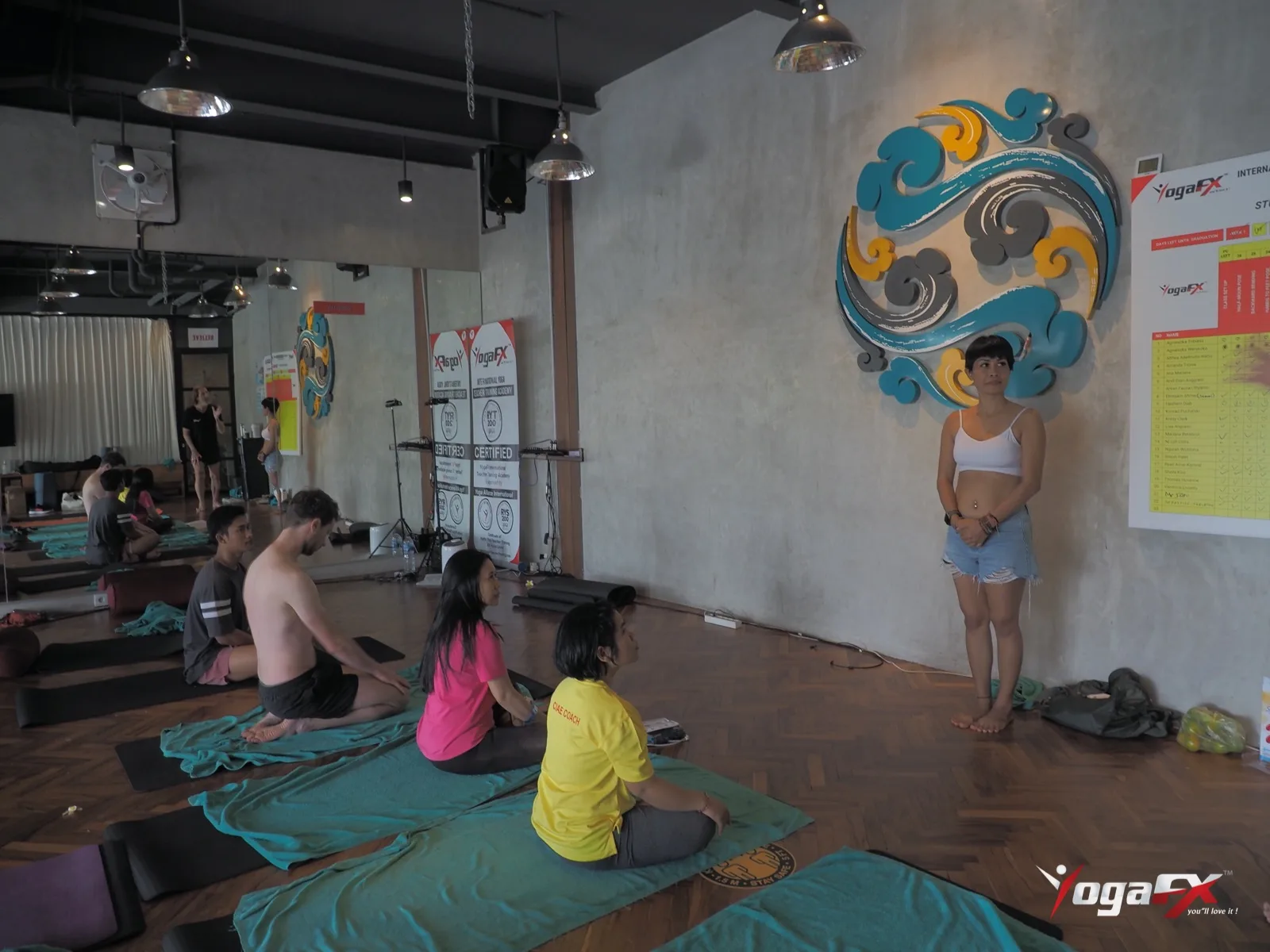
Notice what these signals have in common. Each one tries to answer a single question: will this person run my room safely and well? A certificate answers it in general terms. Only the third check, the method, answers it for the exact class you will teach.
Check 3: What Teaching the 26 and 2 Requires of You
Here is the third answer to "do you need a license to teach yoga": no law asks, but the method does.
The 26 and 2 class is the same every time. It has 26 postures and 2 breathing exercises, and it runs for 90 minutes in a room at about 40°C and 40% humidity. Because nothing changes, the teacher's job is not to invent a class. It's to deliver one precisely.
That makes the method demanding in three specific ways. The figure below sums them up, and the sections after it take each one in turn.
Skill 1: the dialogue, word for word
The dialogue is the script a teacher speaks during class. In a 26 and 2 room the teacher recites it in the same words and the same order, with no demonstration and no music. Students then hear a familiar voice guide them through each posture, and they know what comes next.
So you can't improvise. You memorise the script, then practise its pace, its pauses and its breath. A line delivered too fast loses the room. A pause held too long breaks the rhythm of the posture. Our guide to the 26 and 2 dialogue explains what the script is and why studios keep using it.
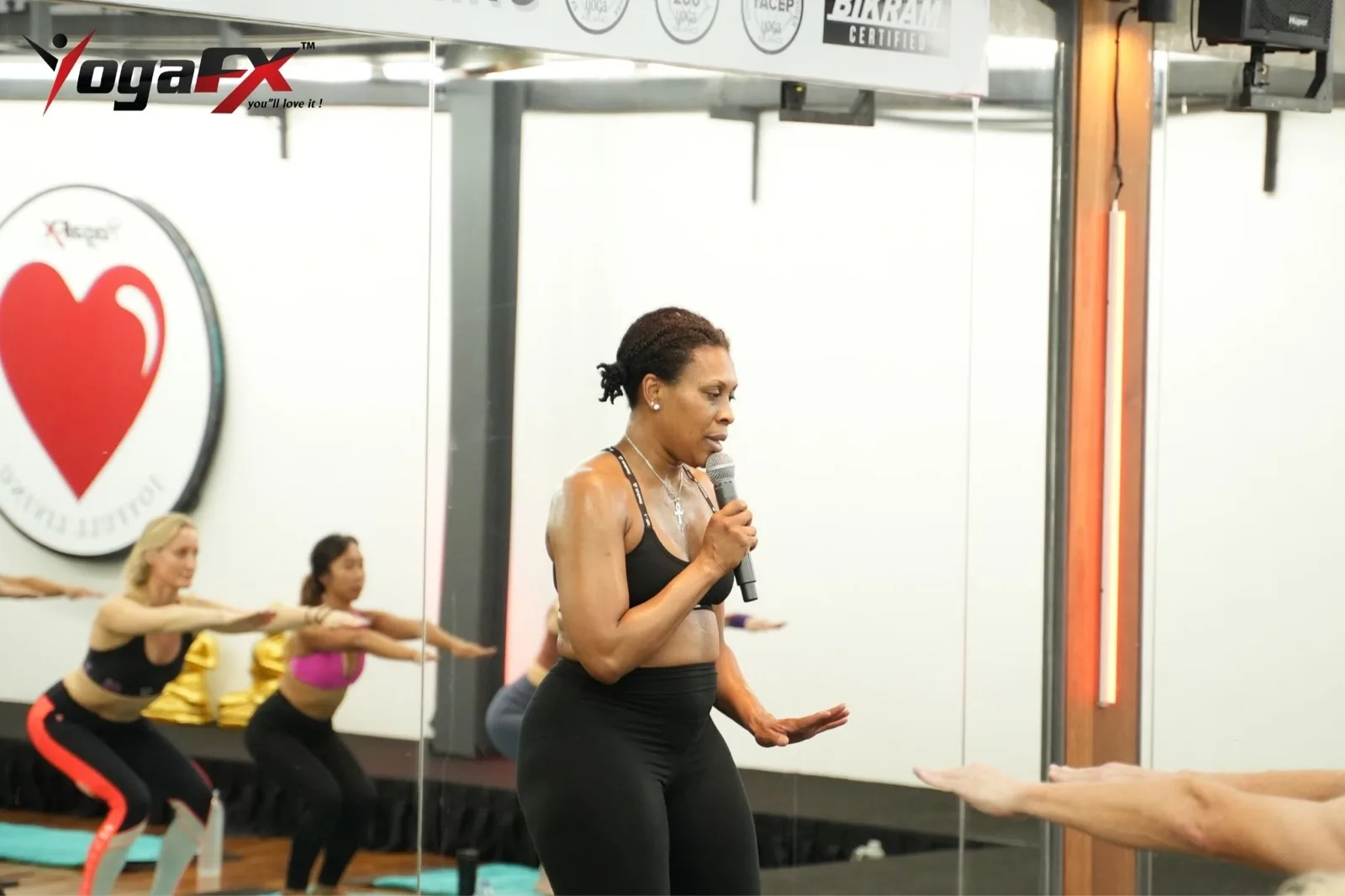
No law tests this. Neither does a general registry, because it sets standards for many styles at once. You build the skill by saying the words aloud, in front of other people, and by getting corrected until the script sounds like a conversation and not a recital.
Skill 2: posture corrections that keep students safe
The second skill is the eye. In a fixed sequence, the same postures return every class, so a trained teacher learns what each one should look like and where students usually go wrong. A knee that drifts, a back that rounds or a neck that strains can all be seen in seconds if you know where to look.
A correction has to be short, kind and clear. Instead of a long explanation, you give one cue that fixes one thing. For example, you might ask a student to lengthen the spine before folding forward. Then you step back and watch whether it worked.
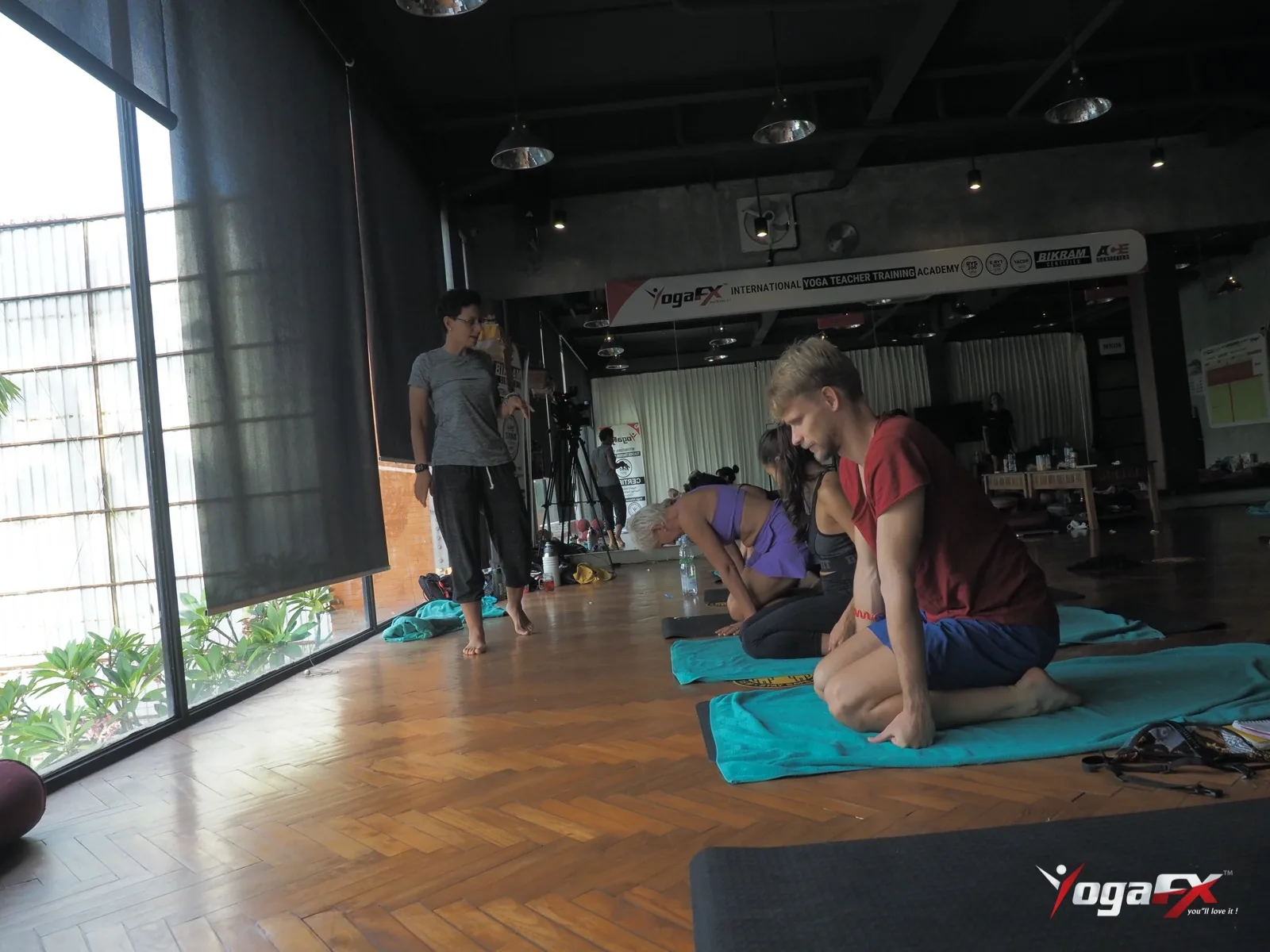
This skill grows only with repetition. That is why our training puts trainees in front of a class early and gives feedback straight away. Teaching someone else's body is different from knowing your own, and a certificate alone cannot show you the gap.
Skill 3: heat awareness in a 40°C room
The third skill is care. A 40°C room is a demanding place to learn, and a teacher has to read it. You watch for students who slow down, stop sweating normally or look unsteady. You set a pace the room can follow and you cue rest at the right moment.
The numbers explain why. A University of Wisconsin study led by Porcari (2014) measured about 333 calories burned by women and 460 by men in a 90-minute class, at roughly 80% of maximum heart rate. As a result, a teacher leads a real workout for everyone in the room, and that raises the stakes for how you pace it.
Heat is also where good intentions can go wrong. Students with a heart condition, pregnancy or regular medication should talk to a healthcare professional before they join a heated class. A teacher who knows this, and who says it kindly, protects both the student and the studio. That care is part of the answer to "do you need a license to teach yoga" in a hot room.
How the three checks compare
Here is the whole picture in one table. Use it to settle "do you need a license to teach yoga" for your own plan, and to see which checks you still need to pass before you teach.
| What is checked | Who sets it | How it is checked | What it protects |
|---|---|---|---|
| Local permits and business rules | City, council or park authority | Applications and fees | Public space and your business |
| Training certificate and registry listing | School, registry and employer | Documents and references | The studio's hiring risk |
| Audition class | Studio manager | One class, watched live | The room on a busy day |
| Dialogue delivery | Your trainer | Practice teaching and feedback | Accuracy and rhythm of the class |
| Posture corrections | Your trainer | Live correction of real students | Student safety |
| Heat awareness | Your trainer | Teaching in a heated hall | Student health in a 40°C room |
How Teacher Training Prepares You for the Method Check
If you want to teach 26 and 2, do you need a license to teach yoga or a method course? Realistically, a method course.
A good one spends most of its time on the third check. At YogaFX we run the Bikram Hot 26&2 Yoga Teacher Training MasterClass as a hybrid. You study online first, then train in person in Bali from a Sunday check-in to a Friday check-out. That means five days away from work.
The next batch checks in on Sunday 24 January 2027 and checks out on Friday 29 January 2027, at the Soham Wellness Center in Seminyak. Dates and venues can change, so confirm with the team before you book flights. Graduates earn a Yoga Alliance RYT 200-Hour certificate and a Bikram Hot 26&2 200-Hour International Yoga Certification.
Mr. Ian Terry, E-RYT 500, leads the training. He holds 12,000+ teaching hours and spent five years, from 2014 to 2019, training alongside the founder of the Bikram Hot 26&2 method. Since 2017, YogaFX has trained 1,500+ graduates from 80+ countries.
To see what a full course covers, read our guide to original hot yoga teacher training, or look at the details on our teacher training page.
A quick self-test before you enrol
- Can you say the script aloud? If not, you need practice, so ask how many hours of practice teaching the course gives you.
- Do you know what a good posture looks like? Corrections need a trained eye, and a trained eye needs feedback.
- Are you comfortable leading in the heat? Try a few classes first if you have not.
- Is your goal a studio job? Then, before you decide if you need a license to teach yoga or a certificate, check what your target studios ask for before you pay for any course.
What Research Says About Teaching Heated Yoga
When people ask "do you need a license to teach yoga", they rarely ask about workload. But the method check matters partly because heated yoga is a real workload. We keep these claims modest, because study quality varies and results differ from person to person.
Porcari and colleagues at the University of Wisconsin (2014) measured the calorie cost and heart rate of a 90-minute Bikram class. Their figures, 333 calories for women and 460 for men, are the same ones quoted above. For a teacher, that tells you the class is no gentle stretch.
On mood, Hui and colleagues (2022) reported that hot yoga reduced state anxiety. So students may arrive for the calm as well as the exercise, and a teacher's tone and pacing shape that experience. None of this promises a result for any one student.
We name these studies instead of linking them, because the research sites blocked our link checker on 11 November 2026. Search the author and year to read them yourself. This is general information, not medical advice. If you have a health condition, consult a healthcare professional before any heated class.
What Graduates Say About the Training
Numbers describe a registry, but people describe a course. Our public review count stands at 150 on Google, 50 on Yoga Alliance and 357 video testimonials on YouTube. Two Google reviews show what students notice about learning to teach, which is a different thing from asking "do you need a license to teach yoga".
"I completed YogaFX Teacher Training in Bali with Mr. Ian , he is a great teacher , truly an authentic , genuine person. The course was intense and required discipline, I loved it !"
Stacy, Google review, 2024
Stacy's word is discipline. That fits the method check: a scripted class rewards practice more than talent, so a course that asks for effort is doing its job.
"Made everyone feel at home, pushed everyone to leave the own comfort zone and create personal development."
Lars, Google review, 2025
Lars describes the same balance from another side. A good trainer makes the hall feel safe and still pushes you to teach out loud. Reviews are not proof of a result, and they are not a promise about yours. They do show why the question "do you need a license to teach yoga" is only the first one to ask.
FAQ: Do You Need a License to Teach Yoga?
Do you need a license to teach yoga in California or Texas?
As far as we know, neither state issues a license to individual yoga teachers. Rules still differ by city and county, and they can cover business permits or insurance. Always ask your local authority and each studio you want to teach at. This is general information, not legal advice.
Do you have to be certified to teach yoga?
Usually the law does not require it, but employers often do. Studios, gyms and retreats want proof that a school trained you, so a certificate opens most doors. Registration with Yoga Alliance is a separate, optional step. Ask each venue what it accepts before you apply.
Do I need a business license to teach yoga?
It depends on how you work. Teaching as an employee of a studio usually means the studio holds the business paperwork. Running your own classes, studio or online business can mean a local business license, tax registration and insurance. Ask your local council or an accountant, because rules change by place.
Can you teach yoga without certification?
In many places nothing stops you legally. Practically, it is hard to get hired, and it is risky for your students. A certified course teaches anatomy, safe cueing and how to run a class. For a fixed method like 26 and 2, you also need practice delivering the script.
Do you need a permit to teach yoga in the park or on the beach?
Often yes, because public land is usually managed by the city or park authority. Some places ask for a commercial activity permit, a fee or insurance for paid classes. Rules vary widely, so contact the park office before you advertise a class, and keep the reply in writing.