A hot yoga certification in the 26 and 2 method tests five things: delivering the dialogue word for word, correcting postures in a posture clinic, keeping students safe at 40°C, teaching a full 90-minute class, and knowing the theory. A good hot yoga certification checks all five before it hands you a certificate.
Table of Contents
Mr. Ian Terry, E-RYT 500, trains teachers of the Original Hot 26&2 method in Bali. This guide shows what each test looks like in practice, what a school should be able to show you, and where a hot yoga certification ends and a Yoga Alliance registration begins. It's general information, not legal or medical advice.
Hot Yoga Certification in the 26 and 2: The Five Tests at a Glance
Most pages about hot yoga certification talk about price, length and location. Those matter, but they describe the start of the course, not the end. This page is about the finish line: what a trainer actually checks before you can call yourself a certified teacher of the 26 and 2.
The method makes that check possible. Every class has the same 26 postures and 2 breathing exercises, in the same order, in a room at about 40°C and 40% humidity. Nothing changes from class to class. So a trainer can hold your teaching up against the script and see where it drifts.
Here are the five tests, in the order most trainees meet them:
- Dialogue delivery. Can you speak the script in the same words and the same order, at a pace the room can follow?
- Posture clinic. Can you spot one error in a posture and fix it with one short, kind cue?
- Heat safety. Can you read a tired room at 40°C and act before a student gets into trouble?
- A full class under watch. Can you hold 90 minutes together, from the first breathing exercise to the last?
- Theory and ethics. Do you understand anatomy, philosophy and professional conduct well enough to explain why you teach what you teach?
A hot yoga instructor certification that skips one of these leaves a gap you will meet in your first month of teaching. The figure below sums up the five, and the sections after it take them one by one.
Test 1: Can You Deliver the Dialogue Word for Word?
The dialogue is the script a teacher speaks through the whole class. In a 26 and 2 room it is recited in the same words and the same order, with no demonstration and no music. Students hear a familiar voice. So they know what comes next and can settle into the posture.
That's why trainers treat it as the first test of any hot yoga certification in this method, and of any bikram yoga teacher certification. You can't improvise a script. You memorise it, and then you work on how it sounds: the pace, the pauses, the breath between lines and the volume that reaches the back row.
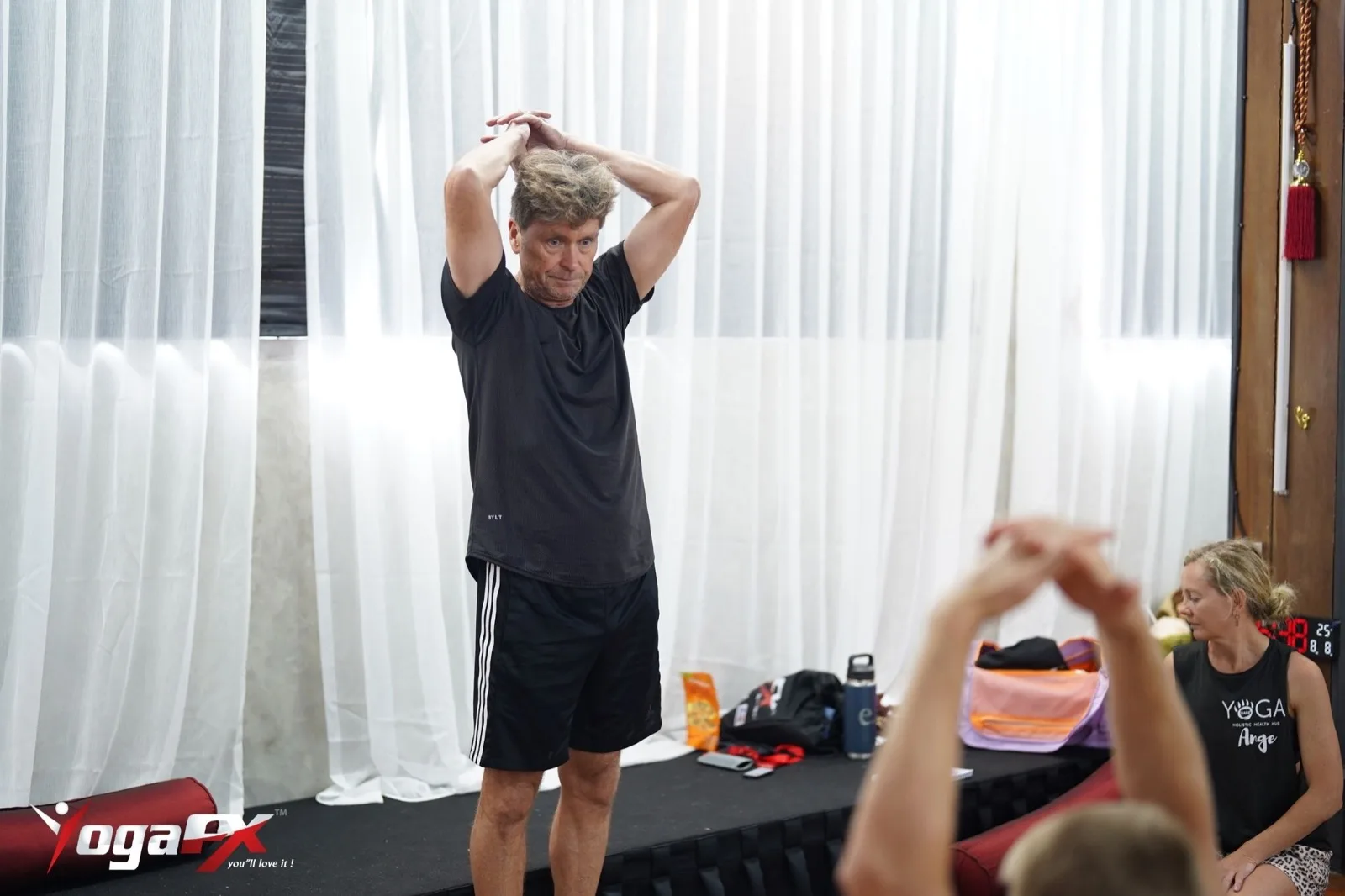
What a trainer listens for
- Accuracy. Are the words and the order right, with nothing added or dropped?
- Pace. A line said too fast loses the room, and a pause held too long breaks the rhythm of the posture.
- Breath and voice. Does the voice stay steady, and does it carry in a heated hall?
- Presence. Do you sound like a person talking to a class, or like someone reading a page?
A few habits help. Say the script aloud every day instead of reading it silently. Record yourself and listen back, because the ear catches rushed lines that the mind skips. Then teach a friend, so you learn what a real listener needs. Our guide to the 26 and 2 dialogue explains what the script is and why studios keep using it.
Test 2: The Posture Clinic, Spotting and Fixing One Error at a Time
The second test is the eye. In a posture clinic, trainees take turns in a posture while the group and the trainer watch. Each person learns what the posture should look like and where students usually go wrong.
The same 26 postures return every class. So the common errors are predictable. A knee drifts, a back rounds in a forward fold, or a neck strains in a backbend. A trained eye sees these in seconds. The clinic trains you to look at the whole body first and the detail second.
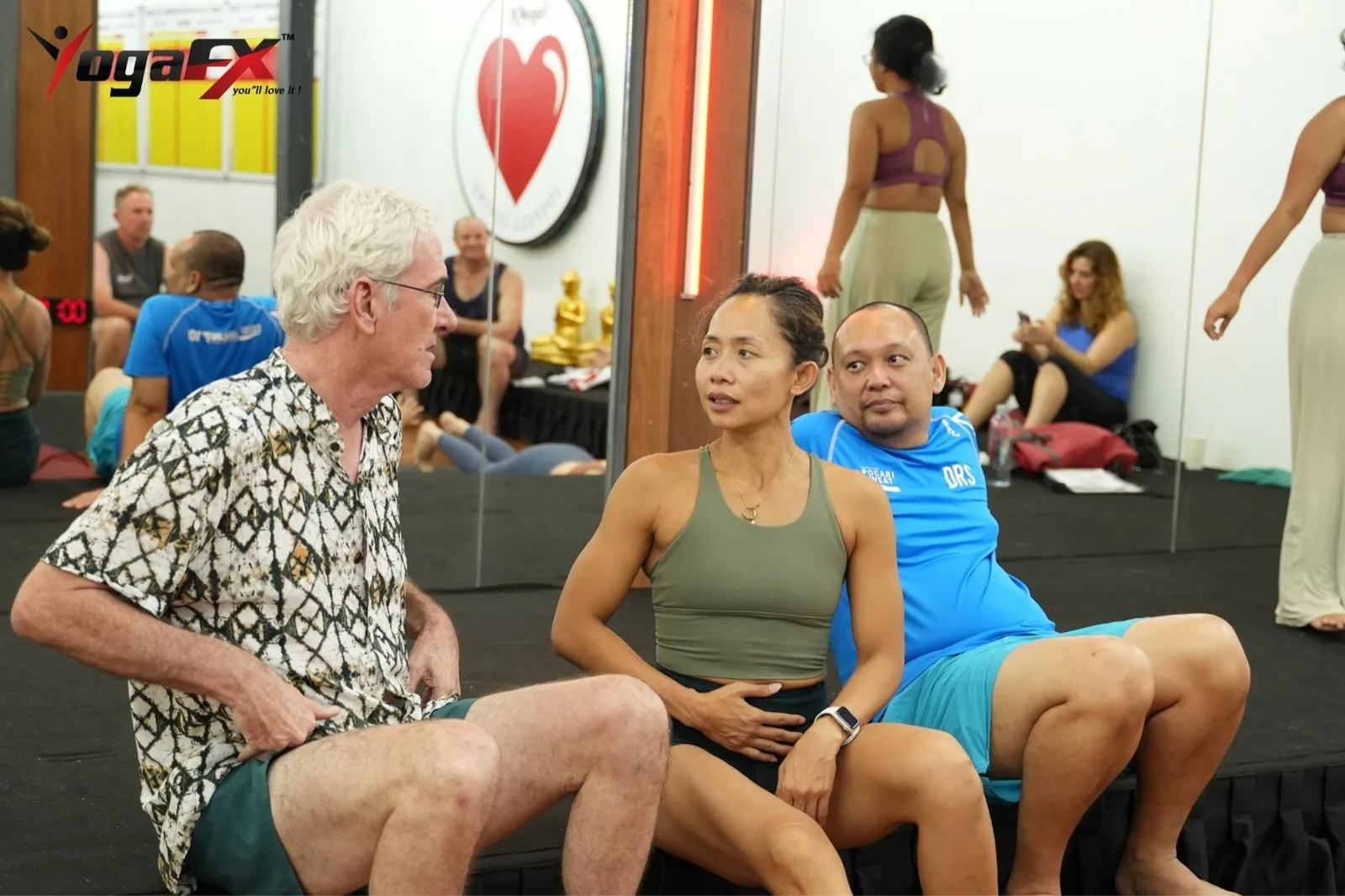
A good correction is short
A correction has to be clear and kind. Instead of a long explanation, you give one cue that fixes one thing, and then you watch whether it worked. For example, you might ask a student to lengthen the spine before folding forward, then step back.
So when you judge a hot yoga certification, ask how much of the course is clinic time and how much feedback you get after each turn. Teaching another person's body is different from knowing your own. Only repeated practice with honest feedback closes that gap.
Test 3: Heat Safety in a 40°C Room
The third test is care. A 40°C room with 40% humidity is a demanding place to learn, and the teacher has to read it. You watch for students who slow down, stop sweating normally or seem unsteady. Then you set a pace the room can follow and cue rest at the right moment.
The numbers show why this matters. A University of Wisconsin study led by Porcari (2014) measured about 333 calories burned by women and 460 by men in a 90-minute class, at roughly 80% of maximum heart rate. As a result, you lead a real workout for everyone in the room. The pacing you choose is a safety decision.
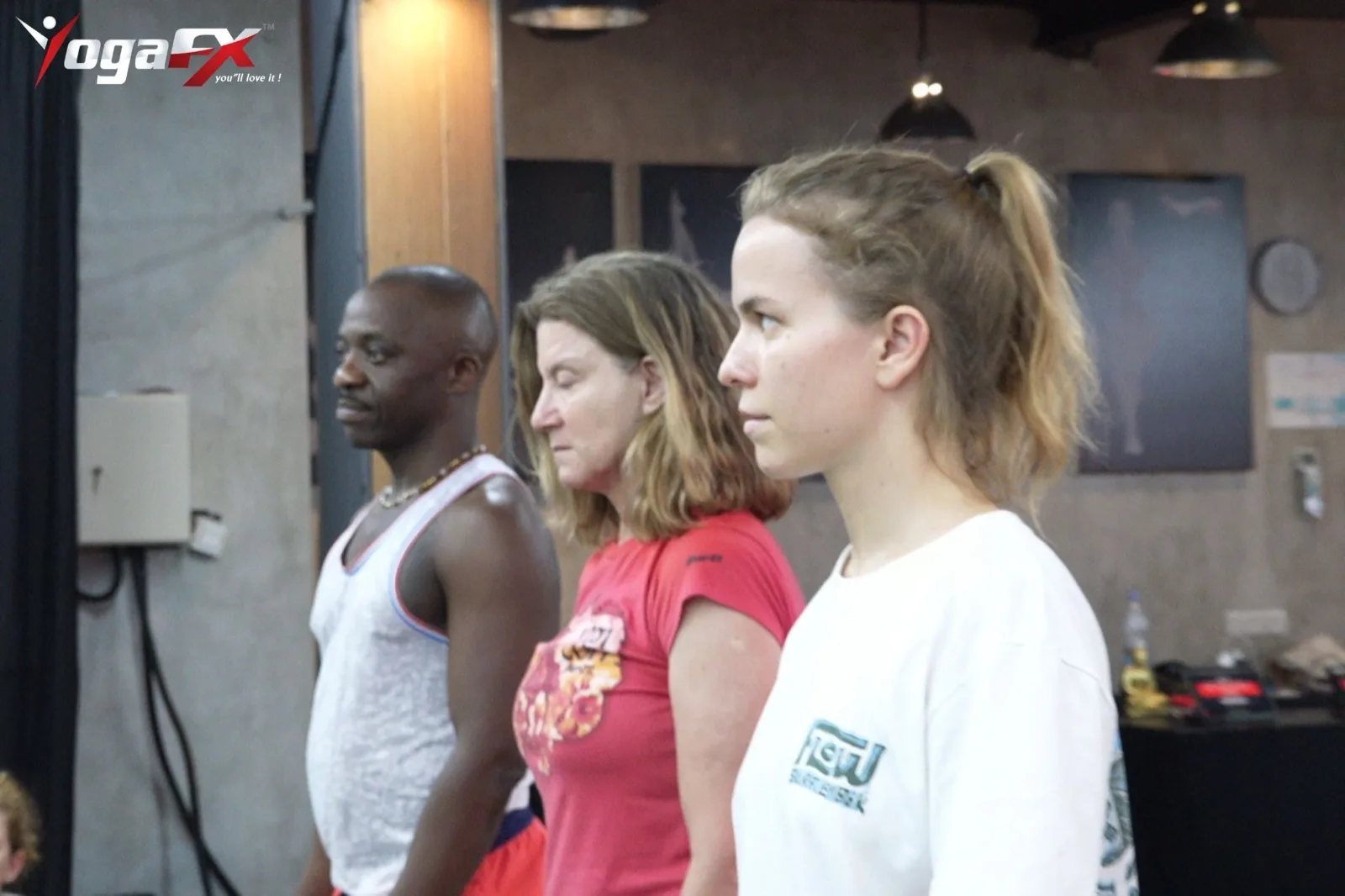
Heat safety is also about who should wait
Heat is where good intentions go wrong. Students with a heart condition, pregnancy or regular medication should speak to a healthcare professional before they join a heated class. A teacher who knows this, and says it kindly at the door, protects the student and the studio.
That's why a serious hot yoga certification covers hydration, signs of overheating and what to do when a student needs to leave the room. If a syllabus never mentions them, the course isn't built for hot rooms. This is general information, not medical advice.
Test 4: Teaching a Full Class Under Watch
The fourth test puts the first three together. You lead a class, or a large part of it, while a trainer watches. A full class has 26 postures and 2 breathing exercises over 90 minutes, so stamina and timing count as much as knowledge.
Most trainees build up in steps. First you lead one posture. Then you lead a block, such as the standing series. Finally you lead the whole sequence, with voice, eye and pacing all working at once. This is also what a studio manager tests in an audition class, which is why the practice pays off after graduation.
- Timing. Does each posture get its proper time, and does the class finish when it should?
- Flow. Do you move from one posture to the next without losing the room?
- Response. When a student struggles, do you adjust the pace without dropping the script?
A hot yoga certification that never puts you in front of a real class, in real heat, leaves this test for your first job. That is a costly place to learn it.
Test 5: Theory, Ethics and Professional Skills
The fifth test is the quietest. According to the Yoga Alliance training options page, the 200-hour credential is the foundational training that gives a base in yoga techniques, philosophy, anatomy and ethics. Most new teachers begin with it.
In a 26 and 2 hot yoga certification, that theory is not a side topic. Anatomy explains why a posture works and why it can hurt. Philosophy and ethics shape how you treat students, how you handle questions about health, and where your role as a teacher ends.
Schools check this in different ways, so ask each one how it does it. You want a clear answer, not a vague promise that you will "absorb it along the way".
How the Five Tests Compare Side by Side
Use the table to size up any hot yoga certification. Each row names what is tested, what proof a school should be able to show you, and what it means if the proof is missing.
| Test | What the trainer watches | Proof a school should show | Red flag if missing |
|---|---|---|---|
| Dialogue delivery | Accuracy, pace, pauses, voice | Practice teaching with feedback on your delivery | You never say the script aloud to a group |
| Posture clinic | Spotting one error, giving one cue | Clinic sessions where you correct real bodies | Posture work is video only |
| Heat safety | Reading a tired room, pacing, rest cues | Teaching in a heated room and a heat safety module | The syllabus never mentions overheating |
| Full class | Timing, flow, response to students | A supervised class from first breath to last | You graduate without leading a full class |
| Theory and ethics | Anatomy, philosophy, conduct | A stated way the school checks your knowledge | "You will pick it up as you go" |
Notice what the proof column has in common. Every item needs live practice with feedback, and none of it can be earned from a screen alone. That's not an argument against online study, which works well for theory and for memorising the script. It's an argument for checking where the live practice happens.
Certificate or Registry: What Each One Records
Many people mix up the certificate a school gives with a listing on a registry. They record different things, and a hot yoga certification usually involves both.
- The school certificate. It names the school, the hours you studied and the method you trained in. For the 26 and 2, that method is the whole point.
- The registry listing. It records that a registered school trained you and that you met the hours. It does not test the method.
What the registry says about itself
Yoga Alliance describes itself on its Meet Yoga Alliance page as having introduced the first voluntary registry for yoga schools and teachers in 1999, and says it now has about 100,000 members across more than 100 countries. Its training options page says each school sets its own tuition, and that you pay a one-time application fee and an annual membership fee on top.
So the registry can tell a studio that your hours were registered. It can't tell the studio whether you can run a 26 and 2 class at 40°C. That's the gap the five tests fill. For the full picture of what the registry covers, read our guide to Yoga Alliance certification for 26 and 2 teachers.
Trade associations for the method work the same way. They can set standards for their members, but the postures and the script stay the same whoever certifies the teacher. Our page on what any association can and cannot change in the 26 and 2 goes into that in detail.
How the YogaFX MasterClass Trains for These Five Tests
At YogaFX we run our hot yoga certification, the Bikram Hot 26&2 Yoga Teacher Training MasterClass, as a hybrid. You study the theory, the anatomy and the dialogue online first, at your own pace. Then you train in person in Bali, where the days go to practising, drilling the dialogue and teaching real classes in natural tropical heat.
That order is deliberate. Once the theory is done at home, the in-person days are free for what only a hot room can teach: the voice, the eye and the pace. Check-in is on a Sunday and check-out is on a Friday, so most students need only five days off work.
Dates, credentials and price
The next batch checks in on Sunday 24 January 2027 and checks out on Friday 29 January 2027, at the Soham Wellness Center in Seminyak. Dates and venues can change, so confirm them with the team before you book flights.
Graduates earn two credentials: a Yoga Alliance RYT 200-Hour certificate and a Bikram Hot 26&2 200-Hour International Yoga Certification. The price starts from US$1,899 at the Early Bird rate (normally US$1,999), and a single room is US$2,199. Interest-free instalments start from US$250 a month.
Who leads it
Mr. Ian Terry, E-RYT 500, leads the training. He holds 12,000+ teaching hours and spent five years, from 2014 to 2019, training alongside the founder of the Bikram Hot 26&2 method. Since 2017, YogaFX has trained 1,500+ graduates from 80+ countries.
Still comparing routes?
If you are still deciding between a fully online, a hybrid and an in-person route, our sister site compares the three routes to a hot yoga certification and what to check before you pay. To see the full course details, open our teacher training page.
A self-check before you enrol
- Can you say the script aloud? If not, ask how many hours of practice teaching the course gives you.
- Do you know what a good posture looks like? Corrections need a trained eye, and a trained eye needs feedback.
- Are you comfortable leading in the heat? Take a few classes in a heated room first if you have not.
- Is your goal a studio job? Then ask your target studios what they accept before you pay for any bikram yoga certification.
What the Research Says About the Class You Will Teach
A certified teacher should be able to say what the class does and what it does not. We keep these claims modest, because study quality varies and results differ from person to person.
Three studies in brief
A 2025 systematic review by Willmott and colleagues covered 43 studies with 942 participants. It linked Bikram-style practice with gains in flexibility, strength and well-being. That gives a teacher something concrete to say, while the review itself cannot promise a result for any one student.
On mood, Hui and colleagues (2022) reported that hot yoga reduced state anxiety. Porcari and colleagues (2014), cited above, measured the calorie cost and heart rate of a 90-minute class. For a trainee, the lesson is the same in both: the class is real exercise, and what you say about it must stay within the evidence.
We name these studies instead of linking them, because the research sites blocked our link checker on 11 November 2026. Search the author and year to read them yourself. If you have a health condition, consult a healthcare professional before any heated class.
What Graduates Say About Learning to Teach
Tests describe a hot yoga certification on paper, but people describe how it felt. Our public review count stands at 150 on Google, 50 on Yoga Alliance and 357 video testimonials on YouTube. Three students show what trainees notice about learning to teach.
"I learnt a lot and really improved my knowledge and skills in yoga teaching!!"
Musyatun, Google review, 2023
Musyatun points at the skills side of the course, which is the part the five tests measure. Knowledge alone does not carry a class, so the practice sessions matter most.
Willy, in a 2020 Google review, called Mr. Ian a very professional, passionate and humble teacher. That mix is what a trainee needs from a trainer who will correct their delivery in front of a group.
"Thank you for this amazing opportunity and eye opening experience."
Joanne, YouTube review, 2025
Joanne recorded her thanks on video at the end of a training. You can watch it below, and you can judge from her face and voice how the room felt on the last day. Reviews are not proof of a result, and they do not promise yours.
Six Questions to Ask Before You Pay for a Hot Yoga Certification
Take this list into your next call with any school offering a hot yoga certification. A clear answer to each one is a good sign, and a vague one is worth noting.
- Who leads the training? Ask for a name, a credential and the number of hours taught.
- How many hours do I teach to real students? You want supervised classes with feedback, not only lectures.
- Where does the practice happen? A heated room is the only place to learn heat safety.
- How is the dialogue checked? Ask whether someone listens to you deliver it, and how often.
- Which credentials do I leave with? Ask for the exact wording of the certificate and the registry status of the school.
- What support do I get after graduation? Teaching gets easier with feedback, so ask how the school stays in touch.
FAQ: Hot Yoga Certification
What does a hot yoga certification test at the end of the course?
A solid hot yoga certification checks five things: delivering the dialogue accurately, correcting postures, keeping students safe in the heat, teaching a full 90-minute class and understanding the theory. Schools differ in how they run these checks, so ask yours to describe each one before you pay.
Is a hot yoga certification the same as Yoga Alliance registration?
No. A hot yoga certification comes from your school and records what you trained in. A Yoga Alliance listing is a separate registry step that records your hours with a registered school. It carries its own application and annual fees, and it does not test whether you can teach the 26 and 2.
Do I need to train in a heated room for a hot yoga instructor certification?
Yes, it is worth it. Heat safety is a skill you can only learn by feeling a room at about 40°C and 40% humidity and watching how students respond. Online study covers theory well, but a heated room is where you practise pacing, rest cues and spotting someone who is struggling.
How do I prepare for the practical part of a bikram yoga teacher certification?
Say the dialogue aloud every day, record yourself and listen back. Take regular classes and watch how the teacher paces the room. Then practise teaching a friend one posture at a time. At YogaFX, the online pre-course lets you do most of this at home before the in-person days.
How much does a bikram yoga certification cost?
At YogaFX, the MasterClass starts from US$1,899 at the Early Bird rate, normally US$1,999, and a single room is US$2,199. Interest-free instalments start from US$250 a month. Add flights and time off work when you compare. Message the team for the next batch dates and what is included.