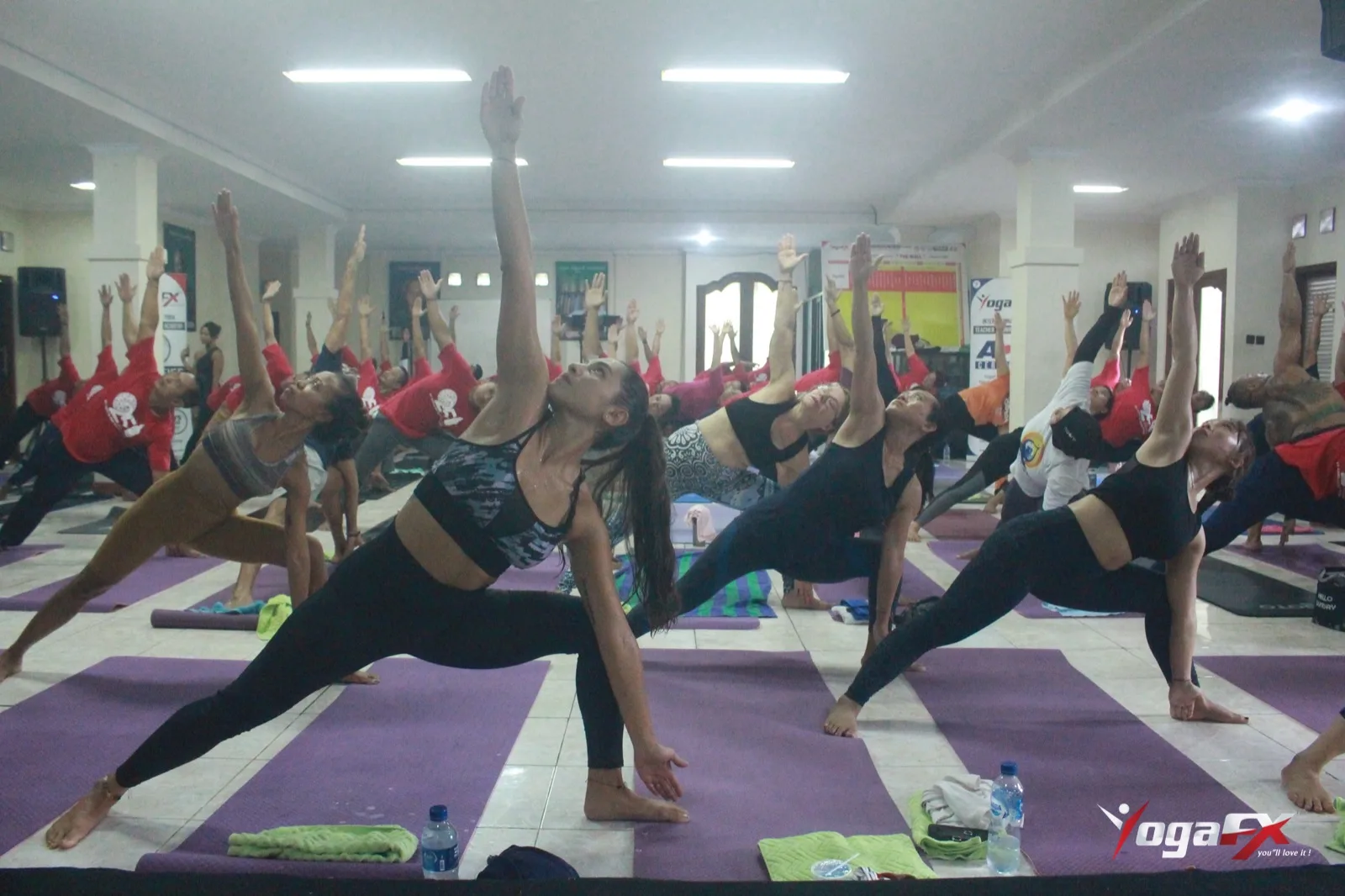
In a hot yoga room, nitric oxide benefits start with one signal: the lining of your blood vessels releases nitric oxide, and the muscle in the vessel wall responds by relaxing, so the vessel opens. Heat and effort both prompt that release, which is why a 26 and 2 class leaves you flushed.
Table of Contents
This guide explains what the nitric oxide benefits mean for you as a student, what the research supports, and where the claims on the internet run ahead of the science. It covers heat and exercise only, so the nitric oxide benefits discussed here have nothing to do with supplements.
Medical note: this is education, not medical advice. Please consult a healthcare professional before you start hot yoga if you have heart disease, high or low blood pressure, or take regular medication.
What Nitric Oxide Actually Does in a Blood Vessel
Every blood vessel is lined with a thin layer of cells called the endothelium. These cells release nitric oxide, a small gas molecule that works as a message. The message is simple: relax. The muscle in the vessel wall loosens, the vessel widens, and blood passes through with less resistance.
That's the whole story behind the nitric oxide benefits people talk about. A vessel that can widen and narrow on demand is a healthy vessel, and that flexibility is what the research on nitric oxide benefits keeps returning to. The molecule itself is not a performance drug, and your body already makes it all day long.
Three plain-language points sum it up:
- Lower resistance. A relaxed wall gives blood a wider channel to move through.
- On-demand control. Vessels open when you are hot or working, then settle when you rest.
- One voice in a chorus. Other chemical messages work alongside it, so no single molecule explains everything you feel in class.
Nitric Oxide Benefits in the 26 and 2 Room: Heat Plus Effort
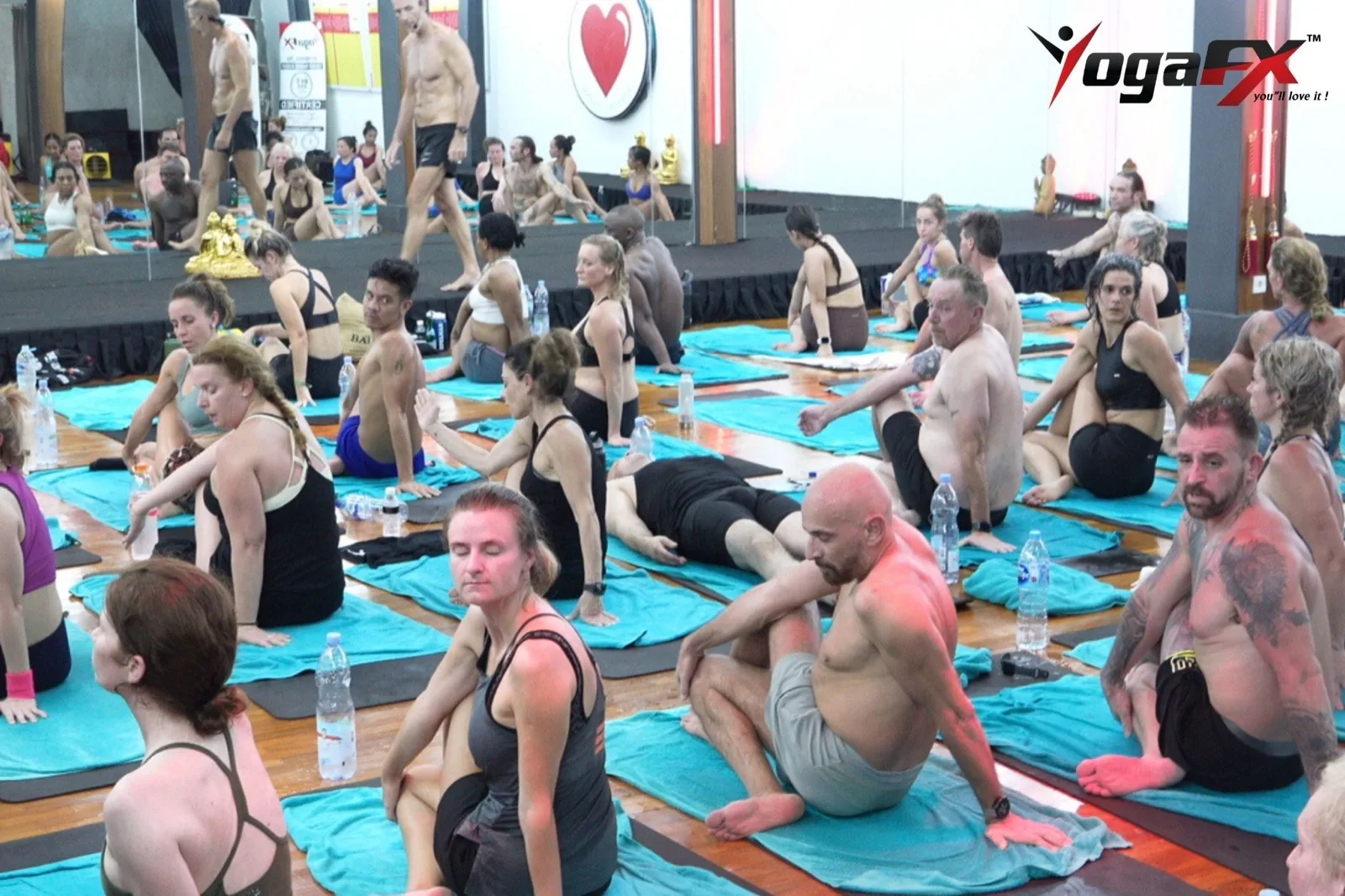
A 26 and 2 class at YogaFX runs for 90 minutes at about 40 degrees Celsius and 40 percent humidity. Students move through 26 postures and 2 breathing exercises in a fixed order. That mix puts two separate demands on your circulation at the same time.
The first demand is heat. When the room is warm and you are working, your core temperature rises. Your body responds by sending more blood to the skin so heat can leave, and by sweating. A 2016 review in the journal Temperature by Wong and Hollowed describes this as active vasodilation of the skin and reports that nitric oxide contributes roughly 30 to 45 percent of that active widening.
The second demand is muscle work. Standing postures such as Awkward pose ask your thighs and hips to hold a load. Working muscles need more blood, and faster blood flow past the vessel lining is one of the cues that prompts the lining to release nitric oxide.
Here's the honest limit on nitric oxide benefits in class. We've no study that measures nitric oxide levels across a full 26 and 2 class, so we won't give you a number. What the sources support is the mechanism: heat widens skin vessels, exercise trains the vessel lining, and nitric oxide takes part in both.
Five Triggers Inside One 90-Minute Class
The table below separates the different things that happen in the room, what you might notice, and how strong the evidence is. We keep the last column blunt on purpose.
| Trigger in class | What your body does | What you notice | Evidence status |
|---|---|---|---|
| Room heat (about 40 °C) | Skin vessels widen so heat can leave the body | Flushed face, sweat from the first series | Nitric oxide supports roughly 30 to 45% of active skin vessel widening (Wong and Hollowed, 2016) |
| Held standing postures | Working leg muscles draw more blood | Burning thighs, heavier breathing | Exercise training can improve nitric oxide-dependent widening (Green et al., 2004) |
| Humidity (about 40%) | Sweat evaporates more slowly | Skin stays wet, heat feels heavier | General heat physiology; no nitric oxide claim |
| Two breathing exercises | Slower, deliberate breathing | A calmer, steadier pace | Not tested for nitric oxide in a 26 and 2 class |
| Final rest in Savasana | Demand falls and the body settles | Heart rate and breathing slow down | Not tested for nitric oxide in a 26 and 2 class |
What the Research Shows About Nitric Oxide Benefits
Two sources do most of the work on nitric oxide benefits, and both were opened and read for this article.
The 2004 review in The Journal of Physiology by Green and colleagues reviewed how exercise training affects nitric oxide-dependent widening of blood vessels in humans. It reports that training augments this widening in both large and small vessels, and that the size of the benefit in people depends on how much muscle mass is trained. It also notes that the improvement has been found less often in healthy people, and that it fades within weeks if training stops.
That last point matters for any class schedule. A vessel benefit linked to exercise is not banked for life. It follows your practice, so a regular rhythm matters more than one big session. Our guide to the wider benefits of 26 and 2 yoga covers how often people practise and what to expect.
The 2016 review in the journal Temperature by Wong and Hollowed covers the skin side of the story, as described above. Together the two sources give a fair summary: heat and exercise both engage nitric oxide, the effects depend on the person, and the best-measured effects are in skin vessels and trained muscle, not in some whole-body number.
How strong is the evidence?
It is worth being clear about how strong this evidence is. Both sources are reviews, which means they summarise many studies rather than testing a 26 and 2 class directly. They support the mechanism. They do not prove that any specific class design produces a specific nitric oxide benefit, and a careful teacher says exactly that.
A 2014 University of Wisconsin study (Porcari et al.) also measured around 80 percent of maximum heart rate during a 90-minute class, which shows the heart is working. Our post on heart rate zones in the standing series goes through what that means.
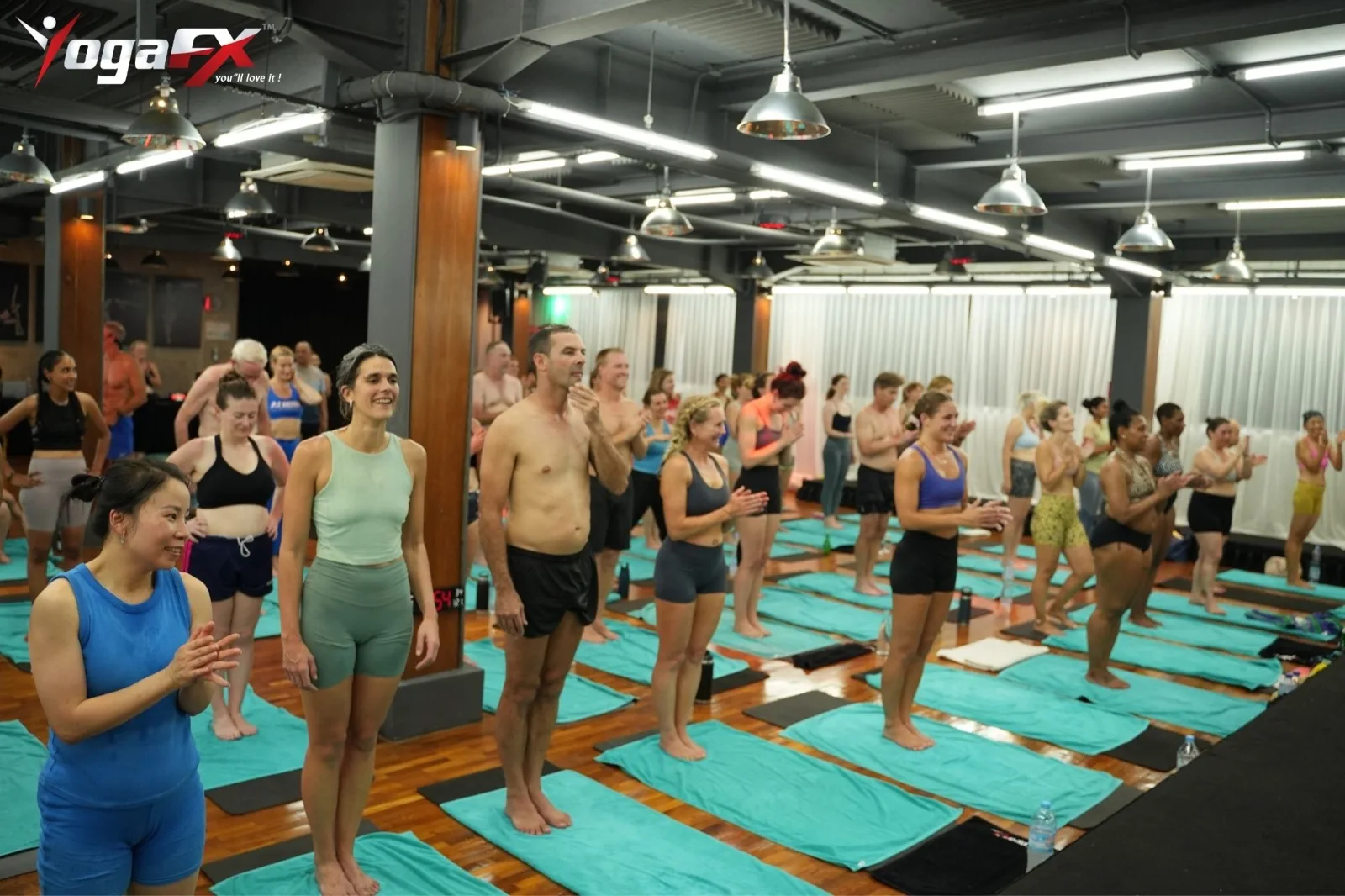
Infographic: The Numbers Behind the Heat and the Vessels
Where Your Vessels Work Hardest: The Standing Series and the Floor
Mr. Ian Terry, Founder and Lead Instructor at YogaFX, is an E-RYT 500 teacher with more than 12,000 hours of teaching. In his classes the dialogue is scripted, so every student hears the same instructions in the same order. That consistency makes the physiology easy to follow, because you know what is coming next.
The standing series: big muscles, big demand for nitric oxide benefits
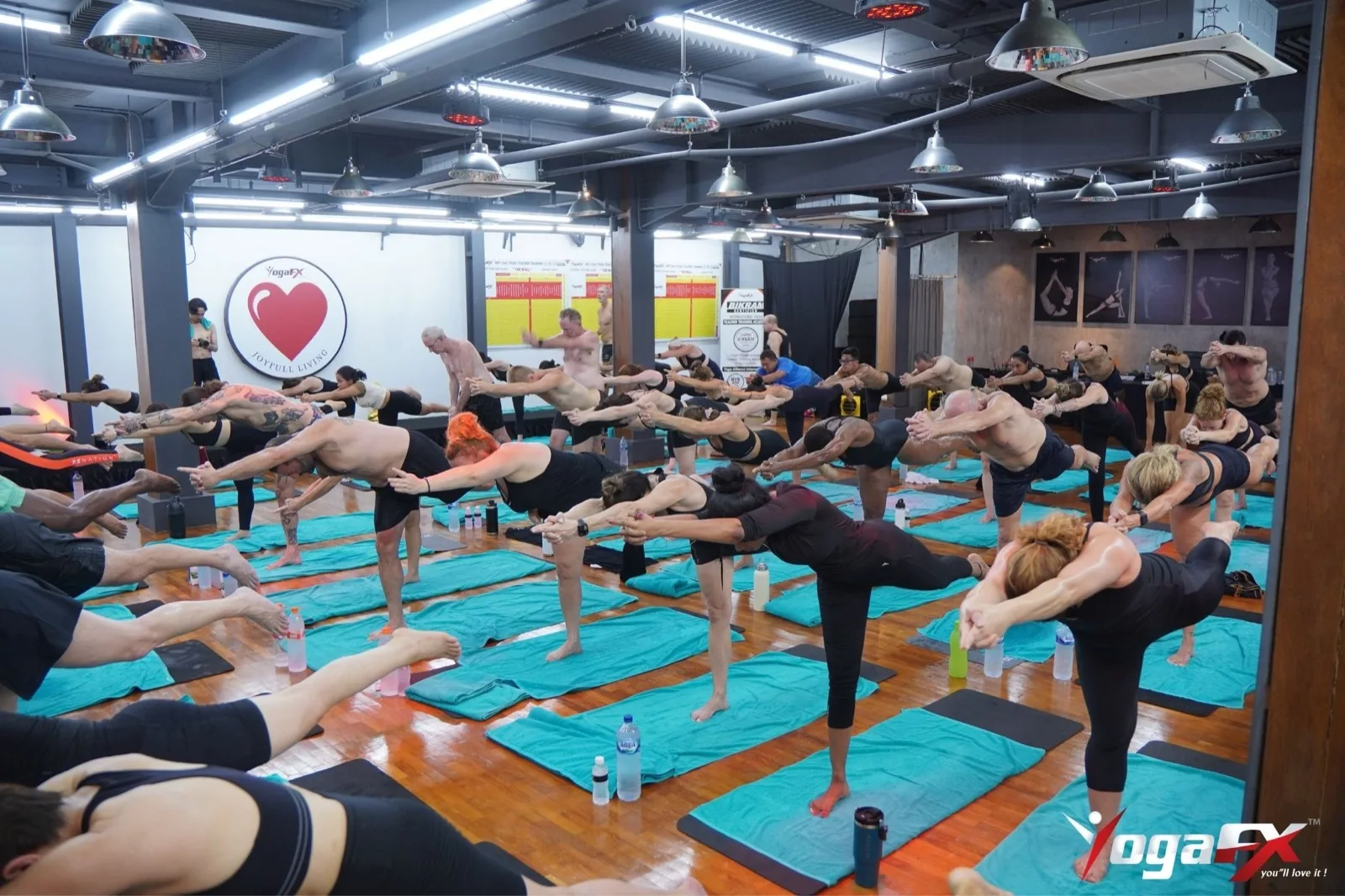
The standing postures use the largest muscle groups in the body, mainly the thighs, hips and trunk. Because the size of the exercise benefit depends on the muscle mass involved, this is where your circulation is most active. Expect your breathing to climb and your skin to flush during the first half of class.
The floor series: lower load, steadier recovery
Once you move to the mat, the load changes. There is still heat, but the postures ask for less balance and less leg work. Many students notice their breathing settles here, even though the room is just as warm. That's the moment to drink water between postures if your teacher allows it, and to stay aware of how you feel.
The breathing exercises: a deliberate reset
The two breathing exercises, one near the start and one at the end, slow everything down on purpose. We make no nitric oxide claim for them. Their job in class is to give you a steady rhythm and a pause. Read more in our guide to why the room is heated if you want the heat side explained in full.
What Students Say About Practising in the Heat
Reviews aren't research, but they show how real people describe this room, far from the nitric oxide benefits hype online. Here are three from the YogaFX review pool, shared with first names only.
Amazing Yoga, amazing teacher, I got so much benefits from yogafx.
Volla, Google review, 2020
My best yoga experience, n my biggest improvement in yoga... i really recommends for anyone to try and feel the experience by yourself
Tridy, Google review, 2020
This has been a brilliant experience... I know everybody had my back just like I had everybody else's back
Marion, YouTube review, 2024
You can watch Marion's full video review below. She speaks about the group, the teaching and what the week meant to her.
Each review mentions community, teaching and effort. None of them claims any nitric oxide benefits, and that is the right way to read this topic: the feeling in the room is real, while the molecule-level story is a mechanism, not a promise.
Heat Safety: Signs You Should Never Ignore
A heated room asks more of your circulation, so you should know what too much looks like. The NHS guidance on heat exhaustion and heatstroke lists the symptoms of heat exhaustion:
- Tiredness, dizziness and headache.
- Feeling sick or being sick.
- Excessive sweating with pale, clammy skin.
- Cramps in the arms, legs and stomach.
- A high temperature, strong thirst and irritability.
NHS advice is to move to a cool place, drink water and cool the skin. If symptoms do not improve within about 30 minutes, or if someone is confused, stops sweating or loses consciousness, that can be heatstroke and needs emergency help. In class, tell your teacher at the first sign and rest on your mat. Nobody'll think less of you.
People with heart disease, blood pressure problems, pregnancy or regular medication should speak to a doctor first. That advice applies whatever you read about nitric oxide benefits online.
How to Get the Most From Nitric Oxide Benefits Without Overdoing It
Understanding the nitric oxide benefits of heat and exercise should change how you practise in small, practical ways. None of these tips is a medical prescription. They are the habits that experienced students and teachers at YogaFX keep coming back to.
- Practise regularly. Because exercise-linked vessel benefits fade within weeks of stopping, a steady weekly rhythm beats an occasional hard session.
- Pace yourself in the first series. Your skin vessels are still opening, so building effort gradually is kinder to your circulation.
- Hydrate before and after class. Sweat is lost water, and your body needs fluid to keep cooling itself. Follow your teacher's guidance on drinking during class.
- Eat light before class. A heavy meal competes for blood flow with the muscles you are about to use.
- Rest without guilt. Sitting down in the heat is part of the practice, and it isn't a failure.
The honest takeaway about nitric oxide benefits is that they reward consistency and respect for your limits. Students who return week after week tend to describe the room as easier to handle over time, and the research on exercise training offers a plausible reason: the vessel lining responds to repeated use. Still, individual results differ, so treat your own comfort as the guide.
If you are new to heat, start with the first few classes at an easy pace. Stay near the back or the side if that helps you step out for air, and remember that the teacher's there to help. Nitric oxide benefits matter far less than finishing the week feeling well and wanting to come back.
What This Does Not Mean: Honest Limits
It's easy to stretch the nitric oxide benefits mechanism into a bad promise. So here is what we do not claim:
- We do not say hot yoga raises nitric oxide by any measured amount.
- We do not say sweat removes toxins. Your liver and kidneys do that work, and sweat mainly cools you.
- We do not recommend or sell supplements, and this article makes no supplement claims.
- We do not promise any health result. Responses vary with age, fitness, medication and health history.
If you want the teacher-side version of this physiology, the YogaFX teacher training site explains how teacher trainees learn to explain this physiology in its own course context.
Try the Heat Yourself: A Free 1-Day Guest Pass in Seminyak
The best way to understand the heat, and the nitric oxide benefits it triggers, is to feel it for a class. The YogaFX studio in Seminyak, Bali, offers a Free 1-Day Guest Pass, so your first class is free. You will find the studio at Jl. Pangkungsari Gg Jepun No.888, Kuta Utara, Seminyak, Badung, Bali 80361, open daily from 06:00 to 22:00.
Bring water and a towel, arrive early, and tell the teacher about any health condition before class starts. If you have questions first, message the YogaFX team and we will answer them personally.
FAQ
Is nitric oxide good for you?
Your body makes nitric oxide itself, and it helps relax blood vessel walls so blood flows more easily. That makes it useful, not magic. This article covers heat and exercise only, not supplements. Ask a healthcare professional before changing anything, especially if you take blood pressure medication.
Does exercise increase nitric oxide?
Research suggests regular exercise can improve how well blood vessels widen through nitric oxide, as a 2004 review in The Journal of Physiology describes. The size of the effect depends on how much muscle is trained, and it fades within weeks if training stops. Results vary from person to person.
Does hot yoga increase nitric oxide?
Nobody has measured nitric oxide across a full 26 and 2 class, so we make no number-based claim. What we can say is that heat and muscle work both widen vessels, and nitric oxide is one of the signals involved in widening skin vessels during heat.
Why is nitric oxide important in the body?
Your vessel lining releases nitric oxide as a chemical message. The message makes the muscle in the vessel wall relax, which opens the vessel. That lets your body redirect blood when you exercise, overheat or rest, without you having to think about it.
Is hot yoga safe if I have heart or blood pressure problems?
Speak to your doctor before your first class if you have heart disease, high or low blood pressure, or take regular medication. A heated room makes your heart work harder to cool you. You can always rest on your mat, and teachers will not push you.
Still have questions? Message Mr. Ian and the YogaFX team on WhatsApp and we will answer them personally.