What is hot yoga? It is yoga practised in a deliberately heated room. The best-known version is the 26 and 2: 26 postures and 2 breathing exercises, always in the same order, for 90 minutes at about 40°C and 40% humidity. Most other hot classes borrow the heat but change the sequence.
Table of Contents
This guide answers what is hot yoga by walking through the 26 and 2 room, because that room is the reference point for the whole category. You will see why it is hot and damp, where the idea came from, how other styles differ and how to stay safe. If you want the method itself first, start with our overview of 26 and 2 yoga.
What Is Hot Yoga? The Short Answer From the 26 and 2 Room
So what is hot yoga as a category? It is an umbrella term. It covers any yoga class where the room is warmer than normal, from a gently warm flow to a full 40°C class. If you ask what is hot yoga in practice, the answer is a warm, humid room, a lot of sweat and a teacher who expects you to pace yourself.
We use the 26 and 2 as the yardstick because it fixes everything that other styles leave open. The temperature, the humidity, the length and the order of postures never change.
Mr. Ian Terry, E-RYT 500, founded YogaFX in 2017 and has taught more than 12,000 hours. He says the same thing to every new student: when the room and the sequence are fixed, you can measure your own progress.
What is hot yoga made of? Three things that make a class "hot"
- Heat. The air temperature is set well above a normal studio, usually between about 32°C and 40°C.
- Humidity. Moist air changes how sweat leaves your skin, so it changes how hot you feel.
- Time. The longer you stay in the room, the more the body has to work to keep cool.
So what is hot yoga missing from this list? The postures. None of these three says anything about them. That is why one class can be called hot yoga and still look nothing like another. The heat is the shared feature. The sequence is where styles split apart.
Why the 26 and 2 Room Is Heated and Humid
Anyone asking what is hot yoga for usually wants to know why the room is so warm. There are two answers, one for the muscles and one for the mind.
In a full class at YogaFX the room sits at about 40°C with roughly 40% humidity. Those two numbers work as a pair. If you want the exact figures and how they move with the size of the class, read our guide to hot yoga temperature.
What the heat does to a standing posture
Warm muscles lengthen more easily, and warm blood vessels carry more blood to them. As a result, the first standing postures feel less stiff than they would in a cold room. The heat also asks your body to cool itself while it holds a posture, so a slow movement still feels like work.
Why humidity matters as much as the thermometer
The Mayo Clinic explains that the body cools itself mainly by sweating. In its guide to heat exhaustion it lists high temperature, especially with high humidity, as a cause, because the body is less able to cool itself efficiently in hot, humid weather. That is why a teacher watches the room, not just the dial.
| Factor | What it is in the 26 and 2 room | What you notice | What helps |
|---|---|---|---|
| Air temperature | About 40°C for the whole 90 minutes | Muscles feel looser, effort feels higher | Pace yourself and rest when you need to |
| Humidity | About 40% | Sweat stays on the skin longer than in dry air | Sip water, wipe your face and breathe through the nose |
| Duration | 90 minutes, one continuous class | The hardest stretch comes in the first 20 to 30 minutes | Arrive hydrated and lie down early if you feel dizzy |
| Crowd | More students add body heat and moisture | The room feels warmer when it is full | Take the spot your teacher suggests |
Notice how the table treats the room as a system. No single number tells the whole story. A 40°C room with sticky air feels very different from 40°C dry air, so treat any studio figure as a target and ask about both numbers.
How Heat Came Into Yoga: A Short History
Heat is not new to yoga, because yoga began in warm climates. What changed was the decision to add heat on purpose in a closed room. That idea spread widely through Bikram yoga in the 1970s, a fixed sequence of 26 postures and 2 breathing exercises taught at around 40°C.
Since then, studios have added heat to almost every format, from flowing vinyasa to slow floor work.
In 2015 the US Ninth Circuit ruled in the Bikram's Yoga College of India v. Evolation Yoga case that the sequence itself is not protected by copyright. That opened the door for any studio to teach it. Our article on Bikram yoga history tells the full story, including what happened to the trademarks.
Why the name "26 and 2" stuck
The name is a plain description. There are 26 postures, and there are 2 breathing exercises. Students do not need to learn Sanskrit names or follow a changing flow. They only need to show up, listen and stay in the room.
Types of Hot Yoga, With the 26 and 2 as the Reference Point
People who learn what is hot yoga often ask whether it is the same as Bikram. It is not. Bikram yoga is one style of hot yoga, and the 26 and 2 is the method that sits behind it. The table below compares the main ways a hot class can be built.
| Class type | Room heat | Order of postures | How it is taught |
|---|---|---|---|
| Non-heated yoga | About 20°C to 22°C | Depends on the teacher and style | Varies widely |
| Hot vinyasa or power flow | About 32°C to 38°C, set by each studio | Changes from class to class | The teacher designs each class |
| 26 and 2 | 40°C with about 40% humidity | The same 26 postures and 2 breathing exercises every time | A scripted spoken dialogue, with no music and no demonstration |
If you are choosing between a flowing hot class and the fixed sequence, our comparison of hot yoga vs regular yoga shows what the heat adds to the same postures. For a Bali view of the styles, the team at our sister studio wrote a beginner guide to hot yoga styles and temperatures that pairs well with this one.
What is hot yoga like when the sequence is fixed?
- No guessing. The postures come in the same order, so your second class feels familiar.
- Easy to measure. You can compare how you felt in a posture last week and this week.
- Clear teaching. The teacher speaks the same dialogue, so you always know what comes next.
What Is Hot Yoga Like? A 26 and 2 Class From Start to Finish
Many first-timers asking what is hot yoga like want a picture before they walk in. Here is the shape of a class, from the first breath to the last rest. The cards below show the four stages in order.
01
Breathing opens the class
Standing deep breathing, the first of the 2 breathing exercises, steadies the heart rate and focuses the mind.
02
The standing series
Balancing and strengthening postures build heat. This is where most first-timers feel the challenge.
03
The floor series
Back bends, forward bends and twists, with short rests between postures.
04
Closing breath and rest
The second breathing exercise, Blowing in Firm, then a final rest on your back.
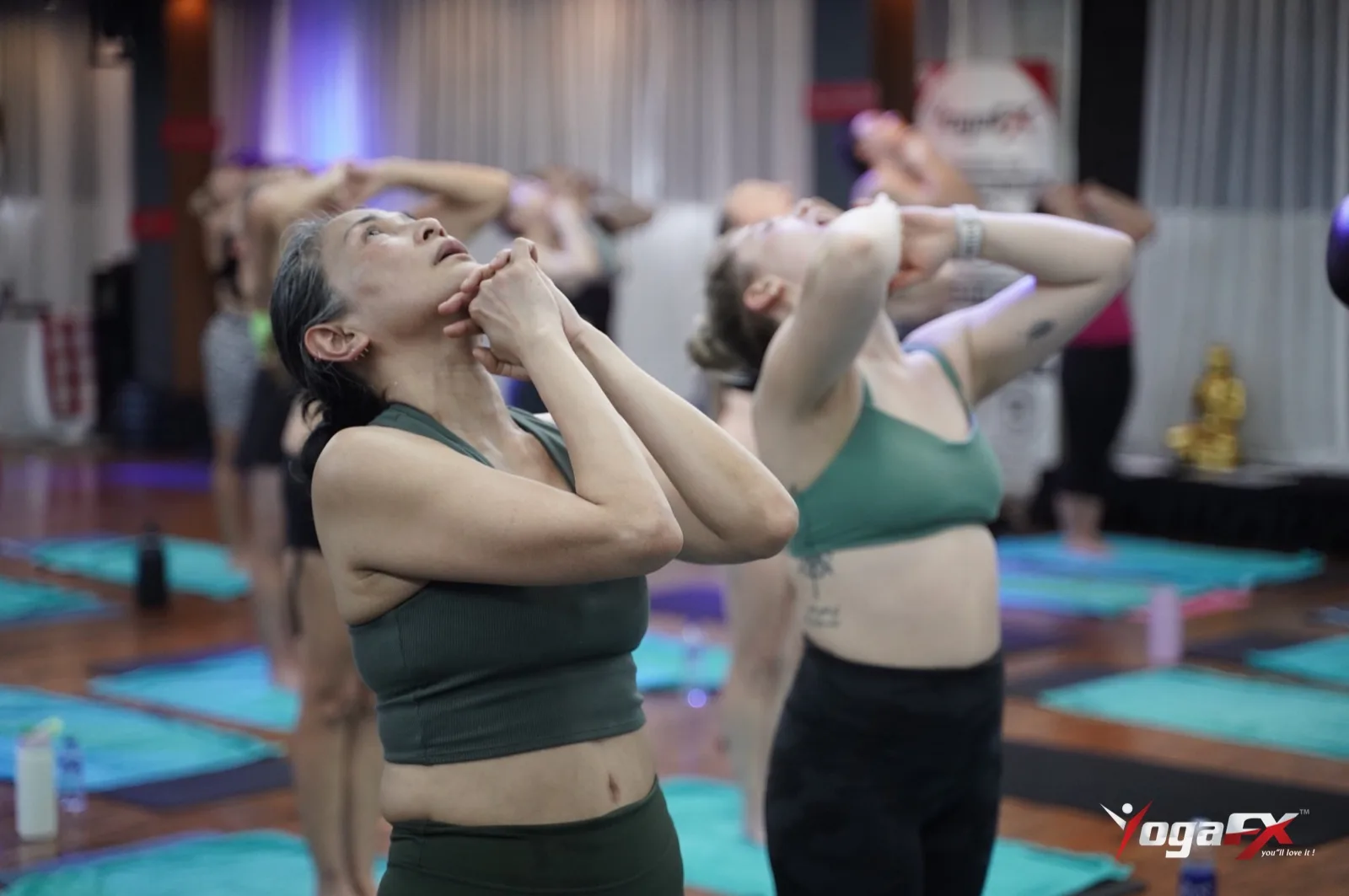
Because the teacher talks you through every posture, you don't need to know the poses in advance. That is the point of the scripted dialogue. There is no music and no demonstration, so your attention stays on your own breath and your own mat.
The first 20 minutes are the hardest
Almost every beginner feels hot, sweaty and tired early on. That's normal. Your body is learning to cool itself in a new setting, so the early postures feel harder than they look. Resting is part of the class, and every teacher expects it.
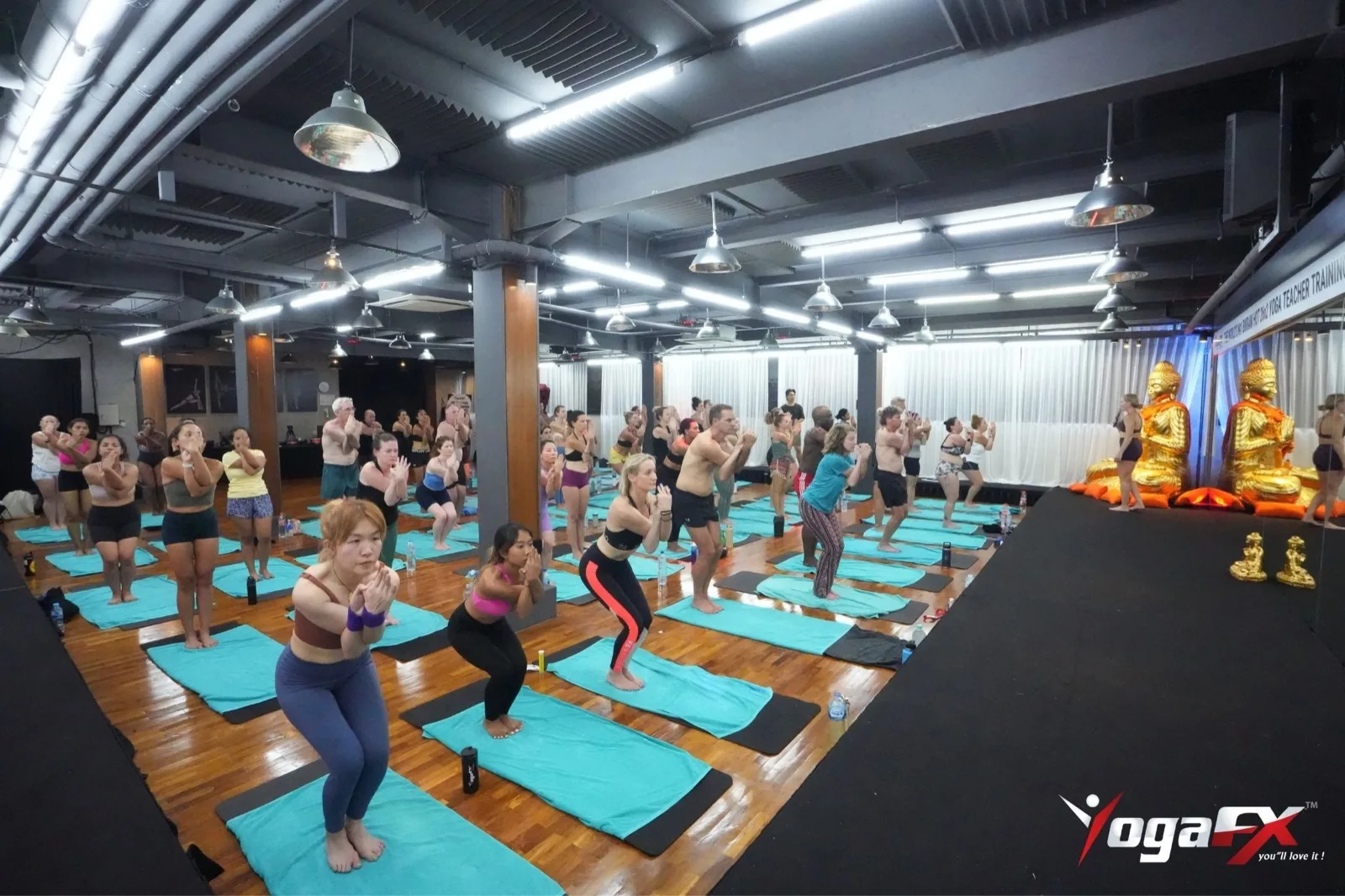
The last rest
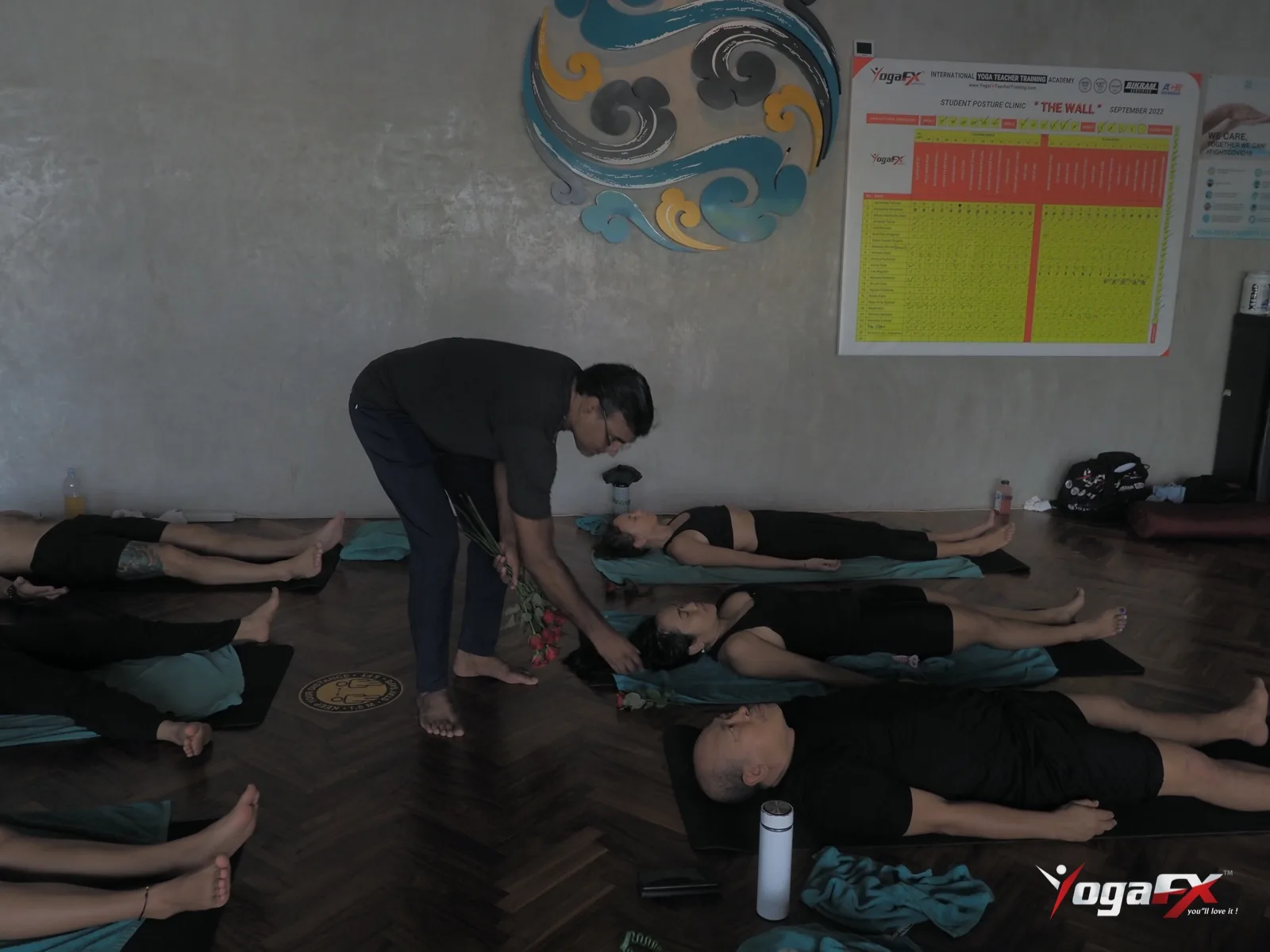
By the end, many students describe a calm, heavy feeling. The final rest is not a reward for surviving. It is where the body settles after 90 minutes of work, so it deserves your full attention.
What the Research Says About Hot Yoga
If you are asking what is hot yoga good for, research is small, so it pays to read it carefully. The studies below show what has been measured, and what has not.
Energy use in a hot room
A 2020 study by Lambert and colleagues, Acute Physiologic Effects of Performing Yoga in the Heat, compared 1 hour of a Bikram sequence at 105°F (40°C) with the same sequence at 74°F. Sixteen experienced practitioners took part. The paper found that heart rate and energy use did not differ significantly between the two rooms.
In plain words, the heat changed how the class felt more than how much energy it used.
A 2014 University of Wisconsin study (Porcari et al.) measured about 333 calories for women and 460 for men in a 90-minute class. Those figures describe the whole 90 minutes, not the room alone.
Mood
A 2023 randomised trial from Massachusetts General Hospital (Nyer et al.) found that people in a heated yoga group were far more likely to see their depression symptoms fall by half or more than people on a waitlist. The figures were 59% against 6% over 8 weeks. Treat that as a promising result, not a treatment plan, and speak to your doctor before changing any care.
This section is for general information and is not medical advice. Please consult a healthcare professional before you start hot yoga, especially if you have a heart condition, blood pressure problems, diabetes or are pregnant.
Staying Safe in a Hot, Humid Room
The Cleveland Clinic describes heat exhaustion as a moderate form of heat illness that happens when you lose too much water or salt, typically while exerting yourself in the heat. Its symptoms include dizziness, nausea, vomiting and headache. The Mayo Clinic adds faintness, muscle cramps and a weak, rapid pulse.
A simple checklist
- Drink early. Start hydrating hours before class, not just minutes before.
- Eat light. Leave two to three hours after a full meal.
- Tell your teacher. Say so if you are new, pregnant or on medication.
- Rest without guilt. If you feel dizzy, lie down on your back and sip water.
That last point matters most. Nobody in a good class expects you to push through a warning sign. The Mayo Clinic also notes that a core temperature of 104°F (40°C) or higher needs urgent help, which is why a hot room is never the place to test your limits.
What Students Say About the Room
Another way to see what is hot yoga like is to hear from people who practised it. These words come from YouTube reviews by trainees at the end of a course in Bali, so they describe the training week more than a drop-in class. Even so, they show how the room and the people around you shape the experience. We use first names only.
Anita, YouTube review, 2025: "I thought that the energy in the room and the support was absolutely amazing." She said she came to deepen her practice and now sees herself teaching.
Atika, YouTube review, 2019, said the first week was the hardest, with illness and homesickness. By the second week she felt connected to the group and passionate about teaching.
Rani, YouTube review, 2023, thanked Mr. Ian for his motivation and kindness, and said the staff were full of love. For a hot, demanding room, that kind of support is what keeps people coming back.
How Mr. Ian Terry Teaches the Room
Anyone who still wonders what is hot yoga at its best should ask the teacher. Mr. Ian Terry trained for five years, from 2014 to 2019, with the founder of the Bikram Hot 26&2 method, and he now teaches it at YogaFX. His rule is that the teacher reads the room first and the clock second. If breathing turns ragged or faces turn very red, the class slows down.
Our Seminyak studio is open from 06:00 to 22:00 every day. If you want to feel the room yourself, message us on WhatsApp and we will help you plan a first class. If you would rather learn to teach it, read about our 26 and 2 yoga teacher training, which leads to Yoga Alliance RYT 200-Hour certification.
FAQ
Is hot yoga a type of yoga?
Yes. Hot yoga is yoga done in a deliberately heated room, so it is a way of practising rather than one fixed style. Bikram yoga, hot vinyasa and other heated classes all count. The postures can be the same as in a cool room. The heat and humidity are what change.
Why is hot yoga practised in a hot room?
The heat warms the muscles so postures feel less stiff, and it raises the effort of each one. In the 26 and 2 room the air sits at about 40°C and 40% humidity. Those two numbers work together, because humid air slows how fast sweat leaves your skin.
Where does hot yoga come from?
Heated yoga became popular through Bikram yoga in the 1970s, a fixed sequence of 26 postures and 2 breathing exercises taught at around 40°C. Studios have since added heat to many other formats. In 2015 a US court ruled that the sequence itself is not protected by copyright.
What is hot yoga good for?
Students mostly use it for strength, flexibility and a focused hour away from screens. Small studies suggest possible benefits for mood, but results are early and do not replace medical care. The heat also makes the work feel harder, so pace yourself and speak to a doctor if unsure.
Who should check with a doctor before trying hot yoga?
Anyone with a heart condition, blood pressure problems, diabetes or a history of heat illness should ask a doctor first. The same applies if you are pregnant or take medication that affects heart rate or hydration. Tell your teacher before class so they can watch you closely.
Still have questions? Message Mr. Ian and the YogaFX team on WhatsApp and we will answer them personally.